Kirjahaku
Etsi kirjoja tekijän nimen, kirjan nimen tai ISBN:n perusteella.
1000 tulosta hakusanalla Alejandro Bilbao


Corps et personne dans les sociétés biotechnologiques
Alejandro Bilbao; Enric Porqueres
La philosophie en commun
2021
nidottu

Deutsche Borse Photography Prize 2021 - Poulomi Basu, Alejandro Cartagena, Cao Fei, Zineb Sedira
Sylvie Fortin Bilbao
The Photographers' Gallery
2021
nidottu

"Jag trycker telefonen hårt mot örat känner hur jag blir varm och svettig av den på kinden när Adam säger Hallå vet du vad som har hänt, Alejandro finns inte längre. Adam säger Hallå vet du vad som har hänt, Alejandro är död."De älskade varandra som bröder och nu finns bara en av dem kvar för att berätta om vad som hände.Han och Alejandro är vänner sedan barndomen. När de börjar sälja gräs till folk i skolan är det mest en kul grej, och pengarna ska sparas till en bil på artonårsdagen. Men snart är de indragna i en våldsspiral som ingen av dem väntat sig.En intensiv roman om två unga killar i Malmö. Om festerna och vännerna, pengarna och kickarna, om sorgen och banden som aldrig går av.

Alejandro González Iñárritu
Celestino Deleyto; Maria del Mar Azcona
University of Illinois Press
2010
sidottu
This in-depth study of Mexican film director Alejandro González Iñárritu explores his role in moving Mexican filmmaking from a traditional nationalist agenda towards a more global focus. Working in the United States and in Mexico, Iñárritu crosses national borders while his movies break the barriers of distribution, production, narration, and style. His features also experiment with transnational identity as characters emigrate and settings change. In studying the international scope of Iñárritu's influential films Amores Perros, 21 Grams, and Babel, Celestino Deleyto and María del Mar Azcona trace common themes such as human suffering and redemption, chance, and accidental encounters. The authors also analyze the director's powerful visual style and his consistent use of multiple characters and a fragmented narrative structure. The book concludes with a new interview with Iñárritu that touches on the themes and subject matter of his chief works.
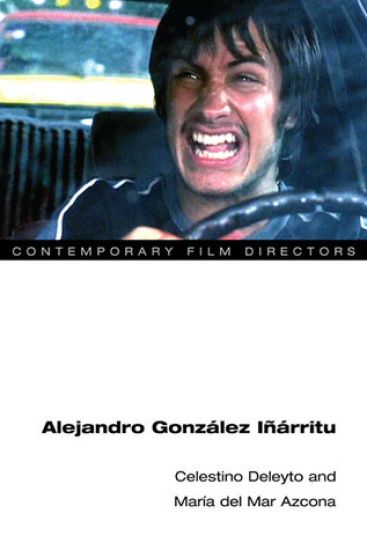
Alejandro González Iñárritu
Celestino Deleyto; Maria del Mar Azcona
University of Illinois Press
2010
nidottu
This in-depth study of Mexican film director Alejandro González Iñárritu explores his role in moving Mexican filmmaking from a traditional nationalist agenda towards a more global focus. Working in the United States and in Mexico, Iñárritu crosses national borders while his movies break the barriers of distribution, production, narration, and style. His features also experiment with transnational identity as characters emigrate and settings change. In studying the international scope of Iñárritu's influential films Amores Perros, 21 Grams, and Babel, Celestino Deleyto and María del Mar Azcona trace common themes such as human suffering and redemption, chance, and accidental encounters. The authors also analyze the director's powerful visual style and his consistent use of multiple characters and a fragmented narrative structure. The book concludes with a new interview with Iñárritu that touches on the themes and subject matter of his chief works.


Since the release of his first feature in 1996, Alejandro Amenábar has become the ‘golden boy’ of Spanish filmmaking, a bankable star director whose brand virtually guarantees quality, big audiences and domestic box office success. He has directed three of the highest-grossing movies in Spanish film history and has enjoyed enormous international and critical acclaim, including an Oscar for Best Foreign Film for Mar Adentro/The Sea Inside, 2004. This book is the first full-length study in English of Amenábar’s shorts and feature films. It provides detailed analysis of his engagement with popular film genres as the basis for an auteur cinema and incorporates a reappraisal of his auteurism as fundamentally decentred and shared. An essential resource for students, scholars and fans of Amenábar, the book will also appeal to a wider readership, including professionals in the film, media and culture industries as well as those who have a general interest in the best of Spanish, European and world cinema.
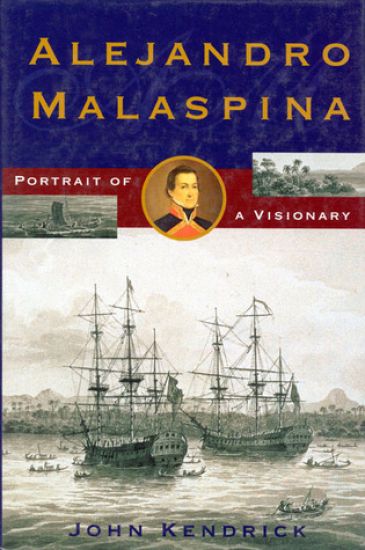
The thirst for knowledge and adventure have always been at the forefront of human imagination. In this engrossing tale, John Kendrick takes us on a voyage across the Pacific via the Philippines, New Zealand, the infant British colony at Sydney Cove, and the Tonga Islands, chronicling the life of Alejandro Malaspina, an eighteenth-century Italian navigator in the service of Spain.Malaspina arrived in Spain with a scientific background and an ardent interest in the philosophy of the Enlightenment. A skilled navigator, his 1789 Pacific voyage was the last and most important of his career - a five-year scientific and political examination of the Spanish colonies in the Americas and the Philippines. His appraisal of the British colonies at Sydney Cove and Tonga allowed him to compare life in a place almost untouched by European contact with the situation in the colonies. Malaspina eventually returned to Spain, where he was received by King Charles IV and commissioned to produce a work covering all aspects of his studies that would establish Spain's reputation as a modern enlightened state.Malaspina advised the king that this could be achieved only if all the present ministers were dismissed and replaced with a slate of Malaspina's choosing who would back his visionary ideas. This seemingly naive proposal resulted in a unanimous vote by the council that his plan was false, seditious, and injurious to the sovereignty of Their Majesties and a sentence of ten years imprisonment in the fortress of San Anton. At Napoleon's urging he was released after eight years and exiled to Italy. He died there in 1810, just as the revolts in the Americas were starting, as he had predicted. Using Malaspina's writings, including the journal of his great voyage and his personal letters, John Kendrick makes the life of this extraordinary man available for the first time in English.
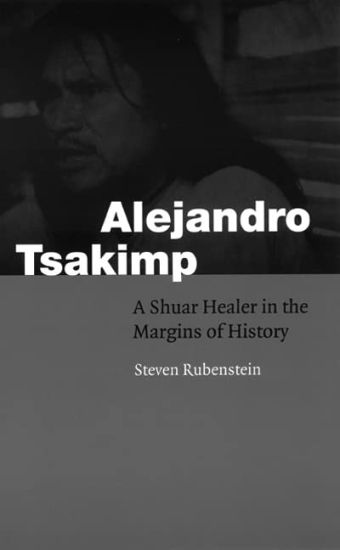
In the heavily forested foothills of the Andes Mountains in Ecuador, a Shuar healer named Alejandro Tsakimp leads many lives. He is a peasant who sells cattle and lumber, a troubled member of the Shuar Federation, a son and brother, husband and father, student and worker, and a shaman. Being a Shuar today-and especially a healer-is both a burden and a resource, and Tsakimp must constantly negotiate varying relations of power, such as with the better educated and richer officials of the Shuar Federation, his patients, siblings, and rival shamans. The power to cure is also the power to kill, so shamans like Tsakimp are frequently in danger from accusations of witchcraft. In his own words, Alejandro Tsakimp tells of his lives and relationships, the practice of shamanism, and the many challenges and triumphs he has encountered since childhood. Born during a time when the Shuars were recovering from a devastating intertribal conflict over the trading of shrunken heads, Tsakimp was first exposed to healing practices when he was cured in the womb by a shaman. Later he actively pursued this knowledge in the hopes of curing his father-another shaman-who was ill from witchcraft. His father's death in 1990 created conflict among his heirs, who were the first generation of Shuars to inherit property. Tsakimp's family fiercely competed for the property and eventually accused each other of witchcraft and parricide. Anthropologist Steven Rubenstein, who began working with Tsakimp in 1989, provides essential background information and has skillfully edited Tsakimp's story. This book is notable for its revealing look at the relationship between anthropologist and shaman, for its insightful glimpse into the complicated lives of South American healers today, and for its compelling collection of stories told by Tsakimp. Steven L. Rubenstein is an associate professor of anthropology at Ohio University. He is the author of The Huaorani.

In the heavily forested foothills of the Andes Mountains in Ecuador, a Shuar healer named Alejandro Tsakimp leads many lives. He is a peasant who sells cattle and lumber, a member of the Shuar Federation, a son and a brother, a husband and a father, a student and a worker, and, finally, a troubled shaman. Being a healer has long been both a burden and a resource, for the power to cure is also the power to kill, and shamans like Tsakimp are frequently in danger from accusations of witchcraft. But the situation of the Shuar today is especially perilous, and Tsakimp must constantly negotiate relations of power not only with rival shamans and his patients, but with the better-educated and richer officials of the Shuar Federation and his own siblings as well. In his own words, Alejandro Tsakimp tells of his lives and relationships, the practice of shamanism, and the many challenges and triumphs he has encountered since childhood. He was born at the time when Shuar were first confronting the impact of Ecuadorian colonialism, which had triggered devastating intertribal conflict over the production and trade of shrunken heads and intratribal feuding fueled by accusations of witchcraft. Tsakimp was first exposed to healing practices when he was cured in the womb by a shaman. Later he actively pursued this knowledge in the hopes of curing his father, another shaman, who was ill from witchcraft. His father's death in 1990 created conflict among his heirs, who were the first generation of Shuar to inherit property. Tsakimp's family fiercely competed for the property and eventually accused one another of witchcraft and parricide.Anthropologist Steven Rubenstein, who began working with Tsakimp in 1989, has skillfully edited Tsakimp's stories and provides essential background information. Ruben-stein argues that although these stories reveal tensions between individual and collective autonomy on the colonial frontier, they also resist simplistic dichotomies such as state versus indigene and modern versus traditional.Alejandro Tsakimp provides a revealing look at the relationship between anthropologist and shaman and an insightful glimpse into the complicated lives of South American Indians today.
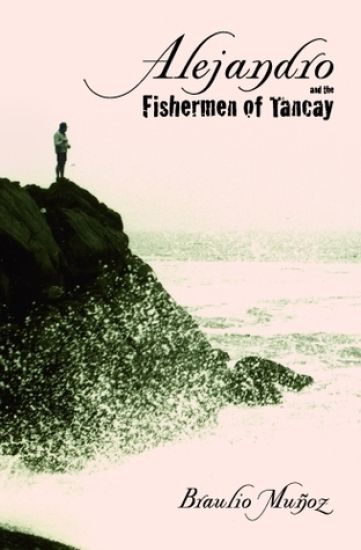
Don Morales tells stories. He tells lots of stories. About Chimbote, the Peruvian town where he lives. About fishing, the lifeblood of the town. And about change, which is not always the same as progress. Stories about the first people to inhabit the region and stories about the people who live there now. Stories about the early people's love of the land and more recent people's destruction of it. Stories about how people used to get along with one another and stories about how things got to be so bad that the government began to murder its own citizens. Don Morales is a wise man. But he is also a sad man, mourning the loss of the past, of better times, of brotherhood. With his short, evocative stories told with simplicity and beauty?he pulls his readers closer to him, as if he were speaking directly to us. For the good fishermen of Tancay, life was better yesterday than it is today. It was better to live in harmony with the sea. When they lived in harmony with the natural world, there was harmony in the human world, too. With a nostalgic feel, yet reflecting Peru's current political instability, this is a delightful book with an important message. When the natural order is disrupted, it is not only fish that die. When nature dies, so might we all.
Alejandro Cesarco: Song
Alejandro Cesarco
Renaissance Society at the University of Chicago
2019
sidottu
Alejandro Cesarco: Song, published on the occasion of the exhibition of the same name at the Renaissance Society, brings together both new commissions and existing works. In the exhibition, Cesarco creates rhythm by incorporating silences and withholdings. The works form an installation drawing on the poetics of duration, refusal, repetition, and affective forms. This presentation, as in the artist’s broader practice, represents a sustained investigation into time, memory, and how meaning is perceived. Centering on two related video works, the exhibition engaged deeply with histories of conceptual art. This catalog features an introduction by Solveig Øvstebø, a conversation between Alejandro Cesarco and Lynne Tillman, an essay by Julie Ault, and new short fiction by Wayne Koestenbaum in response to the exhibition.

She was just looking for her sister. He was looking for a way out. Together, they found danger, desire-and a deadly secret worth killing for. US Marshal Alejandro Santiago is deep undercover and dangerously close to losing himself to the violent world he's infiltrated. Just when he's ready to walk away, a beautiful, fierce woman storms into his investigation-and into his heart.Audrey Hughes hasn't seen her sister in years. But when she receives a cryptic letter and finds her sister missing, Audrey drops everything to find answers. She doesn't expect bullets to fly, or to be rescued by a brooding marshal with a haunted past and a body built for sin.Thrust together by circumstance, Alejandro and Audrey must navigate a tangled web of lies, cartel secrets, and sizzling tension. She wants the truth. He wants to protect her. But someone wants them both silenced-forever.

Alejandro's Little Black Book: The Perfect Dating Companion for a Handsome Man Named Alejandro. A secret place for names, phone numbers, and addresse
Wingman Publishing
Independently Published
2019
nidottu
Keep a record of all the girls that catch your eye