Kirjojen hintavertailu. Mukana 11 244 527 kirjaa ja 12 kauppaa.

Kirjahaku

Etsi kirjoja tekijän nimen, kirjan nimen tai ISBN:n perusteella.

1000 tulosta hakusanalla Alessandra Luciano

Frida & Diego's Kitty Cookbook

Frida & Diego's Kitty Cookbook

Alessandra Luciano

33-1/3 Publishing
2019
pokkari
Organic, all natural, non-GMO cookie, biscuit and treat recipes for your cat. We all love our pets and want to make sure they have a long, safe and healthy life with us. We can begin by making sure they have the best possible cre and pay attention to their nutiritional needs. Making homemade, certified organic, all natural and non-GMO snacks for your cat(s) is a fun way to show them how much you care.By following these simple recipes, and shopping for ingredients carefully, you will know exactly what your pet is eating
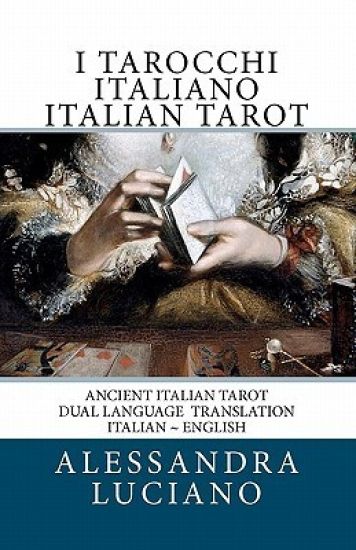
I Tarocchi Italiano - Italian Tarot

I Tarocchi Italiano - Italian Tarot

Alessandra Luciano

33-1/3 Publishing
2019
sidottu
This dual language reference book provides an accurate translation and depiction of ancient Italian tarot text. Both English and Italian provided. Learn from the masters.It offers a culmination of current day interpretations, white card meanings, ancient myth and legend, folklore and practices in an easy to read format.The translation is an invaluable tool for all levels of cartorgraphers, from beginners to advance readers, historians and collectors.Tarot is considdered both an art and a science by Tarot readers, mstics, historians, astrologers, members of the clergy and spiritual leaders alike.
Viking Cook Book

Viking Cook Book

Alessandra Luciano

33-1/3 Publishing
2019
pokkari
This Viking Cookbook is for the guys in your life who refuse to learn how to cook, and then through some level of desperation, they are left standing there saying, "okay, maybe I am hungry. What do I do?" They can only eat box food for so long. This little gem was created for my brother and anyone out there who has brother in their life in need of some basic help in the kitchen. These quick and easy recipes will be just what they need to fill in the gaps for when you or mother stops by with a pot of something special.
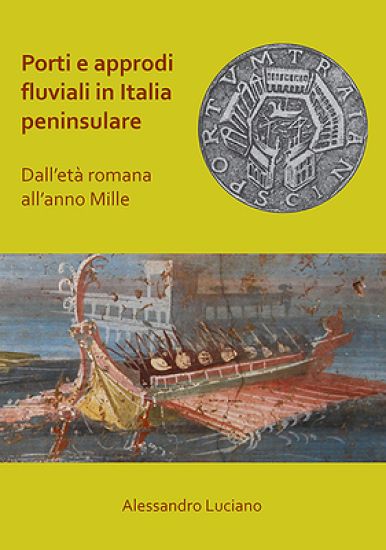
Porti e approdi fluviali in Italia peninsulare: dall’età romana all’anno mille
In the Imperial Age, many ports in Italy had been built in opus coementicium. The most important ones were in Latium (eg. Portus Romae, Antium and Centumcellae), in the Phlegrean Fields (portus Iulius, Misenum, Puteoli and Baiae) and along the northern-Adriatic coast (Classis-Ravenna, Aquileia and Altino). The military fleets of Augustus, in particular, were quartered in the ports of Classis and Misenum. Most Roman ports were located at river mouths and/or in lagoon areas and were connected with inland areas by rivers or artificial canals. For this reason, port structures (piers and warehouses) were set at some distance from the sea, as in Rome (Emporium of Testaccio along the Tiber), in Pisa-San Rossore and in the Po valley. In Late Antiquity many of the Roman ports gradually fell into disuse while others continued until the 7th century. In Ravenna, however, a new port settlement, known as Civitas Classis, came into being in the 5th century, after the creation of the suburb of Portus Romae. In the Early Middle Ages, the northern-Adriatic coast became very important in connection with trade with Constantinople. New settlements equipped with timber port structures were created at Comacchio, Cittanova and in the Venetian lagoon. If maritime trade in the Tyrrhenian Sea decreased (although to a lesser extent in Byzantine towns like Naples), river-borne traade was still dynamic and often managed by abbeys and other ecclesiastical institutions. According to historical sources, many river wharves were located along the Po while San Vincenzo abbey managed the Volturno river. The Carolingian river wharves of San Vincenzo were composed of timber, stone and, according to the Roman tradition, concrete structures. A slow recovery of maritime trades is already evident in the Carolingian Age. This book analyses the Roman and early medieval ports of Italy and the building techniques used in their structures; it displays the elements of continuity and discontinuity revealed during these centuries.
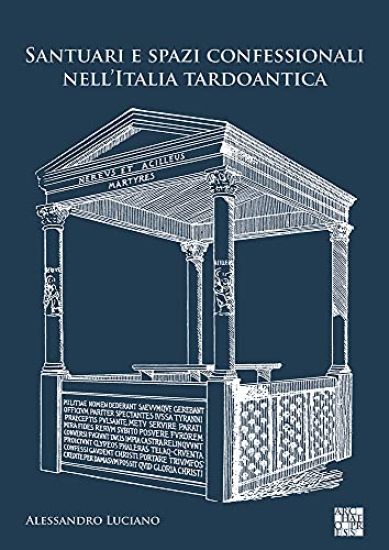
Santuari e spazi confessionali nell’Italia tardoantica
The cult of relics, encouraged by, among others, the emperor Constantine, Pope Damasus and the bishops Ambrose of Milan and Paulinus of Nola, led to the transformation of the Late Antique Italian landscape, and of suburban areas in particular. The process of gradual enhancement of the martyrs' tombs led to the creation of extensive sanctuaries, generally composed of funerary and cultic buildings, as well as service structures, pilgrims' lodgings and monasteries. The most important sanctuaries, such as those of Saints Peter in the Vatican, Paul on the Ostiense, Erasmus in Formia, Alexander in Nomentum, Felix in Cimitile, Gennaro in Naples, Felix in Venosa, Marcianus in Syracuse, and the Apostles in Concordia Sagittaria, became so popular that they justified Jerome's phrase: movetur urbs sedibus suis et currit ad martyrum tumulos. Between the 5th and 6th century, sanctuaries spread also in rural areas, usually along important roads, as documented by the site of San Canzian d'Isonzo. Analysing hypogeal and subdial contexts, Santuari e spazi confessionali nell’Italia tardoantica outlines the evolution of loca sancta, in a process that led the venerated tombs to become first memoriae, then places of worship and finally articulated sanctuaries. For the first time, the contexts of Rome are organically compared with those of the rest of Italy.
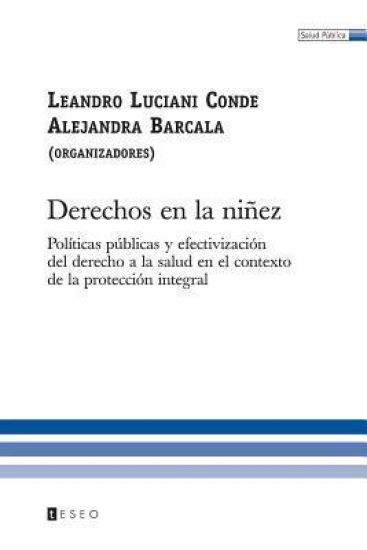
Derechos En La Niñez: Políticas Públicas Y Efectivización Del Derecho A La Salud En El Contexto De La Protección Integral
El libro aborda en primera instancia los niveles macro contextual y de meta procesos de la problem tica relacionada con la Protecci n Integral y las Pol ticas P blicas de Ni ez, desarrollando el marco conceptual de la investigaci n que se presenta: pol ticas p blico sociales de ni ez / adolescencia; pol ticas de salud / salud mental; problem tica del trabajo infantil y situaci n de calle. Posteriormente se enfoca el nivel de los procesos b sicos, a trav s de la presentaci n de los resultados alcanzados sobre el proceso de vulneraci n de derechos, particularmente el derecho a la salud en la ni ez en situaci n de calle.