Kirjojen hintavertailu. Mukana 11 244 527 kirjaa ja 12 kauppaa.

Kirjahaku

Etsi kirjoja tekijän nimen, kirjan nimen tai ISBN:n perusteella.

1000 tulosta hakusanalla Alessandro Roncaglia

Piero Sraffa

Piero Sraffa

Alessandro Roncaglia

Routledge
2000
sidottu
This is a lively, intellectual biography of a leading protagonist of 20th century culture and his relations with other protagonists, such as Gramsci, Keynes and Wittgenstein. The book includes an authoritative interpretation of his main work Production of Commodities by Means of Commodities, a survey of the debates which followed its publication, and hence of the subsequent research strategies undertaken by different 'Sraffian schools'
The Wealth of Ideas

The Wealth of Ideas

Alessandro Roncaglia

Cambridge University Press
2006
pokkari
The Wealth of Ideas, first published in 2005, traces the history of economic thought, from its prehistory (the Bible, Classical antiquity) to the present day. In this eloquently written, scientifically rigorous and well documented book, chapters on William Petty, Adam Smith, David Ricardo, Karl Marx, William Stanley Jevons, Carl Menger, Léon Walras, Alfred Marshall, John Maynard Keynes, Joseph Schumpeter and Piero Sraffa alternate with chapters on other important figures and on debates of the period. Economic thought is seen as developing between two opposite poles: a subjective one, based on the ideas of scarcity and utility, and an objective one based on the notions of physical costs and surplus. Professor Roncaglia focuses on the different views of the economy and society and on their evolution over time and critically evaluates the foundations of the scarcity-utility approach in comparison with the Classical/Keynesian approach.
Why the Economists Got It Wrong

Why the Economists Got It Wrong

Alessandro Roncaglia

Anthem Press
2010
nidottu
‘Why the Economists Got It Wrong’ illustrates the origins and development of the financial crisis, tracing its cultural origins in mainstream views which favoured financial liberalization policies. These views are contrasted with those of Keynes and Keynesian economists such as Minsky, pointing to an interpretation of economic events where uncertainty plays a central role and economic policy is aimed at building institutional and regulatory structures in order to counter financial fragility.
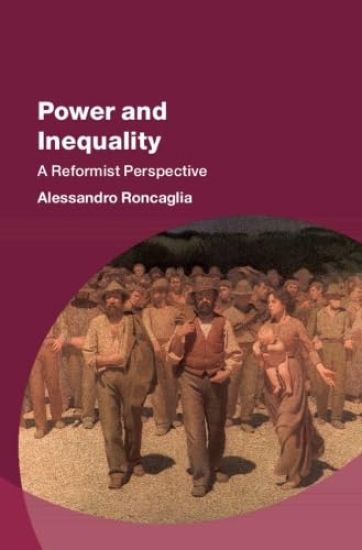
Power and Inequality

Power and Inequality

Alessandro Roncaglia

Cambridge University Press
2024
pokkari
Power is a broad and complex concept that cuts across all fields in humanities and social sciences. Written by a leading historian of economic thought, Power and Inequality presents a wide-ranging and multi-disciplinary analysis of power as an economic and social issue. Its aim is not to formulate a new abstract theory of power but rather to illustrate the different ways in which power is used to exacerbate social and economic inequality. Issues such as division of labour and its evolution, different forms of capitalism up to the money-manager economy, the role of networks (from the family to mason lodges and the mafia), the state and the international arena, culture and the role of the masses are considered. The analysis of these elements, causing inequalities of various kinds, is a prerequisite for devising progressive policy strategies aiming at a reduction of inequalities through a strategy of reforms.
Power and Inequality

Power and Inequality

Alessandro Roncaglia

Cambridge University Press
2024
sidottu
Power is a broad and complex concept that cuts across all fields in humanities and social sciences. Written by a leading historian of economic thought, Power and Inequality presents a wide-ranging and multi-disciplinary analysis of power as an economic and social issue. Its aim is not to formulate a new abstract theory of power but rather to illustrate the different ways in which power is used to exacerbate social and economic inequality. Issues such as division of labour and its evolution, different forms of capitalism up to the money-manager economy, the role of networks (from the family to mason lodges and the mafia), the state and the international arena, culture and the role of the masses are considered. The analysis of these elements, causing inequalities of various kinds, is a prerequisite for devising progressive policy strategies aiming at a reduction of inequalities through a strategy of reforms.
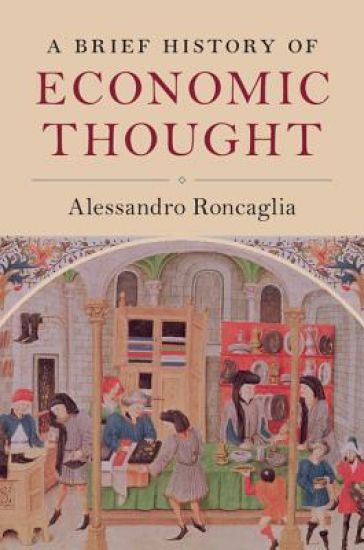
A Brief History of Economic Thought

A Brief History of Economic Thought

Alessandro Roncaglia

Cambridge University Press
2017
sidottu
The evolution of economic thought can be traced back from its beginnings in classical antiquity up to the present day. In this book, Professor Alessandro Roncaglia offers a clear, concise and updated version of his award-winning The Wealth of Ideas, studying the development of economic thought through perspectives and debates on the economy and society over time. With chapters on prominent economic theorists, including William Petty, Karl Marx, and John Maynard Keynes, as well as on other important figures and key debates of each period, Roncaglia critically evaluates the foundations of the marginalist–neoclassical (scarcity–utility) approach in comparison to the Classical–Keynes approach. A comprehensive guide to the history of economic thought, this book will be of value not only to undergraduate and postgraduate students studying economic thought, but also to any readers desiring to study how economics has evolved up to the present day.
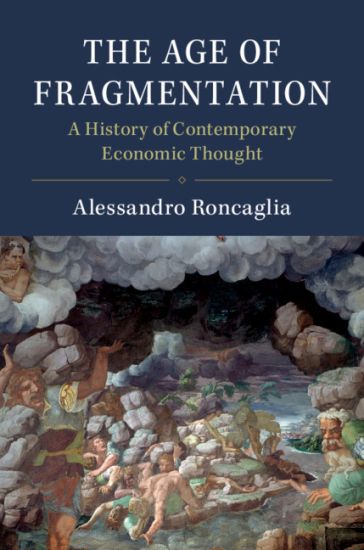
The Age of Fragmentation

The Age of Fragmentation

Alessandro Roncaglia

Cambridge University Press
2019
sidottu
The field of economics has proliferated in complexity and importance since the Second World War. Alessandro Roncaglia recounts the history of the different approaches (marginalist, neoclassical, Keynesian, Austrian, monetarism, rational expectations, institutionalist, evolutionary, classical-Sraffian) and the different fields (micro, macro, money and finance, industrial and game theory, institutions, public finance, econometrics), illustrating the thought and personality of the most important contemporary economists (from Hayek to Sraffa, from Modigliani and Samuelson to Friedman, from Simon to Sen, and many others), focusing on the conceptual foundations of the different streams. At the same time he appraises critically the important debates and controversies in the field and concludes by discussing possible future directions for economic thought. This follow-up to The Wealth of Ideas: A History of Contemporary Economic Thought is a readable introduction to the contemporary economics discourse, accessible to economics students and informed general readers, and an important complement for advanced students and economists active in specialized fields.
The Age of Fragmentation

The Age of Fragmentation

Alessandro Roncaglia

Cambridge University Press
2019
pokkari
The field of economics has proliferated in complexity and importance since the Second World War. Alessandro Roncaglia recounts the history of the different approaches (marginalist, neoclassical, Keynesian, Austrian, monetarism, rational expectations, institutionalist, evolutionary, classical-Sraffian) and the different fields (micro, macro, money and finance, industrial and game theory, institutions, public finance, econometrics), illustrating the thought and personality of the most important contemporary economists (from Hayek to Sraffa, from Modigliani and Samuelson to Friedman, from Simon to Sen, and many others), focusing on the conceptual foundations of the different streams. At the same time he appraises critically the important debates and controversies in the field and concludes by discussing possible future directions for economic thought. This follow-up to The Wealth of Ideas: A History of Contemporary Economic Thought is a readable introduction to the contemporary economics discourse, accessible to economics students and informed general readers, and an important complement for advanced students and economists active in specialized fields.
Piero Sraffa

Piero Sraffa

Alessandro Roncaglia

Routledge
2014
nidottu
This is a lively, intellectual biography of a leading protagonist of 20th century culture and his relations with other protagonists, such as Gramsci, Keynes and Wittgenstein. The book includes an authoritative interpretation of his main work Production of Commodities by Means of Commodities, a survey of the debates which followed its publication, and hence of the subsequent research strategies undertaken by different 'Sraffian schools'
A Brief History of Economic Thought

A Brief History of Economic Thought

Alessandro Roncaglia

Cambridge University Press
2017
pokkari
The evolution of economic thought can be traced back from its beginnings in classical antiquity up to the present day. In this book, Professor Alessandro Roncaglia offers a clear, concise and updated version of his award-winning The Wealth of Ideas, studying the development of economic thought through perspectives and debates on the economy and society over time. With chapters on prominent economic theorists, including William Petty, Karl Marx, and John Maynard Keynes, as well as on other important figures and key debates of each period, Roncaglia critically evaluates the foundations of the marginalist–neoclassical (scarcity–utility) approach in comparison to the Classical–Keynes approach. A comprehensive guide to the history of economic thought, this book will be of value not only to undergraduate and postgraduate students studying economic thought, but also to any readers desiring to study how economics has evolved up to the present day.
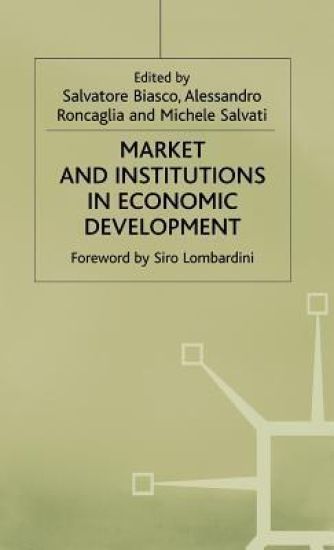
Market and Institutions in Economic Development

Market and Institutions in Economic Development

Alessandro Roncaglia; Salvatore Biasco

Palgrave Macmillan
1992
sidottu
This collection of essays is a contribution to an understanding of the research themes to which Sylos Labini dedicated attention: the themes of an economic science interpreted as political economy in the Classical tradition, i.e. as a logically rigorous but not purely technical effort to understand the world in which we live, as the basis for acting in it in the pursuit of common welfare.
Barriers to Full Employment

Barriers to Full Employment

J. A. Kregel; Alessandro Roncaglia; Egon Matzner

Palgrave Macmillan
1988
sidottu
In the mid-1980s the world's industrialised economies entered their second decade of stagnant growth and mass unemployment paralleled only by the Great Slump. Neo-conservative policies, which replaced traditional Keynesian remedies, have been no more successful in halting the inexorable increase in unemployment: the stigma of failure to deal with unemployment has touched governments of all political extractions from Conservative to Liberal to Social-Democratic. New perspectives on the unemployment problem are needed and this book provides them.
Barriers to Full Employment

Barriers to Full Employment

J. A. Kregel; Alessandro Roncaglia; Egon Matzner

Palgrave Macmillan
1988
nidottu
In the mid-1980s the world's industrialised economies entered their second decade of stagnant growth and mass unemployment paralleled only by the Great Slump. Neo-conservative policies, which replaced traditional Keynesian remedies, have been no more successful in halting the inexorable increase in unemployment: the stigma of failure to deal with unemployment has touched governments of all political extractions from Conservative to Liberal to Social-Democratic. New perspectives on the unemployment problem are needed and this book provides them.
Alessandro Manzoni LA RIVOLUZIONE FRANCESE
La Rivoluzione francese del 1789 e la Rivoluzione italiana del 1859, saggio comparativo di Alessandro Manzoni: e il titolo originale di quest'opera del grande scrittore italiano, edita postuma e non rivista dall'autore. La mancata diffusione e conoscenza di questo studio dipendono certamente, oltre che dal suo essere incompleto, dal contenuto esplicitamente avverso alla Rivoluzione francese e ai cambiamenti che essa ha portato nella Storia. Episodi chiave, come quello della presa della Bastiglia, vengono correttamente ridimensionati e demitizzati dall'acuta analisi di Manzoni, maestro nell'applicare il metodo scientifico all'indagine storica, e lucido osservatore della presunzione e della fragilita umana. La nuova edizione, che riporta in appendice sia la Dichiarazione d'indipendenza degli Stati Uniti d'America sia la Dichiarazione dei Diritti dell'Uomo e del Cittadino, si e arricchita di numerose note esplicative, per meglio conoscere personaggi, luoghi e vicende citate da Manzoni.