

Kirjahaku
Etsi kirjoja tekijän nimen, kirjan nimen tai ISBN:n perusteella.
1000 tulosta hakusanalla Alexa von Heyden

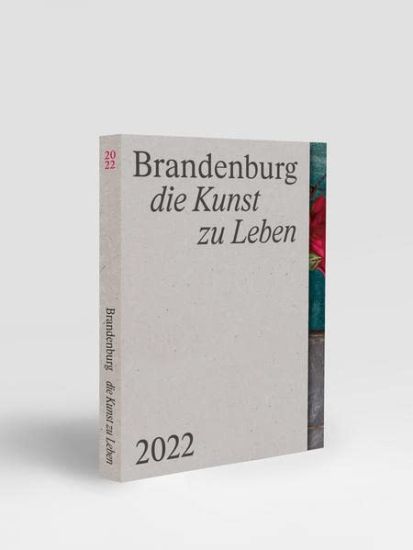
Brandenburg - die Kunst zu Leben
Alexa von Heyden; Karosh Taha; Martin Ahrends
Shift Books
2022
nidottu
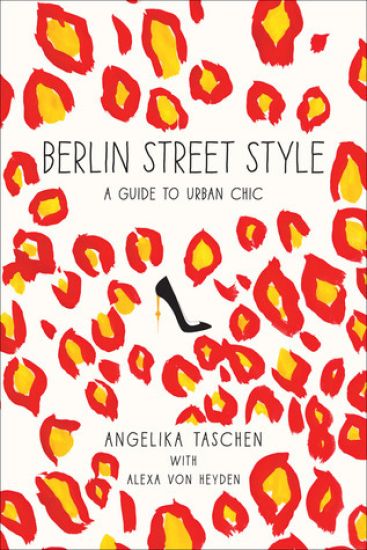
In Berlin Street Style, noted design expert Angelika Taschen explains the unique style of this hip city. Where Parisians may covet a Hermès bag, a Chanel little black dress or chic ballet flats, Berliners don military parkas, sneakers and jeans. The look is casual, edgy, accessible, eclectic and a little rock and roll. The book shows the popular “anti-chic” look seen throughout the city, offering advice on how to achieve the appealingly disheveled Berlin look with vintage pieces, stylish basics and carefully selected accessories. With street style photography and hand-drawn illustrations, this accessible style guide explores how Berlin women dress and where they find their fashion inspiration, highlighting trendsetting blogs and local labels. Taschen also recommends the top destinations for fashion, beauty, design and culture in the city. She has curated a list that includes the most popular places, as well as hidden and up-and-coming spots around the city.
Ein Hausnotruf als Skill für Alexa von Amazon. Konzeptionierung und Implementierung
Nina Rosenmeier
GRIN Verlag
2019
nidottu

After a humiliating defeat in the Crimean War, the Russian Empire struggled to reassert its position as a global power. A small noble family returned from the siege of Sevastopol and joined the rulers' efforts to advance Russian standing in the decades until 1917. Intimate Empire tells the story of the Mansurovs, who were known to nineteenth-century observers as resourceful imperial agents and staunch supporters of Orthodoxy. In close interplay with scholarship and the media, they built churches and pilgrim hostels to increase Russian dominance within its borders and in the Ottoman Empire. Some of the family's achievements stand to this day: the Russian complex in Jerusalem and an impressive Orthodox Convent in Riga. When the Revolution came, they faced stigmatization as former nobles, believers, and monarchists. Impoverishment and arrests became part of their daily lives in Soviet Russia. Intimate Empire is a study of the momentous role played by elite families in Russia's international involvement in the age of empire. It shows how three generations of a mobile noble family advanced the intertwined causes of the Russian Empire and Orthodoxy, using family resources and tools of intimacy. Women were crucial for the family's efforts, both behind the scenes and in public. It is the first monograph to examine the interplay between family and empire building in Russian history-a topic that has proven extraordinarily prolific for British imperial history yet remains virtually unexplored for the Russian case. Russia, Orthodoxy, and noble family life emerge as part of the European trans-imperial scene.
Was kann die Logopädie zur Ausspracheschulung im Deutsch als Fremdsprache (DaF) Unterricht beitragen?
Alexa von Lenthe
GRIN Verlag
2017
nidottu
Lehrwerkanalyse zu "Schritte Plus Neu - Deutsch als Zweitsprache für Alltag und Beruf". Inhalte, Texte und Sprache sowie methodisch-didaktische Aspekte
Alexa von Lenthe; Ariane Sophie Heinen; Beheschta Bayani
GRIN Verlag
2017
nidottu

About this book: European SPCs Unravelled provides an easily accessible overview of SPC law in Europe through a practice-oriented approach. While SPCs are governed by the same substantive rules in all Member States of the European Union and the European Economic Area, they are national IP rights. The formal requirements and procedural practices of the national patent offices granting SPCs still differ significantly, and these divergences can have a substantial impact in the prosecution of SPCs across Europe. This book covers all substantive and procedural aspects of prosecution, enforcement, and invalidation, as well as SPC-related aspects of unfair competition law across European jurisdictions. What's in this book: Following an overarching European chapter, which addresses general considerations and the relevant European Union law, including the jurisprudence of the Court of Justice (CJEU) and the EFTA Court, this book contains separate national chapters for eleven key jurisdictions - i.e., Germany, the United Kingdom, France, the Netherlands, Belgium, Italy, Spain, Portugal, Sweden, Iceland, and Switzerland, as well as a concluding chapter summarizing the fundamentals of SPC law and practice in sixteen further European countries. The contributors to this book, all experts in the field of SPCs in their respective jurisdictions, provide clear and hands-on guidance on a range of specific topics of practical and strategic relevance, including: What is or is not an 'active ingredient' amenable to SPC protection? What is required for an active ingredient to be 'protected' by a basic patent? What relevance has the 'core inventive advance' of the basic patent? Can SPCs be obtained for 'loose' combinations of separately formulated active ingredients? Which basic patent should be chosen for an SPC filing? Which types of marketing authorizations can be relied upon? Under which conditions can SPCs be obtained for a new specific salt, ester, or other derivative of a previously approved active ingredient, for a new specific enantiomer of a previously approved racemate, and for new therapeutic applications of previously approved active ingredients? Can affiliated companies obtain several SPCs for the same product? Does the revocation of an SPC enable the filing of a new SPC for the same product? What are the limits to the filing of 'unfriendly' SPCs based on third-party marketing authorizations? What relevance does the product definition of an SPC have for its scope of protection? What is the scope of protection of an SPC in relation to derivatives of an active ingredient? How is the SPC term calculated, and how can an erroneous term be corrected? How can SPCs and paediatric extensions be invalidated and which grounds of invalidity can be invoked? What pitfalls must be avoided in terms of unfair competition law? How this will help you: As the chapters are structured from the perspective of practitioners, this book provides answers to the frequently raised problems concerning SPCs. This approach distinguishes this book from other commentaries and thereby serves as invaluable assistance to IP practitioners in devising successful pan-European SPC filing strategies. Its country-by-country format makes it easy to compare the national practices and the respective national case law of the different European countries.

Kommunikation und Beziehungsgestaltung in der Physiotherapie
Alexa von Bosse
Springer-Verlag Berlin and Heidelberg GmbH Co. KG
2026
nidottu

Rebel Girls - das Original. Growing up powerful: Alles über Geld
Alexa von Tobel
Dorling Kindersley Verlag
2025
nidottu

Die 444 besten Easter Eggs von Alexa: Lustigste und tiefsinnige Antworten des Sprachassistenten - Humor aus der Cloud
Wilfred Lindo
Independently Published
2017
nidottu
Liebe und Sexualität in Adoleszenzromanen von Bov Bjerg, Alexa Hennig von Lange und Benjamin Lebert
Anonym
GRIN Verlag
2019
nidottu

Blass, F: Griechische Beredsamkeit In Dem Zeitraum Von Alexa
Friedrich Blass
KESSINGER PUBLISHING, LLC
2010
nidottu

Die jüdische Identität in Deutschland. "Oma & Bella" von Alexa Karolinski als Veranschaulichung
Jelena Vujicic
GRIN Verlag
2021
nidottu

Amazon Echo Handbuch: Amazon Echo für Anfänger. Alle wichtigen Funktionen von Alexa einfach und übersichtlich erklärt.
Felix Gerens
Createspace Independent Publishing Platform
2017
nidottu
Affective Ecologies: Empathy, Emotion, and Environmental Narrative explores our emotional engagement with environmental narrative. Focusing on the American cultural context, Alexa Weik von Mossner develops an ecocritical approach that draws on the insights of affective science and cognitive narratology. This approach helps to clarify how we interact with environmental narratives in ways that are both biologically universal and culturally specific. In doing so, it pays particular attention to the thesis that our minds are both embodied (in a physical body) and embedded (in a physical environment), not only when we interact with the real world but also in our engagement with imaginary worlds. How do we experience the virtual environments we encounter in literature and film on the sensory and emotional level? How do environmental narratives invite us to care for human and nonhuman others who are put at risk? And how do we feel about the speculative futures presented to us in ecotopian and ecodystopian texts? Weik von Mossner explores these central questions that are important to anyone with an interest in the emotional appeal and persuasive power of environmental narratives.
Affective Ecologies: Empathy, Emotion, and Environmental Narrative explores our emotional engagement with environmental narrative. Focusing on the American cultural context, Alexa Weik von Mossner develops an ecocritical approach that draws on the insights of affective science and cognitive narratology. This approach helps to clarify how we interact with environmental narratives in ways that are both biologically universal and culturally specific. In doing so, it pays particular attention to the thesis that our minds are both embodied (in a physical body) and embedded (in a physical environment), not only when we interact with the real world but also in our engagement with imaginary worlds. How do we experience the virtual environments we encounter in literature and film on the sensory and emotional level? How do environmental narratives invite us to care for human and nonhuman others who are put at risk? And how do we feel about the speculative futures presented to us in ecotopian and ecodystopian texts? Weik von Mossner explores these central questions that are important to anyone with an interest in the emotional appeal and persuasive power of environmental narratives.
Growing Hope takes a closer look at how such narratives can carry the promise of a better future in the face of grim realities. It brings together two kinds of narratives that are rarely considered in conjunction: stories about urban community gardening and stories about vegan food justice. It shows that there is much common ground between these movements and that the stories told by them are worth exploring as part of a larger narrative about creating a better and more equitable future. In the United States, this is especially true for the stories told by and about people of color and their historically marginalized communities. Employing an econarratological approach informed by critical food studies, environmental justice ecocriticism, and transmedia studies, Growing Hope explores a selection of narratives about people who fight against food injustice and the ideologies sustaining it: stories about defiant gardening and culinary self-empowerment.