Kirjahaku
Etsi kirjoja tekijän nimen, kirjan nimen tai ISBN:n perusteella.
1000 tulosta hakusanalla Alexander Betts
Very Short Introductions: Brilliant, Sharp, Inspiring Social science is the study of human behaviour. It offers the tools to understand and explain people's choices and actions, and how they live together in communities. With insights from social science, organisations and individuals may be persuaded to change their behaviour, making a difference in addressing societal challenges, from climate change to fighting pandemics and alleviating poverty. Social science can offer us the answers to key questions, such as why do some people gamble, eat unhealthy foods, or hold racist beliefs? How do families allocate household tasks, raise children effectively, or manage grief? How do companies weigh profit against environment sustainability, decide to invest in innovation, or adopt policies to address unequal pay between women and men? Why do countries sign international treaties, commit human rights atrocities, or transition from authoritarianism to democracy? Taking an interdisciplinary approach, this Very Short Introduction offers an accessible overview of social science, explaining how methods and theory from different disciplines can be applied and combined to address major global challenges. It aims to equip students, scholars, and practitioners to analyse, interpret, and undertake social science research. Drawing upon inspiring examples, it shows how social scientists can have real-world impact and change the world for the better. It unpacks cutting-edge themes such as behavioural science, human data science, and the ways in which social science can work collaboratively with the natural sciences and humanities. It offers a vision for the future of social science that is interdisciplinary, inclusive, and impactful. ABOUT THE SERIES: The Very Short Introductions series from Oxford University Press contains hundreds of titles in almost every subject area. These pocket-sized books are the perfect way to get ahead in a new subject quickly. Our expert authors combine facts, analysis, perspective, new ideas, and enthusiasm to make interesting and challenging topics highly readable.
We live in an age of displacement. Refugee numbers are increasing due to a proliferation of fragile states, and this problem will be exacerbated by climate change and the impact of COVID-19. And yet, rising populist nationalism has undermined the political willingness of rich countries to accept migrants and asylum seekers. Given these contradictory trends, how can we create sustainable refugee policies that enable displaced people to live in safety and dignity, while operating at scale? The Wealth of Refugees draws upon a decade of original qualitative and quantitative research to offer practical solutions. Focusing on refugees in camps and cities in Africa, it identifies approaches that can be effective in improving the welfare of refugees, increasing social cohesion between refugees and host communities, and reducing the need for onward migration. The book argues that the key lies in unlocking the potential contributions of refugees themselves. Refugees bring skills, talents, and aspirations and can be a benefit rather than a burden to receiving societies. Realizing this potential relies upon moving beyond a purely humanitarian focus to fully include refugees in host-country economies, build economic opportunities in refugee-hosting regions, and navigate the ambiguous politics of refugee protection.
States located near crisis zones are most likely to see an influx of people fleeing from manmade disasters; African states, for instance, are forced to accommodate and adjust to refugees more often than do European states far away from sites of upheaval. Geography dictates that states least able to pay the costs associated with refugees are those most likely to have them cross their borders. Therefore, refugee protection has historically been characterized by a North-South impasse. While Southern states have had to open their borders to refugees fleeing conflict or human rights abuses in neighboring states, Northern states have had little obligation or incentive to contribute to protecting refugees in the South.In recent years, however, the Office of the United Nations High Commissioner for Refugees (UNHCR) has sought to foster greater international cooperation within the global refugee regime through special conferences at which Northern states are pushed to contribute to the costs of protection for refugees in the South. These initiatives, Alexander Betts finds in Protection by Persuasion, can overcome the North-South impasse and lead to significant cooperation.Betts shows that Northern states will contribute to such efforts when they recognize a substantive relationship between refugee protection in the South and their own interests in such issues as security, immigration, and trade. Highlighting the mechanisms through which UNHCR has been able to persuade Northern states that such links exist, Protection by Persuasion makes clear that refugee protection is a global concern, most effectively addressed when geographic realities are overridden by the perception of interdependence.
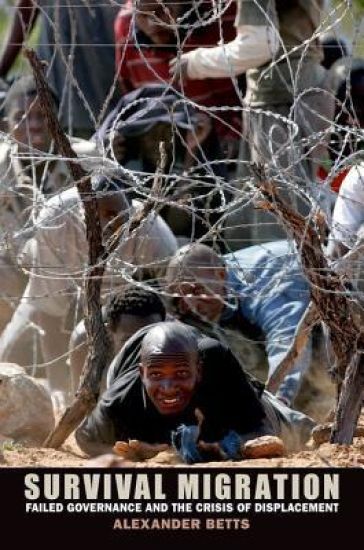
International treaties, conventions, and organizations to protect refugees were established in the aftermath of World War II to protect people escaping targeted persecution by their own governments. However, the nature of cross-border displacement has transformed dramatically since then. Such threats as environmental change, food insecurity, and generalized violence force massive numbers of people to flee states that are unable or unwilling to ensure their basic rights, as do conditions in failed and fragile states that make possible human rights deprivations. Because these reasons do not meet the legal understanding of persecution, the victims of these circumstances are not usually recognized as "refugees," preventing current institutions from ensuring their protection. In this book, Alexander Betts develops the concept of "survival migration" to highlight the crisis in which these people find themselves. Examining flight from three of the most fragile states in Africa—Zimbabwe, the Democratic Republic of Congo, and Somalia—Betts explains variation in institutional responses across the neighboring host states. There is massive inconsistency. Some survival migrants are offered asylum as refugees; others are rounded up, detained, and deported, often in brutal conditions. The inadequacies of the current refugee regime are a disaster for human rights and gravely threaten international security. In Survival Migration, Betts outlines these failings, illustrates the enormous human suffering that results, and argues strongly for an expansion of protected categories.
Using real-world examples and in-depth case studies, Forced Migration and Global Politics systematically applies International Relations theory to explore the international politics of forced migration. Provides an accessible and thought-provoking introduction to the main debates and concepts in international relations and examines their relevance for understanding forced migrationUtilizes a wide-range of real-world examples and in-depth case studies, including the harmonization of EU asylum and immigration policy and the securitization of asylum since 9/11Explores the relevance of cutting-edge debates in international relations to forced migration
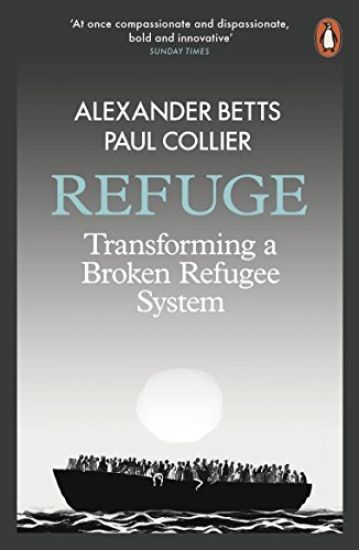
Europe is facing its greatest refugee crisis since the Second World War, yet the institutions responding to it remain virtually unchanged from those created in the post-war era. Going beyond the scenes of desperation which have become all-too-familiar in the past few years, Alexander Betts and Paul Collier show that this crisis offers an opportunity for reform if international policy-makers focus on delivering humane, effective and sustainable outcomes - both for Europe and for countries that border conflict zones. Refugees need more than simply food, tents and blankets, and research demonstrates that they can offer tangible economic benefits to their adopted countries if given the right to work and education. Refuge sets out an alternative vision that can empower refugees to help themselves, contribute to their host societies, and even rebuild their countries of origin.
Refugee Economies
Alexander Betts; Louise Bloom; Josiah Kaplan; Naohiko Omata
Oxford University Press
2016
sidottu
Refugees have rarely been studied by economists. Despite some pioneering research on the economic lives of refugees, there remains a lack of theory and empirical data through which to understand, and build upon, refugees' own engagement with markets. Yet, understanding these economic systems may hold the key to rethinking our entire approach to refugee assistance. If we can improve our knowledge of the resource allocation systems that shape refugees' lives and opportunities, then we may be able to understand the mechanisms through which these market-based systems can be made to work better and turn humanitarian challenges into sustainable opportunities. This book adopts an inter-disciplinary approach, based on original qualitative and quantitative data on the economic life of refugees, in order to begin to build theory on the economic lives of refugees. It focuses on the case of Uganda because it represents a relatively positive case. Unlike other governments in the region, it has taken the positive step to allow refugees the right to work and a significant degree of freedom of movement through it so-called 'Self-Reliance Strategy'. This allows a unique opportunity to explore what is possible when refugees have basic economic freedoms. The book shows that refugees have complex and varied economic lives, often being highly entrepreneurial and connected to the global economy. The implications are simple but profound: far from being an inevitable burden, refugees have the capacity to help themselves and contribute to their host societies - if we let them
The United Nations High Commissioner for Refugees (UNHCR)
Alexander Betts; Gil Loescher; James Milner
Routledge
2011
sidottu
This revised and expanded second edition of The United Nations High Commissioner for Refugees (UNHCR) continues to offer a concise and comprehensive introduction to both the world of refugees and the organizations that protect and assist them. This updated edition also includes:up to date coverage of the UNHCR’s most recent history and policy developmentsevaluation of new thinking on issues such as working in UN integrated operations and within the UN peacebuilding commission assessment of the UNHCR’s record of working for IDP’s (internally displaced persons) discussion of the politics of protection and its implications for the work of the UNHCRoutline of the new challenges for the agency including environmental refugees, victims of natural disasters and survival migrants.Written by experts in the field, this is one of the very few books to trace the relationship between state interests, global politics, and the work of the UNHCR. This book will appeal to students, scholars, practitioners, and readers with an interest in international relations.
The United Nations High Commissioner for Refugees (UNHCR)
Alexander Betts; Gil Loescher; James Milner
Routledge
2011
nidottu
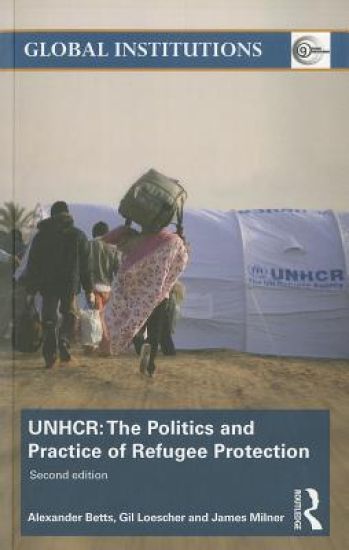
This revised and expanded second edition of The United Nations High Commissioner for Refugees (UNHCR) continues to offer a concise and comprehensive introduction to both the world of refugees and the organizations that protect and assist them. This updated edition also includes:up to date coverage of the UNHCR’s most recent history and policy developmentsevaluation of new thinking on issues such as working in UN integrated operations and within the UN peacebuilding commission assessment of the UNHCR’s record of working for IDP’s (internally displaced persons) discussion of the politics of protection and its implications for the work of the UNHCRoutline of the new challenges for the agency including environmental refugees, victims of natural disasters and survival migrants.Written by experts in the field, this is one of the very few books to trace the relationship between state interests, global politics, and the work of the UNHCR. This book will appeal to students, scholars, practitioners, and readers with an interest in international relations.
Over half the world lives under authoritarian regimes. For these people, the opportunity to engage in politics moves outside the state's territory. Mobilising across borders, diasporas emerge to challenge such governments. This book offers an in-depth examination of the internal politics of transnational mobilisation. Studying Rwandan and Zimbabwean exiles, it exposes the power, interests, and unexpected agendas behind mobilisation, revealing the surprising and ambivalent role played by outsiders. Far from being passive victims waiting for humanitarian assistance, refugees engage actively in political struggle. From Rwandans resisting their repatriation, to Zimbabweans preventing arms shipments, political exiles have diverse aims and tactics. Conversely, the governments they face also deploy a range of transnational strategies, and those that purport to help them often do so with hidden agendas. This shifting political landscape reveals the centrality of transnationalism within global politics, the historical and political contingency of diasporas, and the precarious agency of refugees.
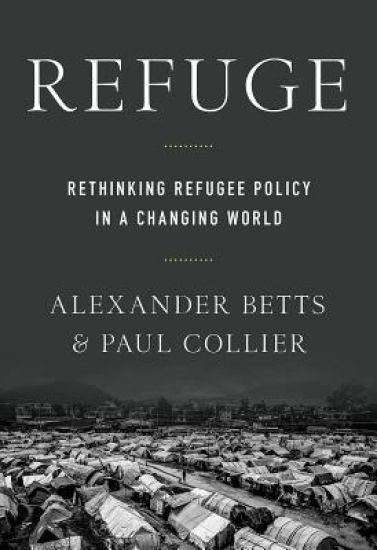
Refuge: Rethinking Refugee Policy in a Changing World
Paul Collier; Alexander Betts
Oxford University Press
2017
nidottu
Global refugee numbers are at their highest levels since the end of World War II, but the system in place to deal with them, based upon a humanitarian list of imagined "basic needs," has changed little. In Refuge, Paul Collier and Alexander Betts argue that the system fails to provide a comprehensive solution to the fundamental problem, which is how to reintegrate displaced people into society. Western countries deliver food, clothing, and shelter to refugee camps, but these sites, usually located in remote border locations, can make things worse. The numbers are stark: the average length of stay in a refugee camp worldwide is 17 years. Into this situation comes the Syria crisis, which has dislocated countless families, bringing them to face an impossible choice: huddle in dangerous urban desolation, rot in dilapidated camps, or flee across the Mediterranean to increasingly unwelcoming governments. Refuge seeks to restore moral purpose and clarity to refugee policy. Rather than assuming indefinite dependency, Collier-author of The Bottom Billion-and his Oxford colleague Betts propose a humanitarian approach integrated with a new economic agenda that begins with jobs, restores autonomy, and rebuilds people's ability to help themselves and their societies. Timely and urgent, the book goes beyond decrying scenes of desperation to declare what so many people, policymakers and public alike, are anxious to hear: that a long-term solution really is within reach.
The Global Governed?
Kate Pincock; Alexander Betts; Evan Easton-Calabria
Cambridge University Press
2020
sidottu
When refugees flee war and persecution, protection and assistance are usually provided by United Nations organisations and their NGO implementing partners. In camps and cities, the dominant humanitarian model remains premised upon a provider-beneficiary relationship. In parallel to this model, however, is a largely neglected story: refugees themselves frequently mobilise to create organisations or networks as alternative providers of social protection. Based on fieldwork in refugee camps and cities in Uganda and Kenya, this book examines how refugee-led organisations emerge, the forms they take, and their interactions with international institutions. Developing an original theoretical framework based on the concept of 'the global governed', the book shows how power and hierarchy mediate the seemingly benign notion of protection. Drawing upon ideas from anthropology and international relations, it offers an alternative vision for more participatory global governance, of relevance to other policy-fields including development, humanitarianism, health, peacekeeping, and child protection.
The Global Governed?
Kate Pincock; Alexander Betts; Evan Easton-Calabria
Cambridge University Press
2020
pokkari
When refugees flee war and persecution, protection and assistance are usually provided by United Nations organisations and their NGO implementing partners. In camps and cities, the dominant humanitarian model remains premised upon a provider-beneficiary relationship. In parallel to this model, however, is a largely neglected story: refugees themselves frequently mobilise to create organisations or networks as alternative providers of social protection. Based on fieldwork in refugee camps and cities in Uganda and Kenya, this book examines how refugee-led organisations emerge, the forms they take, and their interactions with international institutions. Developing an original theoretical framework based on the concept of 'the global governed', the book shows how power and hierarchy mediate the seemingly benign notion of protection. Drawing upon ideas from anthropology and international relations, it offers an alternative vision for more participatory global governance, of relevance to other policy-fields including development, humanitarianism, health, peacekeeping, and child protection.
The Motivic Anabelian Geometry of Local Heights on Abelian Varieties
L. Alexander Betts
AMERICAN MATHEMATICAL SOCIETY
2024
nidottu
Experience Of A Confederate Chaplain, 1861-1864 (1865)
Alexander Davis Betts
KESSINGER PUBLISHING, LLC
2009
pokkari
The Experience of a Confederate Chaplain
Alexander Davis Betts
Createspace Independent Publishing Platform
2012
nidottu
Experience of a Confederate Chaplain, 1861-1864
J. Mitchell; Alexander Davis Betts
Createspace Independent Publishing Platform
2010
nidottu
Tracts Relative To The Island Of St. Helena
Alexander Beatson
KESSINGER PUBLISHING, LLC
2009
pokkari