Kirjojen hintavertailu. Mukana 11 342 296 kirjaa ja 12 kauppaa.

Kirjahaku

Etsi kirjoja tekijän nimen, kirjan nimen tai ISBN:n perusteella.

1000 tulosta hakusanalla Alexander Goldie

Unto the Right Honourable the Lords of Council and Session, the Petition of Alexander Goldie Writer to the Signet,
The 18th century was a wealth of knowledge, exploration and rapidly growing technology and expanding record-keeping made possible by advances in the printing press. In its determination to preserve the century of revolution, Gale initiated a revolution of its own: digitization of epic proportions to preserve these invaluable works in the largest archive of its kind. Now for the first time these high-quality digital copies of original 18th century manuscripts are available in print, making them highly accessible to libraries, undergraduate students, and independent scholars.Delve into what it was like to live during the eighteenth century by reading the first-hand accounts of everyday people, including city dwellers and farmers, businessmen and bankers, artisans and merchants, artists and their patrons, politicians and their constituents. Original texts make the American, French, and Industrial revolutions vividly contemporary.++++The below data was compiled from various identification fields in the bibliographic record of this title. This data is provided as an additional tool in helping to insure edition identification: ++++National Library of ScotlandT195964Drop-head title, dated at head: Feb. 28. 1763. Petitions for release from the Tolbooth at Edinburgh, where he has been sent for threatening Alexander Lockhart. Edinburgh, 1763]. 28p.; 4
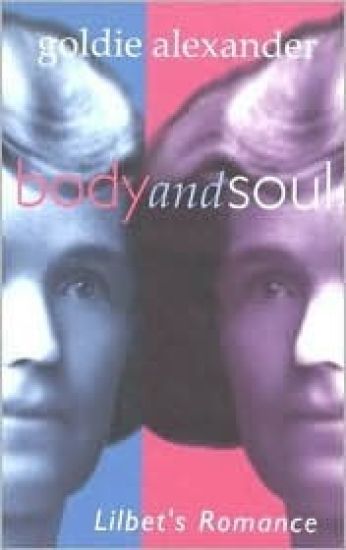
Body and Soul

Body and Soul

Goldie Alexander

Indra Publishing
2013
nidottu
Set in the summer and autumn of 1938, "Body and Soul" is eighteen-year-old disabled Lilbet Marks' very biased account of the love affair between Felix Goldfarb, a recent migrant from Hitler's Germany, and Lilbet's twin sister Ella. Lilbet adores Ella, but also envies her beauty and for her ability to dazzle men. Lilbet's father Simon Marks, her eldest sister Julie, and all their friends are entranced by Felix Goldfarb's winning blend of worldly sophistication and boyish charm. Only bookish Lilbet suspects Felix might not be all that he seems. Also, it is imperative for her physical and psychological wellbeing that Ella remains at the family home. She is determined never to be parted from her twin. Within a few months, Felix departs, leaving behind gigantic gambling debts and Ella pregnant. Though he subsequently sends for Ella, Lilbet manages through clever manipulation to keep her twin by her side.As Lilbet records the day to day events at home, her newspaper cuttings and notes explore 1938 attitudes in general, the intolerance shown at the time towards the disabled, the ambivalence she feels towards her family, her insecurities, fear of loneliness and the double-edged sword of love and envy. Though it is a young woman's musings, the voice is appropriate to the times in which she lived. Among the press clippings, the unconfirmed reports coming out of Hitler's Germany of anti-Jewish violence and disappearances of whole Jewish communities, and the increasing belligerence of Germany towards her neighbours add to the growing tension for this Jewish family in Melbourne of the 1930s.
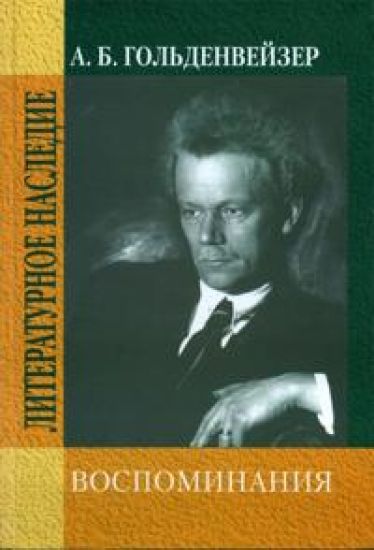
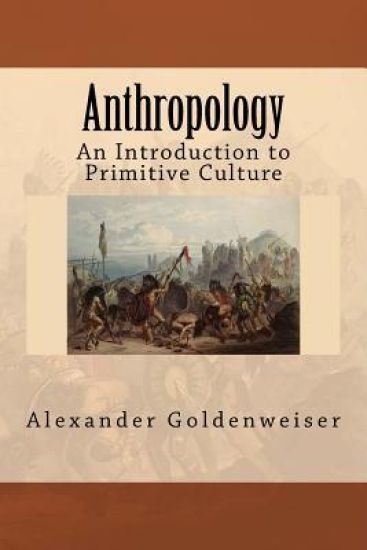
A.B.Goldenveizer. Vospominanija

A.B.Goldenveizer. Vospominanija

Alexander Goldenweiser

Deka-BC
2009
muu
"Vospominanija" A.B. Goldenvejzera byli napisany im v kontse 40-kh godov XX i otrazhajut tseluju epokhu russkoj kultury. Pomimo avtobiograficheskikh svedenij, raskryvajuschikh lichnost, tvorcheskuju i pedagogicheskuju dejatelnost samogo A.B. Goldenvejzera, ne menee tsenny vospominanija o pedagogakh-uchiteljakh, druzjakh, tovarischakh, partnerakh: na stranitsakh "Vospominanij" pered chitatelem predstaet tselaja plejada muzykantov, akterov, pisatelej, sredi kotorykh K.S. Stanislavskij, M.O. Gershenzon, V.P. Prokurin, A.I. Gubert, A.I. Ziloti, P.A. Pabst, M.I. Taneev, L.N. Tolstoj, A.S. Arenskij, V.I. Safronov, G.E. Konjus, M.M. Ippolitov-Ivanov, P.Ju. Shljotser, S.V. Smolenskij, N.D, Kashkin, I.V. Grzhimali, E.A. Lavrovskaja, P.I. Chajkovskij, A.G. Rubinshtejn, G.L. Katuar, G.A. Alchevskij, I. Levin, T.Kh. Bubek, Vsevolod Bujukli, K.A. Kipp, A.A. Jaroshevskij, A.F. Gedike, N.K. Metner, S.V. Rakhmaninov, A.N. Skrjabin i drugie. Shiroko predstavlena konservatorskaja, a takzhe kontsertnaja zhizn Moskvy.
Camille Alexander and the Golden Period Violin

Camille Alexander and the Golden Period Violin

Sarah Jane Heidelberg

Createspace Independent Publishing Platform
2017
pokkari
Cami, a violinist, has a live-in violin teacher in Southeastern suburban Mississippi. The circumstances behind which she is not ashamed but have to explain now, more than ever, to her used-to-be-so-sweet fianc who proposed with a promise ring in the middle of high school senior year. Jim, her teacher, is not happy with her attempts to continue dating Jackson after he is arrested for stealing computers. Even if she doesn't want to believe him, she has to make an ethical decision based on Jackson's emerging temper. If he's gonna hold her back, she wants no part of him. This situation leads to greater complications and a question of character on behalf of both Jim and Jackson. Her audition is swiftly encroaching; just a matter of days and her main conquest is to not travel alone to New York. She pressures her sensei to accompany her (though it wasn't in the plans) and with success, they embark on an endearing journey together. This novella has been highly rated and is a great musician enthusiast book, especially if the reader appreciates the Stradivarius and an opportunity to live out one's dreams. But this is after all, the first in a short series so let's see if her leading man can hold on to his spot for the next novella.
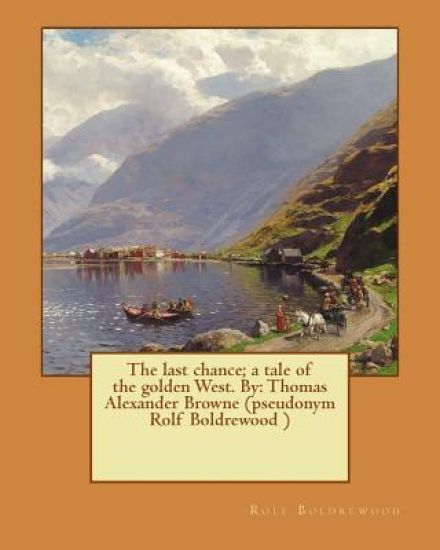
The last chance; a tale of the golden West. By: Thomas Alexander Browne (pseudonym Rolf Boldrewood )
Thomas Alexander Browne (6 August 1826 - 11 March 1915) was an author, who sometimes published under the pseudonym Rolf Boldrewood. He is best known for his novel Robbery Under Arms.Browne was born in London, the eldest child of Captain Sylvester John Brown, a shipmaster formerly of the East India Company, and his wife Elizabeth Angell, n e Alexander. His mother was his "earliest admirer and most indulgent critic . . . to whom is chiefly due whatever meed of praise my readers may hereafter vouchsafe" (Dedication Old Melbourne Memories). (Thomas added the 'e' to his surname in the 1860s). After his father's barque Proteus had delivered a cargo of convicts in Hobart, the family settled in Sydney in 1831. Sylvester Brown took up whaling and built a stone mansion, Enmore, which gave its name to the suburb of Sydney. 1] Thomas Browne was sent to W. T. Cape's school at Sydney, and afterwards to Sydney College, when Cape became its headmaster. One of Browne's closest school friends was a son of Colonel John George Nathaniel Gibbes, MLC, the Collector of Customs for New South Wales, and according to the Dulhunty Papers, Browne spent carefree holidays staying with the Gibbes family at their grand waterside residence on Sydney's Point Piper. When his father moved to Melbourne in 1839, Browne remained at Sydney College as a boarder until 1841 and then was taught by Rev. David Boyd in Melbourne. In 1843, though only 17 years old, Browne took up land near Port Fairy which he named Squattlesamere and was there until 1856. He visited England in 1860 and in 1862-3 had a property, Murrabit run at Lake Boga near Swan Hill, followed by Bundidgaree station on the Murrumbidgee River near Narrandera in the Riverina in 1864. However, bad seasons in 1866 and 1868 compelled Browne to give up squatting, and in 1871 he became a police magistrate and goldfields commissioner. After living in Sydney a short time, in April 1871 he was appointed a police magistrate at Gulgong and gold commissioner in 1872. Browne was an experienced justice of the peace, having acted as chairman of the bench of justices at Narrandera, but in his first years at Gulgong, then one of the richest and largest goldfields in New South Wales, his ignorance of mining and the complicated regulations drew criticism of his competence as commissioner. He was persistently attacked by the Gulgong Guardian And District Mining Record until in 1873 it published an anonymous letter accusing him of bias and corruption. Its editor was thereupon convicted in Sydney of criminal libel and sentenced to six months gaol. The charges against Browne were disproved, and he won favour with the miners by magnanimously interceding with the judge for a light punishment of his libeller. In 1881 Browne was transferred as magistrate and mining warden to Dubbo and to Armidale in 1884. He moved to Albury as chairman of the Land Licensing Board in 1885, serving there as magistrate and warden from 1887-1895 until retiring to Melbourne. He died on 11 March 1915 and was buried in Brighton Cemetery.
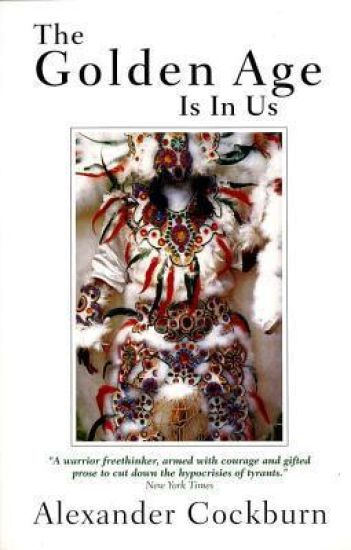
The Golden Age Is in Us

The Golden Age Is in Us

Alexander Cockburn

Verso Books
1996
nidottu
This volume is both a diary of a radical's working life and a public chronicle of the recent political past. His own reflections are interspersed with letters from Graham Greene, personal friends and irate readers. There are discussions with Noam Chomsky, and pieces on criticism, Colette, transvestism, sexual manners and hate mail. Cockburn subverts some left totems along the way-satanic abuse, a JFK conspiracy, a Democratic White House-and demonstrates that there are few uncomplicated victims, the Bad Wolf lurks with Red Riding Hood. In his writing on the environment, the three-hour day and other topics, Cockburn also suggests that an age of uncertainty invites new ideas and new allegiances. The left must be utopian or it is nothing. From the Los Angeles riots to Ireland, from Gorbachev to Clinton-this is a history of an age of uncertainty.