Field Marshal Alexander Leslie was the highest ranking commander from the British Isles to serve in the Thirty Years’ War. Though Leslie’s life provides the thread that runs through this work, the authors use his story to explore the impacts of the Thirty Years’ War, the British Civil Wars and the age of Military Revolution.
Field Marshal Alexander Leslie was the highest ranking commander from the British Isles to serve in the Thirty Years’ War. Though Leslie’s life provides the thread that runs through this work, the authors use his story to explore the impacts of the Thirty Years’ War, the British Civil Wars and the age of Military Revolution.
This book has been considered by academicians and scholars of great significance and value to literature. This forms a part of the knowledge base for future generations. We have represented this book in the same form as it was first published. Hence any marks seen are left intentionally to preserve its true nature.
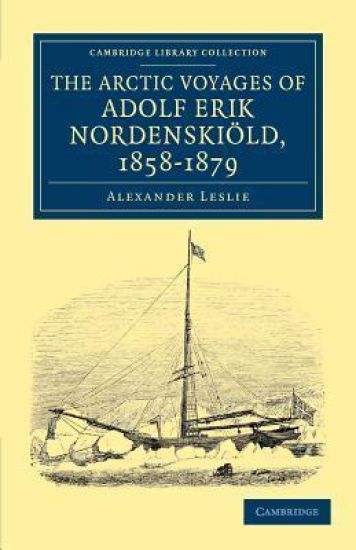
The explorer and geologist Adolf Erik Nordenskiöld (1832–1901) led the expedition that first successfully navigated the North-East Passage and circumnavigated the Eurasian continent. This famous expedition took place in 1878–80, on the steamship Vega. However, prior to this expedition, Nordenskiöld had been on a number of voyages to the Arctic, where comprehensive scientific surveys were carried out. This book, first published in 1879, describes his previous voyages, including those to Spitzbergen and Greenland. It was compiled by Alexander Leslie using Nordenskiöld's own reports, and contains a great deal of historically valuable information. It details encounters with natives met during the voyages and contains the official report of the Medical Officer, Dr Envall, on the health, hygiene and care of the sick during the Swedish Polar Expedition 1872–3. It also includes a list of books and memoirs relating to the Swedish Arctic expeditions and biographical information about Nordenskiöld.
The Arctic Voyages of Adolf Erik Nordenski ld. 1858-1879 is an unchanged, high-quality reprint of the original edition of 1879. Hansebooks is editor of the literature on different topic areas such as research and science, travel and expeditions, cooking and nutrition, medicine, and other genres. As a publisher we focus on the preservation of historical literature. Many works of historical writers and scientists are available today as antiques only. Hansebooks newly publishes these books and contributes to the preservation of literature which has become rare and historical knowledge for the future.
The Scottish Invention of America, Democracy and Human Rights is a history of liberty from 1300 BC to 2004 AD. The book traces the history of the philosophy and fight for freedom from the ancient Celts to the creation of America, asserting the roots of liberty originated in the radical political thought of the ancient Celts, the Scots' struggle for freedom, John Duns Scotus and the Arbroath Declaration (1320), a tradition that influenced Locke and the English Whig theorists as well as our Founding Fathers, particularly Jefferson, Madison, Wilson and Witherspoon. Author Alexander Klieforth argues the Arbroath Declaration (1320) and its philosophy was the intellectual foundation of the American Revolution and Declaration of Independence (1776). Thus, the work is a revolutionary alternative to the traditional Anglocentric view that freedom, democracy and human rights descended only from John Locke and England of the 1600s. The work is the first historical analysis to locate and document the origin of the doctrine of the "consent of the governed" in the medieval scholar, John Duns Scotus (c.1290s), four centuries before Locke and the English Whigs, and in the evolutionary progress of mankind. The work contends that the Arbroath Declaration (1320) and its philosophy was the intellectual foundation of the American Revolution and Declaration of Independence (1776). After showing the Scottish influence on the U.S. Constitution, Bill of Rights, and the new Federal government, the Braudelian-style work traces the development of Scottish-style freedom and human rights through the French Declaration of the Rights of Man and of the Citizen influenced by Jefferson, Lincoln's Gettysburg Address that transformed Jefferson's Declaration, and Eleanor Roosevelt's role in creating the U.N. Universal Declaration of Human Rights, the foundation of the modern human rights struggle. More information about this book is available at the authors website www.braveheartsoul.com.
The Arctic Voyages of Adolf Erik Nordenski ld from 1858 to 1879 is an unchanged, high-quality reprint of the original edition of 1879. Hansebooks is editor of the literature on different topic areas such as research and science, travel and expeditions, cooking and nutrition, medicine, and other genres. As a publisher we focus on the preservation of historical literature. Many works of historical writers and scientists are available today as antiques only. Hansebooks newly publishes these books and contributes to the preservation of literature which has become rare and historical knowledge for the future.