Kirjojen hintavertailu. Mukana 11 393 214 kirjaa ja 12 kauppaa.

Kirjahaku

Etsi kirjoja tekijän nimen, kirjan nimen tai ISBN:n perusteella.

1000 tulosta hakusanalla Alexander Rosenberg

Economics--Mathematical Politics or Science of Diminishing Returns?

Economics--Mathematical Politics or Science of Diminishing Returns?

Alexander Rosenberg

University of Chicago Press
1992
sidottu
Economics today cannot predict the likely outcome of specific events any better than it could in the time of Adam Smith. This is Alexander Rosenberg's controversial challenge to the scientific status of economics. Rosenberg explains that the defining characteristic of any science is predictive improvability--the capacity to create more precise forecasts by evaluating the success of earlier predictions--and he forcefully argues that because economics has not been able to increase its predictive power for over two centuries, it is not a science.
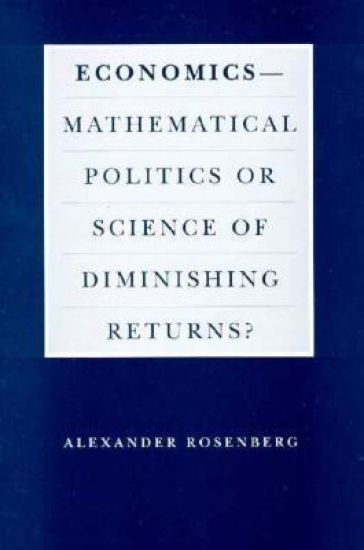
Economics--Mathematical Politics or Science of Diminishing Returns?

Economics--Mathematical Politics or Science of Diminishing Returns?

Alexander Rosenberg

University of Chicago Press
1994
nidottu
Economics today cannot predict the likely outcome of specific events any better than it could in the time of Adam Smith. This is Alexander Rosenberg's controversial challenge to the scientific status of economics. Rosenberg explains that the defining characteristic of any science is predictive improvability—the capacity to create more precise forecasts by evaluating the success of earlier predictions—and he forcefully argues that because economics has not been able to increase its predictive power for over two centuries, it is not a science.
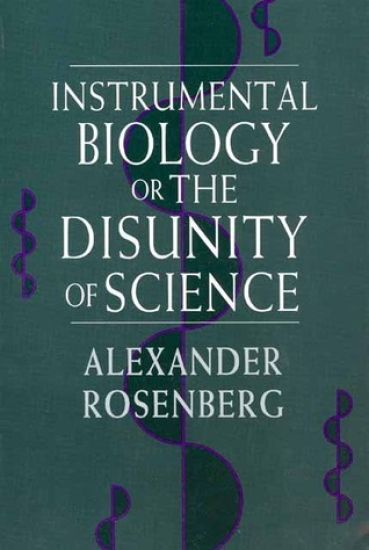
Instrumental Biology, or The Disunity of Science

Instrumental Biology, or The Disunity of Science

Alexander Rosenberg

University of Chicago Press
1994
sidottu
Do the sciences aim to uncover the structure of nature, or are they ultimately a practical means of controlling our environment? This work argues that while physics and chemistry can develop laws that reveal the structure of natural phenomena, biology is fated to be a practical, instrumental discipline. Because of the complexity produced by natural selection and because of the limits on human cognition, scientists are prevented from uncovering the basic structure of biological phenomena. Consequently, biology and all of the disciplines that rest upon it, such as psychology and the other human sciences, must aim to provide practical tools for coping with the natural world rather than a complete theoretical understanding of it.
Instrumental Biology, or The Disunity of Science

Instrumental Biology, or The Disunity of Science

Alexander Rosenberg

University of Chicago Press
1994
nidottu
Do the sciences aim to uncover the structure of nature, or are they ultimately a practical means of controlling our environment? This work argues that while physics and chemistry can develop laws that reveal the structure of natural phenomena, biology is fated to be a practical, instrumental discipline. Because of the complexity produced by natural selection and because of the limits on human cognition, scientists are prevented from uncovering the basic structure of biological phenomena. Consequently, biology and all of the disciplines that rest upon it, such as psychology and the other human sciences, must aim to provide practical tools for coping with the natural world rather than a complete theoretical understanding of it.
Darwinian Reductionism

Darwinian Reductionism

Alexander Rosenberg

University of Chicago Press
2006
sidottu
After the discovery of the structure of DNA in 1953, scientists working in molecular biology embraced reductionism—the theory that all complex systems can be understood in terms of their components. Reductionism, however, has been widely resisted by both nonmolecular biologists and scientists working outside the field of biology. Many of these antireductionists, nevertheless, embrace the notion of physicalism—the idea that all biological processes are physical in nature. How, Alexander Rosenberg asks, can these self-proclaimed physicalists also be antireductionists? With clarity and wit, Darwinian Reductionism navigates this difficult and seemingly intractable dualism with convincing analysis and timely evidence. In the spirit of the few distinguished biologists who accept reductionism—E. O. Wilson, Francis Crick, Jacques Monod, James Watson, and Richard Dawkins—Rosenberg provides a philosophically sophisticated defense of reductionism and applies it to molecular developmental biology and the theory of natural selection, ultimately proving that the physicalist must also be a reductionist.
Philosophy of Social Science

Philosophy of Social Science

Alexander Rosenberg

Routledge
2019
sidottu
Philosophy of Social Science provides a tightly argued yet accessible introduction to the philosophical foundations of the human sciences, including economics, anthropology, sociology, political science, psychology, history, and the disciplines emerging at the intersections of these subjects with biology. Philosophy is unavoidable for social scientists because the choices they make in answering questions in their disciplines force them to take sides on philosophical matters. Conversely, the philosophy of social science is equally necessary for philosophers since the social and behavior sciences must inform their understanding of human action, norms, and social institutions.The fifth edition retains from previous editions an illuminating interpretation of the enduring relations between the social sciences and philosophy, and reflects on developments in social research over the past two decades that have informed and renewed debate in the philosophy of social science. An expanded discussion of philosophical anthropology and modern and postmodern critical theory is new for this edition.
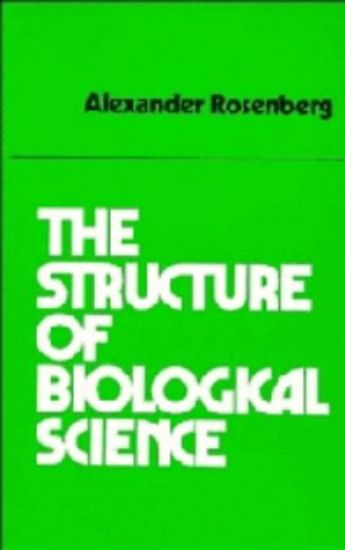
The Structure of Biological Science

The Structure of Biological Science

Alexander Rosenberg

Cambridge University Press
1985
pokkari
This book provides a comprehensive guide to the conceptual methodological, and epistemological problems of biology, and treats in depth the major developments in molecular biology and evolutionary theory that have transformed both biology and its philosophy in recent decades. At the same time the work is a sustained argument for a particular philosophy of biology that unifies disparate issues and offers a framework for expectations about the future directions of the life sciences. The argument explores differences between autonomist and anti-autonomist views of biology. The result is a vindication of reductionism, but one that is unexpectedly hollow. For it leaves the exponents of the autonomy of biology from physical science with as much as their view of biology really requires - and rather more than the reductionist might comfortably concede. Professor Rosenberg shows how the problems of the philosophy of biology are interconnected and how their solutions are interdependent, However, this book focuses more on the direct concerns of biologists, rather than the traditional agenda of philosophers’ problems about biology. This departure from earlier books on the subject results both in greater understanding and relevance of the philosophy of science to biology as a whole.
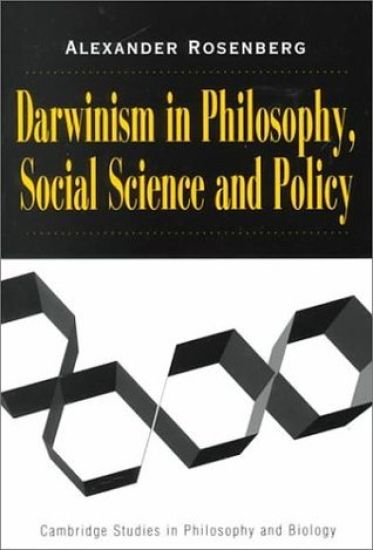
Darwinism in Philosophy, Social Science and Policy

Darwinism in Philosophy, Social Science and Policy

Alexander Rosenberg

Cambridge University Press
2000
pokkari
A collection of essays by Alexander Rosenberg, the distinguished philosopher of science. The essays cover three broad areas related to Darwinian thought and naturalism: the first deals with the solution of philosophical problems such as reductionism, the second with the development of social theories, and the third with the intersection of evolutionary biology with economics, political philosophy, and public policy. Specific papers deal with naturalistic epistemology, the limits of reductionism, the biological justification of ethics, the so-called ‘trolley problem’ in moral philosophy, the political philosophy of biological endowments, and the Human Genome Project and its implications for policy. Rosenberg’s important writings on a variety of issues are here organized into a coherent philosophical framework which promises to be a significant and controversial contribution to scholarship in many areas.
Philosophy of Social Science

Philosophy of Social Science

Alexander Rosenberg

Westview Press Inc
2015
nidottu
Philosophy of Social Science provides a tightly argued yet accessible introduction to the philosophical foundations of the human sciences, including economics, anthropology, sociology, political science, psychology, history, and the disciplines emerging at the intersections of these subjects with biology. Philosophy is unavoidable for social scientists because the choices they make in answering questions in their disciplines force them to take sides on philosophical matters. Conversely, the philosophy of social science is equally necessary for philosophers since the social and behavior sciences must inform their understanding of human action, norms, and social institutions.The fifth edition retains from previous editions an illuminating interpretation of the enduring relations between the social sciences and philosophy, and reflects on developments in social research over the past two decades that have informed and renewed debate in the philosophy of social science. An expanded discussion of philosophical anthropology and modern and postmodern critical theory is new for this edition.
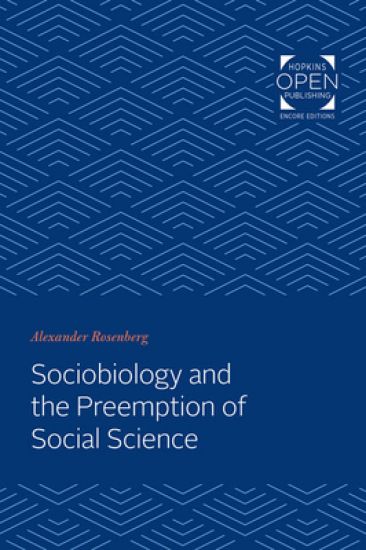
Sociobiology and the Preemption of Social Science

Sociobiology and the Preemption of Social Science

Alexander Rosenberg

Johns Hopkins University Press
2020
pokkari
Originally published in 1981. Why have the social sciences in general failed to produce results with the ever-increasing explanatory power and predictive strength of the natural sciences? In seeking an answer to this question, Alexander Rosenberg, a philosopher of science, plunges into the controversial discipline of sociobiology. Sociobiology, Rosenberg asserts, deals in those forces governing human behavior that traditional social science has unsuccessfully attempted to slip between: neurophysiology, on the one hand, and selective forces, on the other. Unlike previous works in the two fields it straddles, Rosenberg's book brings thinking about the nature of scientific theorizing to bear on the most traditional issues in the philosophy of social science. The author finds that the subjects of conventional social science do not reflect the operation of laws that social scientists are equipped to discover. The author argues that much of the debate surrounding sociobiology is irrelevant to the issue of its ultimate success. Although largely conceptual, the book is an unequivocal defense of this new theory in the explanation of human behavior.
Fat Killer and The Pomeranians

Fat Killer and The Pomeranians

Alexander H Rosenberg

Alexander H Rosenberg
2015
pokkari
The Russians are coming At least one of them--to Los Angeles. But nobody asked Ivan Donetsky, an aging assassin for the Russian mob, if he wanted to come to America in the first place. And to make matters worse, Ivan has to work with a drag queen who calls himself 'Foxy'. Pressure builds while Ivan struggles to adapt to LA where bizarre is the norm. As Ivan and Foxy pursue their mark through a wild party and a freaky movie set, cultural differences get in the way. Yet this is a terrible time for misunderstandings, as the job threatens to destroy everyone involved. Now Ivan, the old Russian dog, needs to step up his game and learn some new tricks.
Darwinism in Philosophy, Social Science and Policy

Darwinism in Philosophy, Social Science and Policy

Rosenberg Alexander

Cambridge University Press
2000
sidottu
A collection of essays by Alexander Rosenberg, the distinguished philosopher of science. The essays cover three broad areas related to Darwinian thought and naturalism: the first deals with the solution of philosophical problems such as reductionism, the second with the development of social theories, and the third with the intersection of evolutionary biology with economics, political philosophy, and public policy. Specific papers deal with naturalistic epistemology, the limits of reductionism, the biological justification of ethics, the so-called 'trolley problem' in moral philosophy, the political philosophy of biological endowments, and the Human Genome Project and its implications for policy. Rosenberg's important writings on a variety of issues are here organized into a coherent philosophical framework which promises to be a significant and controversial contribution to scholarship in many areas.
Jude i Sverige : en antologi

Jude i Sverige : en antologi

Jessica Bab; Lars Dencik; Jonas Eklöf; Alexander Freudenthal; Jessika Gedin; Kenneth Hermele; Gabriel Itkes-Sznap; Negar Josephi; Rebecka Kärde; Rose Lagercrantz; Natalie Lantz; Stefan Mehr; Stephan Mendel-Enk; Hannes Meidal; Henrik Naimark Meyers; Morton Narrowe; Ricki Neuman; Jacki Jakubowski; Lizzie Oved Scheja; Göran Rosenberg; Anneli Rådestad; Willmar Sauter; Nina Solomin; Maja Thrane; Maciej Zaremba; Leif Zern; Elisabeth Åsbrink; Jessica Zandén; Kaj Schueler; Daniel Pedersen

Bokförlaget Faethon
2021
sidottu
Jude i Sverige är en antologi som samlar 29 texter där skribenterna reflekterar över vad det innebär att vara jude: bidragen berör den judiska identiteten, historien, traditionen, religionen och hur det är att leva som jude och judiskt i Sverige. Samt vad det innebär att göra uppror mot allt detta. Personliga berättelser om samvaro, familjeliv och barndomsminnen samsas med historier om betydelsen av att söka sin familjs rötter och återuppväcka ett judiskt liv från tidigare generationer. De enskilda rösterna är unika till såväl uttryck som historia, men de förenas i medvetenheten om att det judiska inte lämnat någon av dem oberörd eller opåverkad. Denna antologi är tillägnad Jackie Jakubowski (1951 2020), som själv under sitt verksamma liv inte bara återkom till frågan om vad det är att vara jude utan också specifikt vad det innebär att vara jude i Sverige. Författarna är: Jessica Bab, Lars Dencik, Jonas Eklöf, Alexander Freudenthal, Jessika Gedin, Kenneth Hermele, Gabriel Itkes-Sznap, Jackie Jakubowski, Negar Josephi, Rebecka Kärde, Rose Lagercrantz, Natalie Lantz, Stefan Mehr, Stephan Mendel-Enk, Hannes Meidal, Henrik Naimark Meyers, Morten Narrowe, Ricki Neuman, Lizzie Oved Scheja, Daniel Pedersen, Göran Rosenberg, Anneli Rådestad, Willmar Sauter, Nina Solomin, Maja Thrane, Jessica Zandén, Maciej Zaremba, Leif Zern och Elisabeth Åsbrink.
A Practical Manual for Transcranial Magnetic Stimulation

A Practical Manual for Transcranial Magnetic Stimulation

Dylan J. Edwards; Peter J. Fried; Paula Davila-Pérez; Jared C. Horvath; Alexander Rotenberg; Alvaro Pascual-Leone

Springer International Publishing AG
2024
sidottu
This practical guide to transcranial magnetic stimulation (TMS) offers step-by-step instruction for the most commonly used TMS protocols in humans. TMS equipment is increasingly available in University and Hospital settings and even small clinics. TMS protocols are often taken from disparate publications, and there has not been a single comprehensive and practical reference for the most common procedures. The current book contains structured steps for the various TMS protocols in addition to relevant fundamental information, including a practical summary of principles of TMS and a glossary of terms. This book is designed to be a quick reference on the office or clinic desk, or in the laboratory, and would be as useful for guiding research and clinical laboratory activities as it would for deciphering TMS study methodologies in the literature.
Flows in Networks Under Fuzzy Conditions

Flows in Networks Under Fuzzy Conditions

Alexander Vitalievich Bozhenyuk; Evgeniya Michailovna Gerasimenko; Janusz Kacprzyk; Igor Naymovich Rozenberg

Springer International Publishing AG
2016
sidottu
This book offers a comprehensive introduction to fuzzy methods for solving flow tasks in both transportation and networks. It analyzes the problems of minimum cost and maximum flow finding with fuzzy nonzero lower flow bounds, and describes solutions to minimum cost flow finding in a network with fuzzy arc capacities and transmission costs. After a concise introduction to flow theory and tasks, the book analyzes two important problems. The first is related to determining the maximum volume for cargo transportation in the presence of uncertain network parameters, such as environmental changes, measurement errors and repair work on the roads. These parameters are represented here as fuzzy triangular, trapezoidal numbers and intervals. The second problem concerns static and dynamic flow finding in networks under fuzzy conditions, and an effective method that takes into account the network’s transit parameters is presented here. All in all, the book provides readers with a practical reference guide to state-of-the art fuzzy methods for solving flow tasks and offers a valuable resource for all researchers and postgraduate students in the fields of network theory, fuzzy models and decision-making.
Flows in Networks Under Fuzzy Conditions

Flows in Networks Under Fuzzy Conditions

Alexander Vitalievich Bozhenyuk; Evgeniya Michailovna Gerasimenko; Janusz Kacprzyk; Igor Naymovich Rozenberg

Springer International Publishing AG
2018
nidottu
This book offers a comprehensive introduction to fuzzy methods for solving flow tasks in both transportation and networks. It analyzes the problems of minimum cost and maximum flow finding with fuzzy nonzero lower flow bounds, and describes solutions to minimum cost flow finding in a network with fuzzy arc capacities and transmission costs. After a concise introduction to flow theory and tasks, the book analyzes two important problems. The first is related to determining the maximum volume for cargo transportation in the presence of uncertain network parameters, such as environmental changes, measurement errors and repair work on the roads. These parameters are represented here as fuzzy triangular, trapezoidal numbers and intervals. The second problem concerns static and dynamic flow finding in networks under fuzzy conditions, and an effective method that takes into account the network’s transit parameters is presented here. All in all, the book provides readers with a practical reference guide to state-of-the art fuzzy methods for solving flow tasks and offers a valuable resource for all researchers and postgraduate students in the fields of network theory, fuzzy models and decision-making.
Unterrichtsstunde

Unterrichtsstunde

Alexander Bösenberg

Grin Verlag
2008
pokkari
Studienarbeit aus dem Jahr 2007 im Fachbereich Politik - Didaktik, politische Bildung, Note: 1,7, Friedrich-Schiller-Universit t Jena (Institut f r Politikwissenschaft - Professur f r Didaktik der Politik), Veranstaltung: Sozialer Wandel und Sozialpolitik als Gegenst nde der politischen Bildung, 13 Quellen im Literaturverzeichnis, Sprache: Deutsch, Abstract: Der Wandel der Arbeitswelt findet inmitten eines gesamtgesellschaftlichen Wandels statt und pr gt ma gebend die Entwicklung eines jeden Individuums in der Gesellschaft. Es bleibt nicht aus sich dieser Herausforderung zu stellen, da jeder von ihr, gewollt oder nicht gewollt, betroffen ist. Die vorliegende Unterrichtsplanung soll das Thema: "Arbeitswelt im Wandel" im Problembereich des Sozialen Wandels aufgreifen und den Lernenden einen bersichtlichen und zugleich kritischen Blick auf die zuk nftigen gesellschaftlichen Entwicklungen in der Arbeitswelt werfen lassen. Durch die didaktische Reduktion, wird der komplexe Themenbereich strukturiert und wichtige Problembereiche herausgenommen, die f r den Gesamtzusammenhang bedeutend sind. Mit einer angemessenen Auswahl der Unterrichtsgegenst nde, wird das Thema greifbar und sch lerorientiert vermittelt. Gleichzeitig werden Materialien und die Methoden abwechslungsreich und ansprechend eingesetzt, sodass unterschiedliche Schl sselkompetenzen einge bt werden k nnen. Die Unterrichtseinheit muss den Anforderungen ihres Inhaltes dahingehend gerecht werden, dass sie neben Soft Skills und Schl sselkompetenzen, auch die Idee eines lebenslangen Lernens vermittelt. Die Lernenden sind dazu aufgefordert ihre eigenen Ideen, Gef hle, W nsche und Erfahrungen mit in den Unterrichtprozess einflie en zu lassen.