

Kirjahaku
Etsi kirjoja tekijän nimen, kirjan nimen tai ISBN:n perusteella.
1000 tulosta hakusanalla Alexander W Nürk

Annual Message of Alexander W. Randall, Governor of the State of Wisconsin
Alexander W Randall
Salzwasser-Verlag
2023
pokkari
Reprint of the original, first published in 1858.

Annual Message of Alexander W. Randall, Governor of the State of Wisconsin
Alexander W Randall
Salzwasser-Verlag
2023
sidottu
Reprint of the original, first published in 1858.

Annual Message of Alexander W. Randall, Governor of the State of Wisconsin
Alexander W. Randall
Antigonos Verlag
2025
nidottu

Annual Message of Alexander W. Randall, Governor of the State of Wisconsin
Antigonos Verlag
2025
sidottu


Anarchist Perspectives for Social Work
Alexander W. Sawatsky
OXFORD UNIVERSITY PRESS INC
2025
sidottu
Social work and the crisis of representation are a common theme for practice and theory. During these volatile times-of pandemic, climate change, civil unrest, and the rise of right-wing fascist ideologies, we must confront the growing challenge of how social work can remain relevant. The fact is that social workers need to have hope in that their work matters, and that there are ways to do more than respond to individual suffering while the world burns. This book makes the radical claim that there are ways to reconcile ideas from anarchism with a kind of social work that seeks to unmake itself, to be part of the project to bring about a better world. The reader is invited to see the chapters of this work as a journey to explore what an anarchist social work theory could offer as various topics are used to illustrate new ways of thinking -both about social problems and of social work itself

George Henry Alexander Clowes was a pivotal figure in the development of the insulin program at the Eli Lilly Company. Through his leadership, scientists and clinicians at Lilly and the University of Toronto created a unique, international team to develop and purify insulin and take the production of this life-saving agent to an industrial scale. This biography, written by his grandson, presents his scientific achievements, and also takes note of his social and philanthropic contributions, which he shared with his wife, Edith. It tells the story of Clowes from his childhood in late Victorian England to his death at Woods Hole on Cape Cod in 1958. Educated in England and Germany, Clowes came to America to join a startup laboratory in Buffalo, where he conducted basic research on cancer and applied research on other disease-related problems. Assuming the position of head of research at Lilly, Clowes was at the center of one of the great discoveries that changed the course of medical history and offered new life to millions of individuals with diabetes and other metabolic disorders. Clowes was also instrumental in the development of other commercial pharmaceutical advances. Devoted to a number of philanthropic causes, Clowes and Edith contributed greatly to the cultural life of his adopted country, a contribution that continues to this day.

Discover the true effects of attending college While there is no doubt that going to college has an effect on one's life, the question of what those specific effects may be remains somewhat elusive. Four Critical Years takes an in-depth look at those potential effects beyond those that are immediately obvious. The book investigates how one's attitudes, beliefs and sense of self are affected by going to college, how behavior is affected, what patterns of behavior emerge from going to college, and the permanence of the effects of attending college. For those students, policymakers and those about to make the crucial decision on whether – or where – to go to college, the book is an original and enlightening look at the subject.
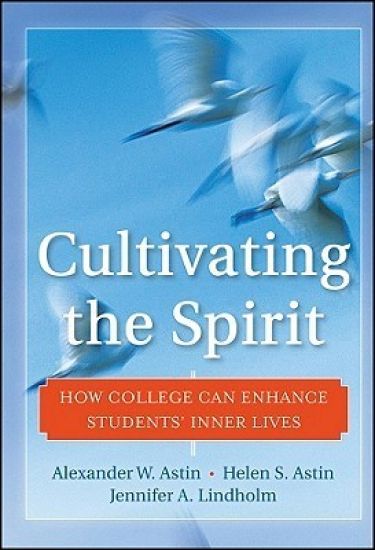
Cultivating the Spirit
Alexander W. Astin; Helen S. Astin; Jennifer A. Lindholm
John Wiley Sons Inc
2010
sidottu
Cultivating the Spirit THIS GROUNDBREAKING WORK IS BASED on a five-year study of how students change during the college years and the role college plays in facilitating the development of their spiritual qualities. Students, the authors argue, grapple with the big questions in life: Who am I? What are my values? Do I have a mission in life? Why am I in college? What kind of person do I want to be? What sort of world do I want to help to create? Their answers to these questions help determine their academic and career choices and are tied to the development of personal qualities such as empathy, caring, and social responsibility. The study finds that, while students' religious engagement declines during college, at the same time they become substantially more caring, tolerant, connected with others, and actively egaged in a spiritual quest. Spiritual growth also enhances academic performance, leadership development, and satisfaction with college. The study provides strong evidence pointing to specific experiences during college that can contribute to students' spiritual growth. The need for spiritual development in college is apparent. Two-thirds of the students in the study express a strong interest in spiritual matters, well over half report that their professors never encourage discussions of religious or spiritual matters, and about the same proportion report that professors never provide opportunities to discuss the purpose and meaning of life. Cultivating the Spirit aims to raise the awareness of academic administrators, faculty, and the public at large to the vital role that spirituality plays in student learning and development. Throughout the book, the authors identify strategies for enhancing students' development and encourage the academy to give greater priority to the spiritual aspects of students' educational and personal development.

Universalism In Its Modern And Ancient Form: Brought To The Test And Without The Argument From Aion, Aionios, Etc.
Alexander W. McLeod
KESSINGER PUBLISHING, LLC
2007
sidottu

American Antiquities And Researches Into The Origin And History Of The Red Race
Alexander W. Bradford
Kessinger Pub
2007
pokkari



American Antiquities And Researches Into The Origin And History Of The Red Race (1841)
Alexander W. Bradford
KESSINGER PUBLISHING, LLC
2008
sidottu

From the author of Four Critical Years--a book the Journal of Higher Education called the most cited work in higher education literature--What Matters in College? presents the definitive study of how students change and develop in college and how colleges can enhance that development. Based on a study of more than 20,000 students, 25,000 faculty members, and 200 institutions, the book shows how academic programs, faculty, student peer groups, and other variables affect students' college experiences.
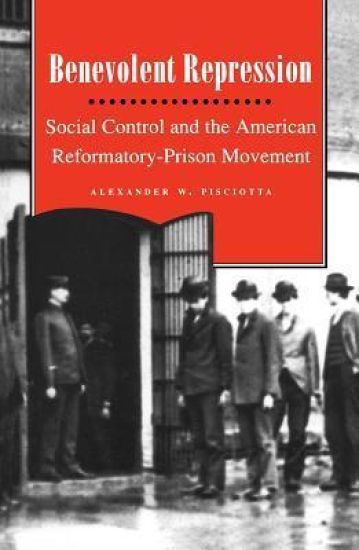
The opening, in 1876, of the Elmira Reformatory marked the birth of the American adult reformatory movement and the introduction of a new approach to crime and the treatment of criminals. Hailed as a reform panacea and the humane solution to America's ongoing crisis of crime and social disorder, Elmira sparked an ideological revolution. Repression and punishment were supposedly out. Academic and vocational education, military drill, indeterminate sentencing and parole?"benevolent reform"?were now considered instrumental to instilling in prisoners a respect for God, law, and capitalism. Not so, says Al Pisciotta, in this highly original, startling, and revealing work. Drawing upon previously unexamined sources from over a half-dozen states and a decade of research, Pisciotta explodes the myth that Elmira and other institutions of "the new penology" represented a significant advance in the treatment of criminals and youthful offenders. The much-touted programs failed to achieve their goals; instead, prisoners, under Superintendent Zebulon Brockway, considered the Father of American Corrections, were whipped with rubber hoses and two-foot leather straps, restricted to bread and water in dark dungeons during months of solitary confinement, and brutally subjected to a wide range of other draconian psychological and physical abuses intended to pound them into submission. Escapes, riots, violence, drugs, suicide, arson, and rape were the order of the day in these prisons, hardly conducive to the transformation of "dangerous criminal classes into Christian gentleman," as was claimed. Reflecting the racism and sexism in the social order in general, the new penology also legitimized the repression of the lower classes. Highlighting the disparity between promise and practice in America's prisons, Pisciotta draws on seven inmate case histories to illustrate convincingly that the "March of Progress" was nothing more than a reversion to the ways of old. In short, the adult reformatory movement promised benevolent reform but delivered benevolent repression?a pattern that continues to this day. A vital contribution to the history of crime, corrections, and criminal justice, this book will also have a major impact on our thinking about contemporary corrections and issues surrounding crime, punishment, and social control.
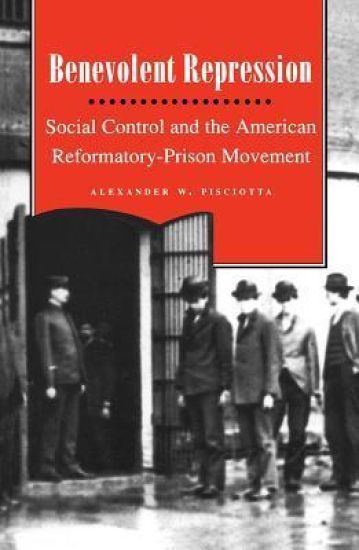
The opening, in 1876, of the Elmira Reformatory marked the birth of the American adult reformatory movement and the introduction of a new approach to crime and the treatment of criminals. Hailed as a reform panacea and the humane solution to America's ongoing crisis of crime and social disorder, Elmira sparked an ideological revolution. Repression and punishment were supposedly out. Academic and vocational education, military drill, indeterminate sentencing and parole?"benevolent reform"?were now considered instrumental to instilling in prisoners a respect for God, law, and capitalism. Not so, says Al Pisciotta, in this highly original, startling, and revealing work. Drawing upon previously unexamined sources from over a half-dozen states and a decade of research, Pisciotta explodes the myth that Elmira and other institutions of "the new penology" represented a significant advance in the treatment of criminals and youthful offenders. The much-touted programs failed to achieve their goals; instead, prisoners, under Superintendent Zebulon Brockway, considered the Father of American Corrections, were whipped with rubber hoses and two-foot leather straps, restricted to bread and water in dark dungeons during months of solitary confinement, and brutally subjected to a wide range of other draconian psychological and physical abuses intended to pound them into submission. Escapes, riots, violence, drugs, suicide, arson, and rape were the order of the day in these prisons, hardly conducive to the transformation of "dangerous criminal classes into Christian gentleman," as was claimed. Reflecting the racism and sexism in the social order in general, the new penology also legitimized the repression of the lower classes. Highlighting the disparity between promise and practice in America's prisons, Pisciotta draws on seven inmate case histories to illustrate convincingly that the "March of Progress" was nothing more than a reversion to the ways of old. In short, the adult reformatory movement promised benevolent reform but delivered benevolent repression?a pattern that continues to this day. A vital contribution to the history of crime, corrections, and criminal justice, this book will also have a major impact on our thinking about contemporary corrections and issues surrounding crime, punishment, and social control.

Toward an Augustan Poetic: Edmund Waller's "reform" of English Poetry. --
Alexander W. (Alexander Ward) Allison
Hassell Street Press
2021
sidottu
This work has been selected by scholars as being culturally important and is part of the knowledge base of civilization as we know it.This work is in the public domain in the United States of America, and possibly other nations. Within the United States, you may freely copy and distribute this work, as no entity (individual or corporate) has a copyright on the body of the work.Scholars believe, and we concur, that this work is important enough to be preserved, reproduced, and made generally available to the public. To ensure a quality reading experience, this work has been proofread and republished using a format that seamlessly blends the original graphical elements with text in an easy-to-read typeface.We appreciate your support of the preservation process, and thank you for being an important part of keeping this knowledge alive and relevant.