Kirjojen hintavertailu. Mukana 11 244 527 kirjaa ja 12 kauppaa.

Kirjahaku

Etsi kirjoja tekijän nimen, kirjan nimen tai ISBN:n perusteella.

1000 tulosta hakusanalla Alexandra M. Nickliss

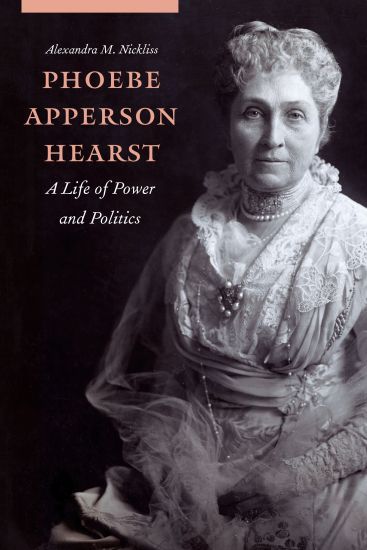
Phoebe Apperson Hearst

Phoebe Apperson Hearst

Alexandra M. Nickliss

University of Nebraska Press
2018
sidottu
In Phoebe Apperson Hearst: A Life in Power and Politics, Alexandra M. Nickliss offers the first biography of one of the Gilded Age’s most prominent and powerful women. A financial manager, businesswoman, and reformer, Phoebe Apperson Hearst was one of the wealthiest and most influential women of the era and a philanthropist, almost without rival, in the San Francisco Bay Area. Hearst was born into a humble middle-class family in rural Missouri in 1842; she died a member of society’s urban elite in 1919. Most people know her as the mother of William Randolph Hearst, the famed newspaper mogul, and as the wife of George Hearst, a mining tycoon and U.S. senator. By age forty-eight, however, after her husband’s death, Hearst had come to control the family’s extravagant estate, demonstrating intelligence and skill as a financial manager. Supporting urban reforms in the Bay Area, across the country, and around the world, Hearst gave much of her wealth to organizations supporting children, health reform, women’s rights, higher education, municipal policy formation, and urban architecture and design. She worked to exert her ideas and implement plans regarding the burgeoning Progressive movement and held many prominent positions, including as first woman regent of the University of California.Phoebe Apperson Hearst tells the story of Hearst’s world and examines the opportunities and challenges she faced as she navigated local, national, and international corridors of influence, rendering a penetrating portrait of a fascinating and often contradictory woman.
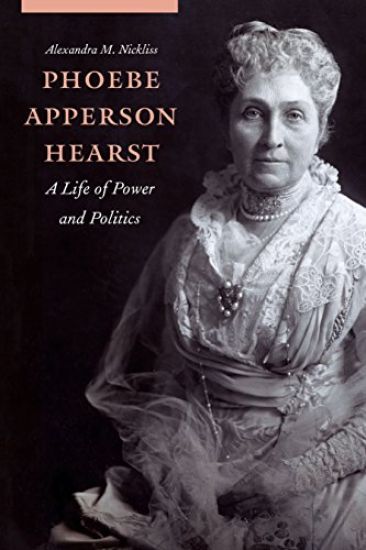
Phoebe Apperson Hearst

Phoebe Apperson Hearst

Alexandra M. Nickliss

University of Nebraska Press
2026
pokkari
In Phoebe Apperson Hearst: A Life in Power and Politics, Alexandra M. Nickliss offers the first biography of one of the Gilded Age’s most prominent and powerful women. A financial manager, businesswoman, and reformer, Phoebe Apperson Hearst was one of the wealthiest and most influential women of the era and a philanthropist, almost without rival, in the San Francisco Bay Area. Hearst was born into a humble middle-class family in rural Missouri in 1842; she died a member of society’s urban elite in 1919. Most people know her as the mother of William Randolph Hearst, the famed newspaper mogul, and as the wife of George Hearst, a mining tycoon and U.S. senator. By age forty-eight, however, after her husband’s death, Hearst had come to control the family’s extravagant estate, demonstrating intelligence and skill as a financial manager. Supporting urban reforms in the Bay Area, across the country, and around the world, Hearst gave much of her wealth to organizations supporting children, health reform, women’s rights, higher education, municipal policy formation, and urban architecture and design. She worked to exert her ideas and implement plans regarding the burgeoning Progressive movement and held many prominent positions, including as first woman regent of the University of California.Phoebe Apperson Hearst tells the story of Hearst’s world and examines the opportunities and challenges she faced as she navigated local, national, and international corridors of influence, rendering a penetrating portrait of a fascinating and often contradictory woman.
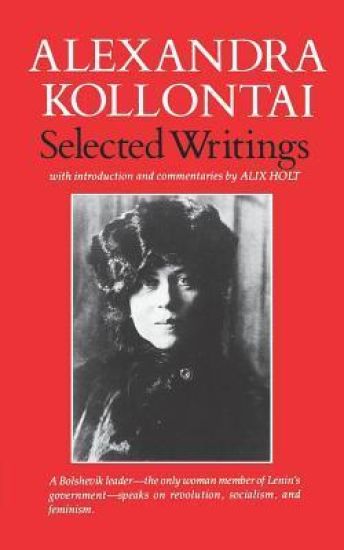
Selected Writings of Alexandra Kollontai

Selected Writings of Alexandra Kollontai

Kollanta; A. Kollontai; Alexandra M. Kollontai

W. W. Norton Company
1980
nidottu
Alexandra Kollontai--the only woman member of the Bolshevik central committee and the USSR's first Minister of Social Welfare--is known today as a historic contributor to the international women's movement, and as one of the first Bolshevik leaders to oppose the growth of the bureaucracy in the young socialist state. Her Selected Writings discuss the social democratic movement before the First World War, the history of the Russian women's movement, and the debate between "feminist" and "socialist" women; the effects of the war on European socialism; the revolutions; the part played by women in the revolutionary events; the early manifestations of bureaucracy and Kollontai's role as spokeswoman for the "workers' opposition"; and morality, sexual politics, the family, and prostitution. It also includes writings from her later life as a Soviet official. Each section is introduced by a commentary in which Alix Holt explains the background and critically sets Kollontai's unique lifework in its historical and biographical contexts, demonstrating both its necessary limitations and its extraordinary range.
Direct Alcohol Fuel Cells for Portable Applications

Direct Alcohol Fuel Cells for Portable Applications

Alexandra M. F. R. Pinto; Vania Sofia Oliveira; Daniela Sofia Castro Falcao

Academic Press Inc
2018
nidottu
Direct Alcohol Fuel Cells for Portable Applications: Fundamentals, Engineering and Advances presents the fundamental concepts, technological advances and challenges in developing, modeling and deploying fuel cells and fuel cell systems for portable devices, including micro and mini fuel cells. The authors review the fundamental science of direct alcohol fuel cells, covering, in detail, thermodynamics, electrode kinetics and electrocatalysis of charge-transfer reactions, mass and heat transfer phenomena, and basic modeling aspects. In addition, the book examines other fuels in DAFCs, such as formic acid, ethylene glycol and glycerol, along with technological aspects and applications, including case studies and cost analysis. Researchers, engineering professionals, fuel cell developers, policymakers and senior graduate students will find this a valuable resource. The book’s comprehensive coverage of fundamentals is especially useful for graduate students, advanced undergraduate students and those new to the field.
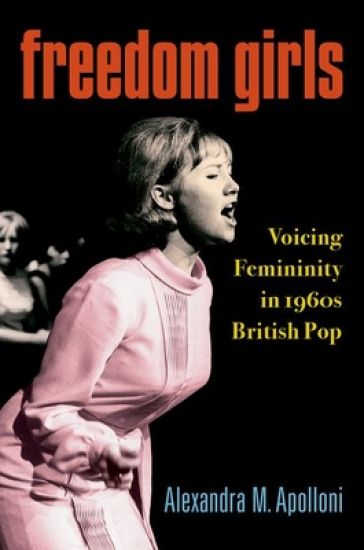
Freedom Girls

Freedom Girls

Alexandra M. Apolloni

OXFORD UNIVERSITY PRESS INC
2021
sidottu
Freedom Girls: Voicing Femininity in 1960s British Pop shows how the vocal performances of girl singers in 1960s Britain defined-and sometimes defied-ideas about what it meant to be a young woman in the 1960s British pop music scene. The singing and expressive voices of Sandie Shaw, Cilla Black, Millie Small, Dusty Springfield, Lulu, Marianne Faithfull, and P.P. Arnold, reveal how vocal sound shapes access to social mobility, and consequently, access to power and musical authority. The book examines how Sandie Shaw and Cilla Black's ordinary girl personas were tied to whiteness and, in Black's case, her Liverpool origins. It shows how Dusty Springfield and Jamaican singer Millie Small engaged with the transatlantic sounds of soul and and ska, respectively, transforming ideas about musical genre, race, and gender. It reveals how attitudes about sexuality and youth in rock culture shaped the vocal performances of Lulu and Marianne Faithfull, and how P.P. Arnold has re-narrated rock history to center Black women's vocality. Freedom Girls draws on a broad array of archival sources, including music magazines, fashion and entertainment magazines produced for young women, biographies and interviews, audience research reports, and others to inform analysis of musical recordings (including such songs as "As Tears Go By," "Son of a Preacher Man," and others) and performances on television programs such as Ready Steady Go!, Shindig, and other 1960s music shows. These performances reveal the historical and contemporary connections between voice, social mobility, and musical authority, and demonstrate how singers used voice to navigate the boundaries of race, class, and gender.
Freedom Girls

Freedom Girls

Alexandra M. Apolloni

OXFORD UNIVERSITY PRESS INC
2022
nidottu
Freedom Girls: Voicing Femininity in 1960s British Pop shows how the vocal performances of girl singers in 1960s Britain defined-and sometimes defied-ideas about what it meant to be a young woman in the 1960s British pop music scene. The singing and expressive voices of Sandie Shaw, Cilla Black, Millie Small, Dusty Springfield, Lulu, Marianne Faithfull, and P.P. Arnold, reveal how vocal sound shapes access to social mobility, and consequently, access to power and musical authority. The book examines how Sandie Shaw and Cilla Black's ordinary girl personas were tied to whiteness and, in Black's case, her Liverpool origins. It shows how Dusty Springfield and Jamaican singer Millie Small engaged with the transatlantic sounds of soul and and ska, respectively, transforming ideas about musical genre, race, and gender. It reveals how attitudes about sexuality and youth in rock culture shaped the vocal performances of Lulu and Marianne Faithfull, and how P.P. Arnold has re-narrated rock history to center Black women's vocality. Freedom Girls draws on a broad array of archival sources, including music magazines, fashion and entertainment magazines produced for young women, biographies and interviews, audience research reports, and others to inform analysis of musical recordings (including such songs as "As Tears Go By," "Son of a Preacher Man," and others) and performances on television programs such as Ready Steady Go!, Shindig, and other 1960s music shows. These performances reveal the historical and contemporary connections between voice, social mobility, and musical authority, and demonstrate how singers used voice to navigate the boundaries of race, class, and gender.
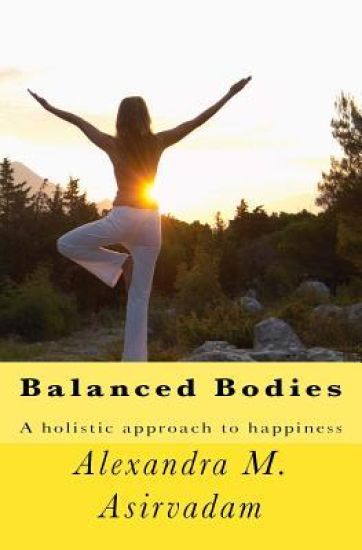
Balanced Bodies: A Holistic Approach to Happiness

Balanced Bodies: A Holistic Approach to Happiness

Alexandra M. Asirvadam

AMA Counseling
2017
nidottu
Nowadays everyone appears to be stressed - at home and at work. Families, friends, coworkers, bosses, health, and finances often seem to add stress to our lives that stops us from enjoying what we have. Stress affects not only our emotions and thought processes, but also our physical health and general well-being. Depression and anxiety are on the rise and half of all Americans are projected to face mental challenges at some point in their lives. For many decades, medication and psychotherapy have been the way to go to treat psychological issues. If we look deeper we will see that we are treating symptoms rather than the cause of the problem, which seems to be the norm in Western medicine. An increasing number of studies and health care providers point out the importance of nutrition and exercise, not only for our physical but also for our mental health. There is a strong body-brain connection, and if we do not feed our bodies well, we also starve our brains, leading to mood disorders, dysfunctional thought patterns, and cognitive impairment. If we do not take care of our physical health, our mental health is going to suffer just the same. This book offers an overview of how unhealthy diet, lack of self-care, toxic relationships, chronic stress, negative thought processes, and a lack of spirituality affect us physically, emotionally, mentally, and spiritually and how to achieve more health and happiness by establishing balance in our lives. The goal of this book is to help readers change their life by making happiness a choice and learning how to make healthy yet simple food selections, improve self-care, deal with stress, control their thoughts and feelings, and simply enjoy their life.
Condom Nation

Condom Nation

Alexandra M. Lord

Johns Hopkins University Press
2010
sidottu
This history of the U.S. Public Health Service's efforts to educate Americans about sex makes clear why federally funded sex education has been haphazard, ad hoc, and often ineffectual. Since launching its first sex ed program during World War I, the Public Health Service has dominated federal sex education efforts. Alexandra M. Lord draws on medical research, news reports, the expansive records of the Public Health Service, and interviews with former surgeons general to examine these efforts, from early initiatives through the administration of George W. Bush. Giving equal voice to many groups in America-middle class, working class, black, white, urban, rural, Christian and non-Christian, scientist and theologian-Lord explores how federal officials struggled to create sex education programs that balanced cultural and public health concerns. She details how the Public Health Service left an indelible mark on federally and privately funded sex education programs through partnerships and initiatives with community organizations, public schools, foundations, corporations, and religious groups. In the process, Lord explains how tensions among these organizations and local, state, and federal officials often exacerbated existing controversies about sexual behavior. She also discusses why the Public Health Service's promotional tactics sometimes inadvertently fueled public fears about the federal government's goals in promoting, or not promoting, sex education. This thoroughly documented and compelling history of the U.S. Public Health Service's involvement in sex education provides new insights into one of the most contested subjects in America.
Church Papists

Church Papists

Alexandra M Walsham

The Boydell Press
1993
pokkari
A study of clerical reaction to the sizeable number of Catholics who outwardly conformed to Protestantism in late 16c England. An important and satisfying monograph... Many insights emerge from this rich and original study, whichwhets the appetite for more. ENGLISH HISTORICAL REVIEW [Diarmaid MacCulloch] `Church Papist' was a nickname, a term of abuse, for those English Catholics who outwardly conformed to the established Protestant Church and yet inwardly remained Roman Catholics. The more dramatic stance of recusancy has drawn historians' attention away from this sizeable, if statistically indefinable, proportion of Church of England congregations, but its existence and significance is here clearly revealed through contemporary records, challenging the sectarian model of post-Reformation Catholicism perpetuated by previous historians. Alexandra Walsham explores the aggressive reaction of counter-Reformation clergy to the compromising conduct of church papists and the threat theyposed to Catholicism's separatist image; alongside this she explains why parish priests simultaneously condoned qualified conformity. This scholarly and original study thus draws into focus contemporary clerical apprehensions andanxieties, as well as the tensions caused by the shifting theological temper ofthe late Elizabethan and early Stuart church.ALEXANDRA WALSHAM is Lecturer in History at the University of Exeter.
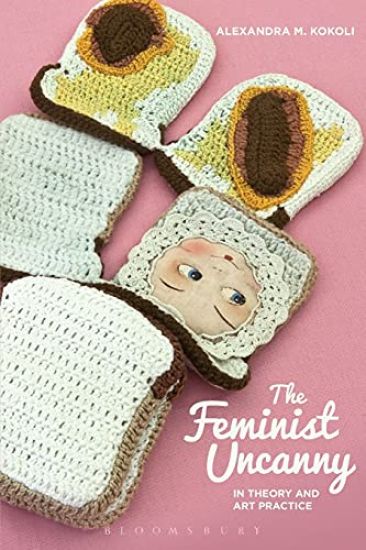
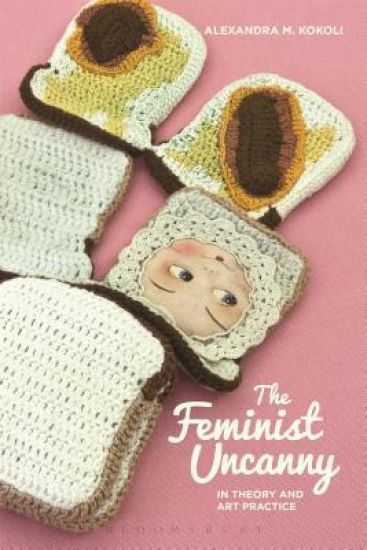
The Feminist Uncanny in Theory and Art Practice

The Feminist Uncanny in Theory and Art Practice

Alexandra M. Kokoli

Bloomsbury Academic
2017
nidottu
The Feminist Uncanny in Theory and Art Practice investigates the widely debated, deeply flawed yet influential concept of the uncanny through the lens of feminist theory and contemporary art practice. Not merely a subversive strategy but a cipher of the fraught but fertile dialogue between feminism and psychoanalysis, the uncanny makes an ideal vehicle for an arrangement marked by ambivalence and acts as a constant reminder that feminism and psychoanalysis are never quite at home with one another.The Feminist Uncanny begins by charting the uncanniness of femininity in foundational psychoanalytic texts by Ernst Jentsch, Sigmund Freud, Jacques Lacan and Mladen Dolar, and contextually introduces a range of feminist responses and appropriations by Hélène Cixous, Julia Kristeva and Sarah Kofman, among others. The book also offers thematically organised interpretations of famous artworks and practices informed by feminism, including Judy Chicago’s Dinner Party, Faith Ringgold’s story quilts and Susan Hiller’s ‘paraconceptualism’, as well as less well-known practice, such as the Women’s Postal Art Even (Feministo) and the photomontages of Maud Sulter. Dead (lexicalised) metaphors, unhomely domesticity, identity and (dis)identification, and the tension between family stories and art's histories are examined in and from the perspective of different artistic and critical practices, illustrating different aspects of the feminist uncanny.Through a ‘partisan’ yet comprehensive critical review of the fascinating concept of the uncanny, The Feminist Uncanny in Theory and Art Practice proposes a new concept, the feminist uncanny, which it upholds as one of the most enduring legacies of the Women's Liberation Movement in contemporary art theory and practice.
The Feminist Uncanny in Theory and Art Practice

The Feminist Uncanny in Theory and Art Practice

Alexandra M. Kokoli

Bloomsbury Academic
2016
sidottu
The Feminist Uncanny in Theory and Art Practice investigates the widely debated, deeply flawed yet influential concept of the uncanny through the lens of feminist theory and contemporary art practice. Not merely a subversive strategy but a cipher of the fraught but fertile dialogue between feminism and psychoanalysis, the uncanny makes an ideal vehicle for an arrangement marked by ambivalence and acts as a constant reminder that feminism and psychoanalysis are never quite at home with one another.The Feminist Uncanny begins by charting the uncanniness of femininity in foundational psychoanalytic texts by Ernst Jentsch, Sigmund Freud, Jacques Lacan and Mladen Dolar, and contextually introduces a range of feminist responses and appropriations by Hélène Cixous, Julia Kristeva and Sarah Kofman, among others. The book also offers thematically organised interpretations of famous artworks and practices informed by feminism, including Judy Chicago’s Dinner Party, Faith Ringgold’s story quilts and Susan Hiller’s ‘paraconceptualism’, as well as less well-known practice, such as the Women’s Postal Art Even (Feministo) and the photomontages of Maud Sulter. Dead (lexicalised) metaphors, unhomely domesticity, identity and (dis)identification, and the tension between family stories and art's histories are examined in and from the perspective of different artistic and critical practices, illustrating different aspects of the feminist uncanny.Through a ‘partisan’ yet comprehensive critical review of the fascinating concept of the uncanny, The Feminist Uncanny in Theory and Art Practice proposes a new concept, the feminist uncanny, which it upholds as one of the most enduring legacies of the Women's Liberation Movement in contemporary art theory and practice.
Legacy of a Past Life 2

Legacy of a Past Life 2

Alexandra M. Goliaszewski

Createspace Independent Publishing Platform
2016
nidottu
I couldn't take another psychic reading telling me something that would never happen and with that I couldn't ask the question about the heart shaped birthmark I was born with. This is where my personal journey began to find those answers especially for my soulmate, my name is Alice Kendrick and this is my personal journey into my past life to find out about the birthmark.One evening I decided to take a walk where I found myself a block from a curio shop called the Tigers eye. It seemed to draw me towards it as if it had all the answers I was searching for. I trusted in my feeling to see if this place was as My feeling were telling me. Once inside I saw a young woman standing by the counter holding a book that seemed familiar to me. It was there I kept thinking. She knows the truth. I then began to look about the shop seeing different items but one got my attention, it was a ruby red heart with a crystal heart. I picked it up and it had this almost hypnotic feel to it holding me for a moment when I was drawn back to the moment. I took it to the young woman and set it down on the counter. Ah, the soulmates heart...she says...would you like to know about this piece. Please, I said. This piece is a replica of the soulmates heart it was created by Ardon, a wizard in the 1400's. He made it for his sons betrothed, Kathryn...she was the kings daughter and he disapproved of her seeing him and that's when they decided to runaway. Then once Ardon placed the crystal pendent about her neck an impression was made. That will identify you as soulmates in future lives. Now, it began to make sense to me the birthmark and the reason for it. At this time I finally got the nerve to say to her...you know about me that I have the birthmark its in that book. Yes...she said. I then was told of at least five other past lives to my recent past life as Ann Cumberland and in this life my soulmate is Mark Roberts a reporter for the BBC.I then asked about her life what was it like she told me several things. In the late eighteen hundreds Ann wanted to return to England to see her family and friends and that she had a ticket to board the Garrison. On its voyage it was hit by a major storm that held it in high seas and strong winds, the waves would crash down on the Garrison pulling passengers out into the sea where they lost their lives. Ann was one of them. When a search was made they found no one in the water...no bodies...no life boats. They did however found the Garrison in tact, it ran aground on Leeds beach with only one small child aboard...hiding and unable to talk. All 2500 people were gone with nothing of them anywhere.And, as for me I quickly learned that Ann had something else in her life that held onto her as well. Ann had Mathew Rolston he was a painter in the late eighteen hundreds and had a desire for her that grew into a fierce jealousy for her that he began to appear to me with this same intensity. He wanted Ann and since I looked like her. He would make threats that once he found his identical and I knew what he meant...who he is in this life. And, that I knew. His name is Eric a co-worker he looks exactly like Mathew Rolston. I knew if he found him first I could lose Mark, but if I find the soulmates herat first then it will protect us, Mark and I from losing each other.