Think you've tried everything to occupy your child? But all the games get dull?Here's an idea - have your child learn a new skill and have fun. This book for kids about tools will help you do just that. You will be very pleased with the results.Being handy is a huge plus in life, from hanging a picture to other small projects. So now, your little one can get an early start. And you about to get your handy-person in the house. It sounds like a win-win.This construction activity book for kids will entertain their minds and boost creativity. Everyone will find something to their taste. This book has a lot to offer. Your child can choose from: Spot the differenceColoring pagesDot-to-dot tracingMazes and moreOver 40 pages of funThis activity book about tools is great for playing alone or with your friends and family. You can make it a challenge or a quest.This book is an actual box of wonders. You get to discover the names of numerous tools. And may get inspired to finish that old project. Or create a new one now with the help of your kid. What fun
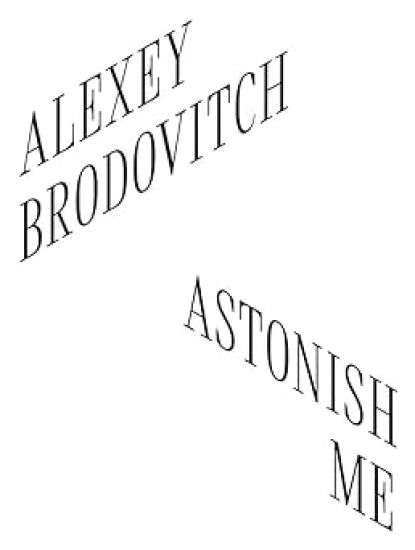
Reassessing the career of the hugely influential Harper’s Bazaar art director, who changed the course of twentieth-century American photography and graphic design This lavishly illustrated volume explores the influence and significance of the Russian-born photographer, designer, and instructor Alexey Brodovitch (1898–1971), best known for his art directorship of the American fashion magazine Harper’s Bazaar between 1934 and 1958, as well as his tutelage of many celebrated documentary and fashion photographers, including Irving Penn, Richard Avedon, Eve Arnold, and Lillian Bassman. Though disparate in their aesthetic approaches, these figures are unified by their responses to Brodovitch’s dictum to “astonish me.” The authors address Brodovitch’s impact on photography as an artistic medium in the mid-twentieth century and explore how European art and design became the foundation of a new American print culture. Brodovitch’s own work will be illuminated through his personal projects—such as the magazine Portfolio and the photographic project Ballet, which depicted performances of the Ballets Russes de Monte Carlo in the United States (whose evolution echoed Brodovitch’s own émigré condition). Case studies of his transformative collaborations with photographers such as Arnold, Avedon, Penn, Lisette Model, Henri Cartier-Bresson, Hans Namuth, and André Kertész reveal pivotal encounters that may surprise even the most ardent photography aficionado. An illustrated chronology offers an important tool for scholars on this influential but often overlooked figure. Distributed for the Barnes Foundation Exhibition Schedule: Barnes Foundation, Philadelphia (March 3–May 19, 2024)
Alexey Shchusev (1873–1949) was one of the most celebrated architects of the Soviet Union, famous for Lenin’s Mausoleum in Moscow. Not only a gifted designer of many prominent buildings, his career was quite unique and closely intertwined with the turbulent course of Russian and Soviet history. He was one of the very few architects who managed to rise to the top of the architectural hierarchy under the tsars and then to repeat this success under Soviet rule. Already before the Revolution of 1917, Shchusev was an acclaimed Revivalist architect, wellknown for his church designs and Moscow’s Kazan Station. In the 1920s, he became a renowned Constructivist. Following the official renunciation of Avant-Garde architecture ordered by Stalin, Shchusev swiftly became an advocate of Socialist Classicism, designing many projects in the dictator’s favoured Empire Style in order to satisfy the Stalinist state’s needs for monumental representation. Combining a scholarly study of Shchusev’s career with stunning photographs this book traces the development of this artistically and politically gifted architect through the architectural and historical changes in the first half of the twentieth century.
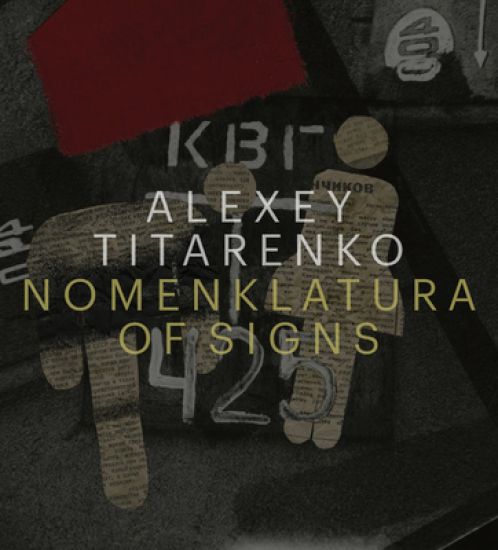
Alexey Titarenko created the series of collages and photomontages that became Nomenklatura of Signs from 1986-1991, under the strict Soviet rule. This new publication presents the series in its entirety for the first time. Working in secret, Titarenko conceived the project as a way to translate the visual reality of Soviet life into a language that expressed its absurdity, in a hierarchy of symbols that, together, formed a nomenclature — or, in Russian, nomenklatura, a term for the system by which government posts were filled in the Soviet Union. Drawing inspiration from the aesthetics of Kazimir Malevich, Aleksandr Rodchenko, and other artists of the early 20th century Russian avant-garde, Titarenko captures an uncanny, darkly comic world in which language is controlled and subverted much like the Newspeak of George Orwell’s novel 1984. The book includes an introduction by writer Jean-Jacques Mari and art historian Gabriel Bauret, as well as a critical interpretation of the series by art historian Ksenia Nouril. The book is designed by Kelly Doe Studio, NYC.
Ion Beam Treatment of Polymers, Second Edition presents the results of polymer investigations and technique development in the field of polymer modification by high-energy ion beams. It shows how to use ion beam equipment in the polymer industry, as well as how to use it to produce new polymer materials. The authors, scientists and researchers active in the field, provide analysis and data from their work, and give an overview of related work by others. The authors focus on wetting, adhesion, hardness, chemical activity, environmental stability, biocompatibility, new synthesis methods, and space flight construction. The technologies of material modification by a beam of high energy ions have wide applications in different fields, from microelectronics to medicine. Historically, ion beam treatment of polymers had fewer applications due to high costs of ion beam equipment and low costs of polymer materials. The modern development of new pulse sources with a high current density and wide ion beams increase the effectiveness of ion beam technology for polymers.
Modeling is a key component to sciences from mathematics to life science, including environmental and ecological studies. By looking at the underlying concepts of the software, we can make sure that we build mathematically feasible models and that we get the most out of the data and information that we have. Systems Science and Modeling for Ecological Economics shows how models can be analyzed using simple math and software to generate meaningful qualitative descriptions of system dynamics. This book shows that even without a full analytical, mathematically rigorous analysis of the equations, there may be ways to derive some qualitative understanding of the general behavior of a system. By relating some of the modeling approaches and systems theory to real-world examples the book illustrates how these approaches can help understand concepts such as sustainability, peak oil, adaptive management, optimal harvest and other practical applications.
Design and Fabrication of Large Polymer Constructions in Space is a ground-breaking study of the polymeric materials, advanced chemical processes, and cutting-edge technology required in the construction of large polymer-based structures for space, when all steps in the process are carried out in the space environment, whether in orbit, in deep space, or on the surface of a moon, asteroid, or planet.The book begins by introducing the fundamentals and requirements of large constructions and inflatable structures for space. The next section of the book focuses on the utilization of polymeric materials within the space environment, examining the effects on materials (vacuum, plasma, temperature), the possible approaches to polymerization both in space and in orbit, the preparation and structure of polymer composites, and the methods for testing materials and structures in terms of strength, defects, and aging. Three chapters then cover how these materials and techniques might be applied to specific categories of construction, including larger space habitats, supporting space structures, and ground infrastructure. Finally, the financial aspects, the consequences for human space exploitation, and the possible future developments are discussed.Using materials science to push the boundaries of construction for space exploration and exploitation, this book is a unique resource for academic researchers and advanced students across polymer science, advanced materials, chemical engineering, construction, and space engineering, as well as for researchers, scientists and engineers at space agencies, companies and laboratories, involved in developing materials or technology for use in space. This is also of great interest to anyone interested in the role of materials science in the building of large space stations, spacecraft, planetary bases, large aperture antenna, radiation and thermal shields, and repairmen sets.
Comprehensively updated for the latest syllabus, for first teaching September 2017, and developed directly with the IB, the second edition of this popular Psychology Course Book provides thorough coverage of all core and optional units at Standard and Higher Level, as well as assessment preparation support. Engaging, full-colour activities and in-depth, international case studies bring the theory to life, while structured opportunities for critical thinking and concept-based learning help to develop enquiring and independent learners. Clear and accessible language, a robust reference section, support for the Internal Assessment and TOK links ensure that all learners progress through the DP Psychology course with confidence.
Comprehensively updated for the latest syllabus, for first teaching September 2017, and developed directly with the IB, the second edition of this popular Psychology Course Book provides thorough coverage of all core and optional units at Standard and Higher Level, as well as assessment preparation support. Engaging, full-colour activities and in-depth, international case studies bring the theory to life, while structured opportunities for critical thinking and concept-based learning help to develop enquiring and independent learners. Clear and accessible language, a robust reference section, support for the Internal Assessment and TOK links ensure that all learners progress through the DP Psychology course with confidence. The online Course Book will be available on Oxford Education Bookshelf until 2025. Access is facilitated via a unique code, which is sent in the mail. The code must be linked to an email address, creating a user account. Access may be transferred once to a new user, once the initial user no longer requires access. You will need to contact your local Educational Consultant to arrange this.
Comprehensively updated for the latest syllabus, for first teaching September 2017, and developed directly with the IB, the second edition of this popular IB Psychology Course Book provides thorough coverage of all core and optional units at Standard and Higher Level, as well as assessment preparation support. Engaging, full-colour activities and in-depth, international case studies bring the theory to life, while structured opportunities for critical thinking and concept-based learning help to develop enquiring and independent learners. Clear and accessible language, a robust reference section, support for the Internal Assessment and TOK links ensure that all learners progress through the DP Psychology course with confidence. This pack includes one print Course Book and one online Course Book. The online Course Book will be available on Oxford Education Bookshelf until 2025. Access is facilitated via a unique code, which is sent in the mail. The code must be linked to an email address, creating a user account. Access may be transferred once to a new user, once the initial user no longer requires access. You will need to contact your local Educational Consultant to arrange this.
Comprehensively updated to match the new DP Psychology syllabus, for first teaching September 2017, the second edition of this assessment-focused study tool presents all the key concepts covered at Standard and Higher Level, building learners' confidence and promoting long-term achievement in examinations. Key concepts are broken down into manageable segments as part of a concise, accessible format, reinforcing understanding and facilitating effective revision. Rigorous extension material provides opportunities for learners to be stretched, whilst clear, straightforward language and visual aids support EAL learners.
IB Prepared resources are developed directly with the IB to provide the most up-to-date, authentic and authoritative guidance on DP assessment. IB Prepared: Psychology combines a concise review of course content with strategic guidance, sample material and exam-style practice opportunities, allowing learners to consolidate the knowledge and skills that are essential to success.
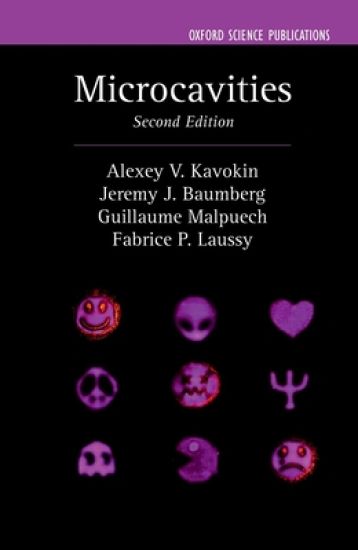
Microcavities are semiconductor, metal, or dielectric structures providing optical confinement in one, two or three dimensions. At the end of the 20th century, microcavities have attracted attention due to the discovery of a strong exciton-light coupling regime allowing for the formation of superposition light-matter quasiparticles: exciton-polaritons. In the following century several remarkable effects have been discovered in microcavities, including the Bose-Einstein condensation of exciton-polaritons, polariton lasing, superfluidity, optical spin Hall and spin Meissner effects, amongst other discoveries. Currently, polariton devices exploiting the bosonic stimulation effects at room temperature are being developed by laboratories across the world. This book addresses the physics of microcavities: from classical to quantum optics, from a Boltzmann gas to a superfluid. It provides the theoretical background needed for understanding the complex phenomena in coupled light-matter systems, and it presents a broad overview of experimental progress in the physics of microcavities.
Rapid development of microfabrication and assembly of nanostructures has opened up many opportunities to miniaturize structures that confine light, producing unusual and extremely interesting optical properties. This book addresses the large variety of optical phenomena taking place in confined solid state structures: microcavities. Realisations include planar and pillar microcavities, whispering gallery modes, and photonic crystals. The microcavities represent a unique laboratory for quantum optics and photonics. They exhibit a number of beautiful effects including lasing, superfluidity, superradiance, entanglement etc. Written by four practitioners strongly involved in experiments and theories of microcavities, it is addressed to any interested reader having a general physical background, but in particular to undergraduate and graduate students at physics faculties.
Metal-semiconductor nanostructures represent an important new class of materials employed in designing advanced optoelectronic and nanophotonic devices, such as plasmonic nanolasers, plasmon-enhanced light-emitting diodes and solar cells, plasmonic emitters of single photons, and quantum devices operating in infrared and terahertz domains. The combination of surface plasmon resonances in conducting structures, providing strong concentration of an electromagnetic optical field nearby, with sharp optical resonances in semiconductors, which are highly sensitive to external electromagnetic fields, creates a platform to control light on the nanoscale. The design of the composite metal-semiconductor system imposes the consideration of both the plasmonic resonances in metal and the optical transitions in semiconductors - a key issue being their resonant interaction providing a coupling regime. In this book the reader will find descriptions of electrodynamics of conducting structures, quantum physics of semiconductor nanostructures, and guidelines for advanced engineering of metal-semiconductor composites. These constituents form together the physical basics of the metal-semiconductor plasmonics, underlying many effective practical applications. The list of covered topics also includes the review of recent results, such as the achievement of a strong coupling regime, and the preservation of non-classical statistics of photons in plasmonic cavities combined with semiconductor nanostructures.
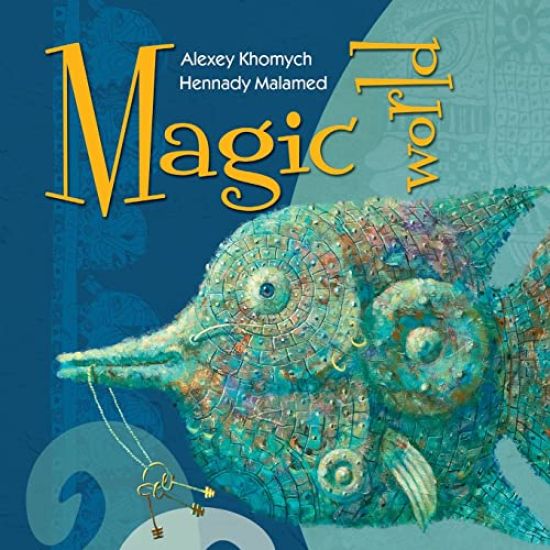
This amazing book is the synthesis of how the artist, the poet, and the designer perceive the world, and it's also an exquisite work of art, which, for both children and adults, will be interesting to explore while contemplating about the eternal. This Book is a Journey, a Key, a Fantasy... To find and to get submerged. To watch and to get amused. To read and to get marveled. To come - and to stay... This book includes the pictures created within a decade, all of them being full of mystery and magic; they may not seem obvious at the first sight, but they always offer something to think about, and it is children who are much easier to embrace these wonderful realms since children are always open for the miracle. The multidimensionality of the pictures gives us a unique opportunity to fantasize, and each of us will be able to see something unique in them.
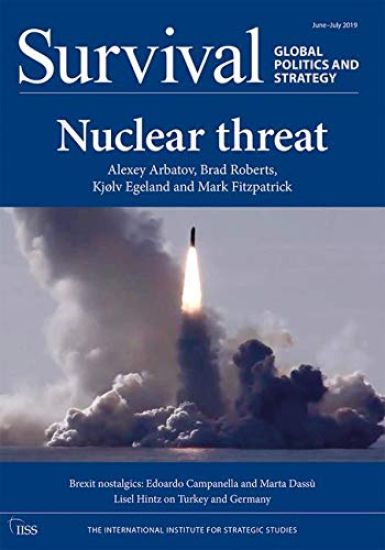
Survival, the bi-monthly publication from The International Institute for Strategic Studies, is a leading forum for analysis and debate of international and strategic affairs. With a diverse range of authors, thoughtful reviews and review essays, Survival is scholarly in depth while vivid, well-written and policy-relevant in approach. Shaped by its editors to be both timely and forward-thinking, the publication encourages writers to challenge conventional wisdom and bring fresh, often controversial, perspectives to bear on the strategic issues of the moment.
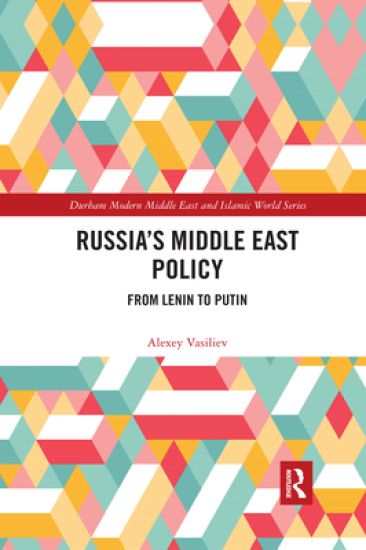
This extraordinary book charts the development of Russia’s relations with the Middle East from the Russian Revolution of 1917 to the present. It covers both high and low points – the closeness to Nasser’s Egypt, followed by reversal; the successful invasion of Afghanistan which later turned into a disaster; the changing relationship with Israel which was at some time surprisingly close; the relationship with Syria, which continues to be of huge significance; and much more. Written by one of Russia’s leading Arabists who was himself involved in the formation and implementation of policy, the book is engagingly written, extremely insightful, telling us things which only the author is in a position to tell us, and remarkably frank, not sparing senior Soviet and Russian figures from criticism. The book includes material based on the author’s conversations with other leading participants.