Kirjojen hintavertailu. Mukana 11 457 351 kirjaa ja 12 kauppaa.

Kirjahaku

Etsi kirjoja tekijän nimen, kirjan nimen tai ISBN:n perusteella.

1000 tulosta hakusanalla Alexia Kannas

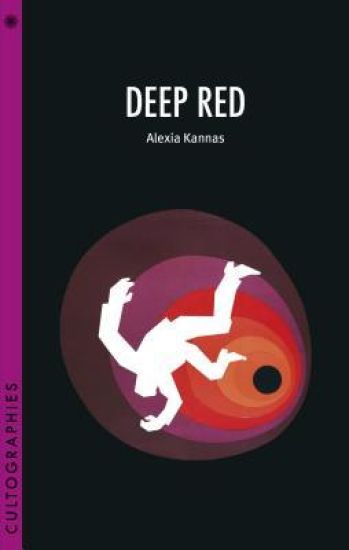
Deep Red

Deep Red

Alexia Kannas

Wallflower Press
2017
pokkari
The release of Italian director Dario Argento's Deep Red in 1975 saw both a return to form for the director and the crystallization of tropes of the giallo genre. While the film's immense popularity in Italy spawned a wave of copy-cat formula thrillers, this enthusiastic reception was not replicated by English-speaking audiences on its theatrical release. With its loosely woven narrative and hyper-stylized violent set pieces, Deep Red was critically panned in the United States and the UK as cliched and exploitative Euro-schlock. Tracing the film's history of censorship, re-edited releases, and its subsequent celebration by cult film audiences, this book considers how these competing discourses have helped to transform the film's cultural status and to fashion it as an exemplar of cult cinema.

Giallo!

Giallo!

Alexia Kannas

State University of New York Press
2021
pokkari
Traces the giallo mystery/horror genre from its genesis in Italian cinema of the 1960s and 1970s to its contemporary place in the global cult-film canon.Italian giallo films have a peculiar allure. Taking their name from the Italian for "yellow"- reflecting the covers of pulp crime novels-these genre movies were principally produced between 1960 and the late 1970s. These cinematic hybrids of crime, horror, and detection are characterized by elaborate set-piece murders, lurid aesthetics, and experimental soundtracks. Using critical frameworks drawn from genre theory, reception studies, and cultural studies, Giallo! traces this historically marginalized genre's journey from Italian cinemas to the global cult-film canon. Through close textual analysis of films including The Girl Who Knew Too Much (1963), Blood and Black Lace (1964), The Bird with the Crystal Plumage (1970), The Black Belly of the Tarantula (1971), and The Case of the Bloody Iris (1972), Alexia Kannas considers the rendering of urban space in the giallo and how it expresses a complex and unsettling critique of late modernity.
Giallo!

Giallo!

Alexia Kannas

State University of New York Press
2020
sidottu
Traces the giallo mystery/horror genre from its genesis in Italian cinema of the 1960s and 1970s to its contemporary place in the global cult-film canon.Italian giallo films have a peculiar allure. Taking their name from the Italian for "yellow"- reflecting the covers of pulp crime novels-these genre movies were principally produced between 1960 and the late 1970s. These cinematic hybrids of crime, horror, and detection are characterized by elaborate set-piece murders, lurid aesthetics, and experimental soundtracks. Using critical frameworks drawn from genre theory, reception studies, and cultural studies, Giallo! traces this historically marginalized genre's journey from Italian cinemas to the global cult-film canon. Through close textual analysis of films including The Girl Who Knew Too Much (1963), Blood and Black Lace (1964), The Bird with the Crystal Plumage (1970), The Black Belly of the Tarantula (1971), and The Case of the Bloody Iris (1972), Alexia Kannas considers the rendering of urban space in the giallo and how it expresses a complex and unsettling critique of late modernity.
Alexia

Alexia

Alexander Leff; Randi Starrfelt

Springer London Ltd
2013
sidottu
This book is a comprehensive review of the main acquired disorders of reading: hemianopic, pure and central alexia. The authors review the diagnostic criteria for each of the different types of disorder, and the efficacy of the therapeutic studies that have attempted to remediate them. The different theoretical models of adult reading, which largely rest on how the reading system responds to injury, are also discussed and evaluated. Focal brain injury caused by stroke and brain tumors are discussed in depth as are the effects of dementia on reading.This book starts with a chapter on normal reading, followed by chapters on hemianopic alexia, pure alexia and central alexia, each structured in the same way, with: a description of the condition; a historical review of cases to date; psychophysics; consideration of the causative lesions; evidence from functional imaging studies on patients and, most importantly, a review of the evidence base for treating each condition. Finally, there is a chapter on how patient data has informed how we think about reading.Alexia: Diagnosis, Treatment and Theory is aimed at neuropsychologists (both experimental and clinical), neurologists, speech therapists and others who deal with patients whose reading has been affected by an acquired brain injury, as well as interested students studying language disorders.
Alexia

Alexia

Alexander Leff; Randi Starrfelt

Springer London Ltd
2016
nidottu
This book is a comprehensive review of the main acquired disorders of reading: hemianopic, pure and central alexia. The authors review the diagnostic criteria for each of the different types of disorder, and the efficacy of the therapeutic studies that have attempted to remediate them. The different theoretical models of adult reading, which largely rest on how the reading system responds to injury, are also discussed and evaluated. Focal brain injury caused by stroke and brain tumors are discussed in depth as are the effects of dementia on reading.This book starts with a chapter on normal reading, followed by chapters on hemianopic alexia, pure alexia and central alexia, each structured in the same way, with: a description of the condition; a historical review of cases to date; psychophysics; consideration of the causative lesions; evidence from functional imaging studies on patients and, most importantly, a review of the evidence base for treating each condition. Finally, there is a chapter on how patient data has informed how we think about reading.Alexia: Diagnosis, Treatment and Theory is aimed at neuropsychologists (both experimental and clinical), neurologists, speech therapists and others who deal with patients whose reading has been affected by an acquired brain injury, as well as interested students studying language disorders.