

Kirjahaku
Etsi kirjoja tekijän nimen, kirjan nimen tai ISBN:n perusteella.
651 tulosta hakusanalla Alfano Alfani

Memorie Di Alfano Alfani Illustre Perugino Vissuto Tra Il XV, E Il XVI Secolo (1848)
Giancarlo Conestabile
KESSINGER PUBLISHING, LLC
2010
pokkari
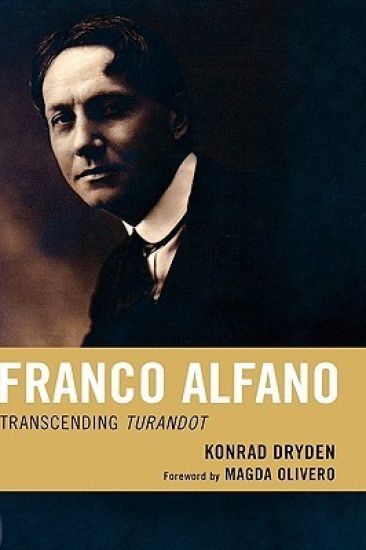
Franco Alfano: Transcending Turandot is the first fully documented biography in any language of Italy's last verismo composer, Franco Alfano (1875-1954), the composer chosen to complete Giacomo Puccini's swansong, Turandot, in 1924. Alfano remains one of the most undervalued composers, despite arguably representing the best of Puccini's contemporaries. His ability and prowess and his intimate friendship with Puccini, led to his selection for Turandot's completion: a daunting, enervating, and ultimately thankless task, which nearly robbed him of sight. This biography finally sheds light on Alfano's view of the events, as opposed to the all-too customary Toscanini/Puccini perspective, thereby revealing a largely unknown facet of one of the most important operatic works of the 20th-century. Konrad Dryden, a friend of the composer's late daughter, Nina Alfano, sets out to unravel and organize the facts of Alfano's life, offering a chronological presentation of the composer's vita as well as an examination of his major operas and their literary origins, providing the most complete portrait of the composer to date. Based on unpublished correspondence from international archives freshly translated by Dryden, the book also sheds light on such colleagues and contemporaries as Puccini, Toscanini, Mary Garden, Edward Johnson, Giordano, Rostand, Mascagni, and Mussolini. A selection of previously unpublished photographs is included, as well as plot synopses of Alfano's operatic works. A foreword by the legendary soprano Magda Olivero-his preferred interpreter and Liù in the world premiere recording of Turandot-and an appendix listing the composer's opus round out this important reference.
Franco Alfano: Transcending Turandot is the first fully documented biography in any language of Italy's last verismo composer, Franco Alfano (1875-1954), the composer chosen to complete Giacomo Puccini's swansong, Turandot, in 1924. Alfano remains one of the most undervalued composers, despite arguably representing the best of Puccini's contemporaries. His ability and prowess and his intimate friendship with Puccini, led to his selection for Turandot's completion: a daunting, enervating, and ultimately thankless task, which nearly robbed him of sight. This biography finally sheds light on Alfano's view of the events, as opposed to the all-too customary Toscanini/Puccini perspective, thereby revealing a largely unknown facet of one of the most important operatic works of the 20th-century. Konrad Dryden, a friend of the composer's late daughter, Nina Alfano, sets out to unravel and organize the facts of Alfano's life, offering a chronological presentation of the composer's vita as well as an examination of his major operas and their literary origins, providing the most complete portrait of the composer to date. Based on unpublished correspondence from international archives freshly translated by Dryden, the book also sheds light on such colleagues and contemporaries as Puccini, Toscanini, Mary Garden, Edward Johnson, Giordano, Rostand, Mascagni, and Mussolini. A selection of previously unpublished photographs is included, as well as plot synopses of Alfano's operatic works. A foreword by the legendary soprano Magda Olivero-his preferred interpreter and Li_ in the world premiere recording of Turandot-and an appendix listing the composer's opus round out this important reference.
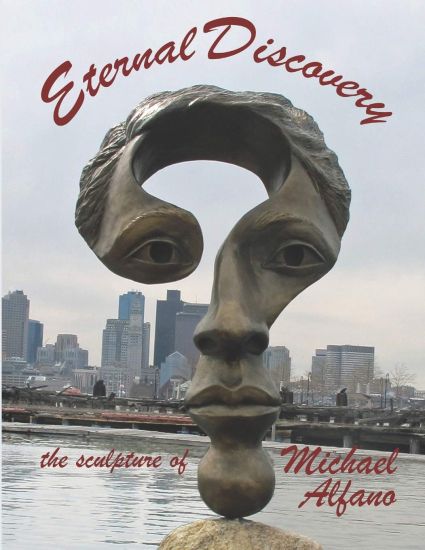
Eternal Discovery: the sculpture of Michael Alfano
Michael Alfano
Independently Published
2018
nidottu
A professional sculptor for over twenty years, Michael Alfano creates art that is figurative-based, surrealistic, and evocative. His sculpture goes beyond the literal, adapting classic forms to convey philosophical and abstract ideas.Through his art, Michael aims to provide an opening to different views, generate discussion, and powerfully affect people. His art relates to the everyday to cause people to experience, think, and understand life more fully.Michael's work is in private collections, parks, museums, and select galleries worldwide. His public art dots the east coast and earned him the headline "Sculptor with a Social Conscience." He is an American Artists Professional League Fellow, as well as an elected member of the Copley Society. Originally from New York, Michael now works in his home studio in the woods of Hopkinton, Massachusetts.

They weighed eight ounces-separately. Each glove laced tight to the tape wrapped fists of the fighter's abused hands. In total, they added a pound of weight-eight ounces of death dispensing leather and horsehair. The gloves were there to defend the boxer and prolong the battle. Men died wearing them and men killed using them.On the Depression racked streets of Chicago, it was hard to tell the good from the bad; hard to discover the truth among the lies; and especially hard to find an uncorrupt politician.It was Detective Tony Alfano's job to uncover a place to start.


LYRISCHE KUNSTLIEDER FÜR DEN SALON VON FRANCO ALFANO
Luvada Harrison
Verlag Unser Wissen
2021
nidottu

LYRISCHE KUNSTLIEDEREN VOOR DE SALON VAN FRANCO ALFANO
Luvada Harrison
Uitgeverij Onze Kennis
2021
nidottu
Lyric Art Songs for the Salon of Franco Alfano
Luvada Harrison
LAP Lambert Academic Publishing
2011
pokkari
CHANSONS D'ART LYRIQUE POUR LE SALON DE FRANCO ALFANO
Luvada Harrison
Editions Notre Savoir
2021
nidottu
CANCIONES DE ARTE LÍRICO PARA EL SALÓN DE FRANCO ALFANO
Luvada Harrison
Ediciones Nuestro Conocimiento
2021
nidottu
CANÇÕES DE ARTE LÍRICA PARA O SALÃO DO FRANCO ALFANO
Luvada Harrison
Edições Nosso Conhecimento
2021
nidottu

Envision in Depth Reading, Writing, and Researching Arguments, MLA Update
Christine Alfano; Alyssa O'Brien
Pearson
2017
nidottu
For courses in Writing. This version of Envision in Depth Reading, Writing, and Researching Arguments has been updated to reflect the 8th Edition of the MLA Handbook (April 2016)* Research-based writing through practical examples Envision in Depth: Reading, Writing, and Researching Arguments encourages students to look at an issue or idea from a new perspective through the process of analysis, argument, source evaluation, and research-based essay writing. This compact, colorful text for argument and research employs visual culture as an intuitive way into rhetoric and writing. Because of its authentic examples, fresh readings, and thorough instruction, students will enjoy learning to read, analyze, and argue about a range of written and visual texts relevant to our contemporary culture. * The 8th Edition introduces sweeping changes to the philosophy and details of MLA works cited entries. Responding to the “increasing mobility of texts,” MLA now encourages writers to focus on the process of crafting the citation, beginning with the same questions for any source. These changes, then, align with current best practices in the teaching of writing which privilege inquiry and critical thinking over rote recall and rule-following.
For courses in Argument. This version of Envision: Writing and Researching Arguments has been updated to reflect the 8th Edition of the MLA Handbook (April 2016)* Explores writing, rhetoric, and research by considering the different modes of argument in contemporary culture A concise and practical guide, Envision: Writing and Researching Arguments, Fifth Edition is ideal for composition courses focusing on argumentation and research-based writing. Each chapter uses interactive and engaging lessons, and focuses both on analyzing and producing words (print materials, articles, blog posts, and even tweets) as well as on writing about images and other contemporary media (cartoons, ads, photographs, films, video games, websites, and more). In this way, it teaches critical literacy about all kinds of texts. Additionally, numerous student writing examples and professional, published readings–both with annotations–are provided to reinforce the writing lessons in each chapter and to demonstrate how students might successfully implement such strategies in their own texts. Students using Envision will learn how to analyze and compose arguments, design and conduct research projects, and produce persuasive visual and oral presentations. * The 8th Edition introduces sweeping changes to the philosophy and details of MLA works cited entries. Responding to the “increasing mobility of texts,” MLA now encourages writers to focus on the process of crafting the citation, beginning with the same questions for any source. These changes, then, align with current best practices in the teaching of writing which privilege inquiry and critical thinking over rote recall and rule-following.
"In this masterly book, [Alfani] offers an insightful long-run perspective and fascinating lessons for the future. A must-read!"—Thomas Piketty, author of Capital in the Twenty-First CenturyA sweeping narrative that shows how the rich historically justified themselves by helping their societies in times of crisis, why they no longer do, and what that may mean for social stabilityThe rich have always fascinated, sometimes in problematic ways. Medieval thinkers feared that the super-rich would act 'as gods among men’; much more recently Thomas Piketty made wealth central to discussions of inequality. In this book, Guido Alfani offers a history of the rich and super-rich in the West, examining who they were, how they accumulated their wealth and what role they played in society. Covering the last thousand years, with frequent incursions into antiquity, and integrating recent research on economic inequality, Alfani finds—despite the different paths to wealth in different eras—fundamental continuities in the behaviour of the rich and public attitudes towards wealth across Western history. His account offers a novel perspective on current debates about wealth and income disparity.Alfani argues that the position of the rich and super-rich in Western society has always been intrinsically fragile; their very presence has inspired social unease. In the Middle Ages, an excessive accumulation of wealth was considered sinful; the rich were expected not to appear to be wealthy. Eventually, the rich were deemed useful when they used their wealth to help their communities in times of crisis. Yet in the twenty-first century, Alfani points out, the rich and the super-rich—their wealth largely preserved through the Great Recession and COVID-19—have been exceptionally reluctant to contribute to the common good in times of crisis, rejecting even such stopgap measures as temporary tax increases. History suggests that this is a troubling development—for the rich, and for everyone else.
"In this masterly book, [Alfani] offers an insightful long-run perspective and fascinating lessons for the future. A must-read!"—Thomas Piketty, author of Capital in the Twenty-First CenturyA sweeping narrative that shows how the rich historically justified themselves by helping their societies in times of crisis, why they no longer do, and what that may mean for social stabilityThe rich have always fascinated, sometimes in problematic ways. Medieval thinkers feared that the super-rich would act 'as gods among men’; much more recently Thomas Piketty made wealth central to discussions of inequality. In this book, Guido Alfani offers a history of the rich and super-rich in the West, examining who they were, how they accumulated their wealth and what role they played in society. Covering the last thousand years, with frequent incursions into antiquity, and integrating recent research on economic inequality, Alfani finds—despite the different paths to wealth in different eras—fundamental continuities in the behaviour of the rich and public attitudes towards wealth across Western history. His account offers a novel perspective on current debates about wealth and income disparity.Alfani argues that the position of the rich and super-rich in Western society has always been intrinsically fragile; their very presence has inspired social unease. In the Middle Ages, an excessive accumulation of wealth was considered sinful; the rich were expected not to appear to be wealthy. Eventually, the rich were deemed useful when they used their wealth to help their communities in times of crisis. Yet in the twenty-first century, Alfani points out, the rich and the super-rich—their wealth largely preserved through the Great Recession and COVID-19—have been exceptionally reluctant to contribute to the common good in times of crisis, rejecting even such stopgap measures as temporary tax increases. History suggests that this is a troubling development—for the rich, and for everyone else.
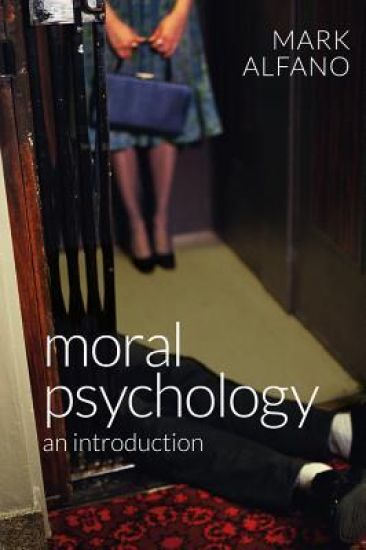
Moral psychology is the systematic inquiry into how morality works, when it does work, and breaks down when it doesn't work. In this comprehensive new textbook, Mark Alfano outlines the five central concepts in the study of moral psychology: agency, patiency, sociality, temporality, and reflexivity. Subsequent chapters each assess a key area of research, which Alfano relates both to the five central concepts and to empirical findings. He then draws out the philosophical implications of those findings before suggesting future directions for research. One of Alfano's guiding themes is that moral philosophy without psychological content is empty, whereas psychological investigation without philosophical insight is blind. He advocates and demonstrates a holistic vision that pictures moral psychology as a project of collaborative inquiry into the descriptive and normative aspects of the human condition. Featuring a glossary of technical terms, further reading sections and chapter-by-chapter study questions, this rich, systematic, and accessible introduction to moral psychology will be suitable for both undergraduates and researchers in philosophy, psychology and related fields.