Kirjojen hintavertailu. Mukana 11 238 394 kirjaa ja 12 kauppaa.

Kirjahaku

Etsi kirjoja tekijän nimen, kirjan nimen tai ISBN:n perusteella.

1000 tulosta hakusanalla Alfred F. Hurley

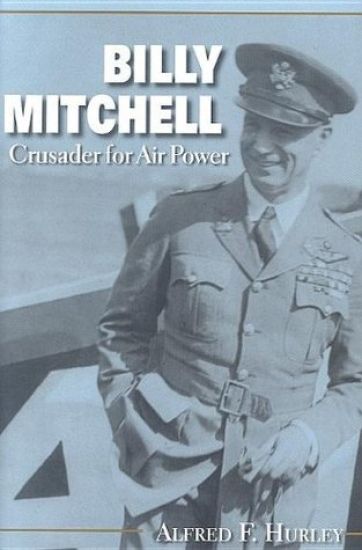
Billy Mitchell

Billy Mitchell

Alfred F. Hurley

Indiana University Press
2006
pokkari
"This is the best book—the most scholarly, the most judicial, the best written—about the intelligent, attractive, undiplomatic, quixotic Billy Mitchell, the legendary founder of today's United States Air Force." —Robert H. Ferrell, author of Harry S. Truman: A Life Revered by many Americans as a martyr for his cause, Brigadier General William "Billy" Mitchell has been one of the least understood figures of modern military history. His position as the dominant figure in American aviation from 1919 until his court-martial in 1925 has made him the frequent subject of biography, film, and television, but usually these portrayals have overemphasized the sensational elements of his story. For Mitchell, sensationalism was only a means of drawing attention to his farsighted ideas on aviation. In Billy Mitchell, he emerges as a man with a mission and a true pioneer of modern aviation, a man whose ideas about leadership in aerial operations inspire and instruct today's airmen and women. Anyone interested in aviation will delight in this compelling biography.
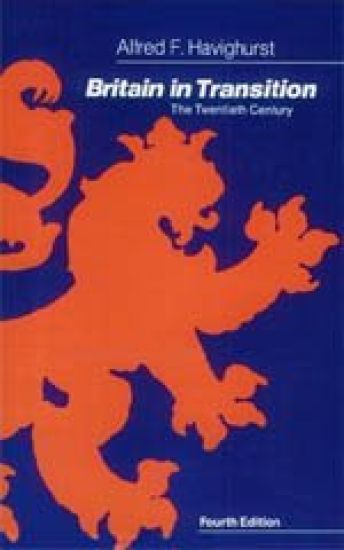
Britain in Transition

Britain in Transition

Alfred F. Havighurst

University of Chicago Press
1985
nidottu
This new edition extends and brings up to date the story of political, economic, and social change among the British. An entirely new chapter covers the Thatcher years, discussing such events as the Falkland Island crisis and the General Election of 1983. Other sections have been revised to reflect information only recently available. Throughout, Havighurst has incorporated material from official documents, monographs, biographies, articles, and the press. His fascinating narrative fully captures the ongoing importance of change itself in shaping the character of Britain.
Britain in Transition

Britain in Transition

Alfred F. Havighurst

University of Chicago Press
1985
sidottu
This new edition extends and brings up to date the story of political, economic, and social change among the British. An entirely new chapter covers the Thatcher years, discussing such events as the Falkland Island crisis and the General Election of 1983. Other sections have been revised to reflect information only recently available. Throughout, Havighurst has incorporated material from official documents, monographs, biographies, articles, and the press. His fascinating narrative fully captures the ongoing importance of change itself in shaping the character of Britain.
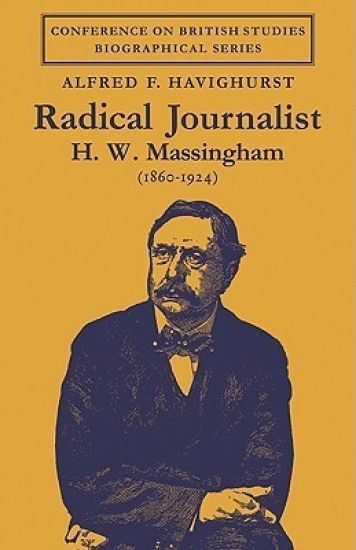
Radical Journalist

Radical Journalist

Alfred F. Havighurst

Cambridge University Press
2008
pokkari
The first study of the career of H. W. Massingham, an outstanding journalist early in the twentieth century when editors were often ranked equal in significance with ministers of state. Massingham featured most significantly in the history of the press as editor of the Star, the Daily Chronicle and finally the Nation. Professor Havighurst demonstrates Missingham's central position by arguing that he played a more important role in the formation of 'progressivism' in the period 1888–92 than even the Fabian Society. Massingham's clash with the Fabians is examined, along with his gradual disillusionment with Rosebery, his influence upon important questions of public opinion, his connection and his subsequent contact with Ramsay MacDonald. The influence of journalists is frequently alleged but is often unproved; this biography provides a detailed assessment of the impact of a major journalist and is a complete and fascinating account of an extremely important political figure. It will appeal to specialists in political and social history and the history of journalism.
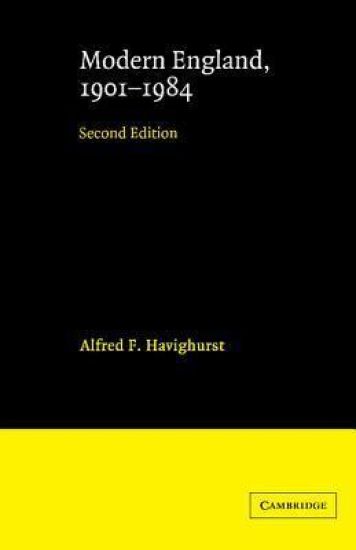
Modern England, 1901–1984

Modern England, 1901–1984

Alfred F. Havighurst

Cambridge University Press
2004
pokkari
This edition thoroughly updates the most comprehensive bibliography of printed books, articles, and standard texts on England in the twentieth century. As well as England, there is considerable information on Ireland, Scotland, the Commonwealth and the colonies. All aspects of the period are included except literature per se and local history that is of restricted relevance. The book also contains chapters on existing bibliographies, catalogues, guides, handbooks and general surveys as well as an index of authors, editors and translators. This handbook will be a useful tool for scholars and teachers at all levels, as well as the general reader interested in examining the period in depth.
Masquerade

Masquerade

Alfred F. Young

Random House USA Inc
2005
pokkari
In Masquerade, Alfred F. Young scrapes through layers of fiction and myth to uncover the story of Deborah Sampson, a Massachusetts woman who passed as a man and fought as a soldier for seventeen months toward the end of the American Revolution. Deborah Sampson was not the only woman to pose as a male and fight in the war, but she was certainly one of the most successful and celebrated. She managed to fight in combat and earn the respect of her officers and peers, and in later years she toured the country lecturing about her experiences and was partially successful in obtaining veterans' benefits. Her full story, however, was buried underneath exaggeration and myth (some of which she may have created herself), becoming another sort of masquerade. Young takes the reader with him through his painstaking efforts to reveal the real Deborah Sampson in a work of history that is as spellbinding as the best detective fiction.
The Shoemaker and the Tea Party

The Shoemaker and the Tea Party

Alfred F. Young

BEACON PRESS
2025
sidottu
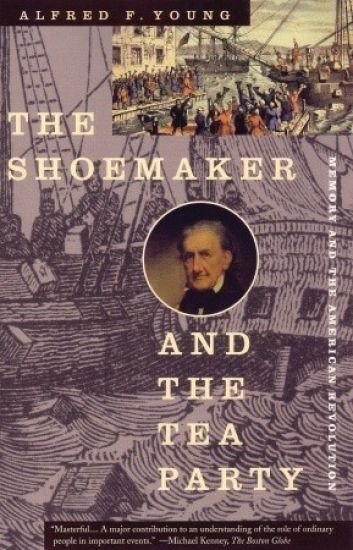
George Robert Twelves Hewes, a Boston shoemaker who participated in such key events of the American Revolution as the Boston Massacre and the Tea Party, might have been lost to history if not for his longevity and the historical mood of the 1830's. When the Tea Party became a leading symbol of the Revolutionary ear fifty years after the actual event, this 'common man' in his nineties was 'discovered' and celebrated in Boston as a national hero. Young pieces together this extraordinary tale, adding new insights about the role that individual and collective memory play in shaping our understanding of history.
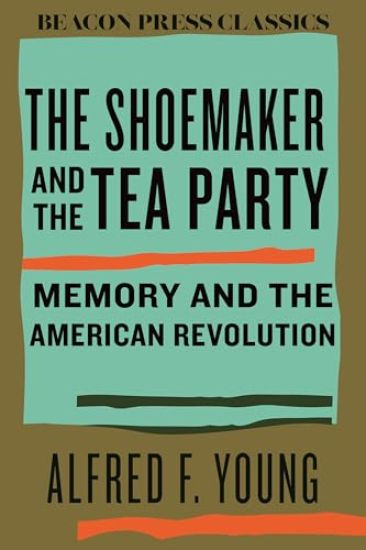
The Shoemaker and the Tea Party

The Shoemaker and the Tea Party

Alfred F. Young

Beacon Press
2000
pokkari
Award-winning historian Alfred F. Young unearths a rich story of the American Revolution with this account of George Robert Twelves Hewes, a Boston shoemaker who took part in such key events as the Boston Massacre and the Tea Party, and then served in the militia and as a seaman. Young pieces together this extraordinary tale and adds to it poignant reflections on the historical value of oral testimony and memory, and explores key questions about a time crucial in the shaping of national identity: What did it mean for the Tea Party to be claimed as an American symbol by both Boston Brahmins and the first trade unions? How do the memories of ordinary people pass into history? How should their stories be recognized by keepers of the past? Young's search leads us on an exciting journey and offers a provocative reading of American history.
Liberty Tree

Liberty Tree

Alfred F. Young

New York University Press
2006
sidottu
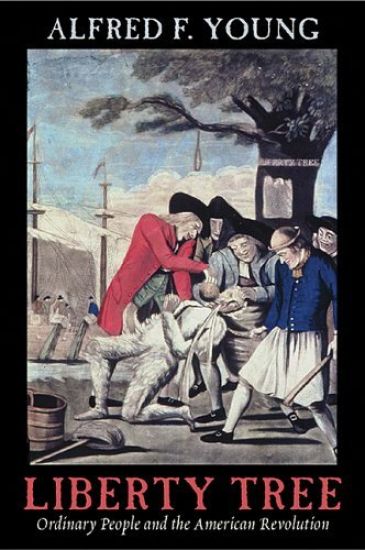
With the publication of Liberty Tree, acclaimed historian Alfred F. Young presents a selection of his seminal writing as well as two provocative, never-before-published essays. Together, they take the reader on a journey through the American Revolution, exploring the role played by ordinary women and men (called, at the time, people out of doors) in shaping events during and after the Revolution, their impact on the Founding generation of the new American nation, and finally how this populist side of the Revolution has fared in public memory. Drawing on a wide range of sources, which include not only written documents but also material items like powder horns, and public rituals like parades and tarring and featherings, Young places ordinary Americans at the center of the Revolution. For example, in one essay he views the Constitution of 1787 as the result of an intentional accommodation by elites with non-elites, while another piece explores the process of ongoing negotiations would-be rulers conducted with the middling sort; women, enslaved African Americans, and Native Americans. Moreover, questions of history and modern memory are engaged by a compelling examination of icons of the Revolution, such as the pamphleteer Thomas Paine and Boston's Freedom Trail. For over forty years, history lovers, students, and scholars alike have been able to hear the voices and see the actions of ordinary people during the Revolutionary Era, thanks to Young's path-breaking work, which seamlessly blends sophisticated analysis with compelling and accessible prose. From his award-winning work on mechanics, or artisans, in the seaboard cities of the Northeast to the all but forgotten liberty tree, a major popular icon of the Revolution explored in depth for the first time, Young continues to astound readers as he forges new directions in the history of the American Revolution.
Liberty Tree

Liberty Tree

Alfred F. Young

New York University Press
2006
pokkari
With the publication of Liberty Tree, acclaimed historian Alfred F. Young presents a selection of his seminal writing as well as two provocative, never-before-published essays. Together, they take the reader on a journey through the American Revolution, exploring the role played by ordinary women and men (called, at the time, people out of doors) in shaping events during and after the Revolution, their impact on the Founding generation of the new American nation, and finally how this populist side of the Revolution has fared in public memory. Drawing on a wide range of sources, which include not only written documents but also material items like powder horns, and public rituals like parades and tarring and featherings, Young places ordinary Americans at the center of the Revolution. For example, in one essay he views the Constitution of 1787 as the result of an intentional accommodation by elites with non-elites, while another piece explores the process of ongoing negotiations would-be rulers conducted with the middling sort; women, enslaved African Americans, and Native Americans. Moreover, questions of history and modern memory are engaged by a compelling examination of icons of the Revolution, such as the pamphleteer Thomas Paine and Boston's Freedom Trail. For over forty years, history lovers, students, and scholars alike have been able to hear the voices and see the actions of ordinary people during the Revolutionary Era, thanks to Young's path-breaking work, which seamlessly blends sophisticated analysis with compelling and accessible prose. From his award-winning work on mechanics, or artisans, in the seaboard cities of the Northeast to the all but forgotten liberty tree, a major popular icon of the Revolution explored in depth for the first time, Young continues to astound readers as he forges new directions in the history of the American Revolution.
Whose American Revolution Was It?

Whose American Revolution Was It?

Alfred F. Young; Gregory Nobles

New York University Press
2011
sidottu
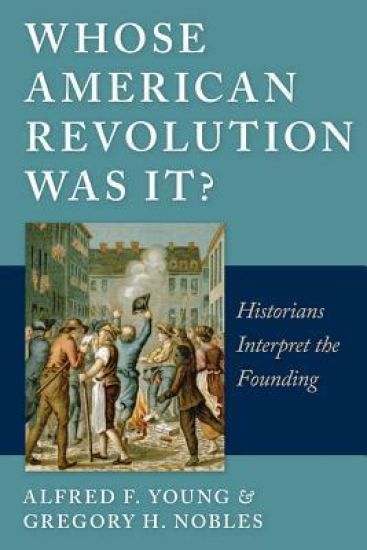
The meaning of the American Revolution has always been a much-contested question, and asking it is particularly important today: the standard, easily digested narrative puts the Founding Fathers at the head of a unified movement, failing to acknowledge the deep divisions in Revolutionary-era society and the many different historical interpretations that have followed. Whose American Revolution Was It? speaks both to the ways diverse groups of Americans who lived through the Revolution might have answered that question and to the different ways historians through the decades have interpreted the Revolution for our own time. As the only volume to offer an accessible and sweeping discussion of the period's historiography and its historians, Whose American Revolution Was It? is an essential reference for anyone studying early American history. The first section, by Alfred F. Young, begins in 1925 with historian J. Franklin Jameson and takes the reader through the successive schools of interpretation up to the 1990s. The second section, by Gregory H. Nobles, focuses primarily on the ways present-day historians have expanded our understanding of the broader social history of the Revolution, bringing onto the stage farmers and artisans, who made up the majority of white men, as well as African Americans, Native Americans, and women of all social classes.
Whose American Revolution Was It?

Whose American Revolution Was It?

Alfred F. Young; Gregory Nobles

New York University Press
2011
pokkari
The meaning of the American Revolution has always been a much-contested question, and asking it is particularly important today: the standard, easily digested narrative puts the Founding Fathers at the head of a unified movement, failing to acknowledge the deep divisions in Revolutionary-era society and the many different historical interpretations that have followed. Whose American Revolution Was It? speaks both to the ways diverse groups of Americans who lived through the Revolution might have answered that question and to the different ways historians through the decades have interpreted the Revolution for our own time. As the only volume to offer an accessible and sweeping discussion of the period's historiography and its historians, Whose American Revolution Was It? is an essential reference for anyone studying early American history. The first section, by Alfred F. Young, begins in 1925 with historian J. Franklin Jameson and takes the reader through the successive schools of interpretation up to the 1990s. The second section, by Gregory H. Nobles, focuses primarily on the ways present-day historians have expanded our understanding of the broader social history of the Revolution, bringing onto the stage farmers and artisans, who made up the majority of white men, as well as African Americans, Native Americans, and women of all social classes.