Kirjojen hintavertailu. Mukana 11 244 527 kirjaa ja 12 kauppaa.

Kirjahaku

Etsi kirjoja tekijän nimen, kirjan nimen tai ISBN:n perusteella.

1000 tulosta hakusanalla Alfred I. Tauber

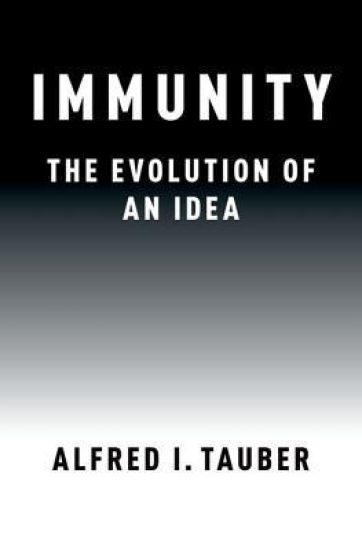
Immunity

Immunity

Alfred I. Tauber

Oxford University Press Inc
2017
sidottu
Senior scholar Alfred Tauber argues in this bold account that common approaches to the study of immunology are inherently flawed in its strict dichotomy of the self and non-self, or external invaders. The relationship between what is self and what is non-self is in reality a complex, dymanic, relational one. Autonomous agents are constantly in the midst of dialectical exchanges in which immunity mediates both noxious and benign encounters. Namely: rather than serving to defend an independent entity, immunity participates in an eco-system. Contemporary transplantation biology and autoimmunity have demonstrated phenomena that upset rigid adherence to the self/non-self dichotomy. Placing tolerant immune mechanisms within a broad ecological context has highlighted the balance of co-operative and competitive relationships in which immunity functions. By understanding immunity this way, as a 'symbiotic turn,' we come to see that immune reactivity (rejection or tolerance) is a second-order response to the cognitive functions of the immune system. Organisms have a complex capacity to respond to environment, and, through Tauber's insignts, we appreciate them more fully when we grasp the flexibility of the borders of organisms. After first providing an overview of the history of immunology, and explaining why the dominant understanding of it is incomplete and limiting, Tauber argues for this new approach to immunology and explains how it will usher in a new biology in which symbiosis is the rule, not the exception.
Immunity

Immunity

Alfred I. Tauber

Oxford University Press Inc
2018
nidottu
Modern immunology traditionally conceives of the immune system as providing defense against pathogens. Alfred I. Tauber criticizes this conception of immunity as too narrow, because it discounts much of the immune system's other normal functions. These include active tolerance of nutritional exchanges with the environment and the stabilization of cooperative relationships with resident micro-organisms. An expanded account extends immunity's functional role from singular 'defense' to broadened discernment of environmental 'exchange.' This ecological perspective has profound theoretical implications, for the basic notion of immune identity is reconfigured: highlighting the organism as a holobiont (a consortium of diverse organisms living in cooperative relationships) challenges prevailing concepts of individuality and the self/nonself dichotomy heretofore organizing immune theory. Indeed, if theoretical interest is focused on the challenges of maintaining immune balance in the full ecological context of the organism, then immune regulation assumes new complexity. Tauber maintains that the key to unravelling that puzzle requires a critical re-assessment of the cognitive processes that underlie immune effector functions. Accordingly, he provides the outline of a re-formulated 'cognitive paradigm' that dispenses with agent-based models and adopts an ecologically conceived understanding of perception and information processing. The implications of this revised configuration of immunity and its deconstructed notions of individuality and selfhood have wide significance for philosophers and life scientists working in immunology, ecology, and the cognitive sciences.
Henry David Thoreau and the Moral Agency of Knowing

Henry David Thoreau and the Moral Agency of Knowing

Alfred I. Tauber

University of California Press
2003
pokkari
In his graceful philosophical account, Alfred I. Tauber shows why Thoreau still seems so relevant today - more relevant in many respects than he seemed to his contemporaries. Although Thoreau has been skillfully and thoroughly examined as a writer, naturalist, mystic, historian, social thinker, Transcendentalist, and lifelong student, we may find in Tauber's portrait of Thoreau the moralist a characterization that binds all these aspects of his career together. Thoreau was caught at a critical turn in the history of science, between the ebb of Romanticism and the rising tide of positivism. He responded to the challenges posed by the new ideal of objectivity not by rejecting the scientific world view, but by humanizing it for himself. Tauber portrays Thoreau as a man whose moral vision guided his life's work. Each of Thoreau's projects reflected a self-proclaimed 'metaphysical ethics', an articulated program of self-discovery and self-knowing. By writing, by combining precision with poetry in his naturalist pursuits and simplicity with mystical fervor in his daily activity, Thoreau sought to live a life of virtue - one he would characterize as marked by deliberate choice. This unique vision of human agency and responsibility will still seem fresh and contemporary to readers at the start of the twenty-first century.
The Immune Self

The Immune Self

Alfred I. Tauber

Cambridge University Press
1994
sidottu
This is one of the first books in a new series that will publish the very best work in the philosophy of biology. The series will be non-sectarian in character, will extend across the broadest range of topics, and will be genuinely interdisciplinary. The Immune Self is a critical study of immunology from its origins at the end of the nineteenth century to its contemporary formulation. The book offers the first extended philosophical critique of immunology, in which the function of the term ‘self’ that underlies the structure of current immune theory is analysed. However, this analysis is carefully integrated into a broad survey of the major scientific developments in immunology, a discussion of their historical context, and a review of the conceptual arguments that have moulded this sophisticated modern science.
The Immune Self

The Immune Self

Alfred I. Tauber

Cambridge University Press
1996
pokkari
The Immune Self is a critical study of immunology from its origins at the end of the nineteenth century to its contemporary formulation. The book offers the first extended philosophical critique of immunology, in which the function of the term self, which underlies the structure of current immune theory, is analysed. However, this analysis is carefully integrated into a broad survey of the major scientific developments in immunology, a discussion of their historical context, and a review of the conceptual arguments that have moulded this sophisticated modern science.
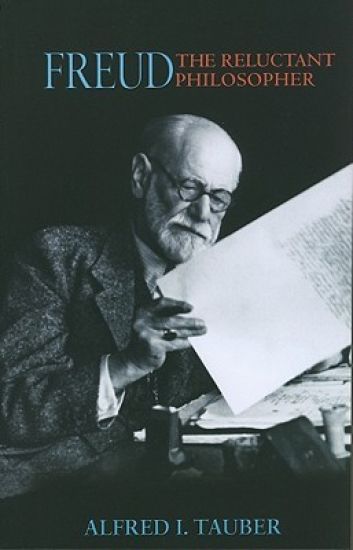
Freud, the Reluctant Philosopher

Freud, the Reluctant Philosopher

Alfred I. Tauber

Princeton University Press
2010
pokkari
Freud began university intending to study both medicine and philosophy. But he was ambivalent about philosophy, regarding it as metaphysical, too limited to the conscious mind, and ignorant of empirical knowledge. Yet his private correspondence and his writings on culture and history reveal that he never forsook his original philosophical ambitions. Indeed, while Freud remained firmly committed to positivist ideals, his thought was permeated with other aspects of German philosophy. Placed in dialogue with his intellectual contemporaries, Freud appears as a reluctant philosopher who failed to recognize his own metaphysical commitments, thereby crippling the defense of his theory and misrepresenting his true achievement. Recasting Freud as an inspired humanist and reconceiving psychoanalysis as a form of moral inquiry, Alfred Tauber argues that Freudianism still offers a rich approach to self-inquiry, one that reaffirms the enduring task of philosophy and many of the abiding ethical values of Western civilization.
Requiem for the Ego

Requiem for the Ego

Alfred I. Tauber

Stanford University Press
2013
sidottu
Requiem for the Ego recounts Freud's last great attempt to 'save' the autonomy of the ego, which drew philosophical criticism from the most prominent philosophers of the period—Adorno, Heidegger, and Wittgenstein. Despite their divergent orientations, each contested the ego's capacity to represent mental states through word and symbol to an agent surveying its own cognizance. By discarding the subject-object divide as a model of the mind, they dethroned Freud's depiction of the ego as a conceit of a misleading self-consciousness and a faulty metaphysics. Freud's inquisitors, while employing divergent arguments, found unacknowledged consensus in identifying the core philosophical challenges of defining agency and describing subjectivity. In Requiem, Tauber uniquely synthesizes these philosophical attacks against psychoanalysis and, more generally, provides a kaleidoscopic portrait of the major developments in mid-20th century philosophy that prepared the conceptual grounding for postmodernism.
Requiem for the Ego

Requiem for the Ego

Alfred I. Tauber

Stanford University Press
2013
pokkari
Requiem for the Ego recounts Freud's last great attempt to 'save' the autonomy of the ego, which drew philosophical criticism from the most prominent philosophers of the period—Adorno, Heidegger, and Wittgenstein. Despite their divergent orientations, each contested the ego's capacity to represent mental states through word and symbol to an agent surveying its own cognizance. By discarding the subject-object divide as a model of the mind, they dethroned Freud's depiction of the ego as a conceit of a misleading self-consciousness and a faulty metaphysics. Freud's inquisitors, while employing divergent arguments, found unacknowledged consensus in identifying the core philosophical challenges of defining agency and describing subjectivity. In Requiem, Tauber uniquely synthesizes these philosophical attacks against psychoanalysis and, more generally, provides a kaleidoscopic portrait of the major developments in mid-20th century philosophy that prepared the conceptual grounding for postmodernism.
William James and Sigmund Freud on the Mind

William James and Sigmund Freud on the Mind

Alfred I. Tauber

TAYLOR FRANCIS LTD
2025
nidottu
This is the first extended study comparing the philosophies of mind promoted by Sigmund Freud and William James, whose opposing views had profound influences on the development of twentieth-century philosophy, cognitive science, and psychology.Each asked, can the mind be scientifically characterized? While Freud thought that psychoanalysis had established a science of the mind, James maintained that the subjective could not be objectified, and psychology was left with only "the crumbs" of analysis. Tauber’s presentation of a conjured philosophical confrontation occasioned by their first and only meeting in 1909 uncovers the clashing philosophies of mind underlying their respective positions. In comparing their opposing portraits of the psyche, persistent questions about self-knowledge, personal identity, and moral agency are presented at their fin de siècle origin. In this setting, the James-Freud dispute offers a unique perspective about our own contemporary dilemmas swirling around selfhood, consciousness, and the subjectivity of human experience.This eclectic history of early psychology will interest psychoanalysts, psychologists, and philosophers as well as those interested in the origins of pragmatism, phenomenology, modernism, and twentieth-century positivism.
William James and Sigmund Freud on the Mind

William James and Sigmund Freud on the Mind

Alfred I. Tauber

TAYLOR FRANCIS LTD
2025
sidottu
This is the first extended study comparing the philosophies of mind promoted by Sigmund Freud and William James, whose opposing views had profound influences on the development of twentieth-century philosophy, cognitive science, and psychology.Each asked, can the mind be scientifically characterized? While Freud thought that psychoanalysis had established a science of the mind, James maintained that the subjective could not be objectified, and psychology was left with only "the crumbs" of analysis. Tauber’s presentation of a conjured philosophical confrontation occasioned by their first and only meeting in 1909 uncovers the clashing philosophies of mind underlying their respective positions. In comparing their opposing portraits of the psyche, persistent questions about self-knowledge, personal identity, and moral agency are presented at their fin de siècle origin. In this setting, the James-Freud dispute offers a unique perspective about our own contemporary dilemmas swirling around selfhood, consciousness, and the subjectivity of human experience.This eclectic history of early psychology will interest psychoanalysts, psychologists, and philosophers as well as those interested in the origins of pragmatism, phenomenology, modernism, and twentieth-century positivism.
Science and the Quest for Meaning

Science and the Quest for Meaning

Alfred I. Tauber

Baylor University Press
2020
pokkari
In this deeply thoughtful exploration, Alfred Tauber, a practicing scientist and highly regarded philosopher, eloquently traces the history of the philosophy of science, seeking in the end to place science within the humanistic context from which it originated. Avoiding the dogmatism that has defined both extremes in the recent "Science Wars" and presenting a conception of reason that lifts the discussion out of the interminable debates about objectivity and neutrality, Tauber offers a way of understanding science as an evolving relationship between facts and the values that govern their discovery and applications. This timely text presents a centrist but highly consequently view, wherein "truth" and "objectivity" can function as working ideals and serve as pragmatic tools. If the humanization of science is to reach completion, it must reveal not only the meaning it receives from its social and cultural settings but also that which it lends to them.Packed with well-chosen case studies, Science and the Quest for Meaning is a trust-worthy and engaging introduction to the history of, and the current debate surrounding, the philosophy of science.
The Triumph of Uncertainty

The Triumph of Uncertainty

Alfred I. Tauber

CENTRAL EUROPEAN UNIVERSITY PRESS
2022
nidottu
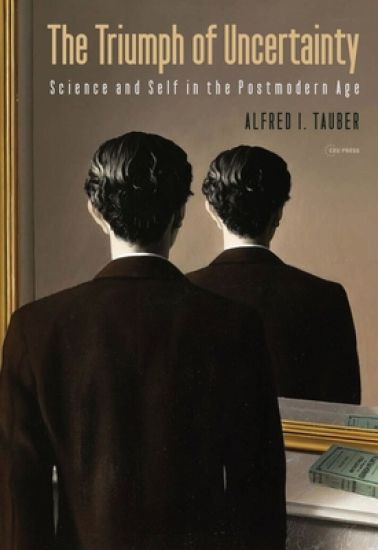
Tauber, a leading figure in history and philosophy of science, offers a unique autobiographical overview of how science as a discipline of thought has been characterized by philosophers and historians over the past century. He frames his account through science’s – and his own personal – quest for explanatory certainty. During the 20th century, that goal was displaced by the probabilistic epistemologies required to characterize complex systems, whether in physics, biology, economics, or the social sciences. This “triumph of uncertainty” is the inevitable outcome of irreducible chance and indeterminate causality. And beyond these epistemological limits, the interpretative faculties of the individual scientist (what Michael Polanyi called the “personal” and the “tacit”) invariably affects how data are understood. Whereas positivism had claimed radical objectivity, post-positivists have identified how a web of non-epistemic values and social forces profoundly influence the production of knowledge. Tauber presents a case study of these claims by showing how immunology has incorporated extra-curricular social elements in its theoretical development and how these in turn have influenced interpretive problems swirling around biological identity, individuality, and cognition. The correspondence between contemporary immunology and cultural notions of selfhood are strong and striking. Just as uncertainty haunts science, so too does it hover over current constructions of personal identity, self knowledge, and moral agency. Across the chasm of uncertainty, science and selfhood speak.
The Triumph of Uncertainty

The Triumph of Uncertainty

Alfred I. Tauber

CENTRAL EUROPEAN UNIVERSITY PRESS
2022
sidottu
Tauber, a leading figure in history and philosophy of science, offers a unique autobiographical overview of how science as a discipline of thought has been characterized by philosophers and historians over the past century. He frames his account through science’s – and his own personal – quest for explanatory certainty. During the 20th century, that goal was displaced by the probabilistic epistemologies required to characterize complex systems, whether in physics, biology, economics, or the social sciences. This “triumph of uncertainty” is the inevitable outcome of irreducible chance and indeterminate causality. And beyond these epistemological limits, the interpretative faculties of the individual scientist (what Michael Polanyi called the “personal” and the “tacit”) invariably affects how data are understood. Whereas positivism had claimed radical objectivity, post-positivists have identified how a web of non-epistemic values and social forces profoundly influence the production of knowledge. Tauber presents a case study of these claims by showing how immunology has incorporated extra-curricular social elements in its theoretical development and how these in turn have influenced interpretive problems swirling around biological identity, individuality, and cognition. The correspondence between contemporary immunology and cultural notions of selfhood are strong and striking. Just as uncertainty haunts science, so too does it hover over current constructions of personal identity, self knowledge, and moral agency. Across the chasm of uncertainty, science and selfhood speak.
Metchnikoff and the Origins of Immunology

Metchnikoff and the Origins of Immunology

Alfred I. Tauber; Leon Chernyak

Oxford University Press Inc
1991
sidottu
This fascinating intellectual history is the first critical study of the work of Elie Metchnikoff, the founding father of modern immunology. Metchnikoff authored and championed the theory that phagocytic cells actively defend the host body against pathogens and diseased cells. In this scientific biography, Tauber and Chernyak explore Metchnikoff's development as an embryologist, showing how it prepared him to propose his theory of host-pathogen interaction. They discuss the profound impact of Darwin's theory of evolution on his progress, and the influence of 19th century debates on vitalism, teleology, and mechanism. As a case study of scientific discovery, this work offers lucid insight into the process of creative science and its dependence on cultural and philosophic sources.
The Generation of Diversity

The Generation of Diversity

Alfred I. Tauber; Scott H. Podolsky

Harvard University Press
2000
nidottu
In recent decades immunology has been one of the most exciting--and successful--fields of biomedical research. Over the past thirty years immunologists have acquired a detailed understanding of the immune system's unique recognition mechanism and of the cellular and chemical means used to destroy or neutralize invading organisms. This understanding has been formulated in terms of the clonal selection theory, the dominant explanation of immune behavior. That story is the subject of The Generation of Diversity.A major problem for immunologists had long been to determine how cells of the immune system could produce millions of distinct antibodies--and produce them on demand. The clonal selection theory explains that cells with genetic instructions to produce each antibody exist in the body in small numbers until exposure to the right molecule--the antigen--triggers the selective cloning that will reproduce exactly the cell needed. But how can so many different antibody-producing cells be generated from such limited genetic material? The solution to this question came from new applications of molecular biology, and, as the authors argue, the impact of the new techniques changed both the methods and the concepts of immunology.The Generation of Diversity is an intellectual history of the major theoretical problem in immunology and its resolution in the post-World War II period. It will provide for immunologists essential background for understanding the conceptual conflicts occurring in the field today.
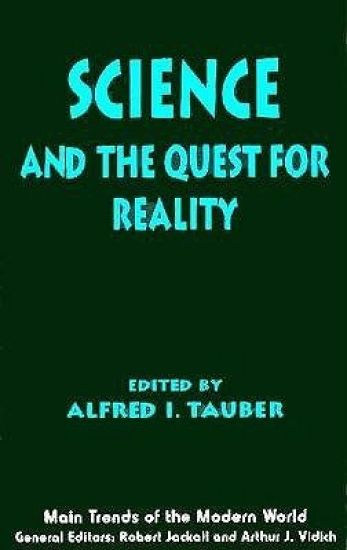
Science and the Quest for Reality

Science and the Quest for Reality

Alfred I. (EDT) Tauber

New York University Press
1997
sidottu
Since Galileo, critics have waged a relentless assault against science, attacking it as dehumanizing, reductionist, relativistic, dominating, and imperialistic. Supporters meanwhile view science as synonymous with modernity and progress. The current debates over the role of science-- described by such headlines as Scientists are Urged to Fight Back Against 'Politically Correct' Critics in The Chronicle of Higher Education--testify to how deeply divided we remain about the values and responsibilities of science in the modern age. Acknowledging the validity of a deep skepticism about science but eager to preserve its strengths and values, Alfred I. Tauber's anthology seeks to avoid an either/or configuration. Science, Tauber argues, is fundamentally pluralistic and must accept detracting criticism as part of its very code in the hope that, in its defense, the scientific enterprise is strengthened and reaffirmed.Featuring essays by a wide range of interdisciplinary, classical, and contemporary thinkers such as Martin Heidegger, Thomas Kuhn, Hilary Putnam, Evelyn Fox Keller, and Max Weber, the work is divided into five parts: science and its worldview; the problem of scientific realism; the nature of scientific change; the boundaries of science; and science and values.
Science and the Quest for Reality

Science and the Quest for Reality

Alfred I. (EDT) Tauber

New York University Press
1996
pokkari
Since Galileo, critics have waged a relentless assault against science, attacking it as dehumanizing, reductionist, relativistic, dominating, and imperialistic. Supporters meanwhile view science as synonymous with modernity and progress. The current debates over the role of science-- described by such headlines as Scientists are Urged to Fight Back Against 'Politically Correct' Critics in The Chronicle of Higher Education--testify to how deeply divided we remain about the values and responsibilities of science in the modern age. Acknowledging the validity of a deep skepticism about science but eager to preserve its strengths and values, Alfred I. Tauber's anthology seeks to avoid an either/or configuration. Science, Tauber argues, is fundamentally pluralistic and must accept detracting criticism as part of its very code in the hope that, in its defense, the scientific enterprise is strengthened and reaffirmed.Featuring essays by a wide range of interdisciplinary, classical, and contemporary thinkers such as Martin Heidegger, Thomas Kuhn, Hilary Putnam, Evelyn Fox Keller, and Max Weber, the work is divided into five parts: science and its worldview; the problem of scientific realism; the nature of scientific change; the boundaries of science; and science and values.
Pflanzenanatomisches Praktikum I

Pflanzenanatomisches Praktikum I

Wolfram Braune; Alfred Leman; Hans Taubert

Spektrum Akademischer Verlag (Germany)
2009
nidottu
Das "Pflanzenanatomische Praktikum" ist seit 9 Auflagen in der botanischen Lehre etabliert und seitdem immer wieder verbessert und aktualisiert worden. Der vorliegende Band 1 ist nach folgenden Prinzipien aufgebaut: Allgemeine Anleitung zum Präparieren und Mikroskopieren botanischer Objekte, Übungen zur botanischen Zytologie und Histologie, Gegenüberstellung von Mikrophoto und Zeichnung, Anatomie der Vegetationsorgane der höheren Pflanzen, Embryologie der Spermatophyta. Band 2 des "Pflanzenanatomischen Praktikums" enthält Anleitungen zum Präparieren und Mikroskopieren niederer Pflanzen einschließlich der Bakterien und Pilze. Das Gesamtwerk dient Studierenden und Dozenten der Biologie, Botanik, Pharmazie und Landwirtschaft zum Kennenlernen von Bau, Fortpflanzungs- und Entwicklungsprozessen pflanzlicher Organismen. "Band 1 dieses Doppelwerkes ist geradezu ein Klassiker, der seit seiner ersten Auflage viele Lernende begleitet und begeistert hat." (Mikrokosmos)
Edward Ball and the Alfred I. DuPont Tradition

Edward Ball and the Alfred I. DuPont Tradition

Francis P. Gaines

Literary Licensing, LLC
2013
sidottu
""Edward Ball and the Alfred I. DuPont Tradition"" is a book written by Francis P. Gaines that delves into the life and legacy of Edward Ball, a prominent businessman and philanthropist who was heavily involved in the growth and development of the DuPont company. The book explores Ball's personal history, including his upbringing in a wealthy family in Florida, his education, and his early business ventures. It also examines his role in the DuPont company, where he served as a key executive and helped to steer the company through periods of growth and change.Throughout the book, Gaines provides a detailed analysis of the DuPont company and its history, as well as the broader economic and social context in which it operated. He explores the various challenges and opportunities that faced the company over the years, from the early days of the chemical industry to the modern era of global competition and technological innovation.In addition to his work at DuPont, Ball was also deeply involved in philanthropy and public service. The book examines his contributions to various charitable causes and his efforts to improve the quality of life for people in his community and beyond.Overall, ""Edward Ball and the Alfred I. DuPont Tradition"" is a comprehensive and engaging account of one man's life and his impact on a major American corporation. It offers valuable insights into the history of the DuPont company and the broader economic and social forces that have shaped the modern world.This is a new release of the original 1959 edition.This scarce antiquarian book is a facsimile reprint of the old original and may contain some imperfections such as library marks and notations. Because we believe this work is culturally important, we have made it available as part of our commitment for protecting, preserving, and promoting the world's literature in affordable, high quality, modern editions, that are true to their original work.