Kirjojen hintavertailu. Mukana 11 244 527 kirjaa ja 12 kauppaa.

Kirjahaku

Etsi kirjoja tekijän nimen, kirjan nimen tai ISBN:n perusteella.

1000 tulosta hakusanalla Alfred Kazin

A Lifetime Burning in Every Moment: From the Journals of Alfred Kazin
From the journals of one of our most distinguished critics comes an extraordinary panorama of the intellectual, social and political culture of the last half century. Written with the vividness and power of first-rate fiction, it brings to life the great artists and thinkers who shaped the times, including Saul Bellow, Bernard Malamud and Hannah Arendt, and shares Kazin's insights on politics, literature, Jewish life after the Holocaust and American society. It is an immensely rich and resonant memoir from an observer whose eloquence can imbue each moment lived with a lifetime of thought and passion.
Alfred Kazin

Alfred Kazin

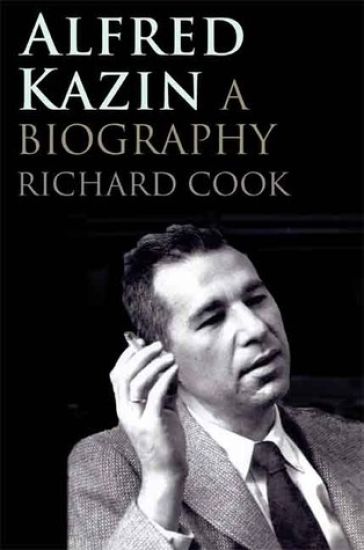
Richard M. Cook

Yale University Press
2008
sidottu
The first biography of Alfred Kazin–inveterate New Yorker, autobiographer, and perhaps the last great man of American letters in the tradition of Edmund Wilson Born in 1915 to barely literate Jewish immigrants in the Brownsville section of Brooklyn, Alfred Kazin rose from near poverty to become a dominant figure in twentieth-century literary criticism and one of America’s last great men of letters. Biographer Richard M. Cook provides a portrait of Kazin in his public roles and in his frequently unhappy private life. Drawing on the personal journals Kazin kept for over 60 years, private correspondence, and numerous conversations with Kazin, he uncovers the full story of the lonely, stuttering boy from Jewish Brownsville who became a pioneering critic and influential cultural commentator.Upon the appearance of On Native Grounds in 1942, Kazin was dubbed “the boy wonder of American criticism.” Numerous publications followed, including A Walker in the City and two other memoirs, books of criticism, as well as a stream of essays and reviews that ceased only with his death in 1998. Cook tells of Kazin’s childhood, his troubled marriages, and his relations with such figures as Lionel Trilling, Saul Bellow, Malcolm Cowley, Arthur Schlesinger, Hannah Arendt, and Daniel Bell. He illuminates Kazin’s thinking on political-cultural issues and the recurring way in which his subject’s personal life shaped his career as a public intellectual. Particular attention is paid to Kazin’s sense of himself as a Jewish-American “loner” whose inner estrangements gave him insight into the divisions at the heart of modern culture.
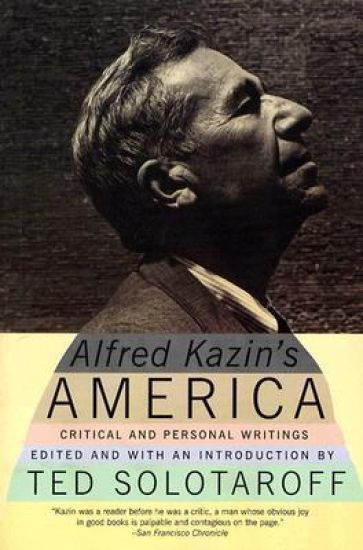
Alfred Kazin's America: Critical and Personal Writings

Alfred Kazin's America: Critical and Personal Writings

Alfred Kazin; Ted Solotaroff

HARPER PERENNIAL
2004
nidottu
"Alfred Kazin chose America as his subject, and his intellectual awakening is itself something of an American legend. . . . Ted Solotaroff's selection of his work is a fitting tribute, a book that will be a starting point for further reading, both of Kazin and of the native writers to whom he devoted himself" -- The New YorkerOver the course of 60 years, Alfred Kazin's writings confronted virtually all of our major imaginative writers, from Ralph Waldo Emerson and Emily Dickinson to James Wright and Joyce Carol Oates and including such unexpected figures as Abraham Lincoln, William James and Thorstein Veblen. It is fair to say that he succeeded Edmund Wilson as the secretary of American letters. At the same time this son of immigrant Russian Jews wrote out of the tensions of the outsider and the astute, outspoken leftist.Editor Ted Solotaroff has selected material from Kazin's three classic memoirs to accompany these critical writings. The excerpts include sharply etched portraits of the Brownsville, Greenwich Village, Upper West Side, and Cape Cod literary milieus and of such figures as Saul Bellow, Lionel Trilling, Edmund Wilson, and Hannah Arendt. Alfred Kazin's America provides an ongoing example of the spiritual freedom, individualism, and democratic contentiousness that he regarded as his heritage and endeavored to pass on.
Alfred Kazin's Journals

Alfred Kazin's Journals

Yale University Press
2011
sidottu
At the time of his death in 1998, Alfred Kazin was considered one of the most influential intellectuals of postwar America. What is less well known is that Kazin had been contributing almost daily to an extensive private journal, which arguably contains some of his best writing. These journals collectively tell the story of his journey from Brooklyn's Brownsville neighbourhood to his position as a dominant figure in twentieth-century cultural life. To Kazin, the daily entry was a psychological and spiritual act. 'I turn to this notebook as if it were my lie detector, my confession, my way of ascertaining authenticity - of making myself whole again.' To read through these entries is to reexperience history as a series of daily discoveries by an alert, adventurous, if often mercurial intelligence. It is also to encounter an array of interesting and notable personalities. Sketches of friends, mistresses, family figures, and other intellectuals are woven in with commentary on Kazin's childhood, early religious interests, problems with parents, bouts of loneliness, dealings with publishers, and thoughts on the Holocaust. The journals also highlight his engagement with the political issues and cultural debates and controversies of the decades through which he lived. He wrestles with communism, anticommunism, socialism, cultural nationalism, liberalism, existentialism, Israel, modernism, bohemianism, the American Jewish renaissance, New York City, the Kennedy administration, the Vietnam war, student radicalism, feminism, religious belief, and neoconservatism. Judiciously selected and edited by acclaimed Kazin biographer Richard Cook, this collection provides the public with access to these previously unavailable writings and, in doing so, offers a fascinating social, historical, literary, and cultural record.
Howards End: Introduction by Alfred Kazin

Howards End: Introduction by Alfred Kazin

E. M. Forster

Everyman's Library
1991
sidottu
First published in 1910, Howards End is the novel that earned E. M. Forster recognition as a major writer. Soon to be a limited series on Starz. At its heart lie two families--the wealthy and business-minded Wilcoxes and the cultured and idealistic Schlegels. When the beautiful and independent Helen Schlegel begins an impetuous affair with the ardent Paul Wilcox, a series of events is sparked--some very funny, some very tragic--that results in a dispute over who will inherit Howards End, the Wilcoxes' charming country home. As much about the clash between individual wills as the clash between the sexes and the classes, Howards End is a novel whose central tenet, "Only connect," remains a powerful prescription for modern life. Introduction by Alfred Kazan(Book Jacket Status: Not Jacketed)
Uncle Tom's Cabin: Introduction by Alfred Kazin

Uncle Tom's Cabin: Introduction by Alfred Kazin

Harriet Beecher Stowe

Everyman's Library
1995
sidottu
Uncle Tom, Topsy, Sambo, Simon Legree, little Eva: their names are American bywords, and all of them are characters in Harriet Beecher Stowe's remarkable novel of the pre-Civil War South. Uncle Tom's Cabin was revolutionary in 1852 for its passionate indictment of slavery and for its presentation of Tom, "a man of humanity," as the first black hero in American fiction. Labeled racist and condescending by some contemporary critics, it remains a shocking, controversial, and powerful work -- exposing the attitudes of white nineteenth-century society toward "the peculiar institution" and documenting, in heartrending detail, the tragic breakup of black Kentucky families "sold down the river." An immediate international sensation, Uncle Tom's Cabin sold 300,000 copies in the first year, was translated into thirty-seven languages, and has never gone out of print: its political impact was immense, its emotional influence immeasurable.
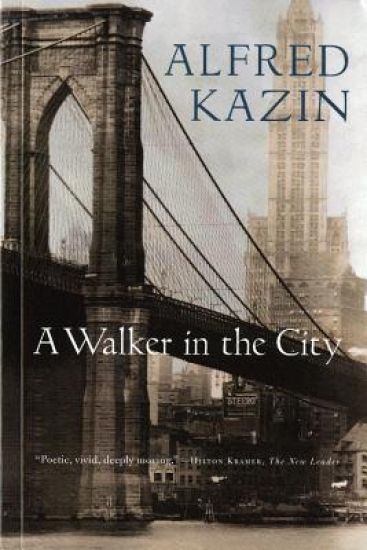
Walker In The City, A

Walker In The City, A

Alfred Kazin

HARPERCOLLINS PUBLISHERS INC
1969
nidottu
Kazin’s memorable description of his life as a young man as he makes the journey from Brooklyn to “americanca”-the larger world that begins at the other end of the subway in Manhattan. A classic portrayal of the Jewish immigrant culture of the 1930s. Drawings by Marvin Bileck.
An American Procession

An American Procession

Alfred Kazin

Harvard University Press
1996
pokkari
In this illuminating study of the "crucial century" (1830-1930), Alfred Kazin views the major figures in American writing, beginning in the 1830s when Ralph Waldo Emerson founded a national literature on the basis of a religious revolution, and ending on the eve of the 1930s with modernism--Eliot, Pound, Hemingway, Fitzgerald--and with the revelation of the "postponed power" of those who had been modern before their time--Henry Adams, Melville, Whitman, Dickinson.
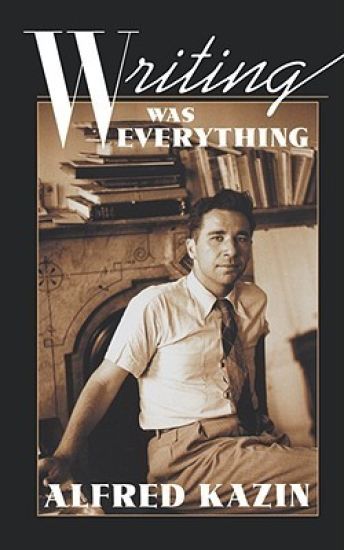
Writing Was Everything

Writing Was Everything

Alfred Kazin

Harvard University Press
1999
nidottu
For more than sixty years Alfred Kazin has been one of the most eloquent witnesses to the literary life of the mind in America. Writing Was Everything is a summation of that life, a story of coming of age as a writer and critic that is also a vibrant cultural drama teeming with such characters as Hart Crane and Allen Ginsberg, Simone Weil and Flannery O'Connor, Hannah Arendt and Robert Lowell, Edmund Wilson and George Orwell.A deft blend of autobiography, history, and criticism that moves from New York in the 1930s to wartime England to the postwar South, Writing Was Everything emerges as a reaffirmation of literature in an age of deconstruction and critical dogma. In his encounters with books, Kazin shows us how great writing matters and how it involves us morally, socially, and personally on the deepest level. Whether reflecting on modernism, southern fiction, or black, Jewish, and New Yorker writing or reliving the work of Richard Wright, Saul Bellow, and John Cheever, he gives a penetrating, moving account of literature observed and lived. In his life as a critic, Kazin personifies the lesson that living and writing are necessarily intimate.Writing Was Everything encapsulates the lively wit and authority of this timeless critic's unmistakable voice. It stands as clear testimony to Kazin's belief that "literature is not theory but, at best, the value we can give to our experience, which in our century has been and remains beyond the imagination of mankind."
God and the American Writer

God and the American Writer

Alfred Kazin

VINTAGE
1998
nidottu
God and the American Writer does more to illuminate the fundamental purposes and motivations of our greatest writers from Hawthorne to Faulkner than any study I have read in the past fifty-five years--that is, since the same author's On Native Grounds. --Louis S. Auchincloss This is the culminating work of the finest living critic of American literature. Alfred Kazin brings a lifetime of thought and reading to the triumphant elucidation of his fascinating and slippery subjects: what the meaning of God has been for American writers, and how those writers, from the New England Calvinists to William Faulkner, have expressed it. In a series of trenchant critical studies of writers as divergent as Hawthorne, Melville, Emerson, Lincoln, Whitman, Dickinson, Twain, William James, Eliot, Frost, and Faulkner, Kazin gives a profound sense of each, and his quotations from their works are artfully chosen to pursue the main theme. The centerpiece of the book is the reflection in American writing of the great American tragedy, the Civil War--so deeply involved in the whole complex issue of religion in America. An enthralling book by a major writer. "This is a book about the place of God in the imaginative life of a country that for two centuries countenanced slavery and then engaged in a fratricidal war to end it. For Americans no subject is more compelling or, in its entanglement with the deepest roots of the national soul, more terrible. And no one has ever written as incisively, as movingly, or as unforgivingly about it as Alfred Kazin has here." --Louis Menand "In the era of willful obfuscation, Alfred Kazin is the good, clear word, a brilliant scholar and an original reader. His latest book, God and the American Writer, which comes fifty-five years after On Native Grounds, proves he has lost nothing and gives us everything he has."--David Remnick "American writers have been born into all sorts of religious sects, but have had to struggle in solitude to make sense of God. Alfred Kazin, a cosmos unto himself, has written brilliantly and affectingly of how a dozen or so of our finest authors--poets, novelists, philosophers, and one president--endured and illuminated that struggle. Kazin is sometimes passionate, even fierce, especially in his discussions of slavery and of his hero (and mine), Abraham Lincoln. But, as ever, Kazin's writing is tempered by an enormous American empathy and by his sense of irony about our country and its spiritual predicaments. Spare, sharp, and immensely learned, God and the American Writer is the most moving volume of criticism yet by our greatest living critic."--Sean Wilentz
New York Jew

New York Jew

Alfred Kazin

Syracuse University Press
1996
nidottu
In this book, Alfred Kazin, who for more than 30 years has been one of the central figures of America's intellectual life, takes us into his own life and times. His autobiography encompasses a personal story openly told; an inside look at New York's innermost intellectual circles; strong and intimate revelations of many of the most important writers of the century; and brilliantly astute observations of the literary accomplishments, atmosphere, and fads of the 1940s, 50s, and 60s in the context of America's shifting political gales.
Contemporaries: Essays

Contemporaries: Essays

Alfred Kazin

Literary Licensing, LLC
2011
sidottu
Contemporaries: Essays by Kazin, Alfred is a collection of essays written by the renowned American literary critic, Alfred Kazin. The book includes a selection of essays that were originally published in various magazines and journals between the 1940s and 1960s. The essays cover a wide range of topics, including literature, politics, culture, and society.Kazin's essays are insightful and thought-provoking, providing readers with a unique perspective on the world around them. The author's writing style is engaging and accessible, making the book an enjoyable read for both scholars and casual readers.The essays in Contemporaries cover a diverse range of subjects, from the works of literary giants like Ernest Hemingway and William Faulkner to the political climate of the Cold War era. Kazin also delves into topics such as the role of the artist in society, the changing nature of American identity, and the impact of technology on culture.Overall, Contemporaries: Essays by Kazin, Alfred is a must-read for anyone interested in American literature, culture, and society. The book provides a fascinating glimpse into the mind of one of America's most influential literary critics, and offers readers a wealth of insights and perspectives on the world around them.This scarce antiquarian book is a facsimile reprint of the old original and may contain some imperfections such as library marks and notations. Because we believe this work is culturally important, we have made it available as part of our commitment for protecting, preserving, and promoting the world's literature in affordable, high quality, modern editions, that are true to their original work.
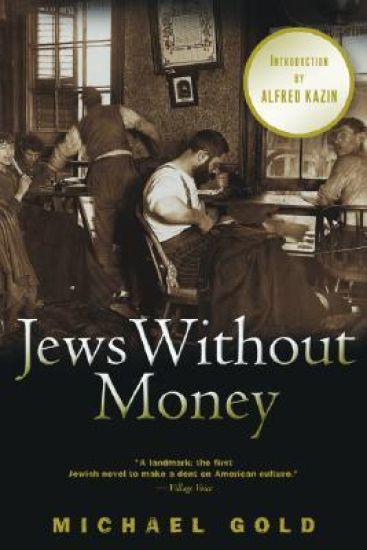
Jews Without Money

Jews Without Money

Michael Gold; Alfred (INT) Kazin

Carroll Graf Publishers Inc
2004
pokkari
As a writer and political activist in early-twentieth-century America, Michael Gold was an important presence on the American cultural scene for more than three decades. Beginning in the 1920s his was a powerful journalistic voice for social change and human rights, and Jews Without Moneythe author's only novelis a passionate record of the times. First published in 1930, this fictionalized autobiography offered an unusually candid look at the thieves, gangsters, and ordinary citizens who struggled against brutal odds in lower East Side Manhattan. Like Henry Roth's Call It Sleep and Abraham Cahan's The Rise and Fall of David Levinsky, Jews Without Money is a literary landmark of the Jewish experience.
Alfred

Alfred

Louise Endres Moore

Henschelhaus Publishing, Inc.
2019
pokkari
We almost didn't know. For 57 years, Alfred Endres told his family he had been a barber, chauffeur, and translator in World War II. But following the death of his wife, Alfred quietly started sharing a glimpse into his actual wartime experiences. His daughter first began capturing those fractions of stories on napkins during her weekly nursing home visits, which grew into a nearly two-decade deep dive into his true role in the war--a reluctant front-line machine gunner in Europe from 1944 to 1945. Intensely researched and thoroughly human, Alfred compiles a lifetime panorama of one infantryman who never wanted a part in the war but accepted it. He returned home, discernibly the gentle Wisconsin farmer he was when he left, to a family unknowing what he had done and what he had survived.
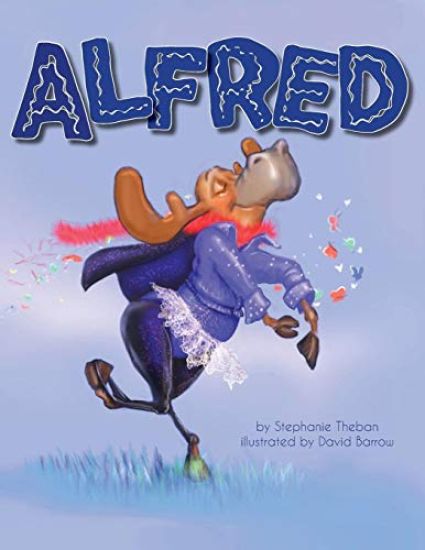
Alfred

Alfred

Stephanie Theban

Doodle and Peck Publishing
2020
pokkari
Moose watches the birds and insects flit and flutter like ballerinas. He sees the stars and moon dance across the sky. Moose wants to dance, too.But at Miss Melissa's Dance Studio, the other animals tell him he can't dance, and he certainly doesn't have the proper costume. Moose is discouraged.He practices more and tries one more time to convince Miss Melissa to let him join the dance class. Miss Melissa finally realizes Moose is a good dancer, just with his own unique style.