Kirjojen hintavertailu. Mukana 11 244 527 kirjaa ja 12 kauppaa.

Kirjahaku

Etsi kirjoja tekijän nimen, kirjan nimen tai ISBN:n perusteella.

1000 tulosta hakusanalla Alfred Schutz

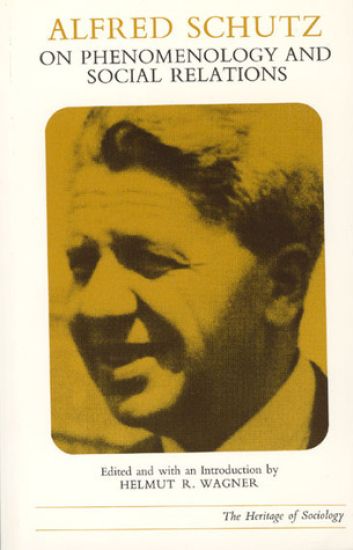
Alfred Schutz on Phenomenology and Social Relations

Alfred Schutz on Phenomenology and Social Relations

Alfred Schutz

University of Chicago Press
1999
nidottu
Alfred Schutz (1899-1959) stood simultaneously in the camps of philosophy and sociology, and his writings constitute the framework of a sociology based on phenomenological considerations. Schutz's basic contributions issue from a critical synthesis of Husserl's phenomenology and Weber's sociology of understanding. He proceeds on the basis of the irreducible souce of all human knowledge in the immediate experiences of the conscious, alert, and active individual. In this volume Helmut Wagner has selected and skillfully correlated various passages both from Schutz's book The Phenomenology of the Social World and from his scattered papers and essays.

Alfred Schütz

Alfred Schütz

Julia Wehner

Grin Publishing
2011
pokkari
Studienarbeit aus dem Jahr 2011 im Fachbereich Soziologie - Klassiker und Theorierichtungen, Note: 2,0, Universit t Duisburg-Essen (Institut f r Soziologie), Veranstaltung: Theorien der Soziologie, Sprache: Deutsch, Abstract: Menschen sind in der Lage ihr Verhalten mit Sinn zu verkn pfen, also zu verstehen warum sie eine Handlung ausf hren. Aber welches Verst ndnis hat mein Gegen ber davon? Wenn der Sinn meiner Handlung nur mir selbst zug nglich w re, k nnte unsere allt gliche Verst ndigung nicht funktionieren. Ebenso wenig k nnte die Sozialwissenschaft menschliches Handeln deuten und verstehen. Alfred Sch tz' theoretische Untersuchungen versuchen zu erkl ren, wie die Aneignung und Verbreitung von gemeinsam zug nglichen Wissensbest nden und Praktiken in der sozialen Welt m glich ist. Vorliegende Arbeit soll anhand von Alfred Sch tz' sozialph nomenologischer Handlungstheorie darstellen, wodurch sich unser Wissen von der Welt konstituiert und wie unser Handeln im Alltag funktioniert. Im zweiten Kapitel wird dazu die Konstruktion von Alltagswissen auf Basis der Strukturanalyse der allt glichen Lebenswelt erl utert. In Kapitel drei wende ich mich dem Problem der Intersubjektivit t zu, das f r die ph nomenologische Soziologie, die Alfred Sch tz ma geblich gepr gt hat, von zentraler Bedeutung ist. An die Betrachtung des intersubjektiven Charakters der miteinander geteilten Lebenswelt schlie t sich eine kurze Er rterung der Muster sozialen Handelns an. Im vierten Kapitel werden wichtige Grundlagen f r die Sozialwissenschaft anhand von Sch tz' Ergebnissen herausgestellt, die methodische Implikationen f r das wissenschaftliche Arbeiten beinhalten. Abgeschlossen wird diese Arbeit durch ein Fazit in Kapitel f nf.
Alfred Schutz's Sociological Aspect of Literature
The maintext in the present volume has beenconstructed out of passages found scattered aboutin thirty-five years of Alfred Schutz's writings, and it has been constructed by following a pageof notes for a lecture that he gave in 1955 under the title "Sociological Aspect of Literature. " The result can be considered the substance of Schutz's contribution to the theory of literature. More detail about how this construction has beenperformed is offered in the Editor's Introduction. The complementary essays areby scholars from Germany, Japan, andthe United States , from several generations, and from the disciplines of anthropology, philosophy, and sociology. These researchers were invited to reflect in their own perspectives on the main text and in relation to matters referred to within and beyond it. Draftversions of most of these complementary essays were presented for critical discussion in a research symposium held at the Graduate Faculty of Political and Social Science of theNewSchool for Social Research on April28-29, 1995 underthe sponsorship of The Center for Advanced Research in Phenomen­ ology, Inc. , Florida Atlantic University; The Department of Philosophy of The Graduate Faculty of the New School, Richard 1. Bernstein, Chair; and Evelyn and George Schutz, the philosopher's children. Revised versions of these presentations and also several essays subsequently recruited are offered to begin yet another stagein thehistory of scholarship on Schutz and the phenomenological research inspired by him. Northwestern University Press is thanked for permission to quote extensively from Alfred Schutz, The Phenomenology of the Social World, trans.
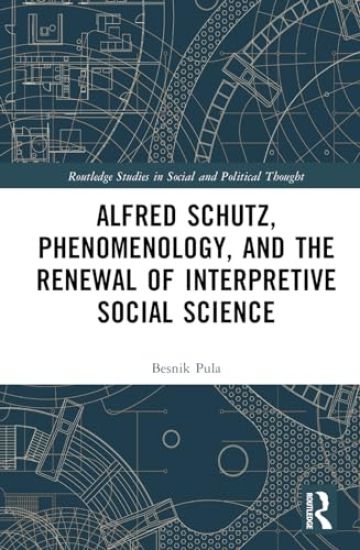
Alfred Schutz, Phenomenology, and the Renewal of Interpretive Social Science
In recent decades, the historical social sciences have moved away from deterministic perspectives and increasingly embraced the interpretive analysis of historical process and social and political change. This shift has enriched the field but also led to a deadlock regarding the meaning and status of subjective knowledge. Cultural interpretivists struggle to incorporate subjective experience and the body into their understanding of social reality. In the early twentieth century, philosopher Alfred Schutz grappled with this very issue. Drawing on Edmund Husserl’s phenomenology and Max Weber’s historical sociology, Schutz pioneered the interpretive analysis of social life from an embodied perspective. However, the recent interpretivist turn, influenced by linguistic philosophies, discourse theory, and poststructuralism, has overlooked the insights of Schutz and other phenomenologists. This book revisits Schutz’s phenomenology and social theory, positioning them against contemporary problems in social theory and interpretive social science research. The book extends Schutz’s key concepts of relevance, symbol relations, theory of language, and lifeworld meaning structures. It outlines Schutz’s critical approach to the social distribution of knowledge and develops his nascent sociology and political economy of knowledge. This book will appeal to readers with interests in social theory, phenomenology, and the methods of interpretive social science, including historical sociology, cultural sociology, science and technology studies, political economy, and international relations.
Alfred Schutz, Phenomenology, and the Renewal of Interpretive Social Science
In recent decades, the historical social sciences have moved away from deterministic perspectives and increasingly embraced the interpretive analysis of historical process and social and political change. This shift has enriched the field but also led to a deadlock regarding the meaning and status of subjective knowledge. Cultural interpretivists struggle to incorporate subjective experience and the body into their understanding of social reality. In the early twentieth century, philosopher Alfred Schutz grappled with this very issue. Drawing on Edmund Husserl’s phenomenology and Max Weber’s historical sociology, Schutz pioneered the interpretive analysis of social life from an embodied perspective. However, the recent interpretivist turn, influenced by linguistic philosophies, discourse theory, and poststructuralism, has overlooked the insights of Schutz and other phenomenologists. This book revisits Schutz’s phenomenology and social theory, positioning them against contemporary problems in social theory and interpretive social science research. The book extends Schutz’s key concepts of relevance, symbol relations, theory of language, and lifeworld meaning structures. It outlines Schutz’s critical approach to the social distribution of knowledge and develops his nascent sociology and political economy of knowledge. This book will appeal to readers with interests in social theory, phenomenology, and the methods of interpretive social science, including historical sociology, cultural sociology, science and technology studies, political economy, and international relations.
Alfred Schutz and his intellectual partners
Alfred Schütz, ein Klassiker des soziologischen Denkens und Philosoph, gehört zu den Begründern des interpretativen Paradigmas in der Soziologie sowie zu den profilierten Vertretern der Phänomenologie. Der Band dokumentiert Schütz' vielfältige Auseinandersetzungen mit seinen ?intellektuellen Partnern?, d.h. mit Klassikern und Zeitgenossen, die auf den Gebieten der Soziologie, Philosophie, Ökonomie und der Politikwissenschaft tätig waren und sein Werk nachhaltig prägten. Das Verhältnis des Schütz'schen Werkes zu soziologischen und philosophischen Vordenkern wie Max Weber, Parsons oder Mead sowie zu Husserl, Heidegger, Bergson, Leibniz oder Cassirer, aber auch seine Bezüge zum Pragmatismus (James, Dewey), zu phänomenologischen Mitstreitern (Gurwitsch, Mereleau-Ponty, Scheler, Sartre) und Wiener Zeitgenossen (Mises, Hayek, Voegelin, Machlup) werden hier von einem internationalen Team anhand der publizierten sowie nachgelassenen Schriften und Materialien rekonstruiert und in ihrer Wirkung auf das Schützsche Denken dargestellt. Damit werden nicht nur unbekannte oder vernachlässigte Aspekte des Schütz'schen Werkes beleuchtet, sondern es entsteht das Bild einer intellektuellen Landschaft zwischen Europa und Amerika, in der viele, deren Ideen uns heute beschäftigen, ihre Wurzel haben.
Alfred Schutz: Appraisals and Developments
This issue of Human Studies is dedicated to Alfred Schutz on the twen- ty-fifth anniversary of his death. It also is meant as a fond and admiring salute to one of Schutz's most outstanding students and his intellectual biographer, Helmut R. Wagner, on the occasion ofhis eightieth birthday. The first paper, by Wagner himself, is the first of three that were presented at the session in honor of Alfred Schutz, which was chaired by George Psathas, at the annual meeting of the Eastern Sociological Society on March 9, 1984 in Boston. It is based on Wagner's intel- lectual biography of Schutz, reviewed in this issue by David M. Ras- mussen, and shows how Wagner found the main conceptual tools of this biography in Schutz's own theoretical work. The second paper, by Jonathan B. Imber, presents a fresh and far-reaching interpretation of Schutz's "The Well-Informed Citizen," and the third, by David M. Rasmussen, compares Schutz with Habermas, especially Habermas's most recent major work, Theory of Communicative Action. The dis- cussion of these three papers by the present author tries to show that they all touch, despite differences in focus and perspec,tive, on a prob- lem in Schutz's conception of phenomenology and social science. In Ingeborg Katharina Helling's essay, the relationship between Al- fred Schutz and Felix Kaufmann, and thus the interplay between phenomenology and the positivism of the Vienna Circle, is analyzed.
Alfred Schutz's Sociological Aspect of Literature
The maintext in the present volume has beenconstructed out of passages found scattered aboutin thirty-five years of Alfred Schutz's writings, and it has been constructed by following a pageof notes for a lecture that he gave in 1955 under the title "Sociological Aspect of Literature. " The result can be considered the substance of Schutz's contribution to the theory of literature. More detail about how this construction has beenperformed is offered in the Editor's Introduction. The complementary essays areby scholars from Germany, Japan, andthe United States , from several generations, and from the disciplines of anthropology, philosophy, and sociology. These researchers were invited to reflect in their own perspectives on the main text and in relation to matters referred to within and beyond it. Draftversions of most of these complementary essays were presented for critical discussion in a research symposium held at the Graduate Faculty of Political and Social Science of theNewSchool for Social Research on April28-29, 1995 underthe sponsorship of The Center for Advanced Research in Phenomen­ ology, Inc. , Florida Atlantic University; The Department of Philosophy of The Graduate Faculty of the New School, Richard 1. Bernstein, Chair; and Evelyn and George Schutz, the philosopher's children. Revised versions of these presentations and also several essays subsequently recruited are offered to begin yet another stagein thehistory of scholarship on Schutz and the phenomenological research inspired by him. Northwestern University Press is thanked for permission to quote extensively from Alfred Schutz, The Phenomenology of the Social World, trans.
Lekture Alfred Schutz - Schutz' Definition des Wissens - Grundbegriffe der Handlungstheorie IV
Studienarbeit aus dem Jahr 2007 im Fachbereich Soziologie - Wissen und Information, Note: 2,0, Friedrich-Alexander-Universit t Erlangen-N rnberg, Veranstaltung: Lekt rekurs Alfred Sch tz, 6 Quellen im Literaturverzeichnis, Sprache: Deutsch, Abstract: "Wissen" ist ein Wort das im allgemeinen Sprachgebrauch recht h ufig benutzt wird und von dem jeder zumindest eine ungef hre Ahnung hat, um was es sich handelt, wenn er diesen Begriff h rt. Doch was genau bedeutet Wissen? Was wird als Wissen definiert und was sagt die Wissenschaft dazu?
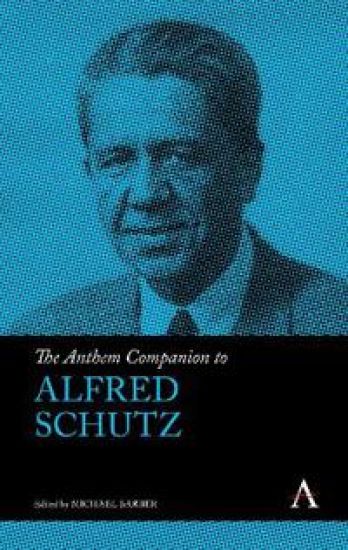
The Anthem Companion to Alfred Schutz
Given that Schutz was a philosopher and a social scientist, this book will examine topics in Schutz’s philosophical-phenomenological theory of the social world, such as the second person, the face-to-face relationship, the meaning of human action, signs, symbols, relevance (or interests). Schutz’s explanation of the social world, however, was meant to provide a philosophical foundation for the social sciences, and so this book will also consider epistemological questions, such as traditional knowledge and the opacity of knowledge and theory, that is, the neglected or unseen questions that accompany knowing or theorizing. Also, authors from within the Schutzian framework will address issues within the social sciences, such as the Durkheimian aspects of Schutz’s thought, the sociology of knowledge, and the theory of sociology. It will also explore how Schutzian theory, which is often viewed as a micro-sociology, can be extended to give an account of a macro-sociological reality like modern society (Gesellschaft)
Vergleich der Wissenssoziologien von Karl Mannheim und Alfred Schutz
Studienarbeit aus dem Jahr 2008 im Fachbereich Soziologie - Klassiker und Theorierichtungen, Note: 1, Universit t Luzern, Veranstaltung: Wissen und Kommunikation, Sprache: Deutsch, Abstract: Wir leben heute in einer multimedial gepr gten Welt. Es sollte mit der fortschreitenden Technik immer einfacher werden, Antworten zu finden. Mussten vor einigen Jahren noch Bibliotheken durchforstet werden, reicht heute ein Computer mit Internetanschluss aus, um an riesige Wissensbest nde heranzukommen. Bei der Suche nach einer eindeutigen Antwort zu gewissen Fragen tauchen dann aber schnell mehrere Antworten auf. Ein Philosoph wird die Frage nach dem Sinn des Lebens zum Beispiel mit dem Begriff "Erfahren" beantworten, w hrend ein Biologe die Fortpflanzung als den Sinn des Lebens betrachtet. Selbst ein Wahnsinniger sieht seine in "normalen Augen" wahnsinnige Welt als Wirklichkeit an. Oder betrachten wir nur einmal die verschiedenen Weltkonstruktionen jeglicher Religionen. Selbst bei einfacheren Fragen werden je nach Perspektive die Antworten unterschiedlich ausfallen. Es liegt daher nahe, dass es nicht eine richtige Wahrheit gibt. Vielmehr gibt es viele Wahrheiten, welche sich durchaus unterscheiden k nnen. Die soziologische Disziplin der Wissenssoziologie besch ftigt sich mit diesem Problem. Wie entsteht Wissen? Wer bestimmt, welches das "richtige Wissen" ist? Und wie wird dieses entstandene Wissen konserviert oder transformiert? M glich wurde diese neue Sicht der Dinge durch die Entdeckung des Beobachters, welcher bildlich einen Schritt zur ckgeht, um das Ganze von "ausserhalb" zu betrachten. Dabei kommt die Disziplin zum Schluss, " ...]dass Wirklichkeit gesellschaftlich konstruiert ist - und - dass die Wissenssoziologie die Prozesse zu untersuchen hat, in denen dies geschieht" (Berger und Luckmann 1969: V). Diese Disziplin kann nicht einem einzelnen Autor zugeschrieben werden. Diese Arbeit konzentriert sich auf den deutschen Raum. Als einige der wichtigsten Mitbegr nder d rfte
Vergleich der Soziologien von Max Weber und Alfred Schutz
Studienarbeit aus dem Jahr 2009 im Fachbereich Soziologie - Klassiker und Theorierichtungen, Note: 1,7, Carl von Ossietzky Universit t Oldenburg, Sprache: Deutsch, Abstract: Karl Emil Maximilian Weber gilt als einer der Klassiker der Soziologie und z hlt unumstritten zu den Begr ndern der modernen Soziologie (vgl. M nch, R. 2002, S. 135). Mit seiner Soziologie kristallisierte sich Anfang des 20. Jahrhunderts eine neue Position des Menschengeschlechts heraus, die der Vorstellung entgegengesetzt war, dass die Geschichte einen eigenen, unabh ngigen Sinn besitze. Erst nach Weber waren die einzelnen Individuen unumstritten die Schmiede ihres Schicksals (vgl. Kalberg 2006, S. 17). Alfred Sch tz kn pft mit seinen Untersuchungen direkt bei Weber an, jedoch kritisiert er auch dessen Werk und nimmt dabei mit seinen Untersuchungen die Perspektive einer bestimmten Problemstellung ein (vgl. Schneider 2008, S. 234). Die vorliegende Arbeit soll daher die soziologischen Theorien von Max Weber und Alfred Sch tz behandeln. Es sollen beide Theorien gegen berstellt und verglichen werden. Ziel soll dabei sein, sowohl die wesentlichen Gemeinsamkeiten, als auch die Unterschiede herauszuarbeiten. Zun chst sollen daf r die Handlungstheorien von Weber und Sch tz einzeln betrachtet werden. Daraufhin werden beide Werke hinsichtlich ihrer Behandlung des subjektiven Sinns behandelt und ausgearbeitet. Danach soll die Emergenzkonstellation beider Werke aufgezeigt werden. Eine Reflexion der erarbeiteten Ergebnisse soll diese Arbeit letztendlich abschlie en.