

Kirjahaku
Etsi kirjoja tekijän nimen, kirjan nimen tai ISBN:n perusteella.
1000 tulosta hakusanalla Alfred W. W. Dale


The Life of R. W. Dale of Birmingham (1899)
Alfred William Winterslow Dale
KESSINGER PUBLISHING, LLC
2010
pokkari
Alfred W. Crosby
VDM Publishing House
2010
nidottu
Observera att förlaget som ger ut denna produkt baserar innehållet i sina produkter på fria källor som Wikipedia. Boken är med stor sannolikhet endast ett utdrag ur dessa informationskällor, alltså inte en vanlig bok i den bemärkelsen.
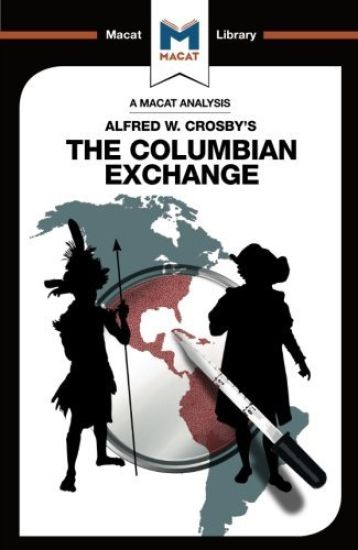
An Analysis of Alfred W. Crosby's The Columbian Exchange
Joshua Specht; Etienne Stockland
Macat International Limited
2017
nidottu
One criticism of history is that historians all too often study it in isolation, failing to take advantage of models and evidence from scholars in other disciplines. This is not a charge that can be laid at the door of Alfred Crosby. His book The Columbian Exchange not only incorporates the results of wide reading in the hard sciences, anthropology and geography, but also stands as one of the foundation stones of the study of environmental history. In this sense, Crosby's defining work is undoubtedly a fine example of the critical thinking skill of creativity; it comes up with new connections that explain the European success in colonizing the New World more as the product of biological catastrophe (in the shape of the introduction of new diseases) than of the actions of men, and posits that the most important consequences were not political – the establishment of new empires – but cultural and culinary; the population of China tripled, for example, as the result of the introduction of new world crops. Few new hypotheses have proved as stimulating or influential.

Perfectly Innocent - The Wrongful Conviction of Alfred Trenkler
Alfred W. Trenkler; Morrison M. Bonpasse
Bonpasse Exoneration Services
2011
nidottu

Shakespeare'S Hand In The Play Of Sir Thomas More
Alfred W Pollard; W W Greg
Alpha Edition
2020
sidottu

Shakespeare'S Hand In The Play Of Sir Thomas More
Alfred W Pollard; W W Greg
Alpha Edition
2020
pokkari
This book has been considered by academicians and scholars of great significance and value to literature. This forms a part of the knowledge base for future generations. So that the book is never forgotten we have represented this book in a print format as the same form as it was originally first published. Hence any marks or annotations seen are left intentionally to preserve its true nature.
First published in 1907, A Few Scraps records the birth of the oil industry in Pennsylvania from the eyewitness perspective of Alfred Smiley, a Pennsylvania native who worked on the world’s first modern oil well. The “Drake” well, often called the birthplace of the modern petroleum industry, was struck on Oil Creek near Titusville, Pennsylvania, in August 1859. Smiley worked on this well and many others throughout the region, riding the overnight success and eventual decline of the oil boom in the second half of the nineteenth century. Mixing a quirky personal narrative with historical information, Smiley recounts stories of the growing oil industry and its effects on life in western Pennsylvania. He describes in lucid detail the early processes and practices of the oil rigs and pipelines, the fever of speculation, and the characters responsible for the creation of “oildom.” The text incorporates unique photographs from the late nineteenth century, providing a further glimpse into the development of communities on the verge of modernization and industrialization.
Thirty years ago, Alfred Crosby published a small work that illuminated a simple point, that the most important changes brought on by the voyages of Columbus were not social or political, but biological in nature. The book told the story of how 1492 sparked the movement of organisms, both large and small, in both directions across the Atlantic. This Columbian exchange, between the Old World and the New, changed the history of our planet drastically and forever. The book The Columbian Exchange changed the field of history drastically and forever as well. It has become one of the foundational works in the burgeoning field of environmental history, and it remains one of the canonical texts for the study of world history. This 30th anniversary edition of The Columbian Exchange includes a new preface from the author, reflecting on the book and its creation, and a new foreword by J. R. McNeill that demonstrates how Crosby established a brand new perspective for understanding ecological and social events. As the foreword indicates, The Columbian Exchange remains a vital book, a small work that contains within the inspiration for future examinations into what happens when two peoples, separated by time and space, finally meet.
Thirty years ago, Alfred Crosby published a small work that illuminated a simple point, that the most important changes brought on by the voyages of Columbus were not social or political, but biological in nature. The book told the story of how 1492 sparked the movement of organisms, both large and small, in both directions across the Atlantic. This Columbian exchange, between the Old World and the New, changed the history of our planet drastically and forever. The book The Columbian Exchange changed the field of history drastically and forever as well. It has become one of the foundational works in the burgeoning field of environmental history, and it remains one of the canonical texts for the study of world history. This 30th anniversary edition of The Columbian Exchange includes a new preface from the author, reflecting on the book and its creation, and a new foreword by J. R. McNeill that demonstrates how Crosby established a brand new perspective for understanding ecological and social events. As the foreword indicates, The Columbian Exchange remains a vital book, a small work that contains within the inspiration for future examinations into what happens when two peoples, separated by time and space, finally meet.
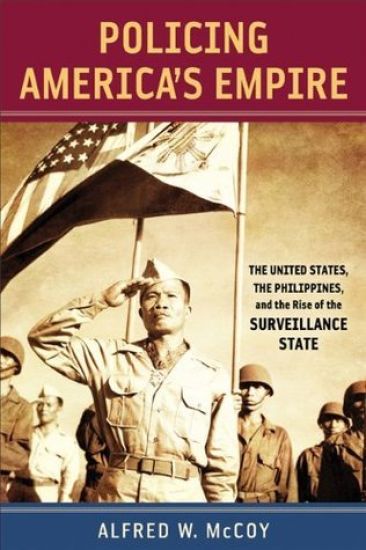
At the dawn of the twentieth century, the U.S. Army swiftly occupied Manila and then plunged into a decade-long pacification campaign with striking parallels to today's war in Iraq. Armed with cutting-edge technology from America's first information revolution, the U.S. colonial regime created the most modern police and intelligence units anywhere under the American flag. In ""Policing America's Empire"" Alfred W. McCoy shows how this imperial panopticon slowly crushed the Filipino revolutionary movement with a lethal mix of firepower, surveillance, and incriminating information. Even after Washington freed its colony and won global power in 1945, it would intervene in the Philippines periodically for the next half-century - using the country as a laboratory for counterinsurgency and rearming local security forces for repression. In trying to create a democracy in the Philippines, the United States unleashed profoundly undemocratic forces that persist to the present day. But security techniques bred in the tropical hothouse of colonial rule were not contained, McCoy shows, at this remote periphery of American power. Migrating homeward through both personnel and policies, these innovations helped shape a new federal security apparatus during World War I. Once established under the pressures of wartime mobilization, this distinctively American system of public-private surveillance persisted in various forms for the next fifty years, as an omnipresent, sub rosa matrix that honeycombed U.S. society with active informers, secretive civilian organizations, and government counterintelligence agencies. In each succeeding global crisis, this covert nexus expanded its domestic operations, producing new contraventions of civil liberties - from the harassment of labor activists and ethnic communities during World War I, to the mass incarceration of Japanese Americans during World War II, all the way to the secret blacklisting of suspected communists during the Cold War.
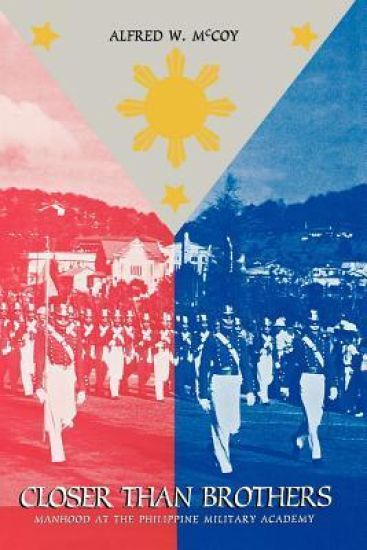
In this innovative book, Alfred W. McCoy takes a new approach to the military and political history of the Philippines. Comparing two generations of graduates from the Philippine Military Academy (PMA)—the classes of 1940 and 1971—McCoy uncovers fundamental differences in their academic socialization and subsequent ascent to power. Viewed through this comparative lens, the story of these two classes becomes the history of the entire Philippine army, offering important insights into the complexities of Filipino involvement in war and peace from the 1930s to the 1990s.Drawing on extensive interviews with these officers, as well as on diaries and memoirs, the book details for the first time activities of the secretive brotherhood that is the Filipino officer corps. Members of the class of 1940, who bonded to one another in PMA training modeled after West Point’s, emerged from heroic battles against Japanese invaders with their belief in civil supremacy over the military affirmed. In postwar decades, they actively blocked coup attempts. By contrast, the class of ’71 emerged from the academy to become the fist of the Marcos dictatorship. Their involvement in torture ruptured the academy’s socialization and inspired them to launch six coup attempts in the late 1980s. The collective biographies of these officers offer insights not only into Philippine history but also into topics of wider global import—the influence of male gender on a distinctly gendered institution, the causes of coup d’état, and the collective trauma of torture.
Since George Bush declared his war on drugs in 1989, cocaine addiction in America has increased 15%, and narcotics have emerged as major commodities from the Third World. Focusing on US narcotics policy, Latin America's cocaine traffic and Asia's heroin trade, the essays in this book offer evidence indicating that the war is not working.
Since George Bush declared his war on drugs in 1989, cocaine addiction in America has increased 15%, and narcotics have emerged as major commodities from the Third World. Focusing on US narcotics policy, Latin America's cocaine traffic and Asia's heroin trade, the essays in this book offer evidence indicating that the war is not working.
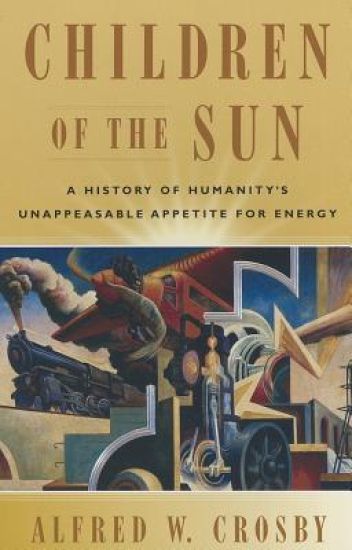
All life on earth is dependent on energy from the sun, but one species has evolved to be especially efficient in tapping that supply. This is the story of the human species and its dedicated effort to sustain and elevate itself by making the earth’s stores of energy its own. A story of slow evolutionary change and sharp revolutionary departures, it takes readers from the origins of the species to our current fork in the road. With a winning blend of wit and insight, Alfred W. Crosby reveals the fundamental ways in which humans have transformed the world and themselves in their quest for energy. When they first started, humans found fuel much like other species in the simple harvesting of wild plants and animals. A major turn in the human career came with the domestication of fire, an unprecedented achievement unique to the species. The greatest advantage from this breakthrough came in its application to food. Cooking vastly increased the store of organic matter our ancestors could tap as food, and the range of places they could live. As they spread over the earth, humans became more complicated harvesters, negotiating alliances with several other species—plant and animal—leading to the birth of agriculture and civilizations. For millennia these civilizations tapped sun energy through the burning of recently living biomass—wood, for instance. But humans again took a revolutionary turn in the last two centuries with the systematic burning of fossilized biomass. Fossil fuels have powered our industrial civilization and in turn multiplied our demand for sun energy. Here we are then, on the verge of exceeding what the available sources of sun energy can conventionally afford us, and suffering the ill effects of our seemingly insatiable energy appetite. A found of the field of global history, Crosby gives a book that glows with illuminating power.
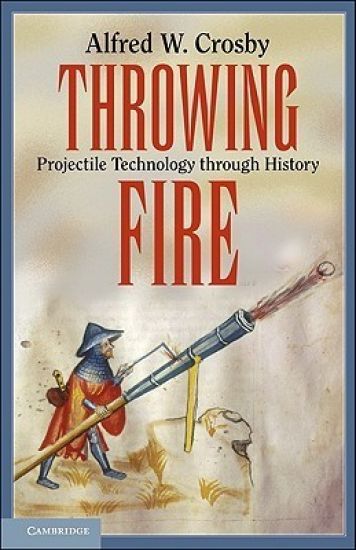
Historian Alfred W. Crosby looks at hard, accurate throwing and the manipulation of fire as unique human capabilities. Humans began throwing rocks in prehistory and then progressed to javelins, atlatls, bows and arrows. We learned to make fire by friction and used it to cook, drive game, burn out rivals, and alter landscapes. In historic times we invented catapults, trebuchets, and such flammable liquids as Greek Fire. About 1,000 years ago we invented gunpowder, which accelerated the rise of empires and the advance of European imperialism. In the 20th century, gunpowder weaponry enabled us to wage the most destructive wars of all time, peaking at the end of World War II with the V-2 and atomic bomb. Today, we have turned our projectile talents to space travel which may make it possible for our species to migrate to other bodies of our solar system and even other star systems.