Kirjojen hintavertailu. Mukana 11 244 527 kirjaa ja 12 kauppaa.

Kirjahaku

Etsi kirjoja tekijän nimen, kirjan nimen tai ISBN:n perusteella.

1000 tulosta hakusanalla Alice C Parker

The Exploration of the Secret Smile

The Exploration of the Secret Smile

Alice C Parker

Peter Lang Publishing Inc
1990
sidottu
This study of the work of the New York poet Frank O'Hara (1926-1966) emphasizes a largely overlooked aspect of O'Hara's poetics: the aspect of the urban homosexual, or gay, experience. It also emphasizes his frequent fusion of the aesthetics of poetry with the aesthetics of the visual arts. Revealing the importance of the deliberately (given the societal -mood- of the '50s and '60s) sedimented homosexual meaning in O'Hara's poetry, as well as the importance of the art of the Abstract Expressionists, "The Exploration of the Secret Smile" offers a new outlook on the congruence of his poetic canon."
The Proper Decoration of Book Covers – The Life and Work of Alice C. Morse

The Proper Decoration of Book Covers – The Life and Work of Alice C. Morse

Mindell Dubansky; Alice Cooney Frelingh; Josephine M. Dunn

Grolier Club of New York
2008
nidottu
This is a ground-breaking study of one of America's leading designers of nineteenth-century publishers' highly decorated bookbindings.This fully illustrated volume documents the life and work of Alice C. Morse. Included in this book is a biography of Morse by Grolier Club member Mindell Dubansky and two essays on her work and influence by scholars in the field of nineteenth-century decorative arts, followed by a comprehensive and lavishly illustrated survey of all the known works by the designer drawn from the personal collection of Mindell Dubansky and from the resources of the Metropolitan Museum of Art.Alice C. Morse (1863-1961) was a prolific and versatile designer during the heyday of the American Decorative Arts Movement. Though her fame has waned since the early twentieth century, her work will be familiar to admirers of artist-designed publishers' bindings of the period 1890-1910. She came to prominence during the late 1880s, when a small group of exceptional American publishers began to commission artist-designers such as Morse, and her contemporaries Sarah Wyman Whitman and Margaret Armstrong, to design the covers of case bindings. The Grolier Club exhibition marked the first time since 1923 that Morse's work was displayed to the public; and this present volume is the first to collect all of Morse's book design work, as well as literary posters and other ephemeral materials relating to her work.
Heroines of Service Mary Lyon, Alice Freeman Palmer, Clara Barton, Frances Willard, Julia Ward Howe, Anna Shaw, Mary Antin, Alice C. Fletcher, Mary Slessor of Calabar, Madame Curie, Jane Addams
The Pennycomequicks, Volume 3, a classical book, has been considered essential throughout the human history, and so that this work is never forgotten we at Alpha Editions have made efforts in its preservation by republishing this book in a modern format for present and future generations. This whole book has been reformatted, retyped and designed. These books are not made of scanned copies of their original work and hence the text is clear and readable.
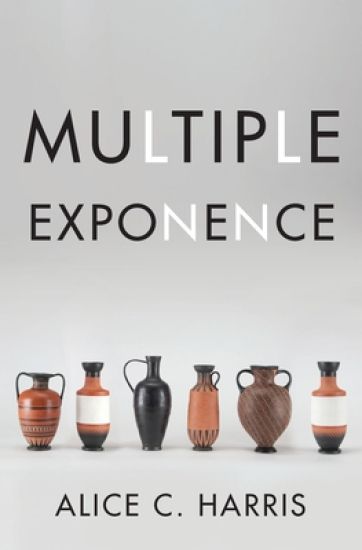
Multiple Exponence

Multiple Exponence

Alice C. Harris

Oxford University Press Inc
2017
sidottu
Multiple (or extended) exponence is the occurrence of multiple realizations of a single morphosemantic feature, bundle of features, or derivational category within a word. This book provides data and direction to the discussion of ME, which has gone in a variety of directions and suffers from lack of evidence. Alice Harris addresses the question of why ME is of interest to linguists and traces the discussion of this concept in the linguistic literature. The four most commonly encountered types of ME are characterized, with copious examples from a broad variety of languages; these types form the basis for discussion of the processing of ME, the acquisition of ME, the historical development of ME, and analysis of ME. The book addresses some of the most important questions involving ME, including why it exists at all.
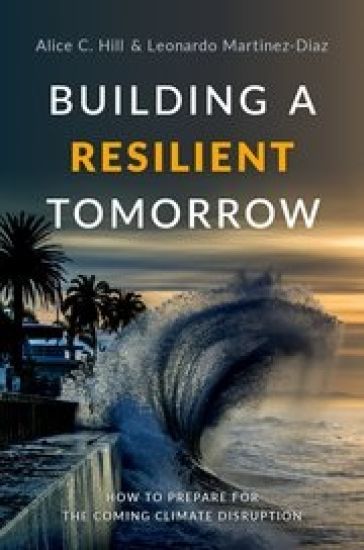
Building a Resilient Tomorrow

Building a Resilient Tomorrow

Alice C. Hill; Leonardo Martinez-Diaz

Oxford University Press Inc
2019
sidottu
Climate change impacts-more heat, drought, extreme rainfall, and stronger storms-have already harmed communities around the globe. Even if the world could cut its carbon emissions to zero tomorrow, further significant global climate change is now inevitable. Although we cannot tell with certainty how much average global temperatures will rise, we do know that the warming we have experienced to date has caused significant losses, and that the failure to prepare for the consequences of further warming may prove to be staggering. Building a Resilient Tomorrow does not dwell on overhyped descriptions of apocalyptic climate scenarios, nor does it travel down well-trodden paths surrounding the politics of reducing carbon emissions. Instead, it starts with two central facts: climate impacts will continue to occur, and we can make changes now to mitigate their effects. While squarely confronting the scale of the risks we face, this pragmatic guide focuses on solutions-some gradual and some more revolutionary-currently being deployed around the globe. Each chapter presents a thematic lesson for decision-makers and engaged citizens to consider, outlining replicable successes and identifying provocative recommendations to strengthen climate resilience. Between animated discussions of ideas as wide-ranging as managed retreat from coastal hot-zones to biological approaches for resurgent climate-related disease threats, Alice Hill and Leonardo Martinez-Diaz draw on their personal experiences as senior officials in the Obama Administration to tell behind-the-scenes stories of what it really takes to advance progress on these issues. The narrative is dotted with tales of on-the-ground citizenry, from small-town mayors and bankers to generals and engineers, who are chipping away at financial disincentives and bureaucratic hurdles to prepare for life on a warmer planet. For readers exhausted by today's paralyzing debates on yearly "fluke" storms or the existence of climate change, Building a Resilient Tomorrow offers better ways to manage the risks in a warming planet, even as we work to limit global temperature rise.
The Fight for Climate after COVID-19

The Fight for Climate after COVID-19

Alice C. Hill

Oxford University Press Inc
2022
sidottu
COVID-19 exposed the world's failure to prepare for the worst -- can we learn to build back better? The COVID-19 pandemic has hit our world on a scale beyond living memory, taking millions of lives and leading to a lockdown of communities worldwide. A pandemic, much like climate change, acts as a threat multiplier, increasing vulnerability to harm, economic impoverishment, and the breakdown of social systems. Even more concerning, communities severely impacted by the coronavirus still remain vulnerable to other types of hazards, such as those brought by accelerating climate change. The catastrophic risks of pandemics and climate change carry deep uncertainty as to when they will occur, how they will unfold, and how much damage they will do. The most important question is how we can face these risks to minimize them most. The Fight for Climate after COVID-19 draws on the troubled and uneven COVID-19 experience to illustrate the critical need to ramp up resilience rapidly and effectively on a global scale. After years of working alongside public health and resilience experts crafting policy to build both pandemic and climate change preparedness, Alice C. Hill exposes parallels between the underutilized measures that governments should have taken to contain the spread of COVID-19 -- such as early action, cross-border planning, and bolstering emergency preparation -- and the steps leaders can take now to mitigate the impacts of climate change. Through practical analyses of current policy and thoughtful guidance for successful climate adaptation, The Fight for Climate after COVID-19 reveals that, just as our society has transformed itself to meet the challenge of coronavirus, so too will we need to adapt our thinking and our policies to combat the ever-increasing threat of climate change. Unapologetic and clear-eyed, The Fight for Climate after COVID-19 helps us understand why the time has come to prepare for the world as it will be, rather than as it once was.
Building a Resilient Tomorrow

Building a Resilient Tomorrow

Alice C. Hill; Leonardo Martinez-Diaz

OXFORD UNIVERSITY PRESS INC
2022
nidottu
Climate change impacts--more heat, drought, extreme rainfall, and stronger storms--have already harmed communities around the globe. Even if the world could cut its carbon emissions to zero tomorrow, further significant global climate change is now inevitable. Although we cannot tell with certainty how much average global temperatures will rise, we do know that the warming we have experienced to date has caused significant losses, and that the failure to prepare for the consequences of further warming may prove to be staggering. Building a Resilient Tomorrow does not dwell on overhyped descriptions of apocalyptic climate scenarios, nor does it travel down well-trodden paths surrounding the politics of reducing carbon emissions. Instead, it starts with two central facts: climate impacts will continue to occur, and we can make changes now to mitigate their effects. While squarely confronting the scale of the risks we face, this pragmatic guide focuses on solutions-some gradual and some more revolutionary-currently being deployed around the globe. Each chapter presents a thematic lesson for decision-makers and engaged citizens to consider, outlining replicable successes and identifying provocative recommendations to strengthen climate resilience. Between animated discussions of ideas as wide-ranging as managed retreat from coastal hot-zones to biological approaches for resurgent climate-related disease threats, Alice Hill and Leonardo Martinez-Diaz draw on their personal experiences as senior officials in the Obama Administration to tell behind-the-scenes stories of what it really takes to advance progress on these issues. The narrative is dotted with tales of on-the-ground citizenry, from small-town mayors and bankers to generals and engineers, who are chipping away at financial disincentives and bureaucratic hurdles to prepare for life on a warmer planet. For readers exhausted by today's paralyzing debates on yearly "fluke" storms or the existence of climate change, Building a Resilient Tomorrow offers better ways to manage the risks in a warming planet, even as we work to limit global temperature rise.
Endoclitics and the Origins of Udi Morphosyntax

Endoclitics and the Origins of Udi Morphosyntax

Alice C. Harris

Oxford University Press
2002
sidottu
Endoclitics and the Origins of Udi Morphosyntax provides a synchronic description and analysis of a phenomenon that appears to be unique among languages that have been brought to the attention of linguists, namely the occurrence of endoclitics. Alice Harris demonstrates that syntactic rules must have access to the internal structure of the word. The early chapters of the book show that the morphemes at issue are clitics (as opposed to affixes), that the items inside which they may occur are words (as opposed to phrases), and that the clitics occur inside these words under specifiable conditions. The second part of the book describes how Udi came to be so different from other languages, and in doing so explains the origins of the phenomenon explored in the first part. The book will appeal to theoretical linguists, especially those interested in the interface between syntax and morphology. It will also be of considerable interest to historical linguists and students of Caucasian languages.
Food Allergies

Food Allergies

Alice C. Richer

Greenwood Press
2009
sidottu
Most people take eating for granted - but for some, eating can be downright dangerous. Thirty thousand Americans are hospitalized each year due to an allergic food reaction and peanut allergies in American children doubled from 1997 to 2002. Between two and ten percent of children are affected by food allergies worldwide and adverse food reactions increased hospital admissions by five hundred percent in the United Kingdom during the past two decades. Asthma cases, a reliable indicator of food allergy susceptibility, increased one hundred percent during the last thirty years. While most people assume they have a food allergy, only a very small percentage of cases are a true food allergy. For reasons still unknown, the human immune system reacts abnormally to certain foods. However, medical disorders, increased globalization of the food supply, and an upsurge of processed and convenience foods that contain food additives may also cause adverse food reactions as well. Accurate diagnosis can be extremely tricky and many sufferers never learn what causes their symptoms.Why are adverse food reactions on the rise? How can an accurate diagnosis be made? Is it even possible to enjoy foods and stay safe and healthy? These are just some of the questions this book will answer while helping the reader to learn all they can about why adverse food reactions happen, distinguish between a true food allergy and a food hypersensitivity, and outline strategies to successfully manage and live with them.
Women and Japanese Management

Women and Japanese Management

Alice C L Lam

Routledge
1992
sidottu
Standard works on the employment systems of Japanese companies deal almost exclusively with men. Women, however, constitute the vast majority of the low wage, highly flexible "non-core" employees. This book breaks new ground in examining the role of Japanese women in industry. It assesses the extent to which growing pressure for equal opportunities between the sexes has caused Japanese companies to adapt their employment and personnel management practices in recent years. The author puts the argument in an historical perspective, covering the employment of Japanese women from the start of Japan's industrialisation up to the turning point of the 1986 Equal Employment Opportunity (EEO) Law. She examines the background and execution of the legislation and she looks at the response of the business community. In her case study of the Seibu department store, which takes up the final part of the book, Lam concludes that the EEO Law has not had the desired effect.
Georgian Syntax

Georgian Syntax

Alice C. Harris

Cambridge University Press
2009
pokkari
Georgian has sometimes been described as a language that is 'totally irregular', where the notions of 'subject', 'object' and 'indirect object' have no relevance. Although it is often cited in work on general linguistics, language universals and language typology, no systematic account of the syntax of this morphologically complex language has been available for Western linguists. Dr Harris's work fills this important need, and indeed her book provides one of the best and most thorough studies available in English of the syntax of a non-Indo-European language. Working in the framework of relational grammar - a framework that is attracting great interest - Dr Harris shows that Georgian does have constructions found in better-known languages, and the study of individual languages to the development of linguistic theory.
Historical Syntax in Cross-Linguistic Perspective

Historical Syntax in Cross-Linguistic Perspective

Alice C. Harris; Lyle Campbell

Cambridge University Press
1995
pokkari
In this major new work Alice Harris and Lyle Campbell set out to establish a general framework for the investigation of linguistic change. Systematic cross-linguistic comparison of syntactic change across a wide variety of languages is used to construct hypotheses about the universals and limits of language change more generally. In particular, the authors seek to move closer towards describing the range of causes of syntactic change to develop an understanding of the mechanisms of syntactic change, and to provide an understanding of why some languages undergo certain changes and not others. The authors draw on languages as diverse as Pipil and French, Georgian and Estonian, and the data presented is one of the book’s great strengths. Rigor and precision are combined here with a great breadth of scholarship to produce a unique resource for the study of linguistic change, which will be of use to scholars and students alike.