

Kirjahaku
Etsi kirjoja tekijän nimen, kirjan nimen tai ISBN:n perusteella.
1000 tulosta hakusanalla Alice L. Laffey

Alice Laffey's rereading of the major themes of the first five books of the Bible will enable readers to gain a firm grasp of the contents of this major literary corpus. Like other volumes in this series, it will also point the way to a different reading of Scripture, one that raises today's questions-power, liberation, justice, and preeminently connectedness. Laffey highlights neglected resources in the text in order "to approach these texts from the perspective of a respectfully interdependent worldview." In this work we witness a radical expansion and transformation of feminist biblical criticism to incorporate concern for all humans, all animals, all nature in a global, even cosmic way.
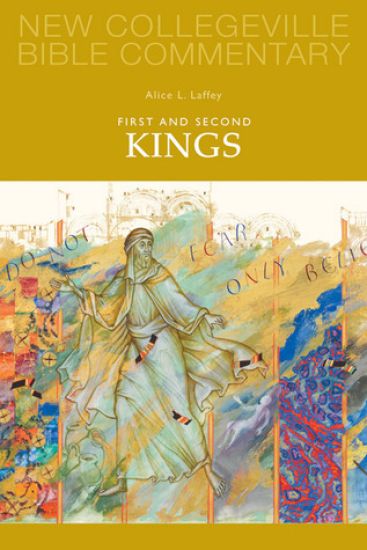
The books of Kings view Israel's history through the theological lens of action. Actions have consequences that are determined by the people's faithfulness or unfaithfulness to their God and the covenant, and the editors' purpose is to demonstrate that the monarchy stands or falls on its faithfulness to its God. The books of Kings, though in real ways foreign to the twenty-first century, contain content that resonates with our contemporary experience. They raise an array of questions: In the relationships between and among individuals and between and among nations, what constitutes loyalty? What behaviors exact justice? What are the demands of being in a covenant relationship with God? What does it mean to be faithful to that relationship? What risks are we willing to take? How do we pray? Where do we look for the power of God? The insights gleaned from engaging these questions can shed a unique light on our contemporary lives.

This volume, using multiple methods, seeks to bring together the best scholarship and insight—Jewish and Christian, past and present—that has contributed to our understanding and appreciation of the biblical book of Ruth. As a feminist commentary, it is particularly sensitive to issues of relationship and inclusion, power and agency. In addition to the voices of the primary co-authors, Alice Laffey and Mahri Leonard-Fleckman, the volume incorporates and integrates important contributing voices from diverse contemporary social contexts and geographical locations. In sum, the commentary seeks to allow Ruth, Naomi, and Boaz to speak again for the first time.

Alice l'Exploratrice
Delphine Stephen; Valentine Stephen
Createspace Independent Publishing Platform
2015
nidottu
Alice l'Exploratrice parcourt le monde la recherche de tr sors disparus. Dans une for t inconnue, Alice l'Exploratrice va faire sa plus grande d couverte...D couvrez les Histoires modeler, des histoires tendres et dr les illustr es en p te modeler, lire avant de dormir.Offrez le bonheur de lire votre enfant avec Les Aventures de mon pr nom, des livres personnalis s son pr nom, illustr s en p te modeler, lire avant de dormir.Choisissez parmi les 14 th mes des Aventures de mon pr nom (pirate, astronaute, cowboy, ballerine...). Vous pouvez personnaliser le livre au pr nom de votre enfant sur le site lesaventuresdemonprenom.comEn quelques jours, votre livre sera disponible la commande sur Amazon

Alice l'Astronaute explore une plan te o vivent des extra-terrestres Mais elle devra d couvrir s'ils sont vraiment gentils avant d'aller se coucher Offrez le bonheur de lire votre enfant avec Les Aventures de mon pr nom, des livres personnalis s son pr nom, illustr s en p te modeler, lire avant de dormir.Choisissez parmi les 14 th mes des Aventures de mon pr nom (pirate, astronaute, cowboy, ballerine...). Vous pouvez personnaliser le livre au pr nom de votre enfant sur le site lesaventuresdemonprenom.comEn quelques jours, votre livre sera disponible la commande sur Amazon

Alice est une jeune fille qui, par curiosit , suit une voiture de tourisme et finit par se perdre. Elle vit seule dans la for t jusqu' ce qu'elle soit trouv e par de gentils gorilles.

We hung the walls with old French movie posters advertising the films of Marcel Pagnol, films that had already provided us with both a name and an ideal: to create a community of friends, lovers, and relatives that span generations and is in tune with the seasons, the land, and human appetites. So writes Alice Waters of the opening of Berkeley's Chez Panisse Cafe on April Fool's Day, 1980. Located above the more formal Chez Panisse Restaurant, the Cafe is a bustling neighborhood bistro where guests needn't reserve far in advance and can choose from the ever-changing a la carte menu. It's the place where Alice Waters's inventive chefs cook in a more impromptu and earthy vein, drawing on the healthful, low-tech traditions of the cuisines of such Mediterranean regions as Catalonia, Campania, and Provence, while improvising and experimenting with the best products of Chez Panisse's own regional network of small farms and producers. In the Chez Panisse Cafe Cookbook, the follow-up to the award-winning Chez Panisse Vegetables, Alice Waters and her team of talented cooks offer more than 140 of the cafe's best-recipes--some that have been on the menu since the day cafe opened and others freshly reinvented with the honesty and ingenuity that have made Chez Panisse so famous. In addition to irresistible recipes, the Chez Panisse Cafe Cookbook is filled with chapter-opening essays on the relationships Alice has cultivated with the farmers, foragers and purveyors--most of them within an hour's drive of Berkeley--who make it possible for Chez Panisse to boast that nearly all food is locally grown, certifiably organic, and sustainably grown and harvested. Alice encourages her chefs and cookbook readers alike to decide what to cook only after visiting the farmer's market or produce stand. Then we can all fully appreciate the advantages of eating according to season--fresh spring lamb in late March, ripe tomato salads in late summer, Comice pear crisps in autumn. This book begins with a chapter of inspired vegetable recipes, from a vivid salad of avocados and beets to elegant Morel Mushroom Toasts to straightforward side dishes of Spicy Broccoli Raab and Garlicky Kale. The Chapter on eggs and cheese includes two of the cafe's most famous dishes, a garden lettuce salad with baked goat cheese and the Crostata di Perrella, the cafe's version of a calzone. Later chapters focus on fish and shellfish, beef, pork, lamb, and poultry, each offering its share of delightful dishes. You'll find recipes for curing your own pancetta, for simple grills and succulent braises, and for the definitive simple roast chicken--as well as sumptuous truffed chicken breasts. Finally the pastry cooks of Chez Panisse serve forth a chapter of uncomplicated sweets, including Apricot Bread Pudding, Chocolate Almond Cookies, and Wood Oven-baked Figs with Raspberries. Gorgeously designed and illustrated throughout with colored block prints by David Lance Goines, who has eaten at the cafe since the day it opened, Chez Panisse Cafe Cookbook is destined to become an indispensable classic. Fans of Alice Waters's restaurant and cafe will be thrilled to discover the recipes that keep them coming back for more. Loyal readers of her earlier cookbooks will delight in this latest collection of time-tested, deceptively simple recipes. And anyone who loves pure, vibrant, delicious fare made from the finest ingredients will be honored to add these new recipes to his or her repertoire.

France and Its Empire Since 1870
Alice L. Conklin; Sarah Fishman; Robert Zaretsky
Oxford University Press Inc
2014
nidottu
Providing an up-to-date synthesis of the history of an extraordinary nation--one that has been shrouded in myths, many of its own making--France and Its Empire Since 1870 seeks both to understand these myths and to uncover the complicated and often contradictory realities that underpin them. It situates modern French history in transnational and global contexts and also integrates the themes of imperialism and immigration into the traditional narrative. Authors Alice L. Conklin, Sarah Fishman, and Robert Zaretsky begin with the premise that while France and the U.S. are sister republics, they also exhibit profound differences that are as compelling as their apparent similarities. The authors frame the book around the contested emergence of the French Republic--a form of government that finally appears to have a permanent status in France--but whose birth pangs were much more protracted than those of the American Republic. Presenting a lively and coherent narrative of the major developments in France's tumultuous history since 1870, the authors organize the chapters around the country's many turning points and confrontations. They also offer detailed analyses of politics, society, and culture, considering the diverse viewpoints of men and women from every background including the working class and the bourgeoisie, immigrants, Catholics, Jews and Muslims, Bretons and Algerians, rebellious youth, and gays and lesbians.

Contemporary young adult literature is a relatively new genre. This guide provides an overview of the burgeoning field, focusing primarily on fiction. Each of the 32 chapters is devoted to a theme of special significance to young adults, and provides brief critical discussions of several related literary works. Chapters close with lists of fiction for further reading. An appendix groups works according to additional themes, and a selected bibliography cites relevant critical studies.

This cookbook covers the years 1840 through 1945, a time during which American cookery underwent a full-scale revolution. Gas and electric stoves replaced hearth cookery. Milk products came from commercial dairy farms rather than the family cow. Daily meals were no longer bound by seasons and regions, as canned, bottled, and eventually frozen products flooded the market and trains began to transport produce and meat from one end of the country to the other. During two World Wars and the Great Depression women entered the work force in unprecedented numbers and household servants abandoned low-paying domestic jobs to work in factories. As a result of these monumental changes, American home cooking became irrevocably simplified and cookery skills geared more toward juggling time to comb grocery store shelves for the best and most economical products than toward butchering and preserving an entire animal carcass or pickling fruits and vegetables. This cookbook reflects these changes, with each of the three chapters capturing the home cooking that typified the era. The first chapter covers the pre-industrial period 1840 to 1875; during this time, home cooks knew how to broil, roast, grill, fry, and boil on an open hearth flame and its embers without getting severely injured. They also handled whole sheep carcasses, made gelatin from boiled pigs trotters, grew their own yeast, and prepared their own preserves. The second chapter covers 1876 through 1910, a time when rapid urbanization transformed the United States from an agrarian society into an industrial giant, giving rise to food corporations such as Armour, Swift, Campbell's, Heinz, and Pillsbury. The mass production and mass marketing of commercial foods began to transform home cooking; meat could be purchased from a local butcher or grocery store and commercial gelatin became widely available. While many cooks still made their own pickles and preserves, commercial varieties multiplied. From 1910 to 1945, the period covered by Chapter 3, the home cook became a full-fledged consumer and the national food supply became standardized to a large extent. As the industrialization of the American food supply progressed, commercially produced breads, pastries, sauces, pickles, and preserves began to take over kitchen cupboards and undermine the home cooks' ability to produce their own meals from scratch. The recipes have been culled from some of the most popular commercial and community cookbooks of the nineteenth and early twentieth centuries. Taken together, the more than 300 recipes reflect the major cookbook trends of the era. Suggested menus are provided for replicating entire meals.

Covering topics ranging from the establishment of the Gulf Coast shrimping industry in 1800s to the Korean taco truck craze in the present day, this book explores the widespread contributions of Asian Americans to U.S. food culture.Since the late 18th century, Asian immigrants to the United States have brought their influences to bear on American culture, yielding a rich, varied, and nuanced culinary landscape. The past 50 years have seen these contributions significantly amplified, with the rise of globalization considerably blurring the boundaries between East and West, giving rise to fusion foods and transnational ingredients and cooking techniques. The Asian American population grew from under 1 million in 1960 to an estimated 19.4 million in 2013. Three-quarters of the Asian American population in 2012 was foreign-born, a trend that ensures that Asian cuisines will continue to invigorate and enrich the United States food culture. This work focuses on the historical trajectory that led to this remarkable point in Asian American food culture. In particular, it charts the rise of Asian American food culture in the United States, beginning with the nation's first Chinese "chow chows" and ending with the successful campaign of Indochina war refugees to overturn the Texas legislation that banned the cultivation of water spinach—a staple vegetable in their traditional diet. The book focuses in particular on the five largest immigrant groups from East and Southeast Asia—those of Chinese, Japanese, Korean, Filipino, and Vietnamese descent.Students and food enthusiasts alike now have a substantial resource to turn to besides ethnic cookbooks to learn how the cooking and food culture of these groups have altered and been integrated into the United States foodscape. The work begins with a chronology that highlights Asian immigration patterns and government legislation as well as major culinary developments. The book's seven chapters provide an historical overview of Asian immigration and the development of Asian American food culture; detail the major ingredients of the traditional Asian diet that are now found in the United States; introduce Asian cooking philosophies, techniques, and equipment as well as trace the history of Asian American cookbooks; and outline the basic structure and content of traditional Asian American meals. Author Alice L. McLean's book also details the rise of Chinese, Japanese, Korean, Filipino, and Vietnamese restaurants in the United States and discusses the contemporary dining options found in ethnic enclaves; introduces celebratory dining, providing an overview of typical festive foods eaten on key occasions; and explores the use of food as medicine among Asian Americans.

This comprehensive overview of Julia Alvarez's fiction, nonfiction, and poetry offers biographical information and parses the author's important works and the intentions behind them.Reading Julia Alvarez reviews the author's acclaimed body of writing, exploring both the works and the woman behind them. The guide opens with a brief biography that includes the saga of the Alvarez family's flight from the Dominican Republic when Julia was ten, and carries her story through the philanthropic organic coffee farm that she and her husband now operate in that nation.The heart of the book is a broad overview of Alvarez's literary achievements, followed by chapters that discuss individual works and a chapter on her poetry. The book also looks at how the author's writings grapple with and illuminate contemporary issues, and at Alvarez's place in pop culture, including an examination of film adaptations of her books. Through this guide, readers will better understand the relevance of Alvarez's works to their own lives and to new ways of thinking about current events.

Women's Health Across the Lifespan, An Issue of Nursing Clinics
Alice L. March
Elsevier - Health Sciences Division
2018
sidottu
This issue has the unique focus of complete health care for the female--from birth to advanced age. Specific topics covered include the following: Ambiguous genitalia; Precocious puberty; Issues related to care access (consent, confidentiality); Teenage pregnancy; Menopause symptom management; Sexuality; Pessary care; Preconception planning; IPV and dating violence; Sexually-transmitted infections (include HPV and vaccination); Care of Women living with HIV/AIDS; Sexual minority care; High-risk pregnancy; and Lactation. The reader will come away with the current clinical information needed to provide care for girls and women of all ages.



Central Asia, 1880's. A botanist stumbles across the rarest of tulip flowers growing in a shaman's garden. She's willing to sell him a bundle of tulip bulbs but first he must eat one, then make love to her (the side effects are supernatural yet useful). After arriving in Holland, the valuable bundle goes missing. Convinced a poor, crippled dock worker is the thief the botanist goes in hot pursuit. But when he fails to return, his son asks the local constable to investigate. When the constable meets up with the dock worker's wife and the couple's teenaged daughter a curse is fully unleased, and the seven people collide in the most intimate and heart-wrenching of ways.


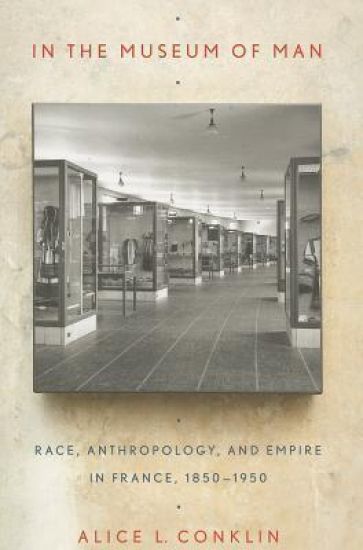
In the Museum of Man offers new insight into the thorny relationship between science, society, and empire at the high-water mark of French imperialism and European racism. Alice L. Conklin takes us into the formative years of French anthropology and social theory between 1850 and 1900; then deep into the practice of anthropology, under the name of ethnology, both in Paris and in the empire before and especially after World War I; and finally, into the fate of the discipline and its practitioners under the German Occupation and its immediate aftermath.Conklin addresses the influence exerted by academic networks, museum collections, and imperial connections in defining human diversity socioculturally rather than biologically, especially in the wake of resurgent anti-Semitism at the time of the Dreyfus Affair and in the 1930s and 1940s. Students of the progressive social scientist Marcel Mauss were exposed to the ravages of imperialism in the French colonies where they did fieldwork; as a result, they began to challenge both colonialism and the scientific racism that provided its intellectual justification. Indeed, a number of them were killed in the Resistance, fighting for the humanist values they had learned from their teachers and in the field. A riveting story of a close-knit community of scholars who came to see all societies as equally complex, In the Museum of Man serves as a reminder that if scientific expertise once authorized racism, anthropologists also learned to rethink their paradigms and mobilize against racial prejudice—a lesson well worth remembering today.