Kirjahaku
Etsi kirjoja tekijän nimen, kirjan nimen tai ISBN:n perusteella.
1000 tulosta hakusanalla Alice M. Curry-Frank

Lady Betty Across the water: (Alice M Williamson Classics Collection)
Alice M. Williamson
Createspace Independent Publishing Platform
2015
nidottu


Alice in France: The World War I Letters of Alice M. O'Brien
Minnesota Historical Society Press
2017
nidottu
The lively and revealing letters of a woman who, with thousands of others, volunteered for service in World War I Europe, taking on jobs that freed men for the trenches.
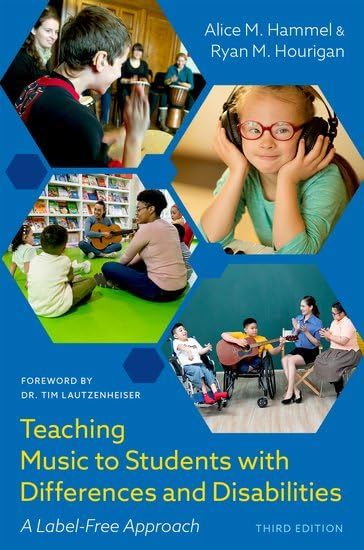
Teaching Music to Students with Differences and Disabilities
Alice M. Hammel; Ryan M. Hourigan
OXFORD UNIVERSITY PRESS INC
2024
sidottu
The latest edition of the landmark text Teaching Music to Students with Differences and Disabilities: A Label-Free Approach--designed for music education faculty, in-service music administrators, in-service music teachers, and preservice music teachers--offers a comprehensive manual and reference guide that introduces those in the field of music education to best practices when teaching music to students with differences and disabilities. Acclaimed pedagogues and clinicians Alice Hammel and Ryan Hourigan addresses a variety of topics such as research-based strategies for methods courses, practical approaches for in-service music educators, and professional development grounded in research, special education law, and best practice. Like previous editions, a core focus this book is that a student with differences and disabilities is an individual who deserves a music education that is free of labels. This philosophical premise of a label-free approach is centered in the preservation of the individual personhood of each student. Through this approach, music educators will be able to gain and advocate for support, understand their rights and responsibilities, and offer an affective and effective music education for students with and without disabilities. This includes learning strategies for effective collaboration with special educators, teacher educators, and classroom teachers. The authors also include curriculum development ideas, lesson plan strategies, observation strategies (methods classroom), and practical ideas (methods classroom).
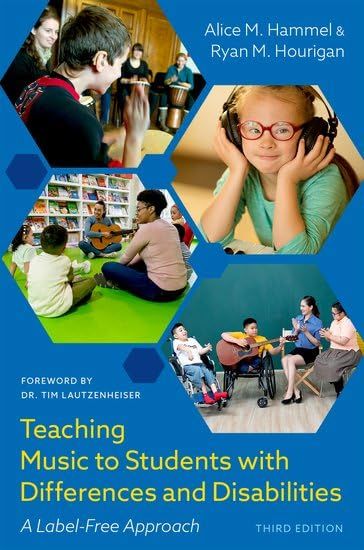
Teaching Music to Students with Differences and Disabilities
Alice M. Hammel; Ryan M. Hourigan
OXFORD UNIVERSITY PRESS INC
2024
nidottu
The latest edition of the landmark text Teaching Music to Students with Differences and Disabilities: A Label-Free Approach--designed for music education faculty, in-service music administrators, in-service music teachers, and preservice music teachers--offers a comprehensive manual and reference guide that introduces those in the field of music education to best practices when teaching music to students with differences and disabilities. Acclaimed pedagogues and clinicians Alice Hammel and Ryan Hourigan addresses a variety of topics such as research-based strategies for methods courses, practical approaches for in-service music educators, and professional development grounded in research, special education law, and best practice. Like previous editions, a core focus this book is that a student with differences and disabilities is an individual who deserves a music education that is free of labels. This philosophical premise of a label-free approach is centered in the preservation of the individual personhood of each student. Through this approach, music educators will be able to gain and advocate for support, understand their rights and responsibilities, and offer an affective and effective music education for students with and without disabilities. This includes learning strategies for effective collaboration with special educators, teacher educators, and classroom teachers. The authors also include curriculum development ideas, lesson plan strategies, observation strategies (methods classroom), and practical ideas (methods classroom).
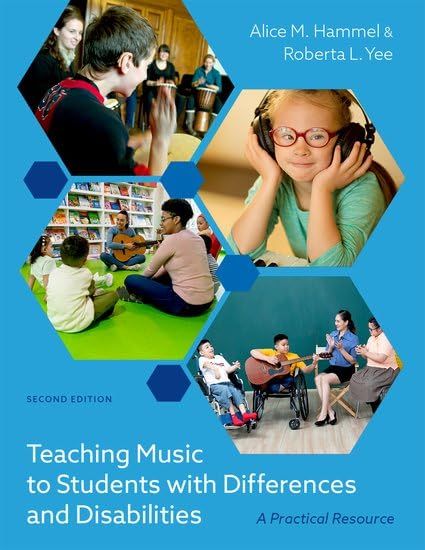
Teaching Music to Students with Differences and Disabilities
Alice M. Hammel; Roberta L. Yee
OXFORD UNIVERSITY PRESS INC
2025
nidottu
Teaching Music to Students with Differences and Disabilities: A Practical Resource, Second Edition brings together theory, policy, and planning for instruction in K-12 classrooms. This resource is a result of collaboration between K-12 teachers, outstanding undergraduate and graduate music education students, and professionals in the field. The lesson ideas, lesson plans, and unit plans are organized according to the six domains posited by Alice Hammel and Ryan Hourigan in their book, Teaching Music to Students with Differences and Disabilities: A Label-free Approach, Third Edition. This book equips music educators with understanding necessary to implement teaching ideas into the domains of cognition, communication, behavior, emotions, and physical and sensory needs. Classroom-tested lesson plans include procedure outlines and assessments as well as guides for adaptation, accommodation, and modification needed for successful implementation in K-12 classrooms. As such, this eminently useful guide provides teachers with enough practical ideas to allow them to begin to create and adapt their own lesson plans for use with students of differing needs and abilities.

"In an environment of intensifying global competition, deployment of technology is becoming the strategic battlefield of the international marketplace." National Critical Technologies Panel. Creating Technology Strategies prepares business and scientific leaders in the biomedical industries to battle for dominance in the global marketplace. It closes the gap between R&D scientists' and corporate executives' understanding of the relationship between R&D decisions and the achievement of business objectives. In doing so, the book creates a blueprint to guide the day-to-day and long-term allocation of science and technology resources and helps achieve a consistency among corporate, R&D, program, and project decisions. Alice M. Sapienza, a scholar and strategic consultant to biomedical firms, explains the special issues of concern to these firms and some of the pressures on their leadership to invest in and manage R&D resources wisely. She provides a conceptual foundation for understanding the technology life cycle and supplies tools with which the leadership team can. *Analyze the external environment and take advantage of the competitive situation *Codify the firm's competitive position in terms of the technology it possesses *Develop a strategic vision that encourages consistent R&D investments *Determine the consequences of and requirements for changing the firm's competitive position *Assess the fit of external knowledge sources (new recruits, acquired firms, etc.) with the biomedical firm *Implement competitive technology strategy at program and project levels. Supplemented with strategic investment assessment guidelines for both industry insiders and nonindustry venture capitalists, Creating Technology Strategies covers both macro and micro R&D issues. For R&D scientists, managers, and potential investors in the pharmaceutical, biotechnology, and diagnostic industries, this book provides much of the information needed to understand the complex and crucial issues of biomedical R&D strategy. How to compete successfully in an industry unlike any other . . . A direct relationship to public and personal health; a three-part consumer base consisting of medical professionals, third-party payers, and patients; a high level of government regulation; and the intensely emotional nature of many of the decisions that must be madethis combination of factors sets the biomedical industry apart from all others when it comes to determining R&D strategies. In this book, a leading industry consultant, Dr. Alice Sapienza, speaks directly to biomedical scientists, corporate strategists, and R&D managers. Dr. Sapienza sorts through the many complex issues that affect both business and R&D decisions and arrives at sensible conclusions that enable biomedical firms to maximize the effectiveness of R&D programs while strengthening their competitive position. The approaches developed in Creating Technology Strategies will be of particular interest to *Members of the R&D leadership team, who must understand, design, and implement a technology strategy that supports the achievement of business goals. *Corporate management, who must better understand the role of science and technology in the attainment of strategic objectives. *R&D scientists, who must assess and manage programs and projects in ways that are consistent with corporate and technology strategies. *Investors, who must analyze a biomedical firm's competitive position before committing their resources. "Dr. Sapienza provides an extremely useful framework for R&D based companies to use in attempting to realign their business strategies. . . . [She] touches on many of the critical elements of the competitive technology environment. . . . [The book provides] a highly effective vehicle to allow groups of key decision makers . . . to understand the future of the research-based biomedical research industry for the 21st century." Michael Williams, Ph.D., D.Sc., Vice President, Neuroscience Research, Abbott Laboratories "[It] is well worth reading and thinking about. . . . includes several hypothetical cases . . . bringing to life some of the more difficult conceptual material. Dr. Sapienza brings an intimate knowledge . . . of technology and strategic issues facing the leadership of many knowledge-based organizations today." Muzammil Mansuri, Ph.D., Vice President, MITOTIX. "I am impressed . . . it presents a sophisticated, but realistic, approach to the problems facing the biopharmaceutical industry in defining and implementing a relevant business and research strategy. . . . Dr. Sapienza has caught the flavor excellently." J.D. Fitzgerald, M.D., Materia Medica.

Since the early 1990s, research and discovery collaborations between biotechnology and pharmaceutical companies have increased to the point that they now provide more than half of the total capital invested in the biotechnology sector. Although smaller biotechnology companies may be engaged in only a few alliances at a time, some of the most active pharmaceutical players may be engaged in anywhere from thirty to forty alliances at once. Any single alliance relationship may be the lifeblood for a small biotechnology company, while the same relationship may be just one of many for the pharmaceutical partner. Research alliances with small, close-to-the-science companies are the source of many of the innovative ideas of today and the future, but they present formidable challenges. Successful collaboration depends not only on the solution of scientific and technical problems, but also on the successful resolution of many leadership and organizational problems. Leading Biotechnology Alliances presents a tightly focused discussion regarding issues and questions that are unique and critical to the effectiveness of alliances, including: * Power differences and other asymmetries between partner firms and some implications for alliance dynamics * Sector history and evolution as a basis for understanding the cultural divide that characterizes many biotechnology-pharmaceutical relationships * Why leaders on the biotechnology side must assume the greater leadership responsibility in these alliances * Different - and predictable - challenges over the alliance life cycle, from start to completion/termination * Leadership roles needed for productive and effective collaboration across groups, locations, and companies From societal and economic perspectives, it is important to lead biotechnology alliances right, right from the start. The intent of Leading Biotechnology Alliances is to help scientists and executives from large and small companies do just that - collaborate productively and effectively. This book includes a case study, numerous interview excerpts, general theory and background, a delineation of alliance responsibilities, and a set of alliance effectiveness questions. Together, these ingredients provide the reader with a clear understanding of the complicated dynamics of alliances and leadership issues and roles within the alliance life cycle.

This updated edition provides managers with a practical guide focused on the particular management needs for research and development in biotechnology and pharmaceutical industries. It offers a way to improve the quality of interactions and creativity output in R&D, with real life case studies to illustrate key points.


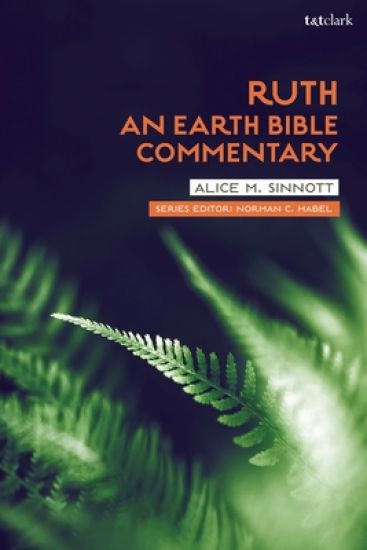
This ecological reading of the book of Ruth takes into account the power which this short story holds, speaking to the whole person by engaging each reader’s emotions, imagination, memory, and reason. Alice M. Sinnott demonstrates how the story of Ruth transcends geographical, spatial and historical boundaries by appealing to all concerned with the plight of the Earth. Sinnott highlights the ecological dimensions of the text that scholars have ignored or dismissed in the past, and explores how the narrator gives voice to the way in which the Earth functions throughout the story. Integral to her reading of the text is a concern for Earth and matters such as food, famine, death, harvests, grain, day and night and members of the Earth community. Sinnott considers non-human characters as legitimate determining factors in the structuring of the narrative, and recognizes Earth and members of the Earth community as equally valid subjects. By identifying with these aspects of Ruth, Sinnott is able to read the text with new eyes; and by placing special emphasis in how the narrator depicts the natural world, she reinforces how subjects from that world emerge as integral components.
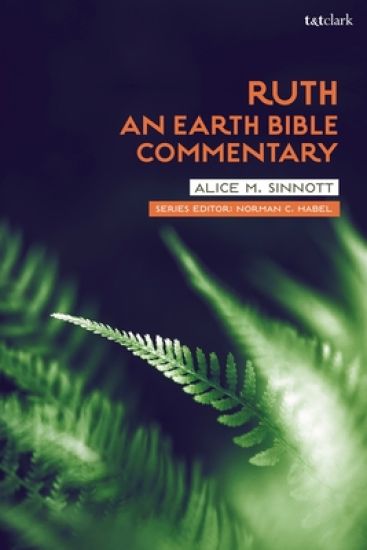
This ecological reading of the book of Ruth takes into account the power which this short story holds, speaking to the whole person by engaging each reader’s emotions, imagination, memory, and reason. Alice M. Sinnott demonstrates how the story of Ruth transcends geographical, spatial and historical boundaries by appealing to all concerned with the plight of the Earth. Sinnott highlights the ecological dimensions of the text that scholars have ignored or dismissed in the past, and explores how the narrator gives voice to the way in which the Earth functions throughout the story. Integral to her reading of the text is a concern for Earth and matters such as food, famine, death, harvests, grain, day and night and members of the Earth community. Sinnott considers non-human characters as legitimate determining factors in the structuring of the narrative, and recognizes Earth and members of the Earth community as equally valid subjects. By identifying with these aspects of Ruth, Sinnott is able to read the text with new eyes; and by placing special emphasis in how the narrator depicts the natural world, she reinforces how subjects from that world emerge as integral components.

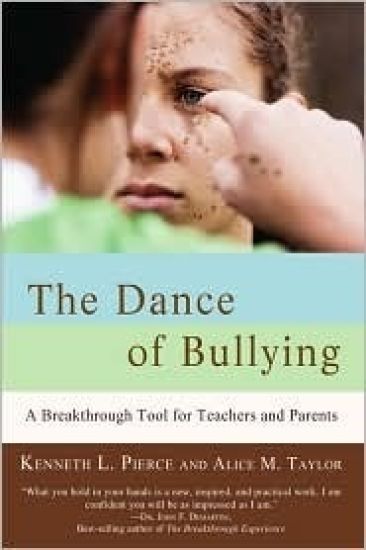
Thousands of children avoid school each day for fear of being persecuted by their peers; countless more dread it for the same reason. This timely, insightful, and truly practical handbook shows parents, teachers, school administrators, and community leaders how to create healthier, safer schools and communities. Based on the physics and psychology behind bullying, The Dance of Bullying explains the interpersonal dynamics that cause one child to harass another. Easy to understand and apply, the tools and techniques in this comprehensive guide include: The innovative "What's Next" intervention strategy The groundbreaking Demartini Method(R) to enhance a child's feelings of self-appreciation and gratitude Skill-enhancing tips for both educators and family members Invaluable insights into the minds of both the bully and the bullied Specific actions to help adults intervene decisively By understanding the bullying dynamic, you will be able to intervene with far greater impact-and in a way that honors everyone involved. With your help, all children can emerge from these relationships with greater self-esteem and improved interpersonal skills. With The Dance of Bullying, you will be able to instigate significant changes in your school and community.