

Kirjahaku
Etsi kirjoja tekijän nimen, kirjan nimen tai ISBN:n perusteella.
1000 tulosta hakusanalla Alison M Jarvis
The French Invention of Menopause and the Medicalisation of Women's Ageing
Alison M. Downham Moore
Oxford University Press
2022
sidottu
Doctors writing about menopause in France vastly outnumbered those in other cultures throughout the entire nineteenth century. The concept of menopause was invented by French male medical students in the aftermath of the French Revolution, becoming an important pedagogic topic and a common theme of doctors' professional identities in postrevolutionary biomedicine. Older women were identified as an important patient cohort for the expanding medicalisation of French society and were advised to entrust themselves to the hygienic care of doctors in managing the whole era of life from around and after the final cessation of menses. However, menopause owed much of its conceptual weft to earlier themes of women as the sicker sex, of vitalist crisis, of the vapours, and of astrological climacteric years. This is the first comprehensive study of the origins of the medical concept of menopause, richly contextualising its role in nineteenth-century French medicine and revealing the complex threads of meaning that informed its invention. It tells a complex story of how women's ageing featured in the demographic revolution in modern science, in the denigration of folk medicine, in the unique French field of hygiène, and in the fixation on women in the emergence of modern psychiatry. It reveals the nineteenth-century French origins of the still-current medical and alternative-health approaches to women's ageing as something to be managed through gynaecological surgery, hormonal replacement, and lifestyle intervention.

The Prodigal Son in English and American Literature
Alison M. Jack
Oxford University Press
2018
sidottu
The Parable of the Prodigal Son is one of the best-known stories in the Bible. It has captured the imagination of commentators, preachers and writers. Alison M. Jack explores the reconfiguring of the character of the Prodigal Son and his family in literature in English. She considers diverse literary periods and genres in which the paradigm is particularly prevalent, such as Elizabethan literature, the work of Shakespeare, the novels of female Victorian writers, the American short story tradition, novels focused on the lives of ordained ministers, and the poetry of Elizabeth Bishop and Iain Crichton Smith. Drawing on scholarship from biblical and literary studies, this study demonstrates the remarkable potency of the parable in generating new, and at times contradictory, meanings in different contexts. Historical and literary criticism are brought into dialogue to explore this remarkably resilient and nimble character as he dances through drama, novels and poetry across the centuries.
The Renaissance, now in its third edition, engages with earlier and current debates about the Renaissance, especially concerning its ‘modernity’, its elitism and gender bias and its globalism. This new edition has been revised to include a discussion of Venice, Rome, Naples and Florence and their relationship with surrounding courts and smaller provincial towns. Brown provides a fresh insight into some of the main themes of the Renaissance, with humanism now being explored in relation to gender, the position of women and the response of religious reformers to the new ideas. The broad geographical scope, concluding with an examination of diffusion through trade with Constantinople, Portugal and Spain, allows students to fully explore how the Renaissance transformed into a global movement. Key themes, such as humanism, art and architecture, Renaissance theatre and the invention of printing, are illustrated with quotations and exempla, making this book an invaluable source for students of the Renaissance, early modern history and social and cultural history.
The Renaissance, now in its third edition, engages with earlier and current debates about the Renaissance, especially concerning its ‘modernity’, its elitism and gender bias and its globalism. This new edition has been revised to include a discussion of Venice, Rome, Naples and Florence and their relationship with surrounding courts and smaller provincial towns. Brown provides a fresh insight into some of the main themes of the Renaissance, with humanism now being explored in relation to gender, the position of women and the response of religious reformers to the new ideas. The broad geographical scope, concluding with an examination of diffusion through trade with Constantinople, Portugal and Spain, allows students to fully explore how the Renaissance transformed into a global movement. Key themes, such as humanism, art and architecture, Renaissance theatre and the invention of printing, are illustrated with quotations and exempla, making this book an invaluable source for students of the Renaissance, early modern history and social and cultural history.
Some people believe that feminist ethics is little more than a series of dogmatic positions on issues such as abortion rights, pornography, and affirmative action.This caricature was never true, but Alison Jaggar's Living with Contradictions is the first book to demonstrate just how rich and complex feminist ethics has become. Beginning with the mo
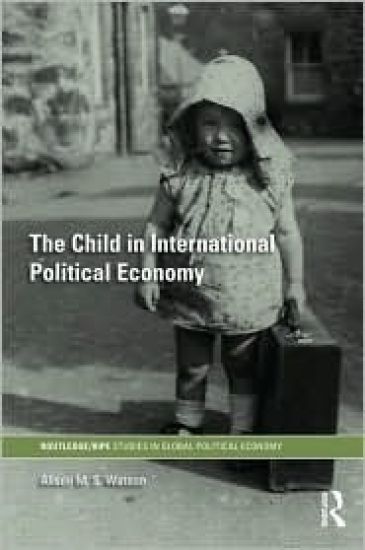
This pioneering volume argues for the inclusion of children, and the structure known as ‘childhood’, as a permanent social category worthy of continued study within the discipline of international political economy (IPE). Fundamentally, and very simply, IPE is concerned with the dynamics of interaction across the economic and political domains; the relationship between the domestic and the international levels of analysis, and the role of the state. This book presents a convincing argument for the discussion of children within each of these areas. This volume:• provides the first book length examination of the child within IPE• draws on work from a variety of disciplines• brings rich analyses to debates about the role of the child in societyContributing insights that may be fundamental to the development of IPE as a discipline, The Child in International Political Economy will be vital reading to students and scholars of IPE, Childhood Studies, and International Relations.
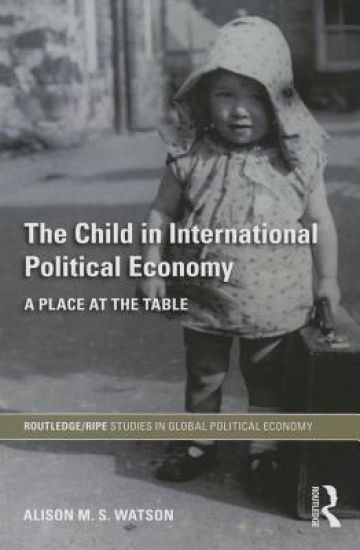
This pioneering volume argues for the inclusion of children, and the structure known as ‘childhood’, as a permanent social category worthy of continued study within the discipline of international political economy (IPE). Fundamentally, and very simply, IPE is concerned with the dynamics of interaction across the economic and political domains; the relationship between the domestic and the international levels of analysis, and the role of the state. This book presents a convincing argument for the discussion of children within each of these areas. This volume:• provides the first book length examination of the child within IPE• draws on work from a variety of disciplines• brings rich analyses to debates about the role of the child in societyContributing insights that may be fundamental to the development of IPE as a discipline, The Child in International Political Economy will be vital reading to students and scholars of IPE, Childhood Studies, and International Relations.

Unlock the Power to Feed Your Soul: A Recipe for Transformative Self-Care
Alison M. English
Alison M English
2021
nidottu
Unlock the Power to Feed Your Soul is based on a concept author, Alison English, discovered in her personal journey. An idea that maybe we are wired for something so deep in our beings that we need to unearth it and nourish it in order to feel meaning, contentment, and purpose. In the book, Alison shares her vulnerable journey. She strives to inspire and ignite your own fire around what soul care could mean for you. This book is not a "how-to" but more as a guide with: Stories from other women Ideas for discovering your own soul care practicesTools and assessments Things that can get in the wayPractical tips for feeding your soul It's such a simple idea with powerful returns that promise to refresh, recharge and literally light you up. What people are saying..."I so needed to read this book. The fresh perspective on self-care opened my eyes to a deeper way to connect with myself and get some much-needed rejuvenation." Gina"I loved the book I loved the subject and the concept of feeding my soul. Alison presents a very real honesty in her journey which inspired me. This is a very on-point message for me at this season of my life." Kathryn"Fantastic I. couldn't. stop. reading This book is brilliant. It's the book I needed at 40 and eventually figured it out by the time was 50. I loved it " Dee Ann

When Silas Beadnall arranges a dinner party at the Kularook Hotel for his sixtieth birthday, he gathers together an ill-assorted group of people who could be called his nearest and dearest -- but some of them have other ideas about that. Old jealousies are reignited, old grievances remembered. His grown-up farmer sons and their wives, his daughter, his sisters, and his estranged grandson -- to say nothing of old friends and neighbours -- all, for differing reasons, do not wish him well on this anniversary. Mounted Constable Bowler Brown, local policeman, watches and listens. And what secrets is the dowdy new housemaid at the hotel hiding?

Guy Bourdin (1928–1991) created some of the most challenging and seductive fashion photography of the last century. He worked for French Vogue for over 30 years, from 1955–1987, and his images filled the pages of international fashion magazines during the 1970s and 1980s in groundbreaking campaigns for Charles Jourdan, Bloomingdales and Dior. His high-glamour, yet often surreal work revolutionized the genre of fashion photography, presenting fashion as the luxurious embellishment rather than the subject of his photographs, which foreground dark fantasies of lust, consumption and desire. Bourdin's legacy can still be seen in the work of photographers such as Stephen Meisel and Helmut Newton. This accessible monograph is the perfect introduction to his work.
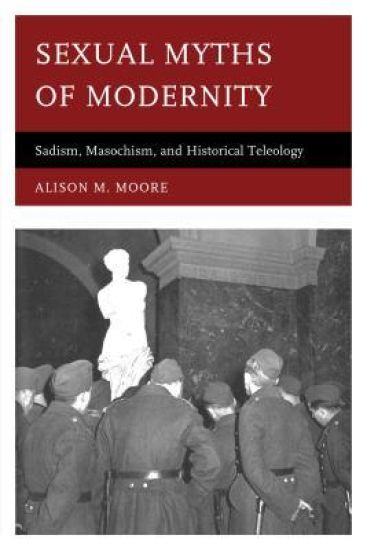
The notion of sexual sadism emerged from nineteenth-century alienist attempts to imagine the pleasure of the torturer or mass killer. This was a time in which sexuality was mapped to social progress, so that perversions were always related either to degeneration or decadence. These ideas were internalized in later Freudian views of the drives within the self, and of their repression under the demands of modern European civilization. Sadism was always presented as the barbarous past that lurked within each of us, ready to burst forth into murderous violence, crime, anti-Semitism, and finally genocide. This idea maintained its currency in European thought after the Second World War as Freudian-influenced accounts of the history of philosophy configured the Marquis de Sade as a kind of Kantian “superego” in a framework that viewed the Western Enlightenment as unraveled by its own inner demons. In this way, a straight line was imagined from the late eighteenth century to the Holocaust. These ideas have had an ongoing legacy in debates about sexual perversion, feminism, genocide representation, and historical memory of Nazism. However, recent genocide research has massively debunked assumptions that perpetrators of mass violence are especially sexually motivated in their cruelty. This book considers how the late twentieth-century imagination eroticized Nazism for its own ends, but also how it has been informed by nineteenth-century formulations of the idea of mass violence as a sexual problem.

The Writing on the Cloud
Alison M. Scott; Christopher D. Geist
University Press of America
1997
nidottu
This book is a path-breaking collection of essays which explore the diverse and complex ways American culture has been shaped by the looming presence of the atomic bomb, the central icon of technology, diplomacy, and war, of the second half of the twentieth century. These essays were originally presented as papers at a 1995 conference at Bowling Green State University commemorating the fiftieth anniversary of the Bomb; this collection is unusual in the range of subjects addressed, which range from abstract expressionism and modernist poetry to television sitcoms and advertisements for lipstick and appliances. The papers fall into four general areas of investigation and interpretation: the analysis of widespread cultural issues or social movements; the examination of particular cultural artifacts; the explorations of aspects of political, diplomatic, or military history; and recollections or interpretations of personal experience. Contents: The Consequences of the Atomic Bomb: The End of the Soviet Union and the Beginning of Environmental Hysteria, Edward Teller; Bert the Turtle Meets Doctor Spock: Parenting in Atomic Age America, Daniel Gomes; Commercial Fallout: The Image of Progress and the Feminine Consumer in the Atomic Age (1945-1962), John Gregory Stocke; From the Missile Gap to the Culture Gap: Modernism in the Fallout from Sputnik, David Howard; Detonating on Canvas: The Abstract Bomb in American Art, Richard Martin; SANE and Beyond Sane: Poets and the H-Bomb, 1958-1960, Daniel Belgrad; From Science to Science Fiction: Leo Szilard and Fictional Persuasion, Michael L. Lewis; Sh-Boom or, How Early Rock & Roll Taught Us to Stop Worrying and Love the Bomb, Richard Aquila; 'Are You Ready for the Great Atomic Power?' Music and Protest, 1945-1960, Joseph C. Ruff; Stories Told by Godzilla and Rodan, Helen Schwartz; The Berlin Crisis, the Bomb Shelter Craze and Bizarre Television: Expressions of an Atomic Age Counterculture in the Early 1960s, Margot A. Henricksen; Peace on Earth Without Goodwill Toward Men: Nuclear Weapons & American Millenarian Aspirations, Ron Hirschbein; Hiroshima and Nagasaki: Memory (and Forgetting) in the Religious Press, Leo Maley, III; Hiroshima in America: Fifty Years of Denial, Robert Jay Lifton; Appendix: Conference Program, 'The Atomic Age Opens: American Culture Confronts the Atomic Bomb'; Index; About the Contributors.

Working with Families of Psychiatric Inpatients
Alison M. Heru; Laura M. Drury
Johns Hopkins University Press
2007
sidottu
Working with the families of inpatients is one of the most important-and most challenging-aspects of practicing clinical psychiatry. Clinicians are responsible not only for the well-being of their patients but also for the education and guidance of the patient's family. In this book, Alison M. Heru and Laura M. Drury offer a step-by-step guide to developing the skills needed to work successfully with patients' families. Research data, outlined in the opening chapters, demonstrate just how essential families and evidence-based family treatment are to effective patient care. Succeeding chapters use clinical case studies to illustrate the skills necessary for the assessment and treatment of the family. Psychiatric residents will enhance their knowledge of the family as a part of the patient's social context and learn how to conduct a family meeting, common mistakes to avoid, and when to refer the family for other assistance. The authors also describe specific strategies for intervening with difficult families and for overcoming some of the fears and anxieties common among residents when they interact with patients' families. The authors provide valuable insights into the perspectives of families and patients and offer practical suggestions for risk management after the patient is discharged from inpatient care. Keyed to the requirements articulated by the American College of Graduate Medical Education, this handbook is a tool no psychiatric resident can do without.

Working with Families of Psychiatric Inpatients
Alison M. Heru; Laura M. Drury
Johns Hopkins University Press
2007
pokkari
Working with the families of inpatients is one of the most important-and most challenging-aspects of practicing clinical psychiatry. Clinicians are responsible not only for the well-being of their patients but also for the education and guidance of the patient's family. In this book, Alison M. Heru and Laura M. Drury offer a step-by-step guide to developing the skills needed to work successfully with patients' families. Research data, outlined in the opening chapters, demonstrate just how essential families and evidence-based family treatment are to effective patient care. Succeeding chapters use clinical case studies to illustrate the skills necessary for the assessment and treatment of the family. Psychiatric residents will enhance their knowledge of the family as a part of the patient's social context and learn how to conduct a family meeting, common mistakes to avoid, and when to refer the family for other assistance. The authors also describe specific strategies for intervening with difficult families and for overcoming some of the fears and anxieties common among residents when they interact with patients' families. The authors provide valuable insights into the perspectives of families and patients and offer practical suggestions for risk management after the patient is discharged from inpatient care. Keyed to the requirements articulated by the American College of Graduate Medical Education, this handbook is a tool no psychiatric resident can do without.
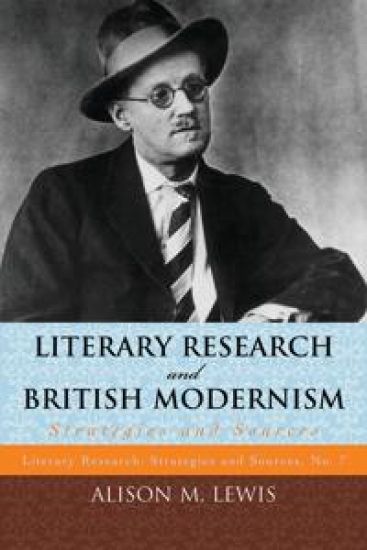
Focusing on work produced between 1880 and 1945, Literary Research and British Modernism: Strategies and Sources provides scholars with the necessary methods and tools for studying the literature of this period. This reference guide will facilitate research into the works of such major modernist writers as James Joyce, T. S. Eliot, Virginia Woolf, E.M. Forster, Joseph Conrad, and Somerset Maugham, as well as lesser known or forgotten authors of the era. The book discusses research methodology and the best practices for the research process, especially regarding the research challenges unique to works of British modernism. This resource includes commentary on general literary reference materials; library catalogs; print and online bibliographies, indexes, and annual reviews; scholarly journals; contemporary reviews; period journals and newspapers; microform and digital collections; manuscripts and archives; and Web resources. This book is an important and helpful guide for researchers of British Modernism and general interested readers alike.
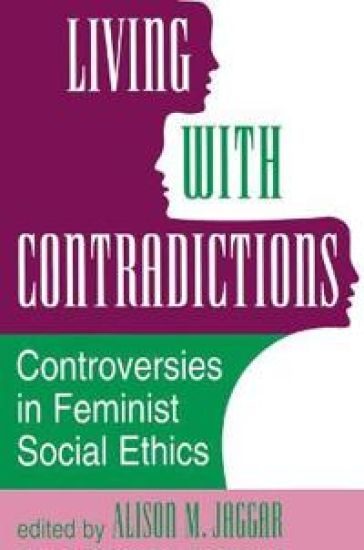
Some people believe that feminist ethics is little more than a series of dogmatic positions on issues such as abortion rights, pornography, and affirmative action.This caricature was never true, but Alison Jaggar's Living with Contradictions is the first book to demonstrate just how rich and complex feminist ethics has become. Beginning with the modest assumption that feminism demands an examination of moral issues with a commitment to ending women's subordination, this anthology shows that one can no longer divide social issues into those that are feminist and those that are not. Living with Contradictions does address many of the traditionally feminist" issues. But it also includes issues not generally recognized as gendered, such as militarism, environmentalism, and the treatment of animals, demonstrating the value of a feminist perspective in these cases. And, far from reflecting any monolithic orthodoxy, the book shows that there is a rich diversity of views on many moral issues among those who share a feminist commitment.Readers can sample a varied selection of papers and essays from books, journals, newspapers, and grassroots newsletters. Covering a wide range of moral issues, this collection refuses to offer simple solutions, choosing instead to reflect the complexities and contradictions facing anyone attempting to live up to feminist ideals in a painfully pre-feminist world.Based on years of the editor's work in the field, imaginatively edited, and including generous introductions for students, this is the ideal text for introducing feminist perspectives into courses in ethics, social ethics, and public policy.

Plant Biology
Alison M. Smith; George Coupland; Liam Dolan; Nicholas Harberd; Jonathan Jones; Cathie Martin; Robert Sablowski; Abigail Amey
CRC Press Inc
2009
nidottu
Plant Biology is a new textbook written for upper-level undergraduate and graduate students. It is an account of modern plant science, reflecting recent advances in genetics and genomics and the excitement they have created. The book begins with a review of what is known about the origins of modern-day plants. Next, the special features of plant genomes and genetics are explored. Subsequent chapters provide information on our current understanding of plant cell biology, plant metabolism, and plant developmental biology, with the remaining three chapters outlining the interactions of plants with their environments. The final chapter discusses the relationship of plants with humans: domestication, agriculture and crop breeding. Plant Biology contains over 1,000 full color illustrations, and each chapter begins with Learning Objectives and concludes with a Summary.
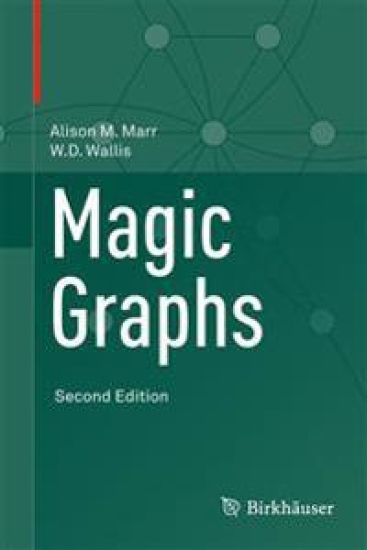
Magic squares are among the more popular mathematical recreations. Over the last 50 years, many generalizations of “magic” ideas have been applied to graphs. Recently there has been a resurgence of interest in “magic labelings” due to a number of results that have applications to the problem of decomposing graphs into trees. Key features of this second edition include:· a new chapter on magic labeling of directed graphs· applications of theorems from graph theory and interesting counting arguments· new research problems and exercises covering a range of difficulties· a fully updated bibliography and indexThis concise, self-contained exposition is unique in its focus on the theory of magic graphs/labelings. It may serve as a graduate or advanced undergraduate text for courses in mathematics or computer science, and as reference for the researcher.
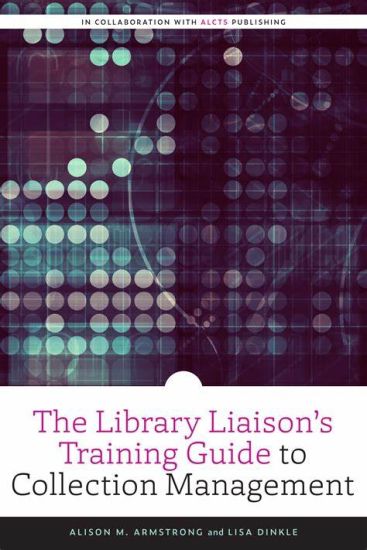
The Library Liaison's Training Guide to Collection Management
Alison M. Armstrong; Lisa Dinkle
ALA Editions
2020
pokkari
Library liaisons often have primary jobs that do not involve collection development, but their familiarity with collection practices makes all the difference in faculty relations. And time pressures mean that on-boarding needs to be as streamlined as possible. This concise, field-tested training manual will put your liaison on solid footing. Plus, end of the chapter prompts make it easy to tailor your approach to local practices. With the help of this resource, your new liaison will get up to speed on such topics astracking budget balances in assigned departments;differentiating between the needs of an individual faculty member and their department;how to say no to monograph requests;benchmarking titles with peer institutions or coordinating within a consortium;17 questions to ask when evaluating a database;considerations when making weeding decisions;four key conversations to have annually between liaisons and collection development librarians; andgathering data for program accreditation reports.Utilizing several dozen real-world examples which show liaison decisions and actions in practice, this guide will be a useful tool for collection development librarians to streamline training processes for library liaisons.