California transplant Brian Lawson runs a popular North Dakota coffeeshop, but still can't make money. One day he's fighting the competition - and the next day fighting for his life, diagnosed with bone cancer. A radical, dangerous treatment could be his cancer cure; a beautiful, equally dangerous woman could be the cure for everything else.
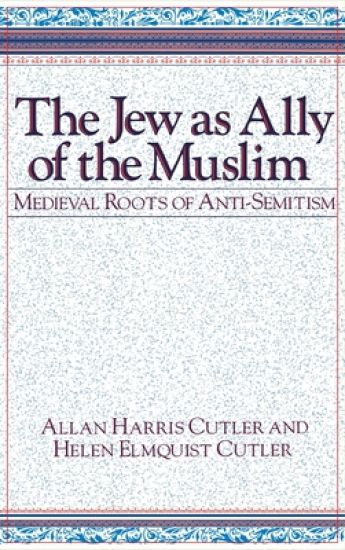
With exacting research and skillful analysis, the Cutlers revise the traditional explanations of the roots of anti-Semitism. They contend that the great outburst of anti-Semitism in Western Europe during the Middle Ages ... derived from primarily anti-Muslimism and the association of Jew with Muslim by medieval Christians.
Publisher's Note: Products purchased from Third Party sellers are not guaranteed by the publisher for quality, authenticity, or access to any online entitlements included with the product.The classic reference on shock and vibration, fully updated with the latest advances in the fieldWritten by a team of internationally recognized experts, this comprehensive resource provides all the information you need to design, analyze, install, and maintain systems subject to mechanical shock and vibration. The book covers theory, instrumentation, measurement, testing, control methodologies, and practical applications.Harris' Shock and Vibration Handbook, Sixth Edition, has been extensively revised to include innovative techniques and technologies, such as the use of waveform replication, wavelets, and temporal moments. Learn how to successfully apply theory to solve frequently encountered problems. This definitive guide is essential for mechanical, aeronautical, acoustical, civil, electrical, and transportation engineers.EVERYTHING YOU NEED TO KNOW ABOUT MECHANICAL SHOCK AND VIBRATION, INCLUDINGFundamental theoryInstrumentation and measurementsProcedures for analyzing and testing systems subject to shock and vibrationGround-motion, fluid-flow, wind-. and sound-induced vibrationMethods for controlling shock and vibrationEquipment designThe effects of shock and vibration on humans
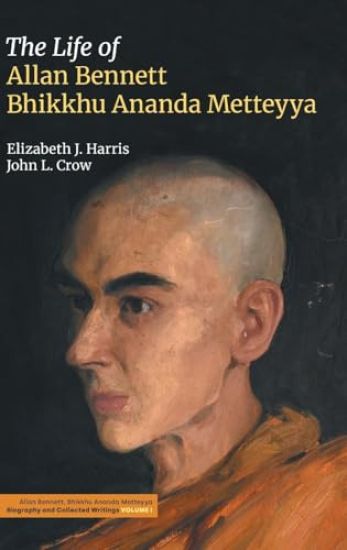
This is the first biography of Allan Bennett, one of the first British men to gain higher ordination as a Buddhist monk and one of the seminal figures in the development of Buddhism in the UK. Bennett rejected Christianity early in his life and turned to late nineteenth century occultism and esoteric new religious movements, namely Theosophy and the Order of the Golden Dawn. His involvement in the latter led to friendship with Aleister Crowley. After he travelled to Ceylon (Sri Lanka) in 1899 for health reasons - he had chronic asthma - he was attracted to Buddhism. Believing Buddhism in Burma (Myanmar) was purer than in Ceylon, he opted for ordination there in 1902. From Burma, he created an international Buddhist network, founding the International Buddhist Society, the Buddhasasana Samagama and starting a journal, Buddhism - An Illustrated Quarterly Review. In 1908, he led a Buddhist mission to England. Convinced that the West needed Buddhism as an antidote to growing materialism, he became a prolific writer. Two volumes of his writings were published. The first recorded a series of talks he gave in London in 1917-1918, published just two months before he died (The Wisdom of the Aryas). The second was published posthumously (The Religion of Burma and Other Papers). Controversy has surrounded his life, particularly in western Buddhist circles, because of his early involvement with the occult.
This is the first biography of Allan Bennett, one of the first British men to gain higher ordination as a Buddhist monk and one of the seminal figures in the development of Buddhism in the UK. Bennett rejected Christianity early in his life and turned to late nineteenth century occultism and esoteric new religious movements, namely Theosophy and the Order of the Golden Dawn. His involvement in the latter led to friendship with Aleister Crowley. After he travelled to Ceylon (Sri Lanka) in 1899 for health reasons - he had chronic asthma - he was attracted to Buddhism. Believing Buddhism in Burma (Myanmar) was purer than in Ceylon, he opted for ordination there in 1902. From Burma, he created an international Buddhist network, founding the International Buddhist Society, the Buddhasasana Samagama and starting a journal, Buddhism - An Illustrated Quarterly Review. In 1908, he led a Buddhist mission to England. Convinced that the West needed Buddhism as an antidote to growing materialism, he became a prolific writer. Two volumes of his writings were published. The first recorded a series of talks he gave in London in 1917-1918, published just two months before he died (The Wisdom of the Aryas). The second was published posthumously (The Religion of Burma and Other Papers). Controversy has surrounded his life, particularly in western Buddhist circles, because of his early involvement with the occult.
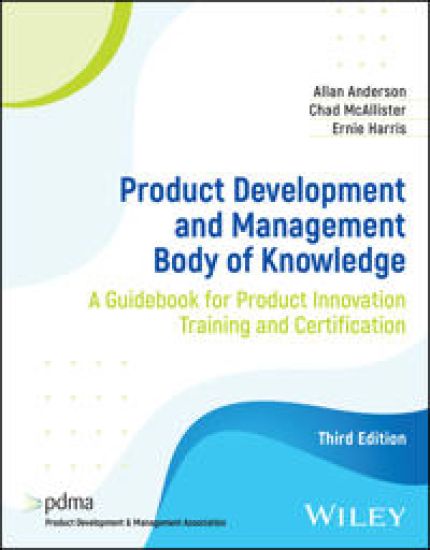
Product Developmentand Management Body of Knowledge Fully-updated Third Edition of the leading study resource for PDMA’s New Product Development Professional certification exam The newly revised and updated Third Edition of PDMA Body of Knowledge (BoK) provides a singular reference for anyone currently involved in, or planning a career in product management and product innovation. It describes a proven framework for product innovation which is applicable to a wide cross-section of product and service industries at various levels of an organization. It is also the basis for candidates studying for PDMA’s New Product Development Professional (NPDP) certification examination. The guide is divided into seven chapters, consistent with the seven product innovation topics used as a basis for the NPDP examination: management, strategy, portfolio, process, design and development, market research, and culture & teams. PDMA Body of Knowledge includes detailed coverage of topics including: The key factors that lead to successful product innovation management.The importance of strategy to product innovation success, hierarchy of strategies, and establishing the organization’s direction via vision, mission, values, and more.The role of portfolio management in selection of the right product innovation projects for an organization.Description of various product innovation processes and the pros and cons of each.The application of tools and techniques at various stages of the design and development process.The application of market research throughout product innovation.The importance of the right culture and team development. The material provided can be applied to the full range of product development projects included in most company portfolios, such as new products or services, line extensions, cost reductions, and product or service improvements. This newly revised and updated Third Edition includes new case studies, examples, and chapter exercises, along with sample NPDP examination questions. PDMA Body of Knowledge is an essential study resource for those studying for PDMA’s NPDP exam. The text is also highly valuable to product management professionals, consultants, instructors, and students seeking to increase their knowledge base. The Product Development and Management Association (PDMA) is a global community of thousands of members whose skills, expertise, and experience power the most recognized and respected innovative companies in the world. PDMA’s unique triad of members include product development and management practitioners, academics, and service providers in a variety of industries and knowledge areas, including new product process, strategy innovation, market research, tools and metrics, organizational issues, and portfolio management.
First published in 1976. It can be argued that both moral and religious education are undervalued in schools. The author, Alan Harris, believes that too many people think of them as indoctrinatory subjects with moral educators’ telling people what they ought to do and religious educators telling them what they ought to believe. By a combination of practical examples of both good and bad teaching from the classroom and clear, analytical examination of what is meant by moral and religious education, the author shows that the object of both subjects should be to help pupils form their own judgements.
First published in 1976. It can be argued that both moral and religious education are undervalued in schools. The author, Alan Harris, believes that too many people think of them as indoctrinatory subjects with moral educators’ telling people what they ought to do and religious educators telling them what they ought to believe. By a combination of practical examples of both good and bad teaching from the classroom and clear, analytical examination of what is meant by moral and religious education, the author shows that the object of both subjects should be to help pupils form their own judgements.
The 1942-43 naval campaign against German U-boats known as the Battle of the Atlantic was a major victory not only for Allied warships but also for naval intelligence. Thanks to the co-ordinated efforts of submarine tracking rooms in London, Washington and Ottawa, the antisubmarine forces' search-and-destroy missions helped preserve the safety of the seaways. Naval intelligence has been an aspect of World War II that has received scant attention. Now former naval intelligence officer Alan Harris Bath traces the co-ordination of Anglo-American efforts before and during the war, identifying the political, military, technological and human factors that aided and sometimes hindered co-operation. He compares the two nations' different and often conflicting styles of intelligence gathering and reveals ways in which interagency and interservice rivalries complicated an already complex process. Drawing on archives in the US, UK and British Commonwealth, Bath describes how co-operation took place at all levels of decision-making, in all theatres of war and at all points in the intelligence cycle, from gathering through analysis to dissemination. He tells how the US learned from Britain's longer experience in the war and how intelligence co-operation was always subordinated to Anglo-American political relations - and how in the final months of fighting intelligence co-operation was impeded by the governments' postwar agendas. Although victory in the Atlantic was the capstone of this co-operative endeavour, Bath also describes how intelligence relationships fared in the South Pacific, not only between the forces of Admiral Nimitz and General MacArthur but also with those of Australia and New Zealand. Throughout the book, he emphasizes the contributions of Australian, New Zealand and Canadian naval intelligence to this co-operative effort. As an in-depth study of the nature, evolution and impact of information sharing by Allied navies, ""Tracking the Axis Enemy"" aims to be informative reading for historians and buffs alike. By showing how the Anglo-American political and cultural bonds shaped intelligence operations and how those operations shaped campaigns, it contributes a new perspective on the Allied victory.
IronPython represents a unique direction for developers interested in working with dynamic languages within the .NET Framework. Whether you're looking to develop applications from scratch or add functionality and maintainability to an existing application, IronPython opens many doors while providing a high–speed, high–performance language that integrates tightly with other .NET languages. Learn to create applications using the benefits of a dynamically typed language. Discover how to leverage the power of IronPython to improve existing applications. Explore interacting with other .NET languages by invoking the common language runtime.
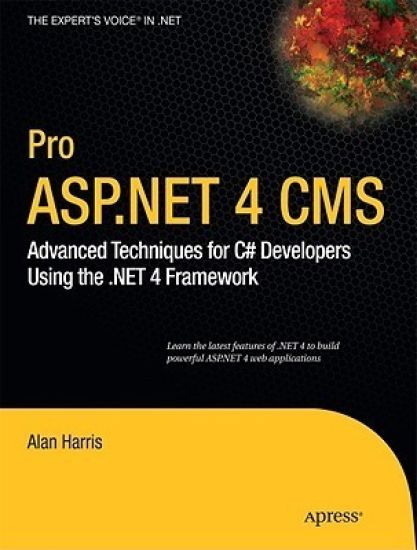
To be a successful ASP.NET 4 developer, you need to know how to apply the vast array of new functionality available in the latest release of the .NET 4 Framework and Visual Studio 2010. This book will immerse you in a variety of advanced topics, including architecting different application data tiers, memory caching paradigms, data mining, and search engine optimization. Working through step-by-step exercises using P/LINQ, DLR, MEF, MVC, IronPython, Axum, and Ajax, you will learn a variety of approaches to building each of the key application tiers common to all web solutions. Using a proven technique of illustrating advanced concepts with functional solutions, all topics in the book are modeled on a fully operational content management system (CMS), built from the ground up. This ensures that you’ll be introduced to real-world examples that demonstrate the full functionality of the .NET 4 Framework for ASP.NET, and that you’ll be able to apply your new skills to any web development situation.
Sinatra gives developers a small but powerful and scalable framework for building web applications with Ruby. This introduction gets readers started, helping them to build, install, and polish a first application. It also explores how Sinatra fits in the web application ecosystem, especially in comparison to its far larger cousin, Ruby on Rails.
Go: Up and Running takes readers on an example-filled tour of this new language focused on concurrency. This field guide to productivity with Go for modern application development emphasizes concurrency, server engineering and using open source tools (GDB, dtrace, etc.) to understand Go from a systems perspective.
Sueles ser muy duro contigo mismo? Cuando te miras al espejo solo te fijas en tus "defectos"? Te gustar a mejorar la relaci n que tienes con tu cuerpo? Entonces sigue leyendo..."Es posible encontrar belleza en la suavidad. Es posible enamorarse de un cuerpo que nunca cre ste fuera merecedor de amor. Es posible encontrar paz despu s de haber pasado toda una vida en guerra contra tu cuerpo. Es posible recuperarse." - Megan Jayne CrabbeSe nos ha ense ado que nuestro cuerpo no es suficiente a menos que llegue a la portada de una revista de moda. Se nos ha dicho constantemente que nuestro cuerpo tiene grandes defectos: gordo, delgado, peque o, grande, voluptuoso, respingado... cualquier calificativo puede ser un defecto. Y hemos aceptado esta situaci n como una verdad absoluta.Sin embargo, la realidad es que la manera en la que vemos a nuestro cuerpo no tiene por qu ser negativa ni tan dura. S , vivimos en un mundo que nos valora de acuerdo a nuestro f sico, pero eso no significa que t tengas que apegarse a esto. Puedes ser capaz de reconocer tu propio valor, independientemente del cuerpo que tengas, porque eres m s que eso, e independientemente de c mo te veas, tu cuerpo hace tanto por ti En este libro, descubrir s: Aprende todo sobre el movimiento de body positive.Comprende qu es la positividad corporal, el amor propio y qu es un cuerpo sano. Consejos comprobados para incentivar el autocuidado y la autoaceptaci n.Descubre la manera de tener un equilibrio alimenticio y aprende a ver el ejercicio con nuevos ojos. T cnicas que te ayudar n en el camino para cambiar la perspectiva que tienes de tu cuerpo y llenar tu vida de gratitud, cuidados y pr cticas ben ficas para ti.Y mucho m s...El miedo, la inseguridad y las dudas que puede generar nuestro cuerpo suelen ser obst culos a los que nos debemos enfrentar el d a a d a. No hay nada mejor que sentirte c moda/o en tu propia piel Comencemos este viaje de autodescubrimiento y amor propio Desplaza hacia arriba y a ade al carrito de compra