Kirjojen hintavertailu. Mukana 11 244 527 kirjaa ja 12 kauppaa.

Kirjahaku

Etsi kirjoja tekijän nimen, kirjan nimen tai ISBN:n perusteella.

817 tulosta hakusanalla Almond Philip C.

Rudolf Otto

Rudolf Otto

Almond Philip C.

The University of North Carolina Press
2011
nidottu
Almond places Otto's theory of religion within the context of his life (1869-1937), looking closely at the significant influences on Otto's thought, among them thinkers as different as Kant and the German Pietists. Elements of Otto's theories are shown to be closely related to the social and intellectual milieu of Germany both before and after World War I. Almond examines Otto's conception of the Holy, of rational and nonrational elements of religion, and compares his views with those of his contemporaries.A UNC Press Enduring Edition -- UNC Press Enduring Editions use the latest in digital technology to make available again books from our distinguished backlist that were previously out of print. These editions are published unaltered from the original, and are presented in affordable paperback formats, bringing readers both historical and cultural value.
Afterlife

Afterlife

Almond Philip C.

Cornell University Press
2016
sidottu
The end of life has never meant the extinction of hope. People have always yearned for, and often been terrified by, continuance beyond the horizon of mortality. Over many centuries various imaginative and sometimes macabre ideas have been devised to explain what happens to human beings after death. As Philip C. Almond reveals in his new and zestful history of the hereafter, whichever image or metaphor has been employed by visionaries, writers, philosophers, or theologians, it has tended to oscillate between two contrary poles: the resurrection of the body and the immortality of the soul. This pendulum movement of ideas and language reflects the contending influence of the Hebrew Bible and of ancient Greek thought and the often tense encounters, skirmishes, and compromises between them.Exploring this polarity, and boldly ranging across time and space, Almond takes his readers on a remarkable journey to worlds of both torment and delight. He travels to the banks of the Styx, where Charon the grizzled boatman ferries a departing spirit across the river only if a coin is first placed for payment on the tongue of its corpse. He transports us to the legendary Isles of the Blessed, walks the hallowed ground of the Elysian Fields, and plumbs the murky depths of Tartarus, primordial dungeon of the Titans. The pitiable souls of the damned are seen to clog the soot-filled caverns of Lucifer’s domain even as the elect ascend to Paradise. Including medieval fears for the fate of those consumed by cannibals, early modern ideas about the Last Day, and modern scientific explorations of the domains of the dead, this first full treatment of the afterlife in Western thought evokes many rich imaginings of Heaven, Hell, Purgatory, and Limbo.
England's First Demonologist

England's First Demonologist

Almond Philip C.

I.B. Tauris
2014
nidottu
'The fables of witchcraft have taken so fast hold and deepe root in the heart of man, that few or none can indure with patience the hand and correction of God.' Reginald Scot, whose words these are, published his remarkable book The Discoverie of Witchcraft in 1584. England's first major work of demonology, witchcraft and the occult, the book was unashamedly sceptical. It is said that so outraged was King James VI of Scotland by the disbelieving nature of Scot's work that, on James' accession to the English throne in 1603, he ordered every copy to be destroyed. Yet for all the anger directed at Scot, and his scorn for Stuart orthodoxy about wiches, the paradox was that his detailed account of sorcery helped strengthen the hold of European demonologies in England while also inspiring the distinctively English tradition of secular magic and conjuring. Scot's influence was considerable. Shakespeare drew on The Discoverie of Witchcraft for his depiction of the witches in Macbeth. So too did fellow-playwright Thomas Middleton in his tragi-comedy The Witch. Recognising Scot's central importance in the history of ideas, Philip Almond places his subject in the febrile context of his age, examines the chief themes of his work and shows why his writings became a sourcebook for aspiring magicians and conjurors for several hundred years. England's First Demonologist makes a notable contribution to a fascinating but unjustly neglected topic in the study of Early Modern England and European intellectual history.
Afterlife

Afterlife

Almond Philip C.

I.B. Tauris
2016
sidottu
For in that sleep of death what dreams may come? The end of life has never meant the extinction of hope. People perpetually have yearned for, and often been terrified by, continuance beyond the horizon of mortality. Ranging across time and space, Philip Almond here takes his readers on a remarkable journey to worlds both of torment and delight. He travels to the banks of the Styx, where Charon the grizzled boatman ferries a departing spirit across the river only if a gold obol is first placed for payment on the tongue of its corpse. He transports us to the legendary Isles of the Blessed, walks the hallowed ground of the Elysian Fields and plumbs the murky depths of Tartarus, primordial dungeon of the Titans. The pitiable souls of the damned are seen to clog the soot-filled caverns of Lucifer even as the elect ascend to Paradise. Including medieval fears for the fate of those consumed by cannibals, early modern ideas about the Last Day and modern scientific explorations of the domains of the dead, this first full treatment of the afterlife in Western thought evokes many rich imaginings of Heaven, Hell, Purgatory and Limbo.
God

God

Almond Philip C.

I.B. Tauris
2018
sidottu
In this elegant new book, the sequel to his earlier, much praised treatment of the Devil, Philip Almond reveals that - whether in Judaism, Christianity or Islam - God is seen to be at once utterly beyond our world yet at the same earnestly desiring to be at one with it. In the Christian chapter of this story the paradox arguably reaches its improbable zenith: in the fragile form of a human being the infinite became finite, the eternal temporal. The way these and other metaphysical tensions have been understood is, the author demonstrates, the key to unlocking the entire history of religion in the West. Expertly placing the narrative of divine presence within the wider history of ideas, Almond suggests that the notion of a deity has been the single greatest conundrum of medieval and modern civilization. In this rich, nuanced appraisal, 'God' is shown to be more complex and fascinating than ever before.
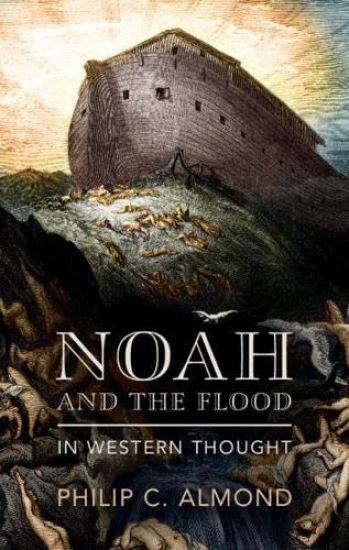
Noah and the Flood in Western Thought

Noah and the Flood in Western Thought

Philip C Almond

Cambridge University Press
2025
sidottu
In a world beset by climatic emergencies, the continuing resonance of the flood story is perhaps easy to understand. Whether in the tortured alpha male intensity of Russell Crowe's Noah, in Darren Aronofsky's eponymous 2014 film, or other recent derivations, the biblical narrative has become a lightning rod for gathering environmental anxieties. However, Philip C. Almond's masterful exploration of Western cultural history uncovers a far more complex Noah than is commonly recognised: not just the father of humanity but also the first shipbuilder, navigator, zookeeper, farmer, grape grower, and wine maker. Noah's pivotal significance is revealed as much in his forgotten secular as in his religious receptions, and their major impact on such disciplines as geology, geography, biology, and zoology. While Noah's many interpretations over two millennia might seem to offer a common message of hope, the author's sober conclusion is that deliverance now lies not in divine but rather in human hands.
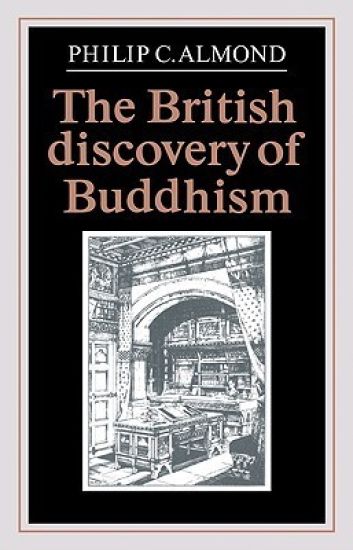
The British Discovery of Buddhism

The British Discovery of Buddhism

Philip C. Almond

Cambridge University Press
2007
pokkari
This book examines the British discovery of Buddhism during the Victorian period. It was only during the nineteenth century that Buddhism became, in the western mind, a religious tradition separate from Hinduism. As a result, Buddha emerged from a realm of myth and was addressed as a historical figure. Almond's exploration of British interpretations of Buddhism - of its founder, its doctrines, its ethics, its social practices, its truth and value - illuminates more than the various aspects of Buddhist culture: it sheds light on the Victorian society making these judgements.
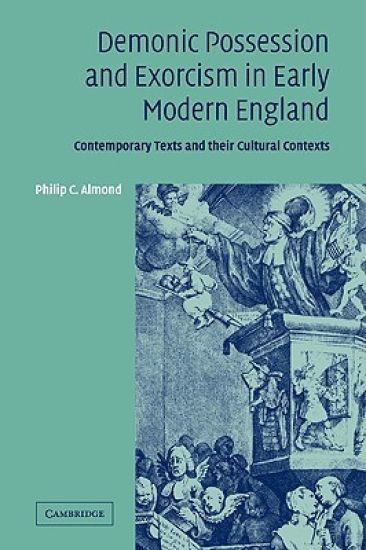
Demonic Possession and Exorcism in Early Modern England

Demonic Possession and Exorcism in Early Modern England

Philip C. Almond

Cambridge University Press
2007
pokkari
This book is exclusively devoted to demonic possession and exorcism in early modern England. It offers modernized versions of the most significant early modern texts on nine cases of demonic possession from the period 1570 to 1650, the key period in English history for demonic possession. The nine stories were all written by eyewitnesses or were derived from eyewitness reports. They involve matters of life and death, sin and sanctity, guilt and innocence, of crimes which could not be committed and punishments which could not be deserved. The nine critical introductions which accompany the stories address the different strategic intentions of those who wrote them. The modernized texts and critical introductions are placed within the context of a wide-ranging general Introduction to demonic possession in England across the period 1550 to 1700.
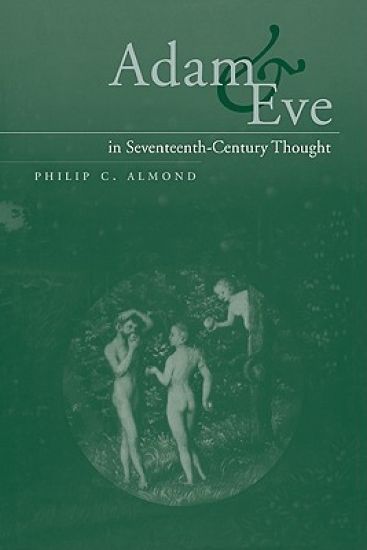
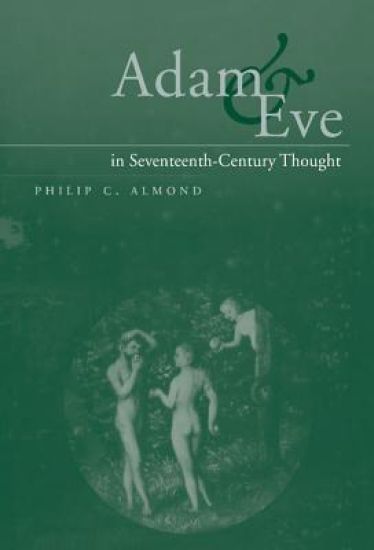
Adam and Eve in Seventeenth-Century Thought

Adam and Eve in Seventeenth-Century Thought

Philip C. Almond

Cambridge University Press
2008
pokkari
This book offers a fascinating account of the central myth of Western culture - the story of Adam and Eve in the Garden of Eden. Philip Almond examines the way in which the gaps, hints and illusions within this biblical story were filled out in seventeenth-century English thought. At this time, the Bible formed a fundamental basis for studies in all subjects, and influenced greatly the way that people understood the world. Drawing extensively on primary sources he covers subjects as diverse as theology, history, philosophy, botany, language, anthropology, geology, vegetarianism, and women. He demonstrates the way in which the story of Adam and Eve was the fulcrum around which moved lively discussions on topics such as the place and nature of Paradise, the date of creation, the nature of Adamic language, the origins of the American Indians, agrarian communism, and the necessity and meaning of love, labour and marriage.
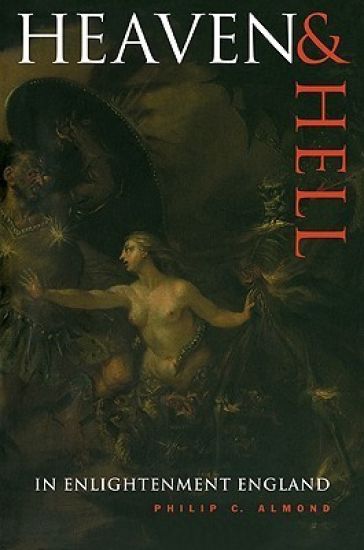
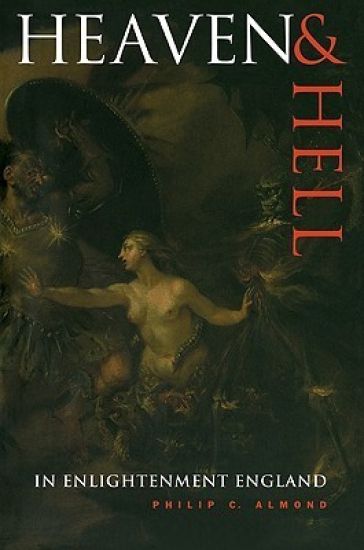
Heaven and Hell in Enlightenment England

Heaven and Hell in Enlightenment England

Philip C. Almond

Cambridge University Press
2009
pokkari
This book examines life after death and changing concepts of heaven and hell in English thought from 1650 to 1750. It explores seventeenth- and eighteenth-century images of the journey of body and soul, from Platonist accounts of pre-existence, the final judgement and beyond into heaven or hell. It discloses a society in which frail and fleeting human life was lived out in the expectation of salvation or damnation, of eternal happiness or eternal torment, of heaven or hell and depicts a world radically different from our own. Drawing on the writings not only of the elite but also of the middling and lower classes, Almond shows how there hovered around images of the afterlife many classical and contemporary debate: free will and predestination, materialism and dualism, religion and science, Catholicism and Protestantism, religious and political radicalism, demonology and witchcraft and so on. The picture which emerges is both representative of the age as a whole and enables us to appreciate more fully contemporary understandings of the meaning of human life and death.
The British Discovery of Buddhism

The British Discovery of Buddhism

Philip C. Almond

Cambridge University Press
1988
sidottu
This is the first book to examine the British discovery of Buddhism during the Victorian period. It was only during the nineteenth century that Buddhism became, in the western mind, a religious tradition separate from Hinduism. As a result, Buddha emerge from a realm of myth and was addressed as a historical figure. Almond's exploration of British interpretations of Buddhism--of its founder, its doctrines, its ethics, its social practices, its truth and value--illuminates more than the various aspects of Buddhist culture: it sheds light on the Victorian society making these judgements.
Heaven and Hell in Enlightenment England

Heaven and Hell in Enlightenment England

Philip C. Almond

Cambridge University Press
1994
sidottu
This book examines life after death and changing concepts of heaven and hell in English thought from 1650 to 1750. It explores seventeenth- and eighteenth-century images of the journey of body and soul, from Platonist accounts of pre-existence, the final judgement and beyond into heaven or hell. It discloses a society in which frail and fleeting human life was lived out in the expectation of salvation or damnation, of eternal happiness or eternal torment, of heaven or hell and depicts a world radically different from our own. Drawing on the writings not only of the elite but also of the middling and lower classes, Almond shows how there hovered around images of the afterlife many classical and contemporary debate: free will and predestination, materialism and dualism, religion and science, Catholicism and Protestantism, religious and political radicalism, demonology and witchcraft and so on. The picture which emerges is both representative of the age as a whole and enables us to appreciate more fully contemporary understandings of the meaning of human life and death.
Adam and Eve in Seventeenth-Century Thought

Adam and Eve in Seventeenth-Century Thought

Philip C. Almond

Cambridge University Press
1999
sidottu
This book offers a fascinating account of the central myth of Western culture - the story of Adam and Eve in the Garden of Eden. Philip Almond examines the way in which the gaps, hints and illusions within this biblical story were filled out in seventeenth-century English thought. At this time, the Bible formed a fundamental basis for studies in all subjects, and influenced greatly the way that people understood the world. Drawing extensively on primary sources he covers subjects as diverse as theology, history, philosophy, botany, language, anthropology, geology, vegetarianism, and women. He demonstrates the way in which the story of Adam and Eve was the fulcrum around which moved lively discussions on topics such as the place and nature of Paradise, the date of creation, the nature of Adamic language, the origins of the American Indians, agrarian communism, and the necessity and meaning of love, labour and marriage.
Demonic Possession and Exorcism in Early Modern England

Demonic Possession and Exorcism in Early Modern England

Philip C. Almond

Cambridge University Press
2004
sidottu
This is the first book exclusively devoted to demonic possession and exorcism in early modern England. It offers, for the first time, modernised versions of the most significant early modern texts on nine cases of demonic possession from the period 1570 to 1650, the key period in English history for demonic possession. The nine stories were all written by eye-witnesses or were derived from eye-witness reports. They involve matters of life and death, sin and sanctity, guilt and innocence, of crimes which could not be committed and punishments which could not be deserved. The nine critical introductions which accompany the stories address the different strategic intentions of those who wrote them. The modernised texts and critical Introductions are placed within the context of a wide-ranging general Introduction to demonic possession in England across the period 1550 to 1700.
The Devil

The Devil

Philip C. Almond

Cornell University Press
2014
sidottu
"Although the Devil still 'lives' in modern popular culture, for the past 250 years he has become marginal to the dominant concerns of Western intellectual thought. That life could not be thought or imagined without him, that he was a part of the everyday, continually present in nature and history, and active at the depths of our selves, has been all but forgotten. It is the aim of this work to bring modern readers to a deeper appreciation of how, from the early centuries of the Christian period through to the recent beginnings of the modern world, the human story could not be told and human life could not be lived apart from the 'life' of the Devil. With that comes the deeper recognition that, for the better part of the last two thousand years, the battle between good and evil in the hearts and minds of men and women was but the reflection of a cosmic battle between God and Satan, the divine and the diabolic, that was at the heart of history itself."—from The DevilLucifer, Mephistopheles, Beelzebub; Ha-Satan or the Adversary; Iblis or Shaitan: no matter what name he travels under, the Devil has throughout the ages and across civilizations been a compelling and charismatic presence. In Christianity, Judaism, and Islam, the supposed reign of God has long been challenged by the fiery malice of his opponent, as contending forces of good and evil have between them weighed human souls in the balance.In The Devil, Philip C. Almond explores the figure of evil incarnate from the first centuries of the Christian era. Along the way, he describes the rise of demonology as an intellectual and theological pursuit, the persecution as witches of women believed to consort with the Devil and his minions, and the decline in the belief in Hell and in angels and demons as corporeal beings as a result of the Enlightenment. Almond shows that the Prince of Darkness remains an irresistible subject in history, religion, art, literature, and culture.Almond brilliantly locates the "life" of the Devil within the broader Christian story of which it is inextricably a part; the "demonic paradox" of the Devil as both God's enforcer and his enemy is at the heart of Christianity. Woven throughout the account of the Christian history of the Devil is another complex and complicated history: that of the idea of the Devil in Western thought. Sorcery, witchcraft, possession, even melancholy, have all been laid at the Devil's doorstep. Until the Enlightenment enforced a "disenchantment" with the old archetypes, even rational figures such as Thomas Aquinas were obsessed with the nature of the Devil and the specific characteristics of the orders of demons and angels. It was a significant moment both in the history of demonology and in theology when Benedict de Spinoza (1632–1677) denied the Devil's existence; almost four hundred years later, popular fascination with the idea of the Devil has not yet dimmed.
Mary Magdalene

Mary Magdalene

Philip C. Almond

Cambridge University Press
2022
sidottu
Mary Magdalene is a key figure in the history of Christianity. After Mary, the mother of Jesus, she remains the most important female saint in her guise both as primary witness to the resurrection and 'apostle of the apostles'. This volume, the first major work on the Magdalene in more than thirty years, focuses on her 'lives' as these have been imagined and reimagined within Christian tradition. Philip Almond expertly disentangles the numerous narratives that have shaped the story of Mary over the past two millennia. Exploring the 'idea' of the Magdalene – her cult, her relics, her legacy – the author deftly peels back complex layers of history and myth to reveal many different Maries, including penitent prostitute; demoniac; miracle worker; wife and lover of Jesus; symbol of the erotic; and New Age goddess. By challenging uniform or homogenised readings of the Magdalene, this absorbing new book brings fascinating insights to its subject.
The Buddha

The Buddha

Philip C. Almond

Cambridge University Press
2023
sidottu
Alongside Jesus and Muhammad, the Buddha is the most significant figure in the history of religion. Philip Almond's engaging new book is the first to combine a history of early traditions about Siddhartha Gautama's life with an authoritative account of how he and the tantalizing philosophy inspired by him came to the attention of the West. It takes the reader on a remarkable journey encompassing (among other topics) Alexander the Great, the courts of the Mongol Khans, Jesuit missions to China and Japan, and intrepid European travellers and scholars from the modern era. Melding Pali and Sanskrit sources with vivid reception, Almond presents the Buddha's story as multi-layered: one of transition from a world of angels and demons, water and tree spirits, to an altogether different context where Buddhism mixed with the cultural preoccupations of those who tentatively – sometimes following false trails – tried to make sense of its fascinating complexity.
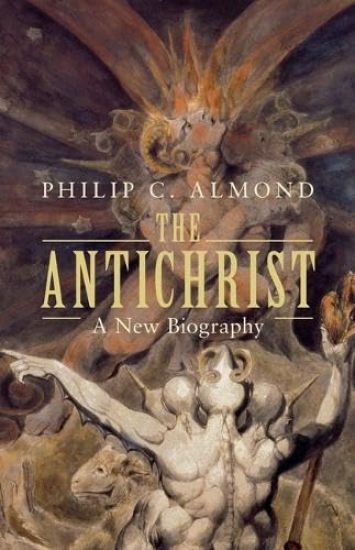
The Antichrist

The Antichrist

Philip C. Almond

Cambridge University Press
2020
sidottu
The malign figure of the Antichrist endures in modern culture, whether religious or secular; and the spectral shadow he has cast over the ages continues to exert a strong and powerful fascination. Philip C. Almond tells the story of the son of Satan from his early beginnings to the present day, and explores this false Messiah in theology, literature and the history of ideas. Discussing the origins of the malevolent being who at different times was cursed as Belial, Nero or Damien, the author reveals how Christianity in both East and West has imagined this incarnation of absolute evil destined to appear at the end of time. For the better part of the last two thousand years, Almond suggests, the human battle between right and wrong has been envisaged as a mighty cosmic duel between good and its opposite, culminating in an epic final showdown between Christ and his deadly arch-nemesis.
The Antichrist

The Antichrist

Philip C. Almond

Cambridge University Press
2025
pokkari
The malign figure of the Antichrist endures in modern culture, whether religious or secular; and the spectral shadow he has cast over the ages continues to exert a strong and powerful fascination. Philip C. Almond tells the story of the son of Satan from his early beginnings to the present day, and explores this false Messiah in theology, literature and the history of ideas. Discussing the origins of the malevolent being who at different times was cursed as Belial, Nero or Damien, the author reveals how Christianity in both East and West has imagined this incarnation of absolute evil destined to appear at the end of time. For the better part of the last two thousand years, Almond suggests, the human battle between right and wrong has been envisaged as a mighty cosmic duel between good and its opposite, culminating in an epic final showdown between Christ and his deadly arch-nemesis.
The Lancashire Witches

The Lancashire Witches

Philip C. Almond

Bloomsbury Academic
2020
nidottu
In the febrile religious and political climate of late sixteenth-century England, when the grip of the Reformation was as yet fragile and insecure, and underground papism still perceived to be rife, Lancashire was felt by the Protestant authorities to be a sinister corner of superstition, lawlessness and popery. And it was around Pendle Hill, a sombre ridge that looms over the intersecting pastures, meadows and moorland of the Ribble Valley, that their suspicions took infamous shape. The arraignment of the Lancashire witches in the assizes of Lancaster during 1612 is England's most notorious witch-trial. The women who lived in the vicinity of Pendle, who were accused alongside the so-called Samlesbury Witches, then convicted and hanged, were more than just wicked sorcerers whose malign incantations caused others harm. They were reputed to be part of a dense network of devilry and mischief that revealed itself as much in hidden celebration of the Mass as in malevolent magic. They had to be eliminated to set an example to others.In this remarkable and authoritative treatment, published to coincide with the 400th anniversary of the case of the Lancashire witches, Philip C Almond evokes all the fear, drama and paranoia of those volatile times: the bleak story of the storm over Pendle