Kirjojen hintavertailu. Mukana 11 244 527 kirjaa ja 12 kauppaa.

Kirjahaku

Etsi kirjoja tekijän nimen, kirjan nimen tai ISBN:n perusteella.

639 tulosta hakusanalla Alok Kumar Patra

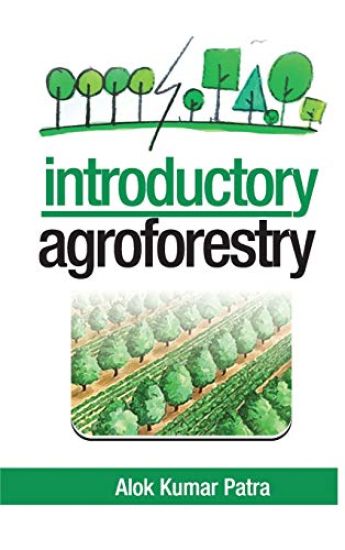
Introductory Agroforestry

Introductory Agroforestry

Alok Kumar Patra

TAYLOR FRANCIS LTD
2022
sidottu
The origin of agroforestry practices—growing trees and shrubs with food and fruit crops and grasses is traditional and very old—but the science of agroforestry is new. Years of experience and experiments have shown that agroforestry as a land-use system is capable of yielding both food and wood and at the same time helps in conserving and rehabilitating the ecosystems. It has the capability to increase the overall productivity of land, maintain the nutrient balance in the soil, and above all, protect the nature. In the recent years, agroforestry has been recommended as a core subject in the curriculum of B. Sc. (Forestry) and B. Sc. (Agriculture) courses of agricultural universities. This book has been divided into ten chapters covering very comprehensive information on all aspects of agroforestry including history, concepts, systems classification, tree-crop interactions, planning and management, diagnosis and design, policy and projects, and propagation and management practices of multipurpose trees.This book is co-published with NIPA. Taylor and Francis does not sell or distribute its print and electronic editions in India, Pakistan, Nepal, Bhutan, Bangladesh and Sri Lanka.
Introductory Agroforestry

Introductory Agroforestry

Alok Kumar Patra

New India Publishing Agency
2024
sidottu
The origins of agroforestry, which involves the cultivation of trees, shrubs, and crops together, are deeply rooted in tradition and date back to antiquity. However, the scientific study of agroforestry is a relatively recent development. Through extensive experimentation and practical experience, it has been established that agroforestry, as a land-use system, can produce both food and timber while also contributing to the preservation and restoration of ecosystems.This book is comprehensive and covers all aspects of agroforestry, including its history, fundamental concepts, system classification, the interactions between tree crops, planning and management, diagnosis and design, policy and project development, and propagation and management practices for multipurpose trees. It is divided into ten informative chapters.
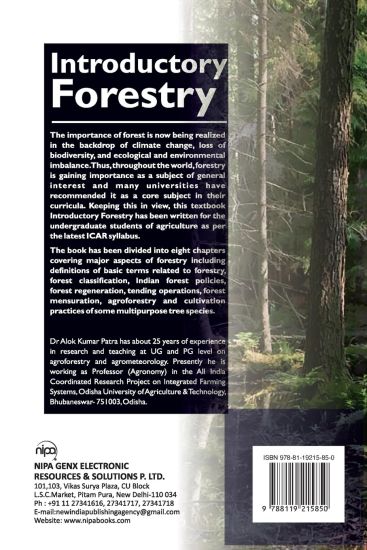
Introductory Forestry

Introductory Forestry

Alok Kumar Patra

New India Publishing Agency
2020
nidottu
Agroforestry, which involves the cultivation of trees, shrubs, and food and fruit crops together with grasses, has its roots in ancient and traditional practices. However, the scientific study of agroforestry is relatively recent. Extensive experience and experimentation have demonstrated that agroforestry, as a land-use system, is capable of producing both food and wood, while also contributing to the conservation and rehabilitation of ecosystems.The book is organized into ten chapters that provide comprehensive information on all aspects of agroforestry. These include the history and concepts of agroforestry, systems classification, tree-crop interactions, planning and management, diagnosis and design, policy and projects, and propagation and management practices for multipurpose trees.
Principles and Applications of Agricultural Meteorology

Principles and Applications of Agricultural Meteorology

Alok Kumar Patra

New India Publishing Agency
2015
nidottu
Weather and climate are natural resources that are considered essential inputs in agricultural planning. They have a direct or indirect impact on all agricultural activities. Agrometeorology is concerned with the interactions between meteorological, hydrological, and pedological factors that influence production systems in agriculture and related sectors such as horticulture, animal husbandry, fisheries, and forestry. The role of an agrometeorologist is to define these interactions, correlate physical environments with biological responses, and apply relevant meteorological skills to help farmers exploit weather conditions and improve agricultural production in terms of both quality and quantity.This book is primarily based on the syllabus of the undergraduate course Agricultural Meteorology and has been divided into 23 chapters that cover all aspects of agrometeorology. Chapter 1 provides an overview of the concepts, definition, importance, scope, history, and future needs of agrometeorology. Chapter 2 offers basic information on the atmosphere. Chapters 3 to 13 discuss weather parameters such as radiation, temperature, humidity, evaporation, fog and dew, pressure, wind, clouds, monsoon, and precipitation, and their importance in agriculture. Chapters 14 to 22 focus on applied aspects of meteorology, including climatic hazards, agroclimatic classification, micrometeorology of crops, weather in relation to crop pests and diseases, weather in relation to animal production, climate change, weather forecasting, remote sensing, and crop simulation modeling. Finally, Chapter 23 describes the features of an agrometeorological observatory.
Principles and Applications of Agricultural Meteorology

Principles and Applications of Agricultural Meteorology

Alok Kumar Patra

New India Publishing Agency
2015
sidottu
This book is primarily based on the syllabus of the course 'Agricultural Meteorology' meant for under graduate students of agriculture, horticulture and forestry. This book has been divided into twenty three chapters covering all aspects of agrometeorology. Concepts, definition, importance and scope, history and future needs of agrometeorology are described in Chapter 1. Chapter 2 details the basic information of atmosphere. Chapter 3 to chapter 13 include the weather parameters like radiation, temperature, humidity, evaporation, fog and dew, pressure, wind, clouds, monsoon and precipitation and their importance in agriculture. Applied aspects of meteorology like climatic hazards, agroclimatic classification, micrometeorology of crops, weather in relation to crop pests and diseases, weather in relation to animal production, climate change, weather forecasting, remote sensing and crop simulation modelling are discussed in Chapter 14 to chapter 22. Chapter 23 describes the features of an agrometeorological observatory.
Introduction to Agrometeorology and Climate Change

Introduction to Agrometeorology and Climate Change

Alok Kumar Patra

New India Publishing Agency- Nipa
2020
nidottu
Weather and climate are natural resources that are considered fundamental inputs in agricultural planning. They have a direct or indirect impact on all agricultural activities. Agrometeorology focuses primarily on the interactions between meteorological, hydrological, and pedological factors that influence production systems in agriculture and related sectors such as horticulture, animal husbandry, fisheries, and forestry.The role of an agrometeorologist is to define these interactions, correlate physical environments with biological responses, and apply relevant meteorological skills to help farmers make the most of favorable weather conditions and improve agricultural production in terms of both quality and quantity.
Introductory Agroforestry (Co-Published With CRC Press-UK)

Introductory Agroforestry (Co-Published With CRC Press-UK)

Alok Kumar Patra

New India Publishing Agency- Nipa
2020
sidottu
The origin of agroforestry practices, i.e. growing trees and shrubs with food and fruit crops and grasses is traditional and very old; but the science of agroforestry is new. Years of experience and experiments have shown that agroforestry as a land-use system is capable of yielding both food and wood and at the same time helps in conserving and rehabilitating the ecosystems. It has the capability to increase the overall productivity of land, maintain the nutrient balance in the soil and above all protect the nature. In the recent years, agroforestry has been recommended as a core subject in the curriculum of B. Sc. (Forestry) and B. Sc. (Agriculture) courses of the state agricultural universities. The book has been divided into ten chapters covering very comprehensive information on all aspects of agroforestry including history, concepts, systems classification, tree-crop interactions, planning and management, diagnosis and design, policy and projects, and propagation and management practices of multipurpose trees. 2020, 192pages, figures, tables, index, 25cm Dr. Alok Kumar Patra has about 25 years of experience in research and teaching at UG and PG level on agroforestry and agrometeorology. Presently he is working as Professor (Agronomy) in the All India Coordinated Research Project on Integrated Farming Systems, Odisha University of Agriculture & Technology, Bhubaneswar- 751003, Odisha.
Introductory Forestry

Introductory Forestry

Alok Kumar Patra

New India Publishing Agency- Nipa
2020
sidottu
Agroforestry is an ancient practice that involves cultivating trees, shrubs, and grasses alongside food and fruit crops. While the traditional methods have been in use for a long time, the scientific study of agroforestry is relatively new. Over the years, experience and research have demonstrated that agroforestry can produce both food and wood, while also conserving and rehabilitating ecosystems.The book provides a comprehensive overview of agroforestry, covering ten chapters that delve into the history, concepts, systems classification, tree-crop interactions, planning and management, diagnosis and design, policy and projects, and propagation and management practices of multipurpose trees.
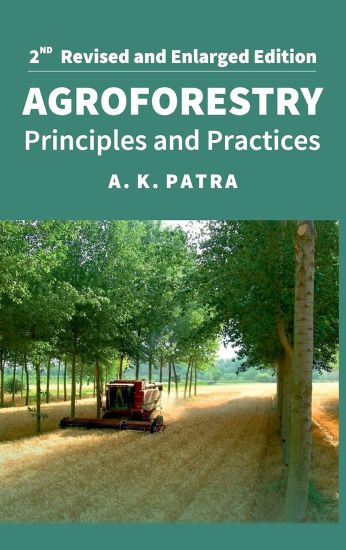
Agroforestry

Agroforestry

Alok Kumar Patra

New India Publishing Agency
2021
sidottu
Agroforestry has been recognized as a crucial subject in the undergraduate curricula of forestry, horticulture, and agriculture. To cater to the needs of students and equip them with the necessary knowledge, this book has been written. Apart from fulfilling the curriculum requirements, it will also aid students in their preparation for competitive examinations.This book will be of interest to plant enthusiasts as well. It has been structured into twenty chapters, encompassing all facets of agroforestry, including its concepts, systems classifications, soil productivity, tree-crop interaction, watershed and wasteland management, climate change adaptation and mitigation, carbon sequestration, urban agroforestry, agroforestry design and diagnosis, economics, and extension of agroforestry.
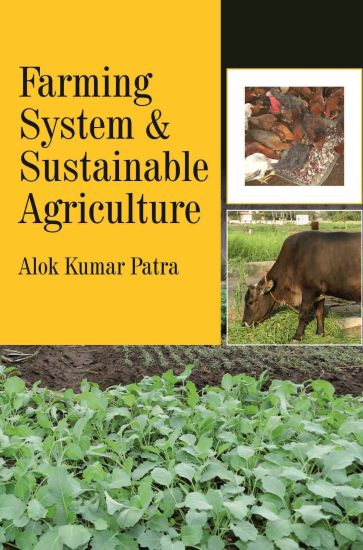
Farming System and Sustainable Agriculture

Farming System and Sustainable Agriculture

Alok Kumar Patra

New India Publishing Agency
2022
sidottu
The contemporary agricultural practices have given rise to several ecological issues, casting doubt on the sustainability of certain farming methods that rely heavily on inputs. Given that the earths resources are finite, it is crucial to use them judiciously and efficiently to achieve a balance between ecology and prosperity. The current priority for farmers, researchers, and policymakers is to pursue sustainable development through sustainable farming systems.This book will be beneficial for students who are preparing for various competitive examinations, as well as for those members of the general public who have an interest in farming and its development.
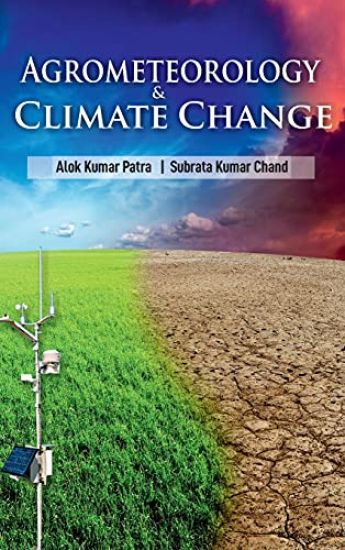
Agrometeorology and Climate Change

Agrometeorology and Climate Change

Alok Kumar Patra; Subrata Kumar Chand

New India Publishing Agency
2021
sidottu
The weather is a crucial input in agriculture, as it significantly influences agricultural planning from land preparation to harvesting, processing, and transportation. As such, climate and weather are considered a critical factor in determining the sustainability of agricultural systems. It is now recognized as a distinct discipline and is recommended as a core subject in the curricula of agricultural universities. The book covers the syllabus of the course Introductory Agrometeorology and Climate Change, which is designed for undergraduate students in agriculture, horticulture, and forestry.