

Kirjahaku
Etsi kirjoja tekijän nimen, kirjan nimen tai ISBN:n perusteella.
1000 tulosta hakusanalla Alvan Bond; Pliny Fisk



An illustrated history of the Holy Bible:
Robert Sears; Alvan Bond; John Kitto
Hansebooks
2020
nidottu
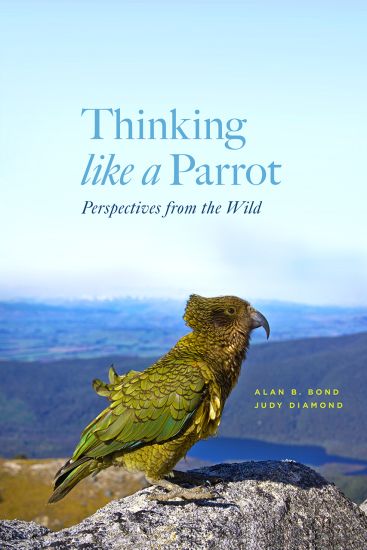
People form enduring emotional bonds with other animal species, such as dogs, cats, and horses. For the most part, these are domesticated animals, with one notable exception: Many people form close and supportive relationships with parrots, even though these amusing and curious birds remain thoroughly wild creatures. What enables this unique group of wild animals to form social bonds with people, and what does this mean for their survival? In Thinking Like a Parrot, Alan Bond and Judy Diamond look beyond much of the standard work on captive parrots to the mischievous, inquisitive, and astonishingly vocal parrots of the wild. Focusing on the psychology and ecology of wild parrots, Bond and Diamond document their distinctive social behavior, sophisticated cognition, and extraordinary vocal abilities. Also included are short vignettes--field notes of the natural history and behavior of both rare and widely distributed species, from the neotropical crimson-fronted parakeet to New Zealand's flightless, ground-dwelling kakapo. This composite approach makes clear that the behavior of captive parrots is grounded in the birds' wild ecology and evolution, revealing that parrots' ability to bond with people is an evolutionary accident, a byproduct of the intense sociality and flexible behavior that characterize their lives. Despite their adaptability and intelligence, however, nearly all large parrot species are rare, threatened, or endangered. To successfully manage and restore these wild populations, Bond and Diamond argue, we must develop a fuller understanding of their biology, of the complex set of ecological and behavioral traits that has led to their vulnerability. Spanning the global distribution of parrot species, Thinking Like a Parrot is rich with surprising insights into parrot intelligence, flexibility, and--even in the face of threats--resilience.


Alan made the mistake of being born at both the wrong time and in the wrong place. The year was 1936, a short time before the outbreak of the Second World War. The place was suburban London not far from Northolt, a major RAF fighter aerodrome. During the latter part of the Blitz his parents evacuated him to safety in Paignton, a seaside town in Devon a long distance from the German attacks on the capital and its environs. However he little knew that life in the air raid shelter among the falling bombs intended for Northolt was far less onerous than living in an old Victorian house with the admonitions of elderly grandparents constantly ringing in his ears. After the war he graduated in medicine but becoming dissatisfied with the hierarchical class structure of the new National Health Service, so redolent of the life in the environment of the class consciousness of life with his snobbish grandparents, decided to emigrate to Australia. Life In Tasmania proved too much for his first marriage. He met 'the Blonde and together the two of them sailed a Tasmanian built wooden cutter, daring the often challenging waters of the Tasman Sea. On board the same boat they explored beautiful coasts of Tasmania, in the process uncovering some of the ghosts of the state's colonial past.

Electrochemical Science and Technology
Keith Oldham; Jan Myland; Alan Bond
John Wiley Sons Inc
2011
nidottu
Electrochemistry is a discipline of wide scientific and technological interest. Scientifically, it explores the electrical properties of materials and especially the interfaces between different kinds of matter. Technologically, electrochemistry touches our lives in many ways that few fully appreciate; for example, materials as diverse as aluminum, nylon, and bleach are manufactured electrochemically, while the batteries that power all manner of appliances, vehicles, and devices are the products of electrochemical research. Other realms in which electrochemical science plays a crucial role include corrosion, the disinfection of water, neurophysiology, sensors, energy storage, semiconductors, the physics of thunderstorms, biomedical analysis, and so on. This book treats electrochemistry as a science in its own right, albeit resting firmly on foundations provided by chemistry, physics, and mathematics. Early chapters discuss the electrical and chemical properties of materials from which electrochemical cells are constructed. The behavior of such cells is addressed in later chapters, with emphasis on the electrodes and the reactions that occur on their surfaces. The role of transport to and from electrodes is a topic that commands attention, because it crucially determines cell efficiency. Final chapters deal with voltammetry, the methodology used to investigate electrode behavior. Interspersed among the more fundamental chapters are chapters devoted to applications of electrochemistry: electrosynthesis, power sources, “green electrochemistry”, and corrosion. Electrochemical Science and Technology is addressed to all who have a need to come to grips with the fundamentals of electrochemistry and to learn about some of its applications. It will constitute a text for a senior undergraduate or graduate course in electrochemistry. It also serves as a source of material of interest to scientists and technologists in various fields throughout academia, industry, and government – chemists, physicists, engineers, environmentalists, materials scientists, biologists, and those in related endeavors. This book: Provides a background to electrochemistry, as well as treating the topic itself.Is accessible to all with a foundation in physical science, not solely to chemists.Is addressed both to students and those later in their careers.Features web links (through www.wiley.com/go/EST) to extensive material that is of a more tangential, specialized, or mathematical nature.Includes questions as footnotes to support the reader’s evolving comprehension of the material, with fully worked answers provided on the web.Provides web access to Excel® spreadsheets which allow the reader to model electrochemical events.Has a copious Appendix of relevant data.

Electrochemical Science and Technology
Keith Oldham; Jan Myland; Alan Bond
John Wiley Sons Inc
2011
sidottu
Electrochemistry is a discipline of wide scientific and technological interest. Scientifically, it explores the electrical properties of materials and especially the interfaces between different kinds of matter. Technologically, electrochemistry touches our lives in many ways that few fully appreciate; for example, materials as diverse as aluminum, nylon, and bleach are manufactured electrochemically, while the batteries that power all manner of appliances, vehicles, and devices are the products of electrochemical research. Other realms in which electrochemical science plays a crucial role include corrosion, the disinfection of water, neurophysiology, sensors, energy storage, semiconductors, the physics of thunderstorms, biomedical analysis, and so on. This book treats electrochemistry as a science in its own right, albeit resting firmly on foundations provided by chemistry, physics, and mathematics. Early chapters discuss the electrical and chemical properties of materials from which electrochemical cells are constructed. The behavior of such cells is addressed in later chapters, with emphasis on the electrodes and the reactions that occur on their surfaces. The role of transport to and from electrodes is a topic that commands attention, because it crucially determines cell efficiency. Final chapters deal with voltammetry, the methodology used to investigate electrode behavior. Interspersed among the more fundamental chapters are chapters devoted to applications of electrochemistry: electrosynthesis, power sources, “green electrochemistry”, and corrosion. Electrochemical Science and Technology is addressed to all who have a need to come to grips with the fundamentals of electrochemistry and to learn about some of its applications. It will constitute a text for a senior undergraduate or graduate course in electrochemistry. It also serves as a source of material of interest to scientists and technologists in various fields throughout academia, industry, and government – chemists, physicists, engineers, environmentalists, materials scientists, biologists, and those in related endeavors. This book: Provides a background to electrochemistry, as well as treating the topic itself.Is accessible to all with a foundation in physical science, not solely to chemists.Is addressed both to students and those later in their careers.Features web links (through www.wiley.com/go/EST) to extensive material that is of a more tangential, specialized, or mathematical nature.Includes questions as footnotes to support the reader’s evolving comprehension of the material, with fully worked answers provided on the web.Provides web access to Excel® spreadsheets which allow the reader to model electrochemical events.Has a copious Appendix of relevant data.
The Sevenfold Path to Peace: Seven Lenten Sermons
Alan Bacon Bond
CSS Publishing Company
1986
nidottu
Jesus made peace by the blood of his cross. What more appropriate theme for a Lenten preaching series could there be than "The Sevenfold Path to Peace"? Here is a sample of this skillful proclaimer's insight (from the first sermon): I saw a sixth grader, on his way up the alley to school, throw a firecracker over the fence of our yard and into the chicken coop. I was as angry as I ever have been in my whole life. The chase was on Down the alley, a hesitating wonder as to how he had vanished into thin air, spotting him darting from under a bush like a rabbit, over a five-and-a-half foot wall, then over a six-and-a-half foot back wall, I took the gate, across the church parking lot, and finally trapped him under the camper parked in a neighbor's yard. Winded and outaged, I yelled that I wanted to "kill" him, but instead took him to the school principal to do the disciplining. I didn't like the feeling that raged in me. I was even frightened by it. I certainly experienced the truth of the words of Eleanor of Aquitaine: "We are the origin of war." Messages include: - Is Peace Attainable? - Desire Peace - Peacemaking: Active, not Passive - Peace as Shalom - The Gift of Peace - Peace Through Sacrifice - Proclaim Peace Alan Bacon Bond is pastor of Scottsdale (Airzona) Congregational United Church of Christ.

Now for the first time, the complete history of the illustrated James Bond is chronicled by pop-culture historian Alan J. Porter in James Bond: The History of the Illustrated 007. Before Bond became world famous with his movie series, the character was the subject of successful English newspaper strips and later in comic books. James Bond: The History of the Illustrated 007 examines it all, covering Bond's newspaper strip and comic book appearances from the 1950s to the present.


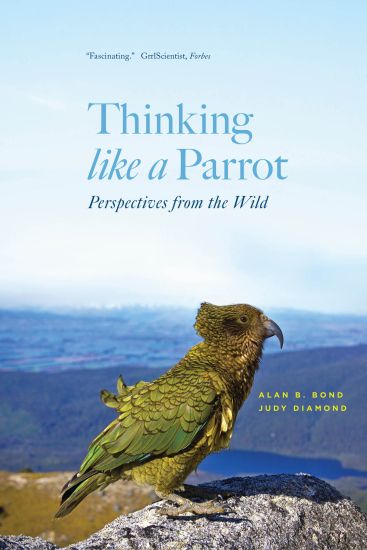
From two experts on wild parrot cognition, a close look at the intelligence, social behavior, and conservation of these widely threatened birds. People form enduring emotional bonds with other animal species, such as dogs, cats, and horses. For the most part, these are domesticated animals, with one notable exception: many people form close and supportive relationships with parrots, even though these amusing and curious birds remain thoroughly wild creatures. What enables this unique group of animals to form social bonds with people, and what does this mean for their survival? In Thinking like a Parrot, Alan B. Bond and Judy Diamond look beyond much of the standard work on captive parrots to the mischievous, inquisitive, and astonishingly vocal parrots of the wild. Focusing on the psychology and ecology of wild parrots, Bond and Diamond document their distinctive social behavior, sophisticated cognition, and extraordinary vocal abilities. Also included are short vignettes—field notes on the natural history and behavior of both rare and widely distributed species, from the neotropical crimson-fronted parakeet to New Zealand’s flightless, ground-dwelling kakapo. This composite approach makes clear that the behavior of captive parrots is grounded in the birds’ wild ecology and evolution, revealing that parrots’ ability to bond with people is an evolutionary accident, a by-product of the intense sociality and flexible behavior that characterize their lives. Despite their adaptability and intelligence, however, nearly all large parrot species are rare, threatened, or endangered. To successfully manage and restore these wild populations, Bond and Diamond argue, we must develop a fuller understanding of their biology and the complex set of ecological and behavioral traits that has led to their vulnerability. Spanning the global distribution of parrot species, Thinking like a Parrot is rich with surprising insights into parrot intelligence, flexibility, and—even in the face of threats—resilience.
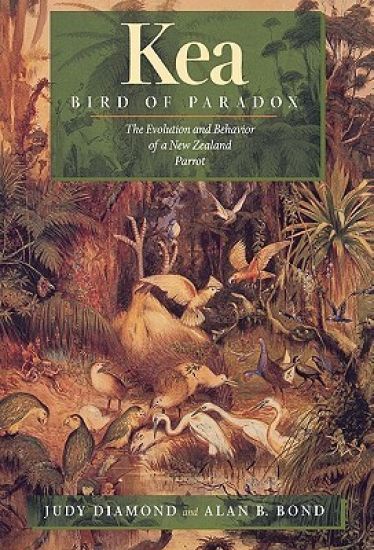
The kea, a crow-sized parrot that lives in the rugged mountains of New Zealand, is considered by some a playful comic and by others a vicious killer. Its true character is a mystery that biologists have debated for more than a century. Judy Diamond and Alan Bond have written a comprehensive account of the kea's contradictory nature, and their conclusions cast new light on the origins of behavioral flexibility and the problem of species survival in human environments everywhere. New Zealand's geological remoteness has made the country home to a bizarre assemblage of plants and animals that are wholly unlike anything found elsewhere. Keas are native only to the South Island, breeding high in the rigorous, unforgiving environment of the Southern Alps. Bold, curious, and ingeniously destructive, keas have a complex social system that includes extensive play behavior. Like coyotes, crows, and humans, keas are 'open-program' animals with an unusual ability to learn and to create new solutions to whatever problems they encounter. Diamond and Bond present the kea's story from historical and contemporary perspectives and include observations from their years of field work. A comparison of the kea's behavior and ecology with that of its closest relative, the kaka of New Zealand's lowland rain forests, yields insights into the origins of the kea's extraordinary adaptability. The authors conclude that the kea's high level of sociality is a key factor in the flexible lifestyle that probably evolved in response to the alpine habitat's unreliable food resources and has allowed the bird to survive the extermination of much of its original ecosystem. But adaptability has its limits, as the authors make clear when describing present-day interactions between keas and humans and the attempts to achieve a peaceful coexistence.
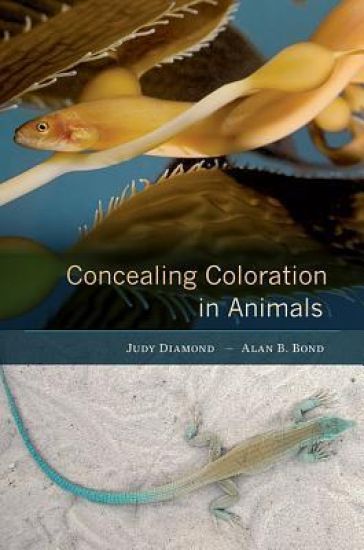
The biological functions of coloration in animals are sometimes surprising. Color can attract mates, intimidate enemies, and distract predators. But color patterns can also conceal animals from detection. Concealing coloration is unusual because it is an adaptation not only to the visual features of the environment but also to the perceptual and cognitive capabilities of other organisms. Judy Diamond and Alan Bond bring to light the many factors at work in the evolution of concealing coloration.Animals that resemble twigs, tree bark, stones, and seaweed may appear to be perfect imitations, but no concealment strategy is without flaws. Amid the clutter of the natural world, predators search for minute, telltale clues that will reveal the identity of their prey. Predators have remarkable abilities to learn to discriminate the fake from the real. But prey have their own range of defensive tactics, evolving multiple appearances or the ability to change color at will. Drawing on modern experimental evidence of the functional significance of animal color strategies, Diamond and Bond offer striking illustrations of how the evolution of features in one organism can be driven by the psychology of others.Concealing Coloration in Animals takes readers on a scientific adventure that explores creatures inside mats of floating seaweed, mice and lizards on desert rocks and sand, and rare parrots in the rainforest of New Zealand. Color photographs extensively document the mind-boggling array of deceptive strategies animals use to blend in, mislead, or vanish from view.

Millie Thormans magiska utstrålning och nattliga vandringar har gett henne smeknamnet Älvan. Robert Bradley, som tvingats arbeta i sin farbrors verkstad, hamnar så småningom hos den en gång rika familjen Thorman och kommer nära den äldsta dottern Agnes, som är den enda som älskat och skyddat den sköra Millie. Det är början på en romans över klassgränserna samtidigt som omvärlden snart kommer kastas in i ett världskrig. Catherine Cookson föddes 1906 i South Shields och dog 1998 i Newcastle-upon-Tyne. "Kate Hannigan", hennes första roman, utkom 1949. Hon var en av 1900-talets mest älskade underhållningsförfattare och blev både upptagen i Brittiska Imperieordern och adlad till följd av sitt författarskap. Flera brittiska tv-serier är baserade på hennes romaner, som översatts i 25 länder. -

Writings and Speeches of Alvan Stewart, On Slavery. Ed. by Luther Rawson Marsh.
Alvan Stewart
University of Michigan Library
2006
pokkari
Writings And Speeches Of Alvan Stewart On Slavery
Alvan Stewart
KESSINGER PUBLISHING CO
2007
pokkari