Kirjojen hintavertailu. Mukana 11 224 866 kirjaa ja 12 kauppaa.

Kirjahaku

Etsi kirjoja tekijän nimen, kirjan nimen tai ISBN:n perusteella.

1000 tulosta hakusanalla Alvar Mould

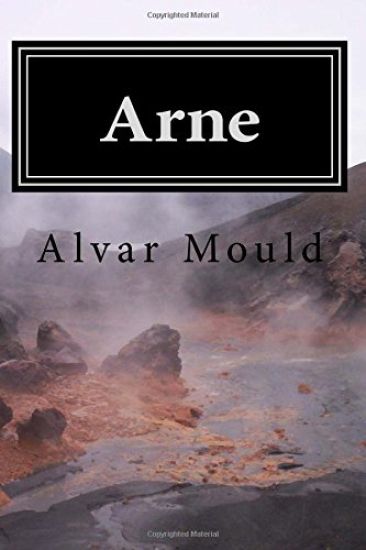
Arne

Arne

Alvar Mould

Createspace Independent Publishing Platform
2015
nidottu
The woman died shortly after Christmas hitting Arne hard with the finality of such loss. The awful belief that he would never see or hear this person again, ever. He would become less affected by death again but it would take a long time and a high price in soul searching. More importantly perhaps, it was the first incident to really make him think deeply on the purpose of life and come to the initially depressing conclusion that there was none.' Set against the background of a small English port and the plantations of German New Guinea between the 1880s and the early 1930s this is the story of a man's experiences of desire, self doubt and fear. His search for self knowledge and a need to make sense of his emotions, thoughts and actions and come to grips with the nature of his existence.
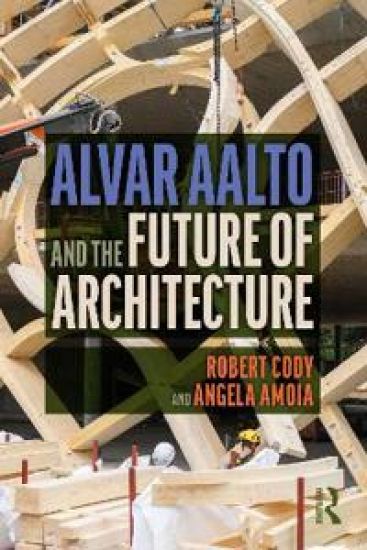
Alvar Aalto and the Future of Architecture

Alvar Aalto and the Future of Architecture

Robert Cody; Angela Amoia

TAYLOR FRANCIS LTD
2022
sidottu
In the contemporary practice of architecture, digital design and fabrication are emergent technologies in transforming how architects present a design and form a material strategy that is responsible, equitable, sustainable, resilient, and forward-looking. This book exposes dialogue between history, theory, design, construction, technology, and sensory experience by means of digital simulations that enhance the assessment and values of our material choices. It offers a critical look to the past to inspire the future. This new edition looks to Alvar Aalto as the primary protagonist for channeling discussions related to these topics. Architects like ALA, Shigeru Ban, 3XN, Peter Zumthor, and others also play the role of contemporary guides in this review. The work of Aalto and selected contemporary architects, along with computer modeling software, showcase the importance of comprehensive design. Organized by the five Ts of contemporary architectural discourse—Typology, Topology, Tectonics, Technic, Thermodynamics—each chapter is used to connect history through Aalto and develop conversations concerning historical and contemporary models, digital simulations, ecological and passive/active material concerns, construction and fabrications, and healthy sensorial environments.Written for students and academics, this book bridges knowledge from academia into practice and vice versa to help architects become better stewards of the environment, make healthier and more accountable buildings, and find ways to introduce policy to make technology a critical component in thinking about and making architecture.
Alvar Aalto and the Future of Architecture

Alvar Aalto and the Future of Architecture

Robert Cody; Angela Amoia

TAYLOR FRANCIS LTD
2022
nidottu
In the contemporary practice of architecture, digital design and fabrication are emergent technologies in transforming how architects present a design and form a material strategy that is responsible, equitable, sustainable, resilient, and forward-looking. This book exposes dialogue between history, theory, design, construction, technology, and sensory experience by means of digital simulations that enhance the assessment and values of our material choices. It offers a critical look to the past to inspire the future. This new edition looks to Alvar Aalto as the primary protagonist for channeling discussions related to these topics. Architects like ALA, Shigeru Ban, 3XN, Peter Zumthor, and others also play the role of contemporary guides in this review. The work of Aalto and selected contemporary architects, along with computer modeling software, showcase the importance of comprehensive design. Organized by the five Ts of contemporary architectural discourse—Typology, Topology, Tectonics, Technic, Thermodynamics—each chapter is used to connect history through Aalto and develop conversations concerning historical and contemporary models, digital simulations, ecological and passive/active material concerns, construction and fabrications, and healthy sensorial environments.Written for students and academics, this book bridges knowledge from academia into practice and vice versa to help architects become better stewards of the environment, make healthier and more accountable buildings, and find ways to introduce policy to make technology a critical component in thinking about and making architecture.
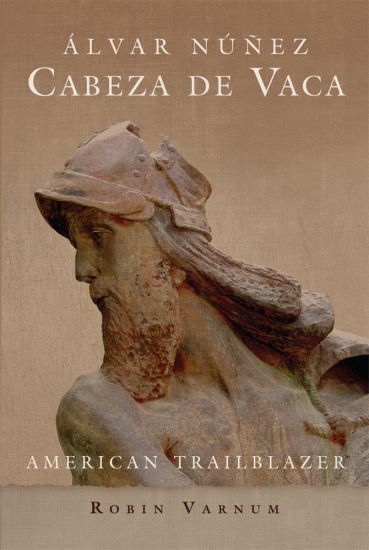
Álvar Núñez Cabeza de Vaca

Álvar Núñez Cabeza de Vaca

Robin Varnum

University of Oklahoma Press
2014
sidottu
In November 1528, almost a century before the Pilgrims landed at Plymouth Rock, the remnants of a Spanish expedition reached the Gulf Coast of Texas. By July 1536, eight years later, álvar Núñez Cabeza de Vaca (c. 1490-1559) and three other survivors had walked 2,500 miles from Texas, across northern Mexico, to Sonora and ultimately to Mexico City. Cabeza de Vaca's account of this astonishing journey is now recognized as one of the great travel stories of all time and a touchstone of New World literature. But his career did not begin and end with his North American ordeal. Robin Varnum's biography, the first single-volume cradle-to-grave account of the explorer's life in eighty years, tells the rest of the story.During Cabeza de Vaca's peregrinations through the American Southwest, he lived among and interacted with various Indian groups. When he and his non-Indian companions finally reconnected with Spaniards in northern Mexico, he was horrified to learn that his compatriots were enslaving Indians there. His Relación (1542) advocated using kindness and fairness rather than force in dealing with the native people of the New World. Cabeza de Vaca went on to serve as governor of Spain's province of Río de La Plata in South America (roughly modern Paraguay). As a loyal subject of the king of Spain, he supported the colonialist enterprise and believed in Christianizing the Indians, but he always championed the rights of native peoples. In Río de La Plata he tried to keep his men from robbing the Indians, enslaving them, or exploiting them sexually - policies that caused grumbling among the troops. When Cabeza de Vaca's men mutinied, he was sent back to Spain in chains to stand trial before the Royal Council of the Indies.Drawing on the conquistador's own reports and on other sixteenth-century documents, both in English translation and the original Spanish, Varnum's lively narrative braids eyewitness testimony of events with historical interpretation benefiting from recent scholarship and archaeological investigation. As one of the few Spaniards of his era to explore the coasts and interiors of two continents, Cabeza de Vaca is recognized today above all for his more humane attitude toward and interactions with the Indian peoples of North America, Mexico, and South America.
Alvar Nunez Cabeza de Vaca

Alvar Nunez Cabeza de Vaca

Robin Varnum

University of Oklahoma Press
2021
nidottu
In November 1528, almost a century before the Pilgrims landed at Plymouth Rock, the remnants of a Spanish expedition reached the Gulf Coast of Texas. By July 1536, eight years later, Álvar NÚÑez Cabeza de Vaca (c. 1490-1559) and three other survivors had walked 2,500 miles from Texas, across northern Mexico, to Sonora and ultimately to Mexico City. Cabeza de Vaca’s account of this astonishing journey is now recognized as one of the great travel stories of all time and a touchstone of New World literature. But his career did not begin and end with his North American ordeal. Robin Varnum’s biography, the first single-volume cradle-to-grave account of the explorer’s life in eighty years, tells the rest of the story.During Cabeza de Vaca’s peregrinations through the American Southwest, he lived among and interacted with various Indian groups. When he and his non-Indian companions finally reconnected with Spaniards in northern Mexico, he was horrified to learn that his compatriots were enslaving Indians there. His RelaciÓn (1542) advocated using kindness and fairness rather than force in dealing with the native people of the New World. Cabeza de Vaca went on to serve as governor of Spain’s province of RÍo de La Plata in South America (roughly modern Paraguay). As a loyal subject of the king of Spain, he supported the colonialist enterprise and believed in Christianizing the Indians, but he always championed the rights of native peoples. In RÍo de La Plata he tried to keep his men from robbing the Indians, enslaving them, or exploiting them sexually-policies that caused grumbling among the troops. When Cabeza de Vaca’s men mutinied, he was sent back to Spain in chains to stand trial before the Royal Council of the Indies.Drawing on the conquistador’s own reports and on other sixteenth-century documents, both in English translation and the original Spanish, Varnum’s lively narrative braids eyewitness testimony of events with historical interpretation benefiting from recent scholarship and archaeological investigation. As one of the few Spaniards of his era to explore the coasts and interiors of two continents, Cabeza de Vaca is recognized today above all for his more humane attitude toward and interactions with the Indian peoples of North America, Mexico, and South America.
Alvar Nunez Cabeza de Vaca

Alvar Nunez Cabeza de Vaca

Donald Chipman

Texas State Historical Association,U.S.
2012
nidottu
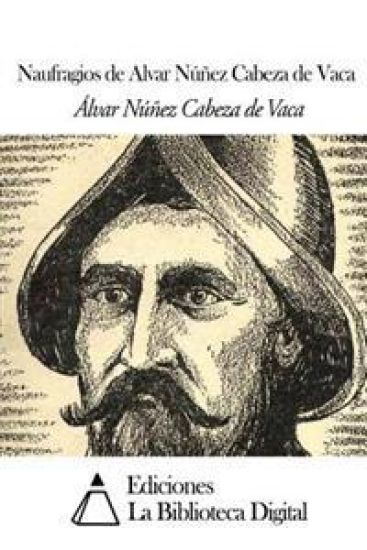
Cabeza de Vaca’s mode of transportation, afoot on portions of two continents in the early decades of the sixteenth century, fits one dictionary definition of the word “pedestrian.” By no means, however, should the ancillary meanings of “commonplace” or “prosaic” be applied to the man, or his remarkable adventures. Between 1528 and 1536, he trekked an estimated 2,480 to 2,640 miles of North American terrain from the Texas coast near Galveston Island to San Miguel de Culiacán near the Pacific Coast of Mexico. He then traveled under better circumstances, although still on foot, to Mexico City.About a year later, Cabeza de Vaca returned to Spain. In 1540, the king granted Cabeza de Vaca civil and military authority in modern-day Paraguay. After arriving on the coast of Brazil in 1541, he was unable to find transportation by ship to the seat of his governorship. He then led a group of more 250 settlers through 1,200 miles of unchartered back country, during which he lost only two men.Cabeza de Vaca’s travels are amazing in themselves, but during them he transformed from a proud Spanish don to lay advocate of Indian rights on both American continents. That journey is as remarkable as his travels. It was this “great awakening” that landed him in more trouble with Spaniards than Indians. Settlers at Asunción rebelled against the reformist governor, incarcerated him, tried to poison his food on two occasions, and finally sent him to Spain in irons. There he was tried and convicted on trumped-up charges of carrying out policies that were the exact opposite of what he had promoted—the humane protection of Indians.This book examines the two great “journeys” of Cabeza de Vaca—his extraordinary adventures on two continents and his remarkable growth as a humanitarian.
Alvar Aalto and the Architecture of Finland; 4

Alvar Aalto and the Architecture of Finland; 4

Scott D. Hamilton

Hassell Street Press
2021
nidottu
This work has been selected by scholars as being culturally important and is part of the knowledge base of civilization as we know it.This work is in the public domain in the United States of America, and possibly other nations. Within the United States, you may freely copy and distribute this work, as no entity (individual or corporate) has a copyright on the body of the work.Scholars believe, and we concur, that this work is important enough to be preserved, reproduced, and made generally available to the public. To ensure a quality reading experience, this work has been proofread and republished using a format that seamlessly blends the original graphical elements with text in an easy-to-read typeface.We appreciate your support of the preservation process, and thank you for being an important part of keeping this knowledge alive and relevant.
Alvar Aalto and The Art of Landscape

Alvar Aalto and The Art of Landscape

Teija Isohauta

TAYLOR FRANCIS LTD
2022
sidottu
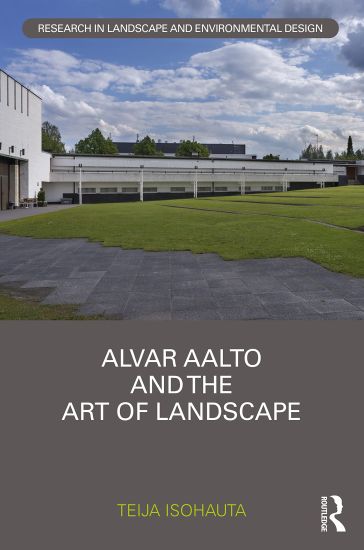
Alvar Aalto and The Art of Landscape captures the essence of the Finnish architect’s landscape concept, emphasising culture and tradition, which characterised his approach to and understanding of architecture as part of the wider environment. From the forests of his youth to sights from his travels, Alvar Aalto (1898–1976) was influenced by outdoor landscapes. Throughout his career, he felt the need to shape the terrain and this became a signature of his architecture. Divided into five chapters, this book traces Aalto’s relationship with landscape, starting with an analysis of his definitions and descriptions of landscape language, which ranged from natural references and biological terms, to synonyms and comparisons. It includes beautifully illustrated case study projects from the 1950s and 1960s, discussing Aalto’s transformation of different landscapes through topography, terracing and tiers, ruins and natural elements, horizon outlines, landmarks, and the repetition of form. Featuring archival sketches, garden drawings, and plans, the book also contains Aalto’s text ‘Architecture in the Landscape of Central Finland’ from 1925 in the appendix. This book provides fascinating, untold insights into Aalto’s relationship with landscape and how this developed during his lifetime, for scholars, researchers, and students interested in architecture and landscape history, landscape art, and cultural studies.
Alvar Aalto and The Art of Landscape

Alvar Aalto and The Art of Landscape

Teija Isohauta

TAYLOR FRANCIS LTD
2024
nidottu
Alvar Aalto and The Art of Landscape captures the essence of the Finnish architect’s landscape concept, emphasising culture and tradition, which characterised his approach to and understanding of architecture as part of the wider environment. From the forests of his youth to sights from his travels, Alvar Aalto (1898–1976) was influenced by outdoor landscapes. Throughout his career, he felt the need to shape the terrain and this became a signature of his architecture. Divided into five chapters, this book traces Aalto’s relationship with landscape, starting with an analysis of his definitions and descriptions of landscape language, which ranged from natural references and biological terms, to synonyms and comparisons. It includes beautifully illustrated case study projects from the 1950s and 1960s, discussing Aalto’s transformation of different landscapes through topography, terracing and tiers, ruins and natural elements, horizon outlines, landmarks, and the repetition of form. Featuring archival sketches, garden drawings, and plans, the book also contains Aalto’s text ‘Architecture in the Landscape of Central Finland’ from 1925 in the appendix. This book provides fascinating, untold insights into Aalto’s relationship with landscape and how this developed during his lifetime, for scholars, researchers, and students interested in architecture and landscape history, landscape art, and cultural studies.
Alvar Aalto and Urban Design

Alvar Aalto and Urban Design

Robert Cody; Angela Amoia

TAYLOR FRANCIS LTD
2025
nidottu
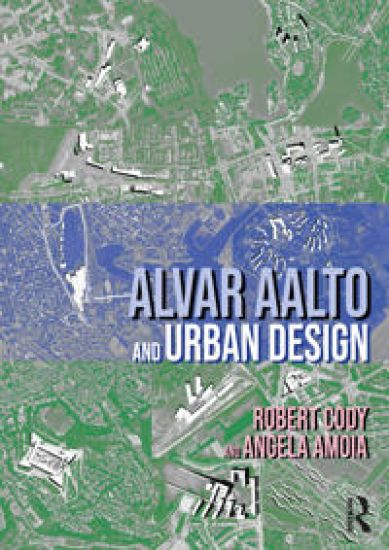
This book provides a fresh look at Alvar Aalto’s regional and community planning work, particularly the ways in which he incorporated sustainability, resiliency, energy, and health, and examines how contemporary architects and planners can learn from this approach for the betterment of 21st century urban design and our future cities.The Alvar Aalto Atelier planned and promoted regional development that combined ecological features, considered density, and offered a framework for informality, including flexible, adaptable infrastructures, with physical plans integrating communities with nature. These plans were largely sub-urban and contained vital lessons on how to deal with sprawl, traffic, landscape, energy, labor, and industry. This book analyses letters, writings, and drawings not seen outside the Alvar Aalto foundation, to review alternative ways to examine sub-urban landscapes and urban typologies, through sustainability, ecology and use of digital technologies.This is an essential read for all those interested in the urban design work of Alvar Aalto. Written in an accessible way for those new to the work of Aalto, Architecture and Urban Design students of all levels will also find this a helpful guide on ecologically and socially responsible design.
Alvar Aalto and Urban Design

Alvar Aalto and Urban Design

Robert Cody; Angela Amoia

TAYLOR FRANCIS LTD
2025
sidottu
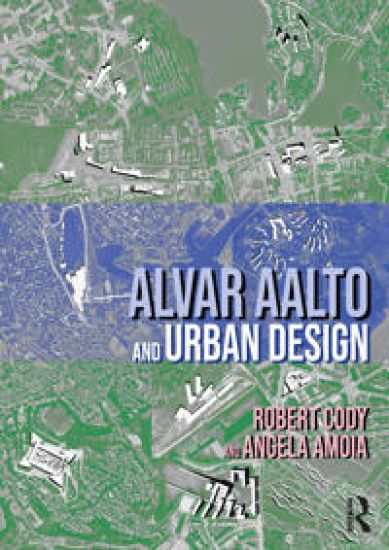
This book provides a fresh look at Alvar Aalto’s regional and community planning work, particularly the ways in which he incorporated sustainability, resiliency, energy, and health, and examines how contemporary architects and planners can learn from this approach for the betterment of 21st century urban design and our future cities.The Alvar Aalto Atelier planned and promoted regional development that combined ecological features, considered density, and offered a framework for informality, including flexible, adaptable infrastructures, with physical plans integrating communities with nature. These plans were largely sub-urban and contained vital lessons on how to deal with sprawl, traffic, landscape, energy, labor, and industry. This book analyses letters, writings, and drawings not seen outside the Alvar Aalto foundation, to review alternative ways to examine sub-urban landscapes and urban typologies, through sustainability, ecology and use of digital technologies.This is an essential read for all those interested in the urban design work of Alvar Aalto. Written in an accessible way for those new to the work of Aalto, Architecture and Urban Design students of all levels will also find this a helpful guide on ecologically and socially responsible design.
Alvar Aalto in the Finnish Context

Alvar Aalto in the Finnish Context

Kirmo Mikkola

TAYLOR FRANCIS LTD
2025
sidottu
This book, first published in Finnish in 1985 under the title Aalto, is a critical introduction to Finnish architect Alvar Aalto (1898–1976), written by one of Aalto’s Finnish architectural contemporaries, Kirmo Mikkola (1934–1986). The book is divided into six sections dealing with different aspects of Aalto’s architecture, from his classical beginnings to urban planning, as well as his various professional and intellectual associates.Mikkola debunks the common opinion of a reticent Aalto to determine the roots of his thinking, seeing him as a mediator of influences from a wide variety of sources. The book was originally targeted at a Finnish audience, and so its translation requires ‘interpreters’, two architect-scholars who knew Mikkola well, Juhani Pallasmaa, and Aino Niskanen. The book also sheds light on a young generation of Finnish architects that distanced itself from Aalto as a role model, pinpointed here by the inclusion of the essay ‘Snowballs’ (1948) by Aulis Blomstedt.Often quoted by Finnish architectural scholars, the publication finally of an English translation of Mikkola’s book will appeal to those international scholars and students who have been aware of the lack of critical perspectives from Aalto’s Finnish architect contemporaries.
Alvar Aalto

Alvar Aalto

Frederick Gutheim; Alvar Aalto

Literary Licensing, LLC
2011
sidottu
""Alvar Aalto"" by Frederick Gutheim is a comprehensive book that explores the life and work of the Finnish architect Alvar Aalto. Aalto is known for his innovative and modernist designs that incorporated elements of nature and the surrounding environment. The book covers Aalto's early years, his education, and his career as an architect, designer, and urban planner. It also delves into his major works, including his iconic buildings such as the Paimio Sanatorium, the Viipuri Library, and the Finlandia Hall. The book includes numerous photographs, illustrations, and sketches of Aalto's designs, as well as insightful commentary on his creative process and philosophy. It is an essential resource for anyone interested in architecture, design, and the legacy of Alvar Aalto.""The Masters Of World Architecture Series.This scarce antiquarian book is a facsimile reprint of the old original and may contain some imperfections such as library marks and notations. Because we believe this work is culturally important, we have made it available as part of our commitment for protecting, preserving, and promoting the world's literature in affordable, high quality, modern editions, that are true to their original work.