
Kirjahaku
Etsi kirjoja tekijän nimen, kirjan nimen tai ISBN:n perusteella.
1000 tulosta hakusanalla Amanda L. Smith

Not a Dime: How to live for "nearly" free.
Amanda L. Smith
Createspace Independent Publishing Platform
2016
nidottu

The Borderline Personality Disorder Wellness Planner for Families
Amanda L. Smith; Perry D. Hoffman
HCI Press
2018
pokkari
This author, Amanda Smith, has a successful book (365-day wellness planner) for people who suffer with Borderline Personality Disorder (BPD). Now, with this new book, the second in the Borderline Personality Disorder series, the author focuses on the helping the family members (spouses, parents, siblings, and even close friends, etc.) of the person with Borderline Personality Disorder, which is a relationship disorder with lots of emotion dysregulation, thereby making relationships with their BPD loved one very difficult.This book is a 52-week wellness planner for the families. It will help them to:- deal with their loved one without going crazy- help them learn about and utilize skills from the psychological treatments their BPD loved one is getting- get support, knowledge, resources,- hope for a healthier and happier future- keep the relationship from terminating

The Dialectical Behavior Therapy Wellness Planner
Amanda L. Smith; Blaise Aguirre
HCI Press
2015
pokkari
The Dialectical Behavior Therapy Wellness Planner is a practical tool for the emotionally sensitive person looking for an easier way to track emotions and behavior as well as monitor progress over time. The Dialectical Behavior Therapy Wellness Planner is a helpful tool for anyone who struggles with emotional sensitivity and/or Borderline Personality Disorder to use as you work toward creating a healthier, more meaningful life--a life worth living--by balancing acceptance and change. In Part 1, discover the value and details of mindfulness, distress tolerance, emotion regulation, and interpersonal effectiveness. Next, in Part 2, take the Self-Care Assessment and then get started with the Daily Self-Care Tracker. After thirty days, take a new Self-Care Assessment to see how you've grown! Use the Planner to consistently track and report on your journey to healing. It's a journal that helps you keep everything in one place, and keeps you focused on where you are and where you want to go. Start on any date with the monthly, weekly, and daily calendars designed to help you plan for success as you practice skills and make a commitment to daily self-care.You can use it to: track your emotions and behavior monitor your progress bring structure into your day

Collectanea Gersoniana ou recueil d'études de recherches et de correspondance littéraires ayant trait au problème bibliographique de l'origine de l'Imitation de Jésus Christ
Jehan Spencer Smith; François Amand de Gournay
Outlook Verlag
2024
nidottu


Habeas Corpus in Wartime unearths and presents a comprehensive account of the legal and political history of habeas corpus in wartime in the Anglo-American legal tradition. The book begins by tracing the origins of the habeas privilege in English law, giving special attention to the English Habeas Corpus Act of 1679, which limited the scope of executive detention and used the machinery of the English courts to enforce its terms. It also explores the circumstances that led Parliament to invent the concept of suspension as a tool for setting aside the protections of the Habeas Corpus Act in wartime. Turning to the United States, the book highlights how the English suspension framework greatly influenced the development of early American habeas law before and after the American Revolution and during the Founding period, when the United States Constitution enshrined a habeas privilege in its Suspension Clause. The book then chronicles the story of the habeas privilege and suspension over the course of American history, giving special attention to the Civil War period. The final chapters explore how the challenges posed by modern warfare during the twentieth and twenty-first centuries have placed great strain on the previously well-settled understanding of the role of the habeas privilege and suspension in American constitutional law, particularly during World War II when the United States government detained tens of thousands of Japanese American citizens and later during the War on Terror. Throughout, the book draws upon a wealth of original and heretofore untapped historical resources to shed light on the purpose and role of the Suspension Clause in the United States Constitution, revealing all along that many of the questions that arise today regarding the scope of executive power to arrest and detain in wartime are not new ones.

Legal scholar Amanda L. Tyler discusses the history and future of habeas corpus in America and around the world. The concept of habeas corpus--literally, to receive and hold the body--empowers courts to protect the right of prisoners to know the basis on which they are being held by the government and grant prisoners their freedom when they are held unlawfully. It is no wonder that habeas corpus has long been considered essential to freedom. For nearly eight hundred years, the writ of habeas corpus has limited the executive in the Anglo-American legal tradition from imprisoning citizens and subjects with impunity. Writing in the eighteenth century, the widely influential English jurist and commentator William Blackstone declared the writ a "bulwark" of personal liberty. Across the Atlantic, in the leadup to the American Revolution, the Continental Congress declared that the habeas privilege and the right to trial by jury were among the most important rights in a free society. This Very Short Introduction chronicles the storied writ of habeas corpus and how its common law and statutory origins spread from England throughout the British Empire and beyond, witnessing its use today around the world in nations as varied as Canada, Israel, India, and South Korea. Beginning with the English origins of the writ, the book traces its historical development both as a part of the common law and as a parliamentary creation born out of the English Habeas Corpus Act of 1679, a statute that so dramatically limited the executive's power to detain that Blackstone called it no less than a "second Magna Carta." The book then takes the story forward to explore how the writ has functioned in the centuries since, including its controversial suspension by President Abraham Lincoln during the Civil War. It also analyzes the major role habeas corpus has played in such issues as the World War II incarceration of Japanese Americans and the US Supreme Court's recognition during the War on Terror of the concept of a "citizen enemy combatant." Looking ahead the story told in these pages reveals the immense challenges that the habeas privilege faces today and suggests that in confronting them, we would do well to remember how the habeas privilege brought even the king of England to his knees before the law.

Habeas Corpus in Wartime unearths and presents a comprehensive account of the legal and political history of habeas corpus in wartime in the Anglo-American legal tradition. The book begins by tracing the origins of the habeas privilege in English law, giving special attention to the English Habeas Corpus Act of 1679, which limited the scope of executive detention and used the machinery of the English courts to enforce its terms. It also explores the circumstances that led Parliament to invent the concept of suspension as a tool for setting aside the protections of the Habeas Corpus Act in wartime. Turning to the United States, the book highlights how the English suspension framework greatly influenced the development of early American habeas law before and after the American Revolution and during the Founding period, when the United States Constitution enshrined a habeas privilege in its Suspension Clause. The book then chronicles the story of the habeas privilege and suspension over the course of American history, giving special attention to the Civil War period. The final chapters explore how the challenges posed by modern warfare during the twentieth and twenty-first centuries have placed great strain on the previously well-settled understanding of the role of the habeas privilege and suspension in American constitutional law, particularly during World War II when the United States government detained tens of thousands of Japanese American citizens and later during the War on Terror. Throughout, the book draws upon a wealth of original and heretofore untapped historical resources to shed light on the purpose and role of the Suspension Clause in the United States Constitution, revealing all along that many of the questions that arise today regarding the scope of executive power to arrest and detain in wartime are not new ones.

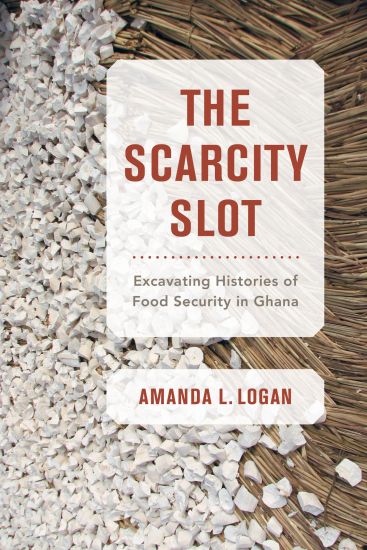
A free open access ebook is available upon publication. Learn more at www.luminosoa.org.The Scarcity Slot is the first book to critically examine food security in Africa’s deep past. Amanda L. Logan argues that African foodways have been viewed through the lens of ‘the scarcity slot,’ a kind of Othering based on presumed differences in resources. Weaving together archaeological, historical, and environmental data with food ethnography, she advances a new approach to building long-term histories of food security on the continent in order to combat these stereotypes. Focusing on a case study in Banda, Ghana that spans the past six centuries, The Scarcity Slot reveals that people thrived during a severe, centuries-long drought just as Europeans arrived on the coast, with a major decline in food security emerging only recently. This narrative radically challenges how we think about African foodways in the past with major implications for the future.



Frugal Franklin's Principles of Anatomy and Physiology I: Essential Texts and Review
Amanda L. J. Duffus; Phillip Y. P. Jen
Phillip Y.P. Jen
2015
nidottu
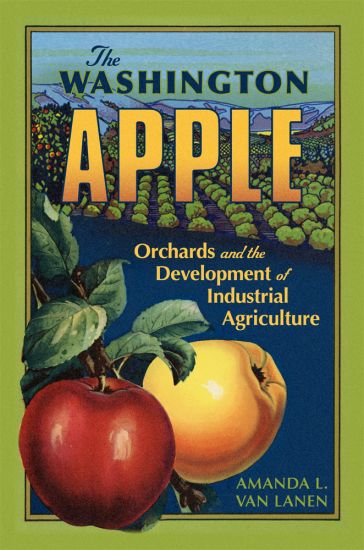
In the nineteenth century, most American farms had a small orchard or at least a few fruit-bearing trees. People grew their own apple trees or purchased apples grown within a few hundred miles of their homes. Nowadays, in contrast, Americans buy mass-produced fruit in supermarkets, and roughly 70 percent of apples come from Washington State. So how did Washington become the leading producer of America’s most popular fruit? In this enlightening book, Amanda L. Van Lanen offers a comprehensive response to this question by tracing the origins, evolution, and environmental consequences of the state’s apple industry. Washington’s success in producing apples was not a happy accident of nature, according to Van Lanen. Apples are not native to Washington, any more than potatoes are to Idaho or peaches to Georgia. In fact, Washington apple farmers were late to the game, lagging their eastern competitors. The author outlines the numerous challenges early Washington entrepreneurs faced in such areas as irrigation, transportation, and labor. Eventually, with crucial help from railroads, Washington farmers transformed themselves into “growers” by embracing new technologies and marketing strategies. By the 1920s, the state’s growers managed not only to innovate the industry but to dominate it. Industrial agriculture has its fair share of problems involving the environment, consumers, and growers themselves. In the quest to create the perfect apple, early growers did not question the long-term environmental effects of chemical sprays. Since the late twentieth century, consumers have increasingly questioned the environmental safety of industrial apple production. Today, as this book reveals, the apple industry continues to evolve in response to shifting consumer demands and accelerating climate change. Yet, through it all, the Washington apple maintains its iconic status as Washington’s most valuable agricultural crop.
In the nineteenth century, most American farms had a small orchard or at least a few fruit-bearing trees. People grew their own apple trees or purchased apples grown within a few hundred miles of their homes. Nowadays, in contrast, Americans buy mass-produced fruit in supermarkets, and roughly 70 percent of apples come from Washington State. So how did Washington become the leading producer of America’s most popular fruit? In this enlightening book, Amanda L. Van Lanen offers a comprehensive response to this question by tracing the origins, evolution, and environmental consequences of the state’s apple industry. Washington’s success in producing apples was not a happy accident of nature, according to Van Lanen. Apples are not native to Washington, any more than potatoes are to Idaho or peaches to Georgia. In fact, Washington apple farmers were late to the game, lagging their eastern competitors. The author outlines the numerous challenges early Washington entrepreneurs faced in such areas as irrigation, transportation, and labor. Eventually, with crucial help from railroads, Washington farmers transformed themselves into “growers” by embracing new technologies and marketing strategies. By the 1920s, the state’s growers managed not only to innovate the industry but to dominate it. Industrial agriculture has its fair share of problems involving the environment, consumers, and growers themselves. In the quest to create the perfect apple, early growers did not question the long-term environmental effects of chemical sprays. Since the late twentieth century, consumers have increasingly questioned the environmental safety of industrial apple production. Today, as this book reveals, the apple industry continues to evolve in response to shifting consumer demands and accelerating climate change. Yet, through it all, the Washington apple maintains its iconic status as Washington’s most valuable agricultural crop.
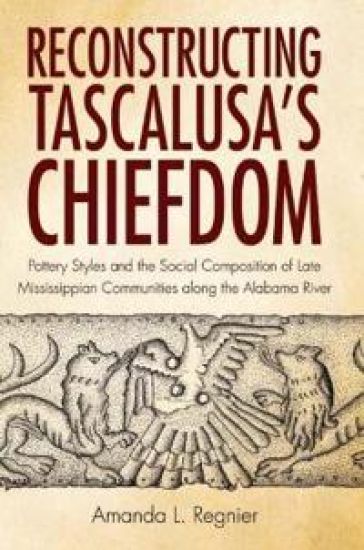
Reconstructing Tascalusa's Chiefdom is an archaeological study of political collapse in the Alabama River Valley following the Hernado de Soto expedition.To explain the cultural and political disruptios caused by Hernado de Soto's exploration deep into north America, Amanda L. Regnier presents an analysis of ceramics and a novel theory of cultural exchange, which argues that culture consists of a series of interconnected models governing proper behaviour that are shared across the belief systems of communities and individuals. An approach not often applied to archaeological research, ceramic study serves as a test of whether historic cognitive models can be extracted from ceramic data via cluster and correspondence analysis. In addition, the summary of Late Mississippian sites includes a chronology of the Alabama River from approximately AD 900 to 1600, which previously has only existed in manuscript form, and a summary of excavations at major Late Mississippian sites along the Alabama River.The results of the study demonstrate that the Alabama River Valley was settled by populations migrating from three different geographic regions during the late fifteenth century. The mixture of ceramic models associated with all three traditions at Late Mississippian sites suggests that these newly founded towns had a distinct mix of ethnically and linguistically diverse populations. Based on the archaeological record, the polity controlled by Tascalusa appears to have been both multi-ethnic and newly formed. Perhaps most significantly, Tascalusa's chiefdom appears to be a pre-contact example of a coalescent society that emerged after populations migrated into a new region from the deteriorating Mississippian chiefdoms in their homelands.