Kirjojen hintavertailu. Mukana 12 092 512 kirjaa ja 12 kauppaa.

Kirjahaku

Etsi kirjoja tekijän nimen, kirjan nimen tai ISBN:n perusteella.

1000 tulosta hakusanalla Amanda L. Van Der Gulik

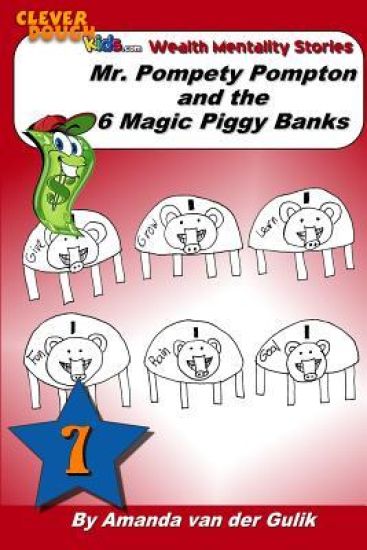
Mr. Pompety Pompton and the Six Magic Piggy Banks

Mr. Pompety Pompton and the Six Magic Piggy Banks

Amanda L. Van Der Gulik

Createspace Independent Publishing Platform
2013
nidottu
In 'Mr. Pompety Pompton & the 6 Magic Piggy Banks' your child will learn alongside our beloved Mr. Pompety Pompton, how to manage the money that they earn so that their money will work hard for them rather than your child always having to work hard for their money.This is a very important skill that most people will never acquire. By learning how to manage their money well, your child will learn about the system of money management that gives your child control over their life.They will learn how to pay themselves first with the 'Grow' jar, then they will learn the importance of letting money flow to help others so that they will also be open to being helped when they most need it with their 'Give' jar.Your child will learn how to save for that horrible rainy day when their world turns completely up-side-down with their 'Rain' jar. Don't you wish you'd started one of those jars when you were a kid? We all have our 'rainy days', those days when we just can't see a way out financially and we are feeling financially stuck. Wouldn't it be great if you had a 'Rain' jar to fall back on?Your child will learn the importance of being ready for their continued education and growth through their 'Learn' jar.And of course your child will love the 'Goal' and 'Fun' jars the most while they learn to go after their goals and to also let themselves celebrate their own accomplishments by spoiling themselves every so often as well.
Mr. Pompety Pompton Scores a Goal

Mr. Pompety Pompton Scores a Goal

Amanda L. Van Der Gulik

Createspace Independent Publishing Platform
2013
nidottu
In 'Mr. Pompety Pompton Scores a Goal' your child will learn the importance not only setting goals but achieving them Your child will triumph along side our sweet Mr. Pompety Pompton and will then be motivated to score their own goals.These 'Wealth Mentality Series' are intended for the 'tween age, children just about to become teenagers but still in that younger mentality, children between the ages of 8-13. The purpose behind these humorous and endearing 'Wealth Mentality Series' stories is to teach your child about a money mentality that will strengthen their money savvy for life.
Mr. Pompety Pompton and Father Christmas

Mr. Pompety Pompton and Father Christmas

Amanda L. Van Der Gulik

Createspace Independent Publishing Platform
2013
nidottu
'Mr. Pompety Pompton and Father Christmas' is our special holiday story to help your child celebrate the holidays while learning the most magical of 'Wealth Mentality' lessons there is to learn and that is that the gift of wealth is in the 'giving' This story will show your child how it feels to give fully of your heart and how much more important it is to give than to receive because by giving that is the only way to receive.Whether or not your family celebrate Father Christmas is not important, the message that 'the gift is in the giving' is what this story is all about and this is an important part in learning about money. It's important to earn money, and it's important to save and invest money and to spend some on yourself as a treat once an a while, but it's also important for your child to realize that one of the best reasons to be clever with their money is so they will have the power to give without any financial stress.It's the giving that's the true 'gift of life'.
Mr. Pompety Pompton Learns the Value of Money

Mr. Pompety Pompton Learns the Value of Money

Amanda L. Van Der Gulik

Createspace Independent Publishing Platform
2013
nidottu
These 'Wealth Mentality Series' are intended for the 'tween age, children just about to become teenagers but still in that younger mentality, children between the ages of 8-13.The purpose behind these humorous and endearing 'Wealth Mentality Series' stories is to teach your child about a money mentality that will strengthen their money savvy for life.In 'Mr. Pompety Pompton Learns the Value of Money' your child will learn that lots of little amounts of money can add up to a lot of money. Never discount the value of a small tip or a penny found on the ground, it all adds up.
Mr. Pompety Pompton's Community Commitment

Mr. Pompety Pompton's Community Commitment

Amanda L. Van Der Gulik

Createspace Independent Publishing Platform
2013
nidottu
In 'Mr. Pompety Pompton's Community Commitment' your child will learn that doing something nice for someone else without any expectations will someday pay off. Giving is part of the whole equation, giving is quite often more rewarding and fun than receiving.These 'Wealth Mentality Series' are intended for the 'tween age, children just about to become teenagers but still in that younger mentality, children between the ages of 8-13. The purpose behind these humorous and endearing 'Wealth Mentality Series' stories is to teach your child about a money mentality that will strengthen their money savvy for life.
Mr. Pompety Pompton and the Power of Leverage

Mr. Pompety Pompton and the Power of Leverage

Amanda L. Van Der Gulik

Createspace Independent Publishing Platform
2013
nidottu
These 'Wealth Mentality Series' are intended for the 'tween age, children just about to become teenagers but still in that younger mentality, children between the ages of 8-13.The purpose behind these humourous and endearing 'Wealth Mentality Series' stories is to teach your child about a money mentality that will strengthen their money savvy for life.It's my experience that children learn best through play-acting and story-telling, which is why I choose to create these 'Wealth Mentality Series' to help your child understand about wealth and abundance and how to set goals, and manage their abundance through story-telling.This is so that your child can enjoy the learning experience without really realizing that they are learning at the same time.Your child will truly enjoy our Mr. Pompety Pompton and our Charlie characters and they will naturally want these dear characters to learn the money and lifeIn 'Mr. Pompety Pomton and the Power of Leverage' your child will learn that they do not always have to do everything themselves. When you have the help of other people, you can get things done a lot faster. It is a strange thing, but in school working together is quite often called cheating and out of school the same thing can be called leverage. Leverage comes in many forms and ways. There is leverage through using other people and also leverage using other people's money (like a bank).
Mr. Pompety Pompton and the Magic of Compound Interest

Mr. Pompety Pompton and the Magic of Compound Interest

Amanda L. Van Der Gulik

Createspace Independent Publishing Platform
2013
nidottu
In 'Mr. Pompety Pompton and the Magic of Compound Interest' your child will learn the magic of compound interest.Benjamin Franklin said: "Compound Interest is The 8th Wonder of the World"Albert Einstein said: "Compound Interest is the world's greatest discovery"These 'Wealth Mentality Series' are intended for the 'tween age, children just about to become teenagers but still in that younger mentality, children between the ages of 8-13.The purpose behind these humorous and endearing 'Wealth Mentality Series' stories is to teach your child about a money mentality that will strengthen their money savvy for life.It's my experience that children learn best through play-acting and story-telling, which is why I choose to create these 'Wealth Mentality Series' to help your child understand about wealth and abundance and how to set goals, and manage their abundance through story-telling. This is so that your child can enjoy the learning experience without really realizing that they are learning at the same time.Your child will truly enjoy our Mr. Pompety Pompton and our Charlie characters and they will naturally want these dear characters to learn the money and life lessons that they too will be able to use for a lifetime of happiness.
Mr. Pompety Pompton Retires on his Passive Income

Mr. Pompety Pompton Retires on his Passive Income

Amanda L. Van Der Gulik

Createspace Independent Publishing Platform
2013
nidottu
In 'Mr. Pompety Pompton Retires on his Passive Income' your child will learn what passive income means and how Mr. Pompety Pompton creates his own passive income. There are many ways to earn passive income, which one will Mr. Pompety Pompton use and will he use just one way to create his passive income?These 'Wealth Mentality Series' are intended for the 'tween age, children just about to become teenagers but still in that younger mentality, children between the ages of 8-13. The purpose behind these humorous and endearing 'Wealth Mentality Series' stories is to teach your child about a money mentality that will strengthen their money savvy for life. It's my experience that children learn best through play-acting and story-telling, which is why I choose to create these 'Wealth Mentality Series' to help your child understand about wealth and abundance and how to set goals, and manage their abundance through story-telling. This is so that your child can enjoy the learning experience without really realizing that they are learning at the same time. Your child will truly enjoy our Mr. Pompety Pompton and our Charlie characters and they will naturally want these dear characters to learn the money and life lessons that they too will be able to use for a lifetime of happiness.
Mr. Pompety Pompton starts a Wealth Mentality Book and Game Club

Mr. Pompety Pompton starts a Wealth Mentality Book and Game Club

Amanda L. Van Der Gulik

Createspace Independent Publishing Platform
2013
nidottu
In 'Mr. Pompety Pompton Starts a Wealth Mentality Book and Game Club' your child will learn that learning is never really done. Even if you think you know everything, there is always more to learn.These 'Wealth Mentality Series' are intended for the 'tween age, children just about to become teenagers but still in that younger mentality, children between the ages of 8-13. The purpose behind these humorous and endearing 'Wealth Mentality Series' stories is to teach your child about a money mentality that will strengthen their money savvy for life. It's my experience that children learn best through play-acting and story-telling, which is why I choose to create these 'Wealth Mentality Series' to help your child understand about wealth and abundance and how to set goals, and manage their abundance through story-telling. This is so that your child can enjoy the learning experience without really realizing that they are learning at the same time. Your child will truly enjoy our Mr. Pompety Pompton and our Charlie characters and they will naturally want these dear characters to learn the money and life lessons that they too will be able to use for a lifetime of happiness.
50 Money Making Ideas for Kids and Teens

50 Money Making Ideas for Kids and Teens

Melanie R. Negrin; Amanda L. Van Der Gulik

Createspace Independent Publishing Platform
2012
nidottu
Most of us fund our lifestyle and plan for the future through earned income.Any passive or portfolio income we earn likely doesn't cover the cost of our monthly expenses.Whether or not that is the case for you, this guide - 50 Money Making Ideas for Kids and Teens - is designed to help your children grow beyond earned income and begin to build a future that includes passive and portfolio income, thereby freeing them from the budgeting stresses we often face ourselves.We have begun that journey with our own children, and we're glad that you have chosen to do the same for yours.
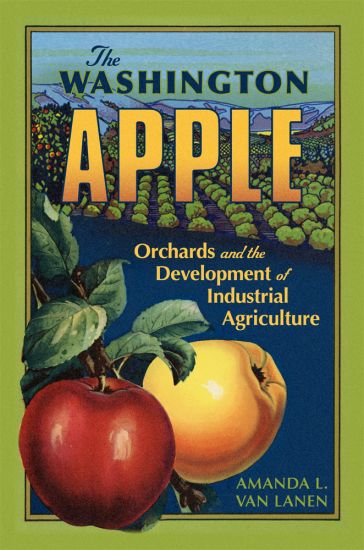
The Washington Apple

The Washington Apple

Amanda L. Van Lanen

UNIVERSITY OF OKLAHOMA PRESS
2022
sidottu
In the nineteenth century, most American farms had a small orchard or at least a few fruit-bearing trees. People grew their own apple trees or purchased apples grown within a few hundred miles of their homes. Nowadays, in contrast, Americans buy mass-produced fruit in supermarkets, and roughly 70 percent of apples come from Washington State. So how did Washington become the leading producer of America’s most popular fruit? In this enlightening book, Amanda L. Van Lanen offers a comprehensive response to this question by tracing the origins, evolution, and environmental consequences of the state’s apple industry. Washington’s success in producing apples was not a happy accident of nature, according to Van Lanen. Apples are not native to Washington, any more than potatoes are to Idaho or peaches to Georgia. In fact, Washington apple farmers were late to the game, lagging their eastern competitors. The author outlines the numerous challenges early Washington entrepreneurs faced in such areas as irrigation, transportation, and labor. Eventually, with crucial help from railroads, Washington farmers transformed themselves into “growers” by embracing new technologies and marketing strategies. By the 1920s, the state’s growers managed not only to innovate the industry but to dominate it. Industrial agriculture has its fair share of problems involving the environment, consumers, and growers themselves. In the quest to create the perfect apple, early growers did not question the long-term environmental effects of chemical sprays. Since the late twentieth century, consumers have increasingly questioned the environmental safety of industrial apple production. Today, as this book reveals, the apple industry continues to evolve in response to shifting consumer demands and accelerating climate change. Yet, through it all, the Washington apple maintains its iconic status as Washington’s most valuable agricultural crop.
The Washington Apple Volume 7

The Washington Apple Volume 7

Amanda L. Van Lanen

UNIVERSITY OF OKLAHOMA PRESS
2024
nidottu
In the nineteenth century, most American farms had a small orchard or at least a few fruit-bearing trees. People grew their own apple trees or purchased apples grown within a few hundred miles of their homes. Nowadays, in contrast, Americans buy mass-produced fruit in supermarkets, and roughly 70 percent of apples come from Washington State. So how did Washington become the leading producer of America’s most popular fruit? In this enlightening book, Amanda L. Van Lanen offers a comprehensive response to this question by tracing the origins, evolution, and environmental consequences of the state’s apple industry. Washington’s success in producing apples was not a happy accident of nature, according to Van Lanen. Apples are not native to Washington, any more than potatoes are to Idaho or peaches to Georgia. In fact, Washington apple farmers were late to the game, lagging their eastern competitors. The author outlines the numerous challenges early Washington entrepreneurs faced in such areas as irrigation, transportation, and labor. Eventually, with crucial help from railroads, Washington farmers transformed themselves into “growers” by embracing new technologies and marketing strategies. By the 1920s, the state’s growers managed not only to innovate the industry but to dominate it. Industrial agriculture has its fair share of problems involving the environment, consumers, and growers themselves. In the quest to create the perfect apple, early growers did not question the long-term environmental effects of chemical sprays. Since the late twentieth century, consumers have increasingly questioned the environmental safety of industrial apple production. Today, as this book reveals, the apple industry continues to evolve in response to shifting consumer demands and accelerating climate change. Yet, through it all, the Washington apple maintains its iconic status as Washington’s most valuable agricultural crop.
Amanda: More Than Any Woman

Amanda: More Than Any Woman

Anton L. Van Den Berg

Createspace Independent Publishing Platform
2016
nidottu
Novel - A story with unique insight into the different areas of a person, life, struggles, triumphs and joy... There are the difficult bits - Amanda refused to break. She couldn't let herself. She went on, because she had to. There are the beautiful bits - Amada leans against the door. Speechless, overwhelmed and intoxicated with the warmness and overpowering emotional glow... Naturally we function better as part of a pair, but we can still function by ourselves. That's what rewards the most. You know you won't explode with joy, but some days you just wish you would.
Habeas Corpus in Wartime

Habeas Corpus in Wartime

Amanda L. Tyler

Oxford University Press Inc
2019
nidottu
Habeas Corpus in Wartime unearths and presents a comprehensive account of the legal and political history of habeas corpus in wartime in the Anglo-American legal tradition. The book begins by tracing the origins of the habeas privilege in English law, giving special attention to the English Habeas Corpus Act of 1679, which limited the scope of executive detention and used the machinery of the English courts to enforce its terms. It also explores the circumstances that led Parliament to invent the concept of suspension as a tool for setting aside the protections of the Habeas Corpus Act in wartime. Turning to the United States, the book highlights how the English suspension framework greatly influenced the development of early American habeas law before and after the American Revolution and during the Founding period, when the United States Constitution enshrined a habeas privilege in its Suspension Clause. The book then chronicles the story of the habeas privilege and suspension over the course of American history, giving special attention to the Civil War period. The final chapters explore how the challenges posed by modern warfare during the twentieth and twenty-first centuries have placed great strain on the previously well-settled understanding of the role of the habeas privilege and suspension in American constitutional law, particularly during World War II when the United States government detained tens of thousands of Japanese American citizens and later during the War on Terror. Throughout, the book draws upon a wealth of original and heretofore untapped historical resources to shed light on the purpose and role of the Suspension Clause in the United States Constitution, revealing all along that many of the questions that arise today regarding the scope of executive power to arrest and detain in wartime are not new ones.
Habeas Corpus

Habeas Corpus

Amanda L. Tyler

Oxford University Press Inc
2021
nidottu
Legal scholar Amanda L. Tyler discusses the history and future of habeas corpus in America and around the world. The concept of habeas corpus--literally, to receive and hold the body--empowers courts to protect the right of prisoners to know the basis on which they are being held by the government and grant prisoners their freedom when they are held unlawfully. It is no wonder that habeas corpus has long been considered essential to freedom. For nearly eight hundred years, the writ of habeas corpus has limited the executive in the Anglo-American legal tradition from imprisoning citizens and subjects with impunity. Writing in the eighteenth century, the widely influential English jurist and commentator William Blackstone declared the writ a "bulwark" of personal liberty. Across the Atlantic, in the leadup to the American Revolution, the Continental Congress declared that the habeas privilege and the right to trial by jury were among the most important rights in a free society. This Very Short Introduction chronicles the storied writ of habeas corpus and how its common law and statutory origins spread from England throughout the British Empire and beyond, witnessing its use today around the world in nations as varied as Canada, Israel, India, and South Korea. Beginning with the English origins of the writ, the book traces its historical development both as a part of the common law and as a parliamentary creation born out of the English Habeas Corpus Act of 1679, a statute that so dramatically limited the executive's power to detain that Blackstone called it no less than a "second Magna Carta." The book then takes the story forward to explore how the writ has functioned in the centuries since, including its controversial suspension by President Abraham Lincoln during the Civil War. It also analyzes the major role habeas corpus has played in such issues as the World War II incarceration of Japanese Americans and the US Supreme Court's recognition during the War on Terror of the concept of a "citizen enemy combatant." Looking ahead the story told in these pages reveals the immense challenges that the habeas privilege faces today and suggests that in confronting them, we would do well to remember how the habeas privilege brought even the king of England to his knees before the law.
Habeas Corpus in Wartime

Habeas Corpus in Wartime

Amanda L. Tyler

Oxford University Press Inc
2017
sidottu
Habeas Corpus in Wartime unearths and presents a comprehensive account of the legal and political history of habeas corpus in wartime in the Anglo-American legal tradition. The book begins by tracing the origins of the habeas privilege in English law, giving special attention to the English Habeas Corpus Act of 1679, which limited the scope of executive detention and used the machinery of the English courts to enforce its terms. It also explores the circumstances that led Parliament to invent the concept of suspension as a tool for setting aside the protections of the Habeas Corpus Act in wartime. Turning to the United States, the book highlights how the English suspension framework greatly influenced the development of early American habeas law before and after the American Revolution and during the Founding period, when the United States Constitution enshrined a habeas privilege in its Suspension Clause. The book then chronicles the story of the habeas privilege and suspension over the course of American history, giving special attention to the Civil War period. The final chapters explore how the challenges posed by modern warfare during the twentieth and twenty-first centuries have placed great strain on the previously well-settled understanding of the role of the habeas privilege and suspension in American constitutional law, particularly during World War II when the United States government detained tens of thousands of Japanese American citizens and later during the War on Terror. Throughout, the book draws upon a wealth of original and heretofore untapped historical resources to shed light on the purpose and role of the Suspension Clause in the United States Constitution, revealing all along that many of the questions that arise today regarding the scope of executive power to arrest and detain in wartime are not new ones.