Kirjojen hintavertailu. Mukana 12 390 323 kirjaa ja 12 kauppaa.

Kirjahaku

Etsi kirjoja tekijän nimen, kirjan nimen tai ISBN:n perusteella.

1000 tulosta hakusanalla Ambrose Bierce; Cathy N. Davidson

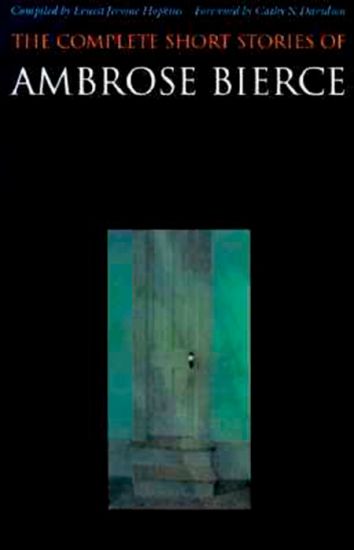
The Complete Short Stories of Ambrose Bierce

The Complete Short Stories of Ambrose Bierce

Ambrose Bierce; Cathy N. Davidson

Bison Books
1984
pokkari
Before he trailed off into the wilds of Mexico, never to be heard from again, Ambrose Bierce achieved a public persona as "bitter Bierce" and "the devil's lexicographer." He left behind a nasty reputation and more than ninety short stories that are perfect expressions of his sardonic genius. Brought together in this volume, these stories represent an unprecedented accomplishment in American literature. In their iconoclasm and needle-sharp irony, their formal and thematic ingenuity and element of surprise, they differ markedly from the fiction admired in Bierce's time. Readers familiar with the classic An Occurrence at Owl Creek Bridge will want to turn to Bierce's other Civil War stories. Also included here are his horror stories, among them The Death of Halpin Frayser and The Damned Thing, and such tall tales as Oil of Dog and A Cargo of Cat.
Ambrose Bierce

Ambrose Bierce

Roy Morris

Oxford University Press Inc
1999
nidottu
A lively and compelling portrait of one of the most acerbic and distinctive voices in American literature, Ambrose Bierce: Alone in Bad Company is a clear-eyed but sympathetic account of a complex individual at odds with his country, his family, his times, and himself. The only American writer of any stature to fight in and survive the Civil War, Bierce discovered in the conflict a bitter confirmation of his darkest assumptions about man and his nature. Profoundly disillusioned, Bierce spent the next fifty years struggling to disabuse his fellow Americans of their own cherished ideals -- be they romantic, religious, or political. His groundbreaking short stories of the war, including his most famous work, "An Occurrence at Owl Creek Bridge," have had a lasting influence on every subsequent American author dealing with war. And the heartless, hilarious aphorisms in his caustic lexicon The Devil's Dictionary have entered, often uncredited, our national consciousness. In this insightful, critically acclaimed biography, the first comprehensive study for almost fifty years, Roy Morris, Jr., accounts for both the influential art that Ambrose Bierce made from a harsh and unforgiving vision -- and the high price he had to pay for it in loneliness, rancour, and spiritual isolation.
Ambrose Bierce

Ambrose Bierce

S. T. Joshi; David E. Schultz

Greenwood Press
1999
sidottu
Ambrose Bierce is well known to readers as the author of The Devil's Dictionary (1906) and numerous short stories, such as the Civil War tales gathered in Tales of Soldiers and Civilians (1891) and the horror stories collected in Can Such Things Be? (1893). But, in his own day, he was best known as a prolific and fearless jounalist, and in the 40 years of his literary career he wrote thousands of articles for newspapers and magazines in San Francisco, London, and elsewhere. Most of the articles and poems that Bierce published in his own 12-volume Collected Works (1909-12) first appeared in his newspaper columns, as did his celebrated tales. With the growing scholarly interest in Bierce, these contributions are eliciting more attention.This bibliography is the first to attempt an exhaustive catalog of Bierce's entire body of published work. While the volume includes a chapter of separate publications by Bierce, such as individual books, its most important feature is a chapter listing entries for his contributions to books and periodicals. These entries identify the first appearances of his stories, articles, and poems. An additional chapter lists reprints of his works, and the volume also provides information about manuscript holdings. Joshi and Schultz demonstrate that in addition to being a master short story writer, fabulist, and epigrammatist, Bierce may also have been the leading American journalist of the 19th century.
The Civil War Short Stories of Ambrose Bierce
In The Devil's Dictionary Ambrose Bierce defined "war" as "a by-product of the arts of peace." A Civil War veteran, Bierce had absolutely no illusions about "courage," "honor," and "glory" on the battlefield. These stories form one of the great antiwar statements in American literature. Included here are the classic An Occurrence at Owl Creek Bridge, Chickamauga, The Mocking Bird, The Coup de Grâce, Parker Anderson, Philosopher, and other stories celebrated for their intensity, startling insight, and mastery of form.
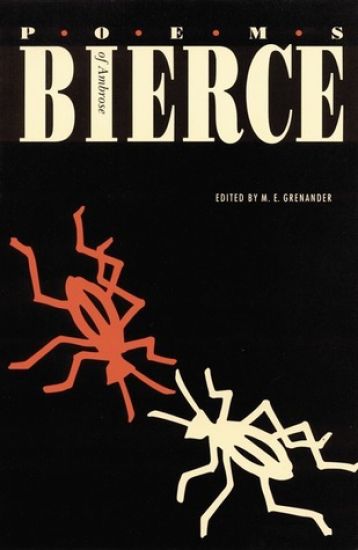
Poems of Ambrose Bierce

Poems of Ambrose Bierce

Ambrose Bierce

University of Nebraska Press
1996
pokkari
Ambrose Bierce is one of the most colorful figures in American literary history. A writer whose Devil's Dictionary remains the delight of misanthropes and fans of satire throughout the English-speaking world, he was also a master of the short story form. From the late 1860s through the early 1900s, he worked as a journalist, gaining wide renown in the 1890s and 1900s as a satirical columnist for William Randolph Hearst's chain of newspapers. In 1913 Bierce traveled to Mexico and joined Pancho Villa's army as an observer. He disappeared late that year and his fate has been a matter of dispute ever since. The poems that Bierce wrote throughout his career are less well known than his stories, journalistic pieces, and aphoristic observations on human folly. Nevertheless, his work as a poet, as critic Donald Sidney-Fryer has argued, "clearly merits the attention of the discriminating lover and student of poetry." Varied in form and subject matter, most of his poems are (not surprisingly) satires.This volume contains a generous selection of Bierce's poems; they are alternately ironic, melancholy, bitter, and wickedly amusing. There are also fifteen essays and letters on poetry, poets, and such topics as "Wit and Humor" and "The Passing of Satire." Certainly there have been few authors more intimately familiar with wit and satire than the brilliant, iconoclastic Bierce. As editor M. E. Grenander makes plain in her introduction, both are abundantly present in this collection of "some of the most remarkable verse in American literary history."