Kirjojen hintavertailu. Mukana 11 213 693 kirjaa ja 12 kauppaa.

Kirjahaku

Etsi kirjoja tekijän nimen, kirjan nimen tai ISBN:n perusteella.

1000 tulosta hakusanalla Ambrose Rigge

Ambrose

Ambrose

Boniface Ramsey

Routledge
1997
sidottu
St. Ambrose, Bishop of Milan from 374 to 397, was one of the most important figures of the fourth century Roman empire. This volume explores the enormous impact of Ambrose on Western civilization, and examines the complexity of his ideas and influence; as a poet, ascetic, mystic and politician. Ambrose combines an up-to-date account of his life and work, with translations of key writings. Ramsey's volume presents a comprehensive and accessible insight into a relatively unexplored persona and argues that Ambrose has influenced the Western world in ways as yet unrealized.
Ambrose

Ambrose

Boniface Ramsey

Routledge
1997
nidottu
St. Ambrose, Bishop of Milan from 374 to 397, was one of the most important figures of the fourth century Roman empire. This volume explores the enormous impact of Ambrose on Western civilization, and examines the complexity of his ideas and influence; as a poet, ascetic, mystic and politician. Ambrose combines an up-to-date account of his life and work, with translations of key writings. Ramsey's volume presents a comprehensive and accessible insight into a relatively unexplored persona and argues that Ambrose has influenced the Western world in ways as yet unrealized.
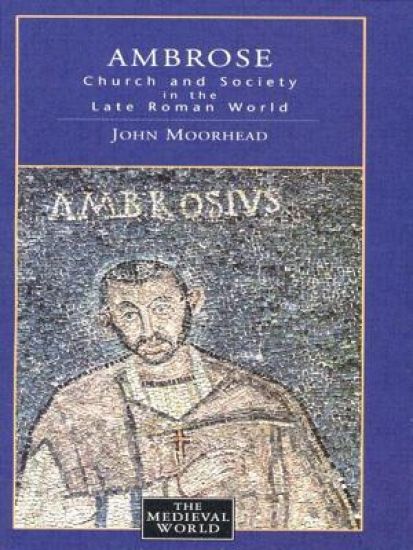
Ambrose

Ambrose

Moorhead John

Longman
1999
nidottu
An account, and assessment, of the career of St Ambrose (339-397), from 374 bishop of Milan and one of the four Doctors of the Christian Church (with Sts. Jerome, Augustine and Gregory the Great). A key figure in the transition of the later Roman Empire into its medieval successor, Western Christendom, Ambrose was deeply involved in the political, social and religious issues of his day: struggles between church and state (especially with Emperor Theodosius), the fight against heresy, but he also had a deep influence on Church thought such as the role and status of women. John Moorhead considers all these dimensions in a book that will be of compelling interest to historians of the Church and the late classical world and classical studies.
Ambrose

Ambrose

John Moorhead

Routledge
2017
sidottu
An account, and assessment, of the career of St Ambrose (339-397), from 374 bishop of Milan and one of the four Doctors of the Christian Church (with Sts. Jerome, Augustine and Gregory the Great). A key figure in the transition of the later Roman Empire into its medieval successor, Western Christendom, Ambrose was deeply involved in the political, social and religious issues of his day: struggles between church and state (especially with Emperor Theodosius), the fight against heresy, but he also had a deep influence on Church thought such as the role and status of women. John Moorhead considers all these dimensions in a book that will be of compelling interest to historians of the Church and the late classical world and classical studies.
Ambrose

Ambrose

Hayden Thorne

Createspace Independent Publishing Platform
2018
nidottu
Freshly out of college and armed with nothing more than a degree in Art History, Leander Caron strikes out on his own in a bid to find some direction in his life. His efforts land him in Dolores, a city burdened with shadows of grief and death. Where ghosts yearn for their past. Where sorcerer-hunters heed the call of the goddess of the crossroads and battle darker forces from the otherworld. A cheerful, artistic, and doting widow welcomes him into her old Victorian house as her lone boarder, and there Leander finds the company and affection he's never enjoyed from his own mother. Luck changes for him as well in the guise of Efrain Thorley, a sorcerer-hunter who not only offers him desperately needed employment but also a reason to hope for a happiness Leander has never come to expect for himself. But as it happens in a world shaped by potent forces of old magic and science, inexplicable events gradually turn into alarming confrontations with malignant forces from a shadow world. Portraits meant to comfort the grieving turn into corrupted shades of their inspiration. An unseen presence watches an isolated young man with heartbreaking yearning. And something dangerous and terrifying shadows Leander's steps night after night. Inching closer and closer. Confounding Efrain's efforts and all but ensuring Leander's fate as collateral damage in a failed hunt.
Ambrose Bierce

Ambrose Bierce

Roy Morris

Oxford University Press Inc
1999
nidottu
A lively and compelling portrait of one of the most acerbic and distinctive voices in American literature, Ambrose Bierce: Alone in Bad Company is a clear-eyed but sympathetic account of a complex individual at odds with his country, his family, his times, and himself. The only American writer of any stature to fight in and survive the Civil War, Bierce discovered in the conflict a bitter confirmation of his darkest assumptions about man and his nature. Profoundly disillusioned, Bierce spent the next fifty years struggling to disabuse his fellow Americans of their own cherished ideals -- be they romantic, religious, or political. His groundbreaking short stories of the war, including his most famous work, "An Occurrence at Owl Creek Bridge," have had a lasting influence on every subsequent American author dealing with war. And the heartless, hilarious aphorisms in his caustic lexicon The Devil's Dictionary have entered, often uncredited, our national consciousness. In this insightful, critically acclaimed biography, the first comprehensive study for almost fifty years, Roy Morris, Jr., accounts for both the influential art that Ambrose Bierce made from a harsh and unforgiving vision -- and the high price he had to pay for it in loneliness, rancour, and spiritual isolation.
Ambrose of Milan and the End of the Arian-Nicene Conflicts
This is a new and provocative study re-evaluating the history of the struggle between orthodoxy and heresy in the early church. Dr Williams argues that the traditional picture of Nicene ascendancy in the western church from 350 - 381 is substantially misleading, and in particular that the conventional portrait of Ambrose of Milan as one who rapidly and easily overpowered his "Arian" opponents is a fictional product derived from idealized accounts of the fifth century. Sources illustrating the struggle between the orthodox pro-Nicenes and "Arians" or Homoians, in the fourth century reveal that Latin "Arianism" was not the lifeless and theologically alien system that historians of the last century would have us believe. Dr Williams shows that the majority of churches in the West had little practical use for the Nicene creed until the end of the 350s - over twenty five years after it was first issued under Constantine - and that the ultimate triumph of the Nicene faith was not as inevitable as it has been assumed. Ambrose himself was seriously harrassed by sustained attacks from "Arians" in Milan for the first decade of his episcopate, and his early career demonstrates the severity of the religious conflict which embroiled the western churches,especially in North Italy. Only after an intense and uncertain decade did Ambrose finally prevail in Milan once the Nicene form of faith was embraced by the Roman empire through imperial legislation and "Arianism" was outlawed as heresy. This is an innovative and challenging book full of illumination new insights on the social, political, and theological entanglements ofthe early church.
Ambrose and John Chrysostom

Ambrose and John Chrysostom

J. H. W. G. Liebeschuetz

Oxford University Press
2011
sidottu
J. H. W. G. Liebeschuetz compares the personalities and the respective careers of two of the greatest of the early Christian Fathers, Ambrose and John Chrysostom. While the statesmanlike Ambrose ended his life as a pillar of the Western establishment, Chrysostom, the outspoken idealist, died in exile. However, their views and ideals were remarakably similar: both bishops were concerned with the social role of the Church, both were determined opponents of what they called the Arian heresy, and each attracted a dedicated following among his urban congregation. This similarity, Liebeschuetz argues, was due not to the influence of one on the other, but was a consequence of their participation in a Christian culture which spanned the divide between the Eastern (later Byzantine) and Western parts of the Roman Empire. The monastic movement figures throughout the book as an important influence on both men and as perhaps the most dynamic development in the Christian culture of the fourth century.
Ambrose Follows His Nose

Ambrose Follows His Nose

Dick King-Smith; Josie Rogers

Penguin Random House Children's UK
2023
pokkari
'Sparkling humour and wonderful characters are Dick King-Smith's trademarks' - Books for Your ChildrenAn exciting new publication in celebration of the centenary of his birth, a recently discovered funny and poignant animal story by Dick King-Smith, completed by his great granddaughter, Josie Rogers.Ambrose may seem like an ordinary rabbit but he has the most extraordinary sense of smell. He can detect any aroma from sweets to kittens - and even niffy foxes!He lives with his family in a hutch and is visited every day by Biddy, who is desperate to take him home to be her pet - if only her mum and dad would let her. Biddy trains Ambrose to become a tracker rabbit - which comes in very handy when Ambrose's little sister Roly goes missing. But when Biddy's family find themselves in real danger, can Ambrose's sensitive nose save the day?
Ambrose's Patriarchs

Ambrose's Patriarchs

Marcia L. Colish

University of Notre Dame Press
2018
sidottu
In this welcome new book Marcia L. Colish offers the only monograph-length study of the patriarch treatises of Ambrose of Milan (c. 340-397), in which he develops, for the first time in the patristic period, an ethics for the laity. Ambrose the ethicist has been viewed primarily as the author of advice to those with special callings in the church, such as priests, widows, and consecrated virgins. His views have been characterized as advocating asceticism and promoting a Platonic view of human nature, in which the body is a moral problem. Ambrose's patriarch treatises, argues Colish, are instead aimed at lay people who did not have special callings in the church, but who led active lives in the world as spouses, parents, heads of households, professionals, and citizens. These treatises reveal a different side of Ambrose and show that he developed an ethics of moderation based on an Aristotelian and Stoic anthropology, which he modified in the light of biblical ethics and St. Paul's view of human nature. Colish's analysis sharply revises previous estimates of Ambrose the ethicist through a careful consideration of the patriarch treatises in their historical context, as Lenten sermons delivered by Ambrose to the catechumens in his Milanese church whom he was preparing during Lent for their coming Easter baptism. The pastoral context and intended audience of these treatises have largely been ignored in previous scholarship. Colish contends that when the treatises are read as Ambrose intended for them to be received, as a corpus of works aimed at the conversion of pagan Roman adults to Christianity, Ambrose's vision of a Christian ethics for the common man emerges.
Ambrose's Patriarchs

Ambrose's Patriarchs

Marcia L. Colish

University of Notre Dame Press
2005
nidottu
In this welcome new book Marcia L. Colish offers the only monograph-length study of the patriarch treatises of Ambrose of Milan (c. 340-397), in which he develops, for the first time in the patristic period, an ethics for the laity. Ambrose the ethicist has been viewed primarily as the author of advice to those with special callings in the church, such as priests, widows, and consecrated virgins. His views have been characterized as advocating asceticism and promoting a Platonic view of human nature, in which the body is a moral problem. Ambrose's patriarch treatises, argues Colish, are instead aimed at lay people who did not have special callings in the church, but who led active lives in the world as spouses, parents, heads of households, professionals, and citizens. These treatises reveal a different side of Ambrose and show that he developed an ethics of moderation based on an Aristotelian and Stoic anthropology, which he modified in the light of biblical ethics and St. Paul's view of human nature. Colish's analysis sharply revises previous estimates of Ambrose the ethicist through a careful consideration of the patriarch treatises in their historical context, as Lenten sermons delivered by Ambrose to the catechumens in his Milanese church whom he was preparing during Lent for their coming Easter baptism. The pastoral context and intended audience of these treatises have largely been ignored in previous scholarship. Colish contends that when the treatises are read as Ambrose intended for them to be received, as a corpus of works aimed at the conversion of pagan Roman adults to Christianity, Ambrose's vision of a Christian ethics for the common man emerges.
Ambrose Bierce Takes on the Railroad

Ambrose Bierce Takes on the Railroad

Daniel Lindley

Praeger Publishers Inc
1999
sidottu
An account of California journalist and wit Ambrose Bierce and his struggle with the railroad octopus controlled by the Big Four (Collis P. Huntington, Leland Stanford, Charles Crocker, and Mark Hopkins). This is the first book to look at Bierce's early muckraking campaign in depth through Bierce's acid journalism and the railroad's private and public reactions. After a brief literature review and biography of Bierce, one of America's greatest wits, journalists, and short-story writers, the study turns to his thirty-year battle with the Central Pacific Railroad, which controlled much of California's economy and politics, often through bribery of politicians and newspaper editors and publishers. Lindley looks at the initial funding of the railroad through the U.S. government, the development of railroads as symbols of hope and progress, and the eventual corruption of that optimistic outlook by railroad owners and politicians.Bierce attacked the railroads in his columns during his tenure at three San Francisco periodicals, the Argonaut, the Wasp, and the Examiner. His efforts culminated in a trip to Washington, D.C., in 1896 to cover the funding bill debate in Congress, during which railroad officials attempted to avoid repaying millions of dollars in government loans. Bierce did not consider himself a muckraker. He derided the generation of Progressive journalists who followed him a decade after he ended his campaign against the railroad. Yet, Bierce's journalism was a precursor of what is popularly known as the muckraking period, 1902-1914.
Ambrose Bierce

Ambrose Bierce

S. T. Joshi; David E. Schultz

Greenwood Press
1999
sidottu
Ambrose Bierce is well known to readers as the author of The Devil's Dictionary (1906) and numerous short stories, such as the Civil War tales gathered in Tales of Soldiers and Civilians (1891) and the horror stories collected in Can Such Things Be? (1893). But, in his own day, he was best known as a prolific and fearless jounalist, and in the 40 years of his literary career he wrote thousands of articles for newspapers and magazines in San Francisco, London, and elsewhere. Most of the articles and poems that Bierce published in his own 12-volume Collected Works (1909-12) first appeared in his newspaper columns, as did his celebrated tales. With the growing scholarly interest in Bierce, these contributions are eliciting more attention.This bibliography is the first to attempt an exhaustive catalog of Bierce's entire body of published work. While the volume includes a chapter of separate publications by Bierce, such as individual books, its most important feature is a chapter listing entries for his contributions to books and periodicals. These entries identify the first appearances of his stories, articles, and poems. An additional chapter lists reprints of his works, and the volume also provides information about manuscript holdings. Joshi and Schultz demonstrate that in addition to being a master short story writer, fabulist, and epigrammatist, Bierce may also have been the leading American journalist of the 19th century.
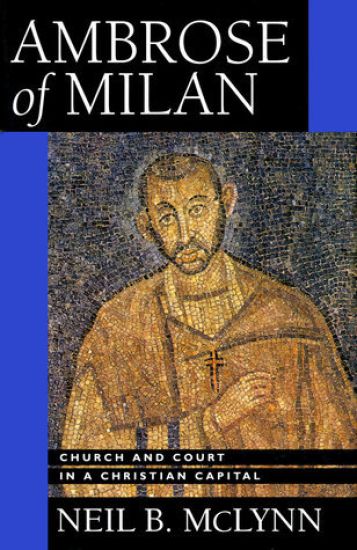
Ambrose of Milan

Ambrose of Milan

Neil B. McLynn

University of California Press
1994
sidottu
In this new and illuminating interpretation of Ambrose, bishop of Milan from 374 to 397, Neil McLynn thoroughly sifts the evidence surrounding this very difficult personality. The result is a richly detailed interpretation of Ambrose's actions and writings that penetrates the bishop's painstaking presentation of self. McLynn succeeds in revealing Ambrose's manipulation of events without making him too Machiavellian. Having synthesized the vast complex of scholarship available on the late fourth century, McLynn also presents an impressive study of the politics and history of the Christian church and the Roman Empire in that period. Admirably and logically organized, the book traces the chronology of Ambrose's public activity and reconstructs important events in the fourth century. McLynn's zesty, lucid prose gives the reader a clear understanding of the complexities of Ambrose's life and career and of late Roman government.