Kirjojen hintavertailu. Mukana 11 241 044 kirjaa ja 12 kauppaa.

Kirjahaku

Etsi kirjoja tekijän nimen, kirjan nimen tai ISBN:n perusteella.

1000 tulosta hakusanalla Amy E Herman

Fixed.

Fixed.

Amy E Herman

HARPERCOLLINS PUBLISHERS INC
2022
sidottu
With Amy Herman’s Fixed., we now have access to what the FBI, NATO, the State Department, Interpol, Scotland Yard, and many more organizations and their leaders have been using to solve their most intractable problems.Demonstrating a powerful paradigm shift for finding solutions, Herman teaches us to see things differently, using art to challenge our default thinking and open up possibilities otherwise overlooked. Her unexpected, insightful, and often delightful methodology is sought after by leaders and professionals for whom failure is catastrophic. Luckily for us, these tactics work— no matter the problem’s scale or complexity. And we don’t need an art degree or previous knowledge about art to benefit from her approach, only a willingness to open our eyes and our minds. Yes, things go wrong all the time. What matters most is what we do to fix them.
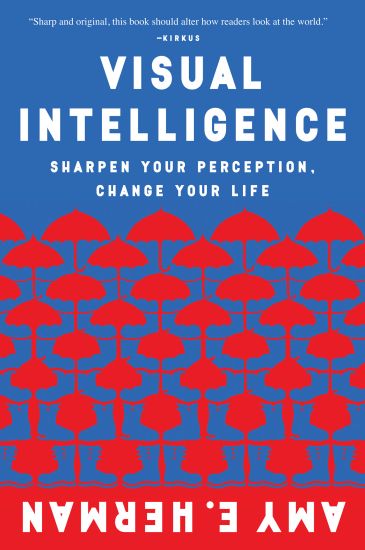
Visual Intelligence

Visual Intelligence

Amy E. Herman

HARPERCOLLINS PUBLISHERS INC
2023
pokkari
"Sharp and original, this book should alter how readers look at the world. " --Kirkus "This fascinating and beautifully illustrated book will make you see the world more clearly than you ever have before. And that clarity will transform how you deal with the challenges and opportunities you face every day." -- Leonard Mlodinow, author of Subliminal and The Drunkard's Walk How could looking at Monet's water lily paintings help save a company millions? How can noticing people's footwear foil a terrorist attack? How can your choice of adjective win an argument, calm your children, or catch a thief? In her celebrated seminar, The Art of Perception, art historian Amy Herman has trained experts from many fields to perceive and communicate better. By showing people how to look closely at images, she helps them hone their "visual intelligence," a set of skills we all possess but few of us know how to use effectively. She has spent more than a decade teaching doctors to observe patients instead of their charts, helping police officers separate facts from opinions when investigating a crime, and training professionals from the FBI, the State Department, Fortune 500 companies, and the military to recognize the most pertinent and useful information. Her lessons highlight far more than the physical objects you may be missing; they teach you how to recognize the talents, opportunities, and dangers that surround you every day. "Herman offers a compelling case for the life-enhancing value--and central importance--of careful observation . . . Visual Intelligence is a fascinating book and an important one--and it is a great read." --Daniel Weiss, president of the Metropolitan Museum of Art
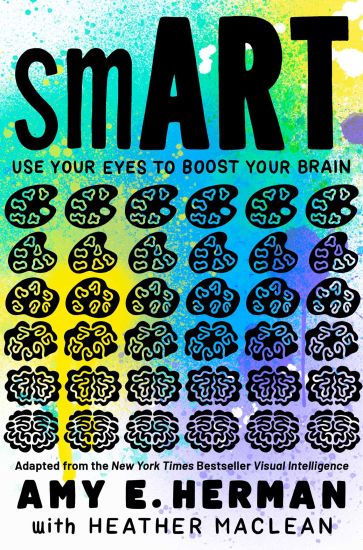
Smart: Use Your Eyes to Boost Your Brain (Adapted from the New York Times Bestseller Visual Intelligence)
I Spy and Where's Waldo? get a revolutionary twist in this "fun, eye-opening" (Booklist) young readers edition on how to fully engage your brain to think critically and creatively. What would you say if I told you that looking at art could give you the confidence you need to speak up in class? Or that learning the history of donuts could help you think like a super spy and train like the CIA? smART teaches readers how to process information using paintings, sculptures, and photographs using methods that instantly translate to real world situations and are also fun With three simple steps (1) How to SEE, (2) How to THINK about what you see, and (3) How to TALK about what you see, readers learn how to think critically and creatively, a skill that only requires you to open your eyes and actively engage your brain.
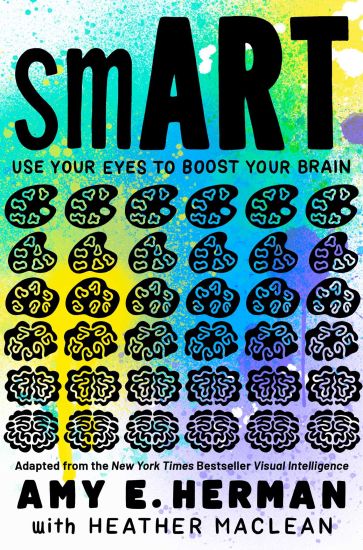
Smart: Use Your Eyes to Boost Your Brain (Adapted from the New York Times Bestseller Visual Intelligence)
I Spy and Where's Waldo? get a revolutionary twist in this "fun, eye-opening" (Booklist) young readers edition on how to fully engage your brain to think critically and creatively. What would you say if I told you that looking at art could give you the confidence you need to speak up in class? Or that learning the history of donuts could help you think like a super spy and train like the CIA? smART teaches readers how to process information using paintings, sculptures, and photographs using methods that instantly translate to real world situations and are also fun With three simple steps (1) How to SEE, (2) How to THINK about what you see, and (3) How to TALK about what you see, readers learn how to think critically and creatively, a skill that only requires you to open your eyes and actively engage your brain.
Optimizing the Contributions of Air Force Civilian STEM Workforce

Optimizing the Contributions of Air Force Civilian STEM Workforce

Shirley M Ross; Rebecca Herman; Irina a Chindea; Samantha E Dinicola; Amy Grace Donohue

RAND
2020
nidottu
The Air Force's ability to accomplish national security goals relies heavily on research advances in the science, technology, engineering, and mathematics (STEM) fields. In this context RAND researchers explored the existing academic and professional literature to gain insights into how organizations such as the Air Force should manage, support, and organize their current civilian STEM workerforce to best leverage talent and maximize performance.
Cowmen and Rustlers

Cowmen and Rustlers

Amy E

Notion Press, Inc.
2020
pokkari
Notion Press proudly brings to you timeless classics from ancient texts to popular modern classics. This carefully chosen collection of books is a celebration of literature, our tribute to the pioneers, the legends and the giants of the literary world. Apart from being the voice of indie writers, we also want to introduce every reader to read all kinds of literature. In this series, you will find a wide range of books-from popular classics like the works of Shakespeare and Charlotte Bront to rare gems by the likes of Edith Wharton and James Fenimore Cooper.
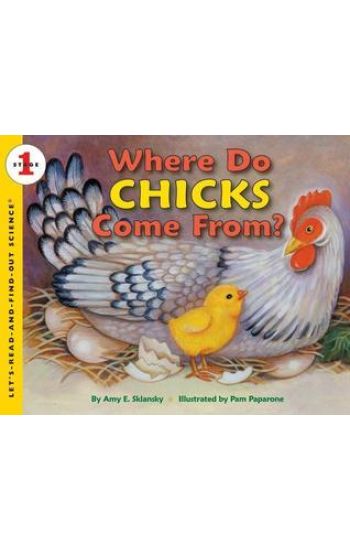
Where Do Chicks Come From?

Where Do Chicks Come From?

Amy E. Sklansky

Harpercollins
2005
nidottu
Read and find out about eggs--and how baby chicks grow inside of them--in this colorfully illustrated nonfiction picture book.Learn how chicks develop, how they get the food they need to grow, and how a mother hen helps keep them safe in this introduction to the life cycle of a baby chick.This is a clear and appealing science book for early elementary age kids, both at home and in the classroom. It's a Level 1 Let's-Read-and-Find-Out, which means the book explores introductory concepts perfect for children in the primary grades. The 100+ titles in this leading nonfiction series are: hands-on and visualacclaimed and trustedgreat for classroomsTop 10 reasons to love LRFOs: Entertain and educate at the same timeHave appealing, child-centered topicsDevelopmentally appropriate for emerging readersFocused; answering questions instead of using survey approachEmploy engaging picture book quality illustrationsUse simple charts and graphics to improve visual literacy skillsFeature hands-on activities to engage young scientistsMeet national science education standardsWritten/illustrated by award-winning authors/illustrators & vetted by an expert in the fieldOver 130 titles in print, meeting a wide range of kids' scientific interestsBooks in this series support the Common Core Learning Standards, Next Generation Science Standards, and the Science, Technology, Engineering, and Math (STEM) standards. Let's-Read-and-Find-Out is the winner of the American Association for the Advancement of Science/Subaru Science Books & Films Prize for Outstanding Science Series.
RAINBOW

RAINBOW

Amy E. West; Sally M. Weinstein; Mani N. Pavuluri

Oxford University Press Inc
2017
nidottu
Bipolar spectrum disorders are characterized by severe mood dysregulation, rage, irritability, and depression, along with low self-esteem and interpersonal struggles. Children with bipolar symptoms also tend to have poor academic performance and disruptive school behavior, and their families often experience strained relationships and increased conflict. RAINBOW: A Child- and Family-Focused Cognitive-Behavioral Treatment for Pediatric Bipolar Disorder presents a 12-session family-based treatment intervention for children aged 7-13 with bipolar spectrum disorders. The CFF-CBT/RAINBOW program comprises four innovative aspects in that it: (1) is designed to be developmentally specific to children in this age group; (2) is driven by the distinct needs of these children and their families; (3) involves intensive work with parents parallel to the work with children in order to directly address parents' own therapeutic needs, as well as helping them develop an effective parenting style for their child; and (4) integrates psychoeducation, cognitive-behavioral therapy, and interpersonal therapy techniques, tailored to the unique needs of these children, to augment the effects of pharmacotherapy. This Clinician Manual includes a conceptual overview for each session as well as step-by-step instructions for clinicians with all accompanying handouts, worksheets, and in-session games/activities. It provides clinicians with a comprehensive set of tools and a structured approach to guiding children and families. RAINBOW has been shown to significantly reduce mood symptoms and improve overall functioning for children with bipolar spectrum disorders.
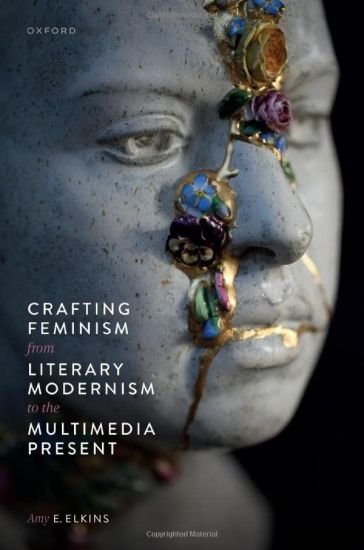
Crafting Feminism from Literary Modernism to the Multimedia Present
Crafting Feminism develops a dynamic study of craft and art-making in modern and contemporary feminist writing. In evocative readings of literary works from Virginia Woolf to Zadie Smith, this book expands our sense of transartistic modernist scholarship to encompass process-oriented and medium-specific analyses of textile arts, digital design, collage, photography, painting, and sculpture in literary culture. By integrating these craft practices into the book's enlightening archive, Elkins's theoretical argument extends a reading of craft metaphors into the material present. Crafting Feminism demonstrates how writers have engaged with handiwork across generations and have undertaken the crafting of a new modernity, one that is queer and feminist-threaded, messy, shattered, cut-up, pasted together, preserved, repaired, reflected, and spun out. An avant-garde work of scholarship, this book interweaves queer research methods and interdisciplinary rigor with a series of surprising archival discoveries. Making visible the collaborative, creative features of craft, Elkins captivates readers with generous illustrations and a series of "Techne" interchapters-interludes between longer chapters, which powerfully convey the symbiosis between feminist theory and method, and detail the network of archival influences that underpin this volume's hybrid approach. Foregrounding the work of decentering patriarchal and Eurocentric legacies of artistic authority, Elkins champions the diverse, intergenerational history of craft as a way to reposition intersectional makers at the heart of literary culture. An original and compelling study, Crafting Feminism breaks new ground in modernist and visual studies, digital humanities, and feminist, queer, and critical race theory.
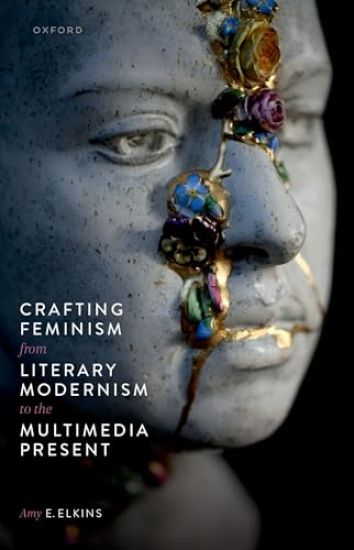
Crafting Feminism from Literary Modernism to the Multimedia Present
Crafting Feminism develops a dynamic study of craft and art-making in modern and contemporary feminist writing. In evocative readings of literary works from Virginia Woolf to Zadie Smith, this book expands our sense of transartistic modernist scholarship to encompass process-oriented and medium-specific analyses of textile arts, digital design, collage, photography, painting, and sculpture in literary culture. By integrating these craft practices into the book's enlightening archive, Elkins's theoretical argument extends a reading of craft metaphors into the material present. Crafting Feminism demonstrates how writers have engaged with handiwork across generations and have undertaken the crafting of a new modernity, one that is queer and feminist-threaded, messy, shattered, cut-up, pasted together, preserved, repaired, reflected, and spun out. An avant-garde work of scholarship, this book interweaves queer research methods and interdisciplinary rigor with a series of surprising archival discoveries. Making visible the collaborative, creative features of craft, Elkins captivates readers with generous illustrations and a series of "Techne" interchapters-interludes between longer chapters, which powerfully convey the symbiosis between feminist theory and method, and detail the network of archival influences that underpin this volume's hybrid approach. Foregrounding the work of decentering patriarchal and Eurocentric legacies of artistic authority, Elkins champions the diverse, intergenerational history of craft as a way to reposition the work of intersectional makers at the heart of literary culture. An original and compelling study, Crafting Feminism breaks new ground in modernist and visual studies, digital humanities, and feminist, queer, and critical race theory.

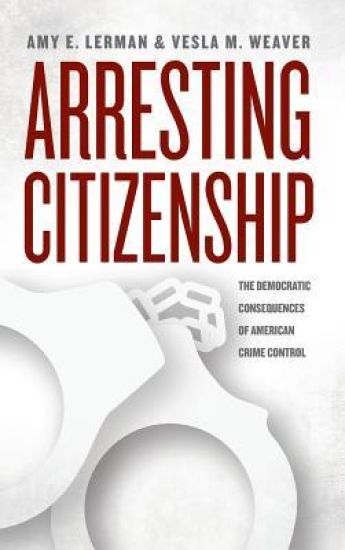
Arresting Citizenship

Arresting Citizenship

Amy E. Lerman; Vesla M. Weaver

University of Chicago Press
2014
sidottu
One-third of America's adult population has passed through the criminal justice system and now has a criminal record. Many more have never been convicted, but are still subject to surveillance by the state. Never before has the government maintained so vast a network of institutions dedicated solely to the control and confinement of its citizens. A provocative assessment of the contemporary carceral state, Arresting Citizenship argues that the broad reach of the criminal justice system has recast the relation between citizen and state, resulting in a sizable - and growing-group of second-class citizens. From police stops to court cases and incarceration, at each stage of the criminal justice system, disempowered individuals belonging to this group experience a state-within-a-state that reflects few of the country's core democratic values. The authors show how this contact with police, courts, and prisons decreases faith in the capacity of American political institutions to respond to citizens' concerns and diminishes the sense of equal citizenship-even for those not found guilty of any crime. They go on to offer concrete proposals for reforms to reincorporate this large group of citizens as active participants in American political life.
Arresting Citizenship

Arresting Citizenship

Amy E. Lerman; Vesla M. Weaver

University of Chicago Press
2014
nidottu
One-third of America's adult population has passed through the criminal justice system and now has a criminal record. Many more have never been convicted, but are still subject to surveillance by the state. Never before has the government maintained so vast a network of institutions dedicated solely to the control and confinement of its citizens. A provocative assessment of the contemporary carceral state, Arresting Citizenship argues that the broad reach of the criminal justice system has recast the relation between citizen and state, resulting in a sizable-and growing-group of second-class citizens. From police stops to court cases and incarceration, at each stage of the criminal justice system, disempowered individuals belonging to this group experience a state-within-a-state that reflects few of the country's core democratic values. The authors show how this contact with police, courts, and prisons decreases faith in the capacity of American political institutions to respond to citizens' concerns and diminishes the sense of equal citizenship - even for those not found guilty of any crime. They go on to offer concrete proposals for reforms to reincorporate this large group of citizens as active participants in American political life.
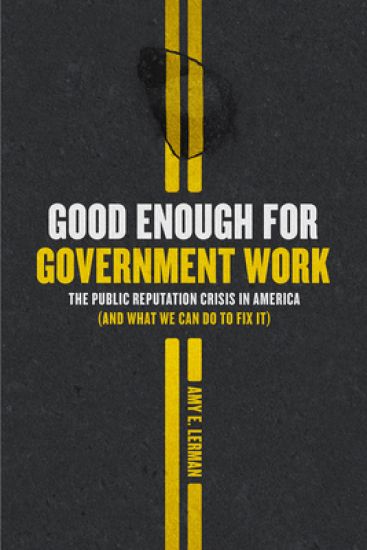
Good Enough for Government Work

Good Enough for Government Work

Amy E. Lerman

University of Chicago Press
2019
sidottu
American government is in the midst of a reputation crisis. An overwhelming majority of citizens--Republicans and Democrats alike--hold negative perceptions of the government and believe it is wasteful, inefficient, and doing a generally poor job managing public programs and providing public services. When social problems arise, Americans are therefore skeptical that the government has the ability to respond effectively. It's a serious problem, argues Amy E. Lerman, and it will not be a simple one to fix. With Good Enough for Government Work, Lerman uses surveys, experiments, and public opinion data to argue persuasively that the reputation of government is itself an impediment to government's ability to achieve the common good. In addition to improving its efficiency and effectiveness, government therefore has an equally critical task: countering the belief that the public sector is mired in incompetence. Lerman takes readers through the main challenges. Negative perceptions are highly resistant to change, she shows, because we tend to perceive the world in a way that confirms our negative stereotypes of government--even in the face of new information. Those who hold particularly negative perceptions also begin to "opt out" in favor of private alternatives, such as sending their children to private schools, living in gated communities, and refusing to participate in public health insurance programs. When sufficient numbers of people opt out of public services, the result can be a decline in the objective quality of public provision. In this way, citizens' beliefs about government can quickly become a self-fulfilling prophecy, with consequences for all. Lerman concludes with practical solutions for how the government might improve its reputation and roll back current efforts to eliminate or privatize even some of the most critical public services.
Good Enough for Government Work

Good Enough for Government Work

Amy E. Lerman

University of Chicago Press
2019
pokkari
American government is in the midst of a reputation crisis. An overwhelming majority of citizens--Republicans and Democrats alike--hold negative perceptions of the government and believe it is wasteful, inefficient, and doing a generally poor job managing public programs and providing public services. When social problems arise, Americans are therefore skeptical that the government has the ability to respond effectively. It's a serious problem, argues Amy E. Lerman, and it will not be a simple one to fix. With Good Enough for Government Work, Lerman uses surveys, experiments, and public opinion data to argue persuasively that the reputation of government is itself an impediment to government's ability to achieve the common good. In addition to improving its efficiency and effectiveness, government therefore has an equally critical task: countering the belief that the public sector is mired in incompetence. Lerman takes readers through the main challenges. Negative perceptions are highly resistant to change, she shows, because we tend to perceive the world in a way that confirms our negative stereotypes of government--even in the face of new information. Those who hold particularly negative perceptions also begin to "opt out" in favor of private alternatives, such as sending their children to private schools, living in gated communities, and refusing to participate in public health insurance programs. When sufficient numbers of people opt out of public services, the result can be a decline in the objective quality of public provision. In this way, citizens' beliefs about government can quickly become a self-fulfilling prophecy, with consequences for all. Lerman concludes with practical solutions for how the government might improve its reputation and roll back current efforts to eliminate or privatize even some of the most critical public services.
British Responses to Genocide

British Responses to Genocide

Amy E. Grubb; Elisabeth Hope Murray

TAYLOR FRANCIS LTD
2022
sidottu
This book examines British responses to genocide and atrocity in the Ottoman Empire during the aftermath of World War I. The authors analyze British humanitarianism and humanitarian intervention through the advice and policies of the Foreign Office and British government in London and the actions of Foreign Officers in the field. British understandings of humanitarianism at the time revolved around three key elements: good government, atrocity, and the refugee crises; this ideology of humanitarianism, however, was challenged by disputed policies of post-war politics and goals regarding the Near East. This resulted in limited intervention methods available to those on the ground but did not necessarily result in the forfeiture of the belief in humanitarianism amongst the local British officials charged with upholding it. This study shows that the tension between altruism and political gain weakened British power in the region, influencing the continuation of violence and repression long after the date most perceive as the cessation of WWI. The book is primarily aimed at scholars and researchers within the field; it is a research monograph and will be of greatest interest to scholars of genocide, British history, and refugee studies, as well as for activists and practitioners.
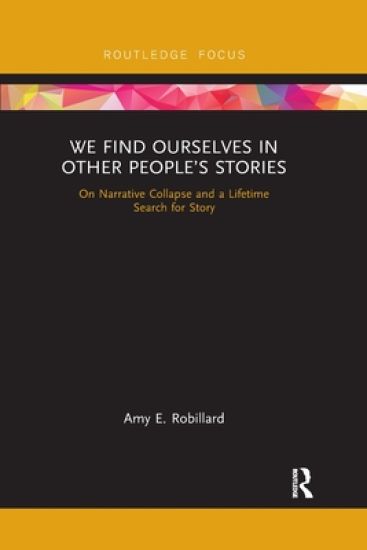
We Find Ourselves in Other People’s Stories
We Find Ourselves in Other People’s Stories: On Narrative Collapse and a Lifetime Search for Story is a collection of five essays that dissolves the boundary between personal writing and academic writing, a longstanding binary construct in the discipline of composition and writing studies, in order to examine the rhetorical effects of narrative collapse on the stories we tell about ourselves and others. Taken together, the essays theorize the relationships between language and violence, between narrative and dementia, between genre and certainty, and between writing and life.
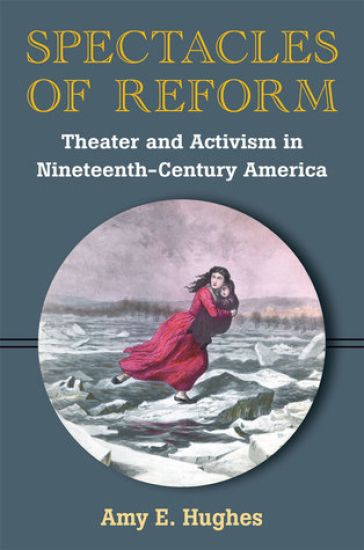
Spectacles of Reform

Spectacles of Reform

Amy E. Hughes

The University of Michigan Press
2014
nidottu
In the nineteenth century, long before film and television brought us explosions, car chases, and narrow escapes, it was America's theaters that thrilled audiences, with “sensation scenes” of speeding trains, burning buildings, and endangered bodies, often in melodramas extolling the virtues of temperance, abolition, and women's suffrage. Amy E. Hughes scrutinizes these peculiar intersections of spectacle and reform, revealing the crucial role that spectacle has played in American activism and how it has remained central to the dramaturgy of reform. Hughes traces the cultural history of three famous sensation scenes—the drunkard with the delirium tremens, the fugitive slave escaping over a river, and the victim tied to the railroad tracks—assessing how these scenes conveyed, allayed, and denied concerns about the rights and responsibilities of citizenship. These images also appeared in printed propaganda, suggesting that the coup de théâtre was an essential part of American reform culture. Additionally, Hughes argues that today’s producers and advertisers continue to exploit the affective dynamism of spectacle, reaching an even broader audience through film, television, and the Internet.To be attuned to the dynamics of spectacle, Hughes argues, is to understand how we see. Her book will interest not only theater historians, but also scholars and students of political, literary, and visual culture who are curious about how U.S. citizens saw themselves and their world during a pivotal period in American history.
The American Literature Scholar in the Digital Age

The American Literature Scholar in the Digital Age

Amy E. Earhart; Andrew Jewell

The University of Michigan Press
2010
nidottu
"By casting the collection explicitly as an outreach to the larger community of Americanists---not primarily those who self-identify as 'digital scholars'---Earhart and Jewell have made an important choice, and one that will likely make this a landmark publication."---Andrew Stauffer, University of VirginiaThe American Literature Scholar in the Digital Age, which features a wide range of practitioner-scholars, is the first of its kind: a gathering of people who are expert in American literary studies and in digital technologies, scholars uniquely able to draw from experience with building digital resources and to provide theoretical commentary on how the transformation to new technologies alters the way we think about and articulate scholarship in American literature. The volume collects articles from those who are involved in tool development, usability testing, editing and textual scholarship, digital librarianship, and issues of race and ethnicity in digital humanities, while also situating digital humanities work within the larger literary discipline. In addition, the volume examines the traditional structures of the fields, including tenure and promotion criteria, modes of scholarly production, the skill sets required for scholarship, and the training of new scholars. The American Literature Scholar in the Digital Age will attract practitioners of digital humanities in multiple fields, Americanists who utilize digital materials, and those who are intellectually curious about the new movement and materials.Amy E. Earhart is Assistant Professor in the Department of English at Texas A&M University.Andrew Jewell is Associate Professor of Digital Projects, University Libraries, at the University of Nebraska–Lincoln.Cover art: Book background ©iStockphoto.com/natashikadigitalculturebooks is an imprint of the University of Michigan Press and the Scholarly Publishing Office of the University of Michigan Library dedicated to publishing innovative and accessible work exploring new media and their impact on society, culture, and scholarly communication. Visit the website at www.digitalculture.org.