Kirjahaku
Etsi kirjoja tekijän nimen, kirjan nimen tai ISBN:n perusteella.
1000 tulosta hakusanalla Amy M. Porter; Nancy E. Baker
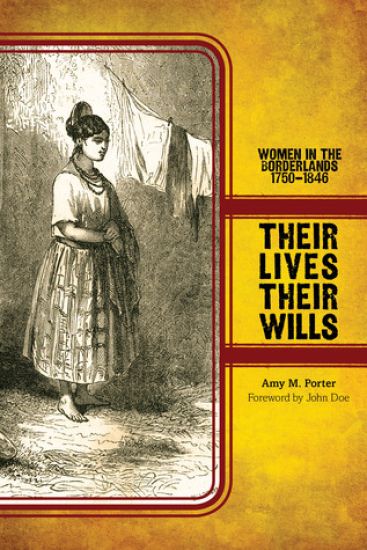
In 1815, in the Spanish settlement of San Antonio de Béxar, a dying widow named María Concepción de Estrada recorded her last will and testament. Estrada used her will to record her debts and credits, specify her property, leave her belongings to her children, make requests for her funeral arrangements, and secure her religious salvation.Wills like Estrada’s reveal much about women’s lives in the late Spanish and Mexican colonial communities of Santa Fe, El Paso, San Antonio, Saltillo, and San Esteban de Nueva Tlaxcala in present-day northern Mexico. Using last wills and testaments as main sources, Amy M. Porter explores the ways in which these documents reveal details about religion, family, economics, and material culture. In addition, the wills speak loudly to the difficulties of frontier life, in which widowhood and child mortality were commonplace. Most importantly, information in the wills helps to explain the workings of the patriarchal system of Spanish and Mexican borderland communities, showing that gender role divisions were fluid in some respects.Supplemented by censuses, inventories, court cases, and travellers’ accounts, women’s wills paint a more complete picture of life in the borderlands than the previously male-dominated historiography of the region.

U.S. Navy Employment Options for Unmanned Surface Vehicles (Usvs)
Scott Savitz; Irv Blickstein; Peter Buryk; Robert W. Button; Paul DeLuca; James Dryden; Jason Mastbaum; Jan Osburg; Philip Padilla; Amy Potter; Carter C. Price; Lloyd Thrall; Susan K. Woodward; Roland J. Yardley; John M. Yurchak
RAND
2014
pokkari
This report assesses in what ways and to what degree unmanned surface vehicles (USVs) are suitable for supporting U.S. Navy missions and functions. It briefly characterizes the current and emerging USV marketplaces to provide a baseline for near-term capabilities, describes USV concepts of employment to support diverse U.S. Navy missions and functions, and evaluates these concepts of employment to identify specific missions and functions for which they are highly suitable.
The Book Plates of Amy M. Sacker
John Henry Nash; Troutsdale Press Bkp Cu-Banc; Amy M Sacker
Hutson Street Press
2025
sidottu
The Book Plates of Amy M. Sacker
John Henry Nash; Troutsdale Press Bkp Cu-Banc; Amy M Sacker
Hutson Street Press
2025
pokkari
The Book Plates of Amy M. Sacker
John Henry Nash; Troutsdale Press Bkp Cu-Banc; Amy M Sacker
Palala Press
2018
pokkari
This work has been selected by scholars as being culturally important, and is part of the knowledge base of civilization as we know it. This work was reproduced from the original artifact, and remains as true to the original work as possible. Therefore, you will see the original copyright references, library stamps (as most of these works have been housed in our most important libraries around the world), and other notations in the work.This work is in the public domain in the United States of America, and possibly other nations. Within the United States, you may freely copy and distribute this work, as no entity (individual or corporate) has a copyright on the body of the work.As a reproduction of a historical artifact, this work may contain missing or blurred pages, poor pictures, errant marks, etc. Scholars believe, and we concur, that this work is important enough to be preserved, reproduced, and made generally available to the public. We appreciate your support of the preservation process, and thank you for being an important part of keeping this knowledge alive and relevant.
Instructor Solutions Manual (Download only) for Cases in Hospitality and Tourism Management
Amy M. Allen-Chabot
PEARSON EDUCATION (US)
2005
muu
""
Starting from the botanical crazes inspired by Linnaeus in the eighteenth century, and exploring the variations it spawned - natural history, landscape architecture, polemical battles over botany's prurience - this study offers a fresh, detailed reading of the courtship novel from Jane Austen to George Eliot and Henry James. By reanimating a cultural understanding of botany and sexuality that we have lost, it provides an entirely new and powerful account of the novel's role in scripting sexualized courtship, and illuminates how the novel and popular science together created a cultural figure, the blooming girl, that stood at the center of both fictional and scientific worlds.
Starting from the botanical craze inspired by Linnaeus in the eighteenth century, and exploring the variations it spawned - natural history, landscape architecture, polemical battles over botany's prurience - this study offers a fresh, detailed reading of the courtship novel from Jane Austen to George Eliot and Henry James. By reanimating a cultural understanding of botany and sexuality that we have lost, it provides an entirely new and powerful account of the novel's role in scripting sexualised courtship, and illuminates how the novel and popular science together created a cultural figure, the blooming girl, that stood at the centre of both fictional and scientific worlds.
Silent Partners restores women to their place in the story of England's Financial Revolution. Women were active participants in London's first stock market beginning in the 1690s and continuing through the eighteenth century. Whether playing the state lottery, investing in government funds for retirement, or speculating in company stocks, women regularly comprised between a fifth and a third of public investors. These female investors ranged from London servants to middling tradeswomen, up to provincial gentlewomen and peeresses of the realm. Amy Froide finds that there was no single female investor type, rather some women ran risks and speculated in stocks while others sought out low-risk, low-return options for their retirement years. Not only did women invest for themselves, their financial knowledge and ability meant that family members often relied on wives, sisters, and aunts to act as their investing agents. Moreover, women's investing not only benefitted themselves and their families, it also aided the nation. Women's capital was a critical component of Britain's rise to economic, military, and colonial dominance in the eighteenth century. Focusing on the period between 1690 and 1750, and utilizing women's account books and financial correspondence, as well as the records of joint stock companies, the Bank of England, and the Exchequer, Silent Partners provides the first comprehensive overview of the significant role women played in the birth of financial capitalism in Britain.
Never Married: Singlewomen in Early Modern England investigates a paradox in the history of early modern England: although one third of adult women were never married, these women have remained largely absent from historical scholarship. Amy Froide reintroduces us to the category of difference called marital status and to the significant ways it shaped the life experiences of early modern women. By de-centring marriage as the norm in social, economic, and cultural terms, her book critically refines our current understanding of people's lives in the past and adds to a recent line of scholarship that questions just how common 'traditional' families really were. This book is both a social-economic study of singlewomen and a cultural study of the meanings of singleness in early modern England. It focuses on never-married women in England's provincial towns, and on singlewomen from a broad social spectrum. Covering the entire early modern era, it reveals that this was a time of transition in the history of never-married women. During the sixteenth century life-long singlewomen were largely absent from popular culture, but by the eighteenth century they had become a central concern of English society. As the first book of original research to focus on singlewomen on the period, it also illuminates other areas of early modern history. Froide reveals the importance of kinship in the past to women without husbands and children, as well as to widows, widowers, single men, and orphans. Examining the contributions of working and propertied singlewomen, she is able to illustrate the importance of gender and marital status to urban economies and to notions of urban citizenship in the early modern era. Tracing the origins of the spinster and old maid stereotypes she reveals how singlewomen were marginalized as first the victims and then the villains of Protestant English society.
Nerve Repair and Transfers from Hand to Shoulder, An issue of Hand Clinics
Amy M. Moore; Susan E. Mackinnon
Elsevier - Health Sciences Division
2016
sidottu
This issue will include articles on Nerve Repair and Nerve Grafting, Nerve Regeneration, Nerve Transfers to Restore Shoulder Function, Nerve Transfers to Restore Elbow Function, and many more!
Melissa Grant has escaped the clutches of death, not once, not twice, but three times. While she considers this to be divine intervention, her assailant is sure that her luck will run out, and the authorities are suspicious that Melissa isn't as innocent as she seems. Implicated in the murders of two of her closest friends, and running from both a hit man and the law, Melissa does what is thought to be impossible in the 21st Century - she disappears. Julie Lawson has no family, no friends, and no past. She spends her days photographing the country and her nights tossing and turning as nightmares plague her sleep. While passing through the town of St. Brendan, on Maryland's Eastern Shore, Julie finds some things she hasn't had in a very long time - a home, friends, and love. For the first time in two years, Julie can see her future, but she can attain it only by surviving a predator from her past. Eric West has a past of his own that he is trying to forget. His return to his hometown keeps his demons away until he meets Julie, and she stirs up emotions in him that he hasn't felt in a long time. As he slowly begins to let go of this past, Eric tries to break down the walls that Julie has so tightly built around herself. Gaining her trust one small act at a time, and hiring the best investigator in DC to dig for answers, Eric opens the Pandora's Box to Julie's past which threatens all of their futures.
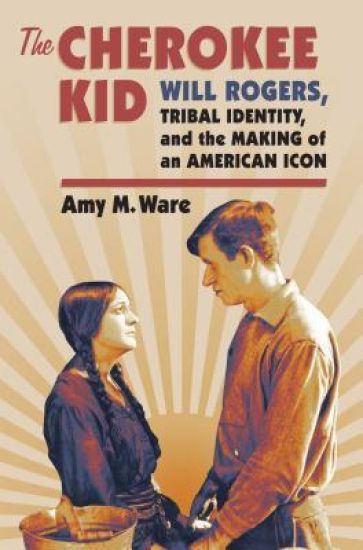
Early in the twentieth century, the political humorist Will Rogers was arguably the most famous cowboy in America. And though most in his vast audience didn’t know it, he was also the most famous Indian of his time. Those who know of Rogers’s Cherokee heritage and upbringing tend to minimize its importance, or to imagine that Rogers himself did so—notwithstanding his avowal in interviews: “I’m a Cherokee and they’re the finest Indians in the World.” The truth is, throughout his adult life and his work the Oklahoma cowboy made much of his American Indian background. And in doing so, as Amy Ware suggests in this book, he made Cherokee artistry a fundamental part of American popular culture.Rogers, whose father was a prominent and wealthy Cherokee politician and former Confederate slaveholder, was born into the Paint Clan in the town of Oolagah in 1879 and raised in the Cooweescoowee District of the Cherokee Nation. Ware maps out this milieu, illuminating the familial and social networks, as well as the Cherokee ranching practices, educational institutions, popular publications and heated political debates that so firmly grounded Rogers in the culture of the Cherokees. Through his early career, from Wild West and vaudeville performer to Ziegfeld Follies headliner in the late 1910s, she reveals how Rogers embodied the seemingly conflicting roles of cowboy and Indian, in effect enacting the blending of these identities in his art. Rogers’s work in the film industry also reflected complex notions of American Indian identity and history, as Ware demonstrates in her reading of the clearest examples, including Laughing Billy Hyde, in which Rogers, an Indian, portrayed a white prospector married to an Indian woman— who was played by a white actress.In his work as a columnist for the New York Times, and in his radio performances, Ware continues to trace the Cherokee influence on Rogers’s material—and in turn its impact on his audiences. It is in these largely uncensored performances that we see another side of Rogers’ Cherokee persona—a tribal elitism that elevated the Cherokee above other Indian nations. Ware’s exploration of this distinction exposes still-common assumptions regarding Native authenticity in the history of American culture, even as her in-depth look at Will Rogers’s heritage and legacy reshapes our perspective on the Native presence in that history, and in the life and work of a true American icon.
Family genealogy research has grown exponentially over the past decade, making it an area worthy of scholarly inquest. Tracing Family Lines: The Impact of Genealogy Research on Family Communication, by Amy M. Smith, explores the connection between women and genealogy by examining the ways inherited familial narratives and data work to position women within American culture. Although studies of women’s lives are on the rise, the standpoint(s) of women has historically been marginalized, particularly as women continue to be relegated to domestic and family care. Through researching these standpoints, we are better able to see the political constructions of sexist oppression, as well as the ways genealogy offers a possible site for resistance. Interviewing women who are engaged in the act of researching their own family genealogy provides insight into their motivation for doing so. In documenting the family communication that surrounds the genealogical data, as well as studying the family organizational structure, this study contributes to the existing research regarding family history and family narrative. As many of these women are members of local genealogical societies, they are also able to address aspects of community membership, and the positioning of women within these organizations. As women and genealogy are both under-researched, Tracing Family Lines illuminates the experiences of women genealogists, to understand the impact of genealogical data upon family communication, and to explore family genealogy as a site of feminist resistance to the socio-political marginalization of women.
The first book-length treatment of Le Guin's feminism, this text offers a career-spanning look at her engagement with modern gender theory and practice. During the 1970s, Le Guin experienced a paradigm shift to feminism, a change which had profound effects on her work. This critical examination explores the masculinist nature of her early writing and how her work changed both thematically and aesthetically as a result of her newfound feminism. Of particular interest is her later phase, wherein Le Guin transitions to a more inclusive post-feminism, privileging unity and balance over separatism. A vital addition to Le Guin criticism.
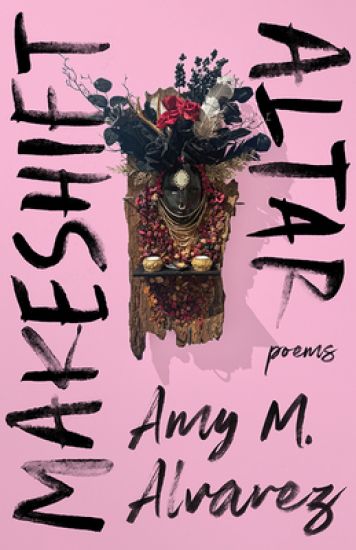
Amy M. Alvarez explores the cultural, spiritual, and place-based experiences of Afro-Caribbean and African American diasporic peoples in this haunting and emotionally charged collection of poems that meditates on the meaning of home and existence. Born in New York City to Jamaican and Puerto Rican parents, Alvarez draws readers into a journey of self-discovery and identity, connecting the past with the present while highlighting the complexities of navigating life as a multicultural American. The musicality of her language weaves together themes of environment, family, and migration, as well as her own ancestry as a Black Latinx woman. Makeshift Altar is an intimate collection that explores identities forged by colonialism and displacement and shaped by individual choice and collective power.