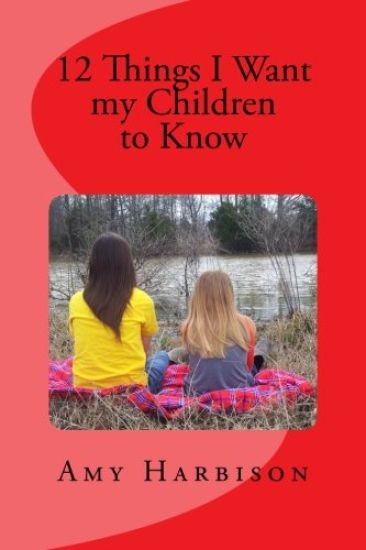
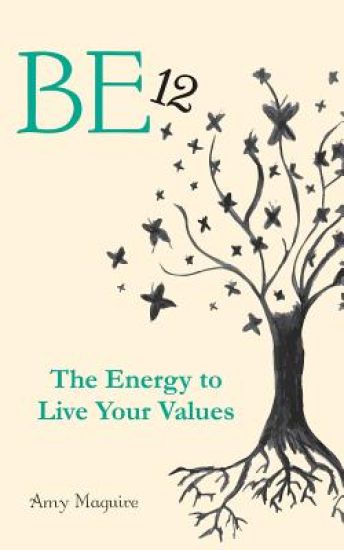
Love Value Purpose opens up space for you to breathe. Chaos may seem overwhelming or peace may feel out of reach. Yet there is a path to discovering pure love, your precious value, and the true purposes you were always designed to enjoy and experience. In this book, you will wonder about who you are, why you have areas of joy from long ago that seem inaccessible, or even disappointments...some from injury and others when we seek something that felt real but was just a moment of pleasure. Love Value Purpose will take you on a journey to look at larger questions of "Why am I here?" and more personal questions of "Why do I think of myself this way?" Weaved throughout the book are stories of compassion, hope, and healing from true events.You can know true love. You can find your value. You can discover your life of purpose.
"What would it be like if I were a puppy? I close my eyes and imagine I'm fluffy." When a boy imagines himself in the life of a puppy, he digs holes, howls at the moon, and causes all kinds of mayhem. However, being a dog might have its down sides. And what about the playful perks of being a kid? Laugh out loud as you follow along on this cheeky journey of imagination and adventure.
"What would it be like if I were a puppy? I close my eyes and imagine I'm fluffy." When a boy imagines himself in the life of a puppy, he digs holes, howls at the moon, and causes all kinds of mayhem. However, being a dog might have its down sides. And what about the playful perks of being a kid? Laugh out loud as you follow along on this cheeky journey of imagination and adventure.
Advances in the social sciences have emerged through a variety of research methods: field-based research, laboratory and field experiments, and agent-based models. However, which research method or approach is best suited to a particular inquiry is frequently debated and discussed. Working Together examines how different methods have promoted various theoretical developments related to collective action and the commons, and demonstrates the importance of cross-fertilization involving multimethod research across traditional boundaries. The authors look at why cross-fertilization is difficult to achieve, and they show ways to overcome these challenges through collaboration. The authors provide numerous examples of collaborative, multimethod research related to collective action and the commons. They examine the pros and cons of case studies, meta-analyses, large-N field research, experiments and modeling, and empirically grounded agent-based models, and they consider how these methods contribute to research on collective action for the management of natural resources. Using their findings, the authors outline a revised theory of collective action that includes three elements: individual decision making, microsituational conditions, and features of the broader social-ecological context. Acknowledging the academic incentives that influence and constrain how research is conducted, Working Together reworks the theory of collective action and offers practical solutions for researchers and students across a spectrum of disciplines.
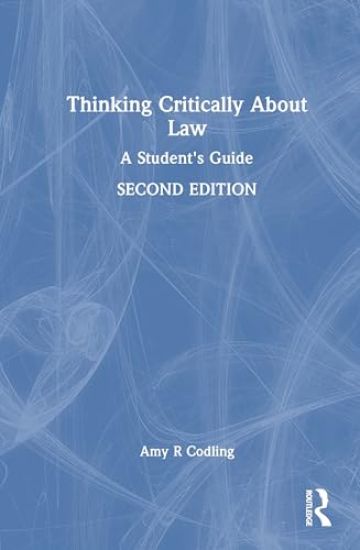
You arrive at university to embark upon your journey to ‘think like a lawyer’, but is simply knowing the law enough to gain you the best marks? What do you need to do, exactly, to achieve a first-class law degree and promising professional career? For top marks, what do your lecturers mean when they say you need to deepen your ‘critical analysis’ to answer assessment questions? When should you put your own viewpoints forward? When, and how, should you draw upon the work of others? What do your examiners mean when they give you feedback saying that your work is ‘too descriptive’? This book explores what it means to think critically and offers practical tips and advice for students to develop the process, skill and ability of thinking critically while studying law, as well as beyond that in the workplace.The second edition of Thinking Critically About Law utilises art, music, poetry and prose to explore essential questions about studying law and what it means to think critically, offering practical tips and advice for students looking to develop critical thinking skills in relation to law. Updates reflect seismic changes that have taken place both in law teaching and in society more generally. These include the Covid-19 pandemic, social movements sparked by the murders of Sarah Everard and George Floyd, moves to decolonise the law curriculum and the introduction of the SQE qualification. There is also an innovative foreword by Professor Russell Sandberg, a new chapter on the topic of how to think critically during discussions, a new section on Thinking Critically About Law in the Future as well as a renewed emphasis on the health and well-being of students. Other student-focused resources will be available as support materials.Thinking Critically about Law is a crucial companion for those studying law at A-Level and undergraduate level, as well as being relevant to postgraduate students, newly qualified lawyers and tutors of law.
You arrive at university to embark upon your journey to ‘think like a lawyer’, but is simply knowing the law enough to gain you the best marks? What do you need to do, exactly, to achieve a first-class law degree and promising professional career? For top marks, what do your lecturers mean when they say you need to deepen your ‘critical analysis’ to answer assessment questions? When should you put your own viewpoints forward? When, and how, should you draw upon the work of others? What do your examiners mean when they give you feedback saying that your work is ‘too descriptive’? This book explores what it means to think critically and offers practical tips and advice for students to develop the process, skill and ability of thinking critically while studying law, as well as beyond that in the workplace.The second edition of Thinking Critically About Law utilises art, music, poetry and prose to explore essential questions about studying law and what it means to think critically, offering practical tips and advice for students looking to develop critical thinking skills in relation to law. Updates reflect seismic changes that have taken place both in law teaching and in society more generally. These include the Covid-19 pandemic, social movements sparked by the murders of Sarah Everard and George Floyd, moves to decolonise the law curriculum and the introduction of the SQE qualification. There is also an innovative foreword by Professor Russell Sandberg, a new chapter on the topic of how to think critically during discussions, a new section on Thinking Critically About Law in the Future as well as a renewed emphasis on the health and well-being of students. Other student-focused resources will be available as support materials.Thinking Critically about Law is a crucial companion for those studying law at A-Level and undergraduate level, as well as being relevant to postgraduate students, newly qualified lawyers and tutors of law.
I'm Just Saying is a fresh new perspective of spoken words and poems on the many different aspects of everyday life. Author Dominique Butler candidly brings to life many different topics that invade the thoughts of both men and women of any color. Things such as life, love, politics and feminism seems subliminally enhance in this book while analyzing the way we perceive the world we live in today. These collections of poems will do nothing but continue to grab your attention while making you revisit the way you look at things surrounding you.
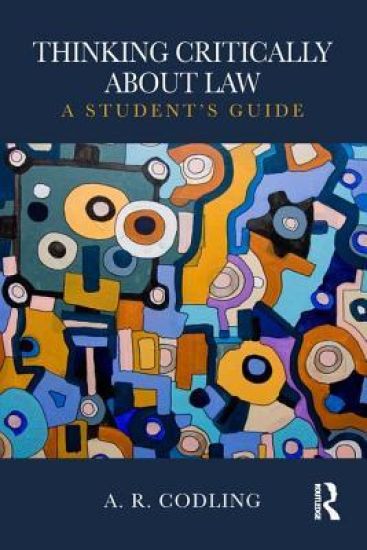
So you’ve arrived at university, you’ve read the course handbook and you’re ready to learn the law. But is knowing the law enough to get you the very best marks? And what do your lecturers mean when they say you need to develop critical and analytical skills? When is it right to put your own views forward? What are examiners looking for when they give feedback to say that your work is too descriptive?This book explores what it means to think critically and offers practical tips and advice for students to develop the process, skill and ability of thinking critically while studying law. The book investigates the big questions such as: What is law? and What is ‘thinking critically’? How can I use critical thinking to get better grades in assessments? What is the role of critical thinking in the work place? These questions and more are explored in Thinking Critically About Law.Whether you have limited prior experience of critical thinking or are looking to improve your performance in assessments, this book is the ideal tool to help you enhance your capacity to question, challenge, reflect and problematize what you learn about the law throughout your studies and beyond.
So you’ve arrived at university, you’ve read the course handbook and you’re ready to learn the law. But is knowing the law enough to get you the very best marks? And what do your lecturers mean when they say you need to develop critical and analytical skills? When is it right to put your own views forward? What are examiners looking for when they give feedback to say that your work is too descriptive?This book explores what it means to think critically and offers practical tips and advice for students to develop the process, skill and ability of thinking critically while studying law. The book investigates the big questions such as: What is law? and What is ‘thinking critically’? How can I use critical thinking to get better grades in assessments? What is the role of critical thinking in the work place? These questions and more are explored in Thinking Critically About Law.Whether you have limited prior experience of critical thinking or are looking to improve your performance in assessments, this book is the ideal tool to help you enhance your capacity to question, challenge, reflect and problematize what you learn about the law throughout your studies and beyond.
Provides information literacy practitioners with a thorough exploration of how threshold concepts can be applied to information literacy, identifying important elements and connections between each concept, and relating theory to practical methods that can transform how librarians teach.A model that emerged from the Enhancing Teaching-Learning Environments project in Great Britain, threshold concepts are those transformative core ideas and processes in a given discipline that define the ways of thinking and practicing shared by experts. Once a learner grasps a threshold concept, new pathways to understanding and learning are opened up. The authors of this book provide readers with both a substantial introduction to and a working knowledge of this emerging theory and then describe how it can be adapted for local information literacy instruction contexts.Five threshold concepts are presented and covered in depth within the context of how they relate and connect to each other. The chapters offer an in-depth explanation of the threshold concepts model and identify how it relates to various disciplines (and our own discipline, information science) and to the understandings we want our students to acquire. This text will benefit readers in these primary audiences: academic librarians involved with information literacy efforts at their institutions, faculty teaching in higher education, upper-level college administrators involved in academic accreditation, and high school librarians working with college-bound students.
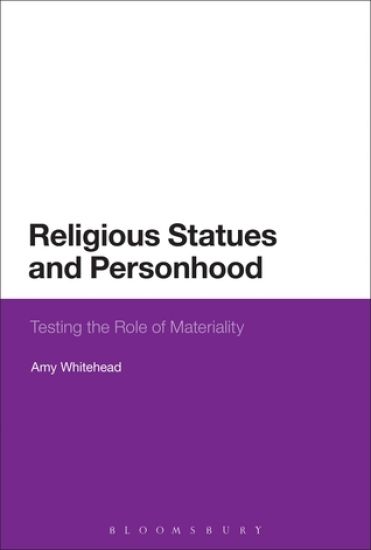
Objects such as statues and icons have long been problematic in the study of religion, especially in European Christianities. Through examining two groups, the contemporary Pagan Glastonbury Goddess religion in the Southwest of England and a cult of the Virgin Mary in Andalusia, Spain, Amy Whitehead asserts that objects can be more than representational or symbolic. In the context of increasing academic interest in materiality in religions and cultures, she shows how statues, or 'things', are not always interacted with as if they are inert material against which we typically define ourselves as 'modern' humans.Bringing two distinct cultures and religions into tension, animism and 'the fetish' are used as ways in which to think about how humans interact with religious statues in Western Europe and beyond. Both theoretical and descriptive, the book illustrates how religions and cultural practices can be re-examined as performances that necessarily involve not only human persons, but also objects.
Objects such as statues and icons have long been problematic in the study of religion, especially in European Christianities. Through examining two groups, the contemporary Pagan Glastonbury Goddess religion in the Southwest of England and a cult of the Virgin Mary in Andalusia, Spain, Amy Whitehead asserts that objects can be more than representational or symbolic. In the context of increasing academic interest in materiality in religions and cultures, she shows how statues, or 'things', are not always interacted with as if they are inert material against which we typically define ourselves as 'modern' humans.Bringing two distinct cultures and religions into tension, animism and 'the fetish' are used as ways in which to think about how humans interact with religious statues in Western Europe and beyond. Both theoretical and descriptive, the book illustrates how religions and cultural practices can be re-examined as performances that necessarily involve not only human persons, but also objects.
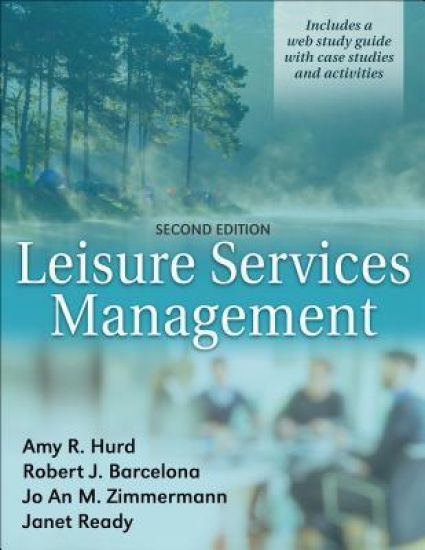
Leisure Services Management, Second Edition, prepares students for the challenges they’ll face as entry- to mid-level recreation and leisure managers. The book outlines the essential knowledge and skills that successful managers need to have and helps students build those competencies by encouraging them to think as managers. The text’s activities, projects, and examples help students connect the competencies to real-world situations.Leisure Services Management begins by presenting a firm foundation of competency-based management. Students will learn what management is, what the manager’s role is, and how their work affects their agency and their customers. They will also explore specific management areas such as marketing, financial management, human resources, employee development, communication, and evaluation. Throughout the text, students will be encouraged to apply their own experiences to the concepts being discussed to deepen their understanding of the profession. For each chapter, the authors provide experiential learning activities that simulate real on-the-job situations. Each of these activities asks students to assume one of the many roles of a new manager. They’ll learn to deal with day-to-day management activities by completing work assignments and projects similar to those they’ll assume as a manager. The activities will help students develop the competencies they’ll need in order to meet the challenges of this evolving field. New to this edition of Leisure Services Management are the following student-friendly features: Updated sidebars in which professionals in the field offer early career advice for future managersReal examples from all three sectors—public, nonprofit, and commercial—giving a broad perspective of parks and recreation, tourism, sport, therapeutic recreation, and outdoor recreationInternational perspectives and examples, encouraging students to think globallyInformation about the exam for becoming a Certified Park and Recreation Professional (CPRP) The text also includes a web study guide, which includes links to sample forms from the actual files of leisure managers to assist students in understanding and using important management tools. With an overview of key concepts by chapter, detailed case studies, a glossary, and a competency scorecard, the web study guide will help students build their knowledge of the content area, apply the information learned to their current work environment or a future internship, and prepare for future certifications. The competency-driven approach of Leisure Services Management, Second Edition, assists readers in gaining the knowledge and practicing the skills needed to begin a career in leisure management. Bolstered by the practical information in this text, new managers can contribute to the success of their organization as they enjoy the challenges and rewards of their new position.
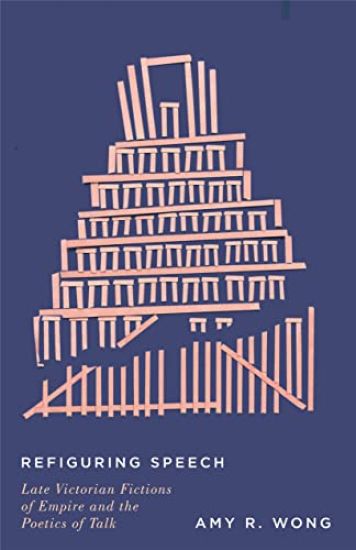
In this book, Amy R. Wong unravels the colonial and racial logic behind seemingly innocuous assumptions about "speech": that our words belong to us, and that self-possession is a virtue. Through readings of late-Victorian fictions of empire, Wong revisits the scene of speech's ideological foreclosures as articulated in postcolonial theory. Engaging Afro-Caribbean thinkers like Édouard Glissant and Sylvia Wynter, Refiguring Speech reroutes attention away from speech and toward an anticolonial poetics of talk, which emphasizes communal ownership and embeddedness within the social world and material environment. Analyzing novels by Robert Louis Stevenson, Bram Stoker, George Meredith, Joseph Conrad, and Ford Madox Ford, Wong refashions the aesthetics of disordered speech—such as parroting, eavesdropping, profuse inarticulacy, and dysfluency—into alternate forms of communication that stand on their own as talk. Wong demonstrates how late nineteenth-century Britain's twin crises of territorialization—of empire and of new media—spurred narrative interests in capturing the sense that speech's tethering to particular persons was no longer tenable. In doing so, Wong connects this period to US empire by constructing a genealogy of Anglo-American speech's colonialist and racialized terms of proprietorship. Refiguring Speech offers students and scholars of Victorian literature and postcolonial studies a powerful conceptualization of talk as an insurgent form of communication.