
Kirjahaku
Etsi kirjoja tekijän nimen, kirjan nimen tai ISBN:n perusteella.
1000 tulosta hakusanalla André Kalifa
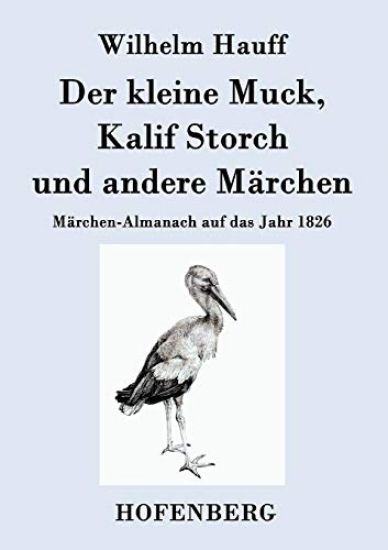
Wilhelm Hauff: Der kleine Muck, Kalif Storch und andere M rchen. M rchen-Almanach auf das Jahr 1826 Lesefreundlicher Gro druck in 16-pt-Schrift Gro format, 210 x 297 mm Berliner Ausgabe, 2019 Durchgesehener Neusatz mit einer Biographie des Autors bearbeitet und eingerichtet von Theodor Borken Erstdruck: Stuttgart (Metzler) 1826. Inhaltsverzeichnis: M rchen-Almanach auf das Jahr 1826. M rchen als Almanach. Die Karawane. Die Geschichte von Kalif Storch. Die Geschichte von dem Gespensterschiff. Die Geschichte von der abgehauenen Hand. Die Errettung Fatmes. Die Geschichte von dem kleinen Muck. Das M rchen vom falschen Prinzen. Biographie. Textgrundlage ist die Ausgabe: Wilhelm Hauff: S mtliche Werke in drei B nden. Nach den Originaldrucken und Handschriften. Textredaktion und Anmerkungen Sibylle von Steinsdorff, M nchen: Winkler, 1970. Umschlaggestaltung von Thomas Schultz-Overhage unter Verwendung des Bildes: Albrecht D rer, Storch, 1515. Gesetzt aus der Minion Pro, 16 pt. Henricus Edition Deutsche Klassik UG (haftungsbeschr nkt) ber den Autor: 1802 als Sohn eines Regierungssekret rs in Stuttgart geboren, studiert Wilhelm Hauff Theologie in Blaubeuren und schreibt als flammender Burschenschaftler erste Gedichte. Nach einer ausgedehnten Bildungsreise nach Paris, Br ssel, Hamburg und Berlin wird er Redakteur des Cotta'schen Morgenblattes. Innerhalb von gut zwei Jahren entstehen drei umfangreiche Romane, sieben Novellen einige Gedichte und vor allem zw lf Kunstm rchen, die seinen Ruhm bis heute begr nden. Am 18. November 1827 stirbt Wilhelm Hauff im Alter von 25 Jahren innerhalb weniger Tage an einer Infektionskrankheit.
Wilhelm Hauff: Der kleine Muck, Kalif Storch und andere M rchen. M rchen-Almanach auf das Jahr 1826 Lesefreundlicher Gro druck in 16-pt-Schrift Gro format, 210 x 297 mm Berliner Ausgabe, 2019 Durchgesehener Neusatz mit einer Biographie des Autors bearbeitet und eingerichtet von Theodor Borken Erstdruck: Stuttgart (Metzler) 1826. Inhaltsverzeichnis: M rchen-Almanach auf das Jahr 1826. M rchen als Almanach. Die Karawane. Die Geschichte von Kalif Storch. Die Geschichte von dem Gespensterschiff. Die Geschichte von der abgehauenen Hand. Die Errettung Fatmes. Die Geschichte von dem kleinen Muck. Das M rchen vom falschen Prinzen. Biographie. Textgrundlage ist die Ausgabe: Wilhelm Hauff: S mtliche Werke in drei B nden. Nach den Originaldrucken und Handschriften. Textredaktion und Anmerkungen Sibylle von Steinsdorff, M nchen: Winkler, 1970. Umschlaggestaltung von Thomas Schultz-Overhage unter Verwendung des Bildes: Albrecht D rer, Storch, 1515. Gesetzt aus der Minion Pro, 16 pt. Henricus Edition Deutsche Klassik UG (haftungsbeschr nkt) ber den Autor: 1802 als Sohn eines Regierungssekret rs in Stuttgart geboren, studiert Wilhelm Hauff Theologie in Blaubeuren und schreibt als flammender Burschenschaftler erste Gedichte. Nach einer ausgedehnten Bildungsreise nach Paris, Br ssel, Hamburg und Berlin wird er Redakteur des Cotta'schen Morgenblattes. Innerhalb von gut zwei Jahren entstehen drei umfangreiche Romane, sieben Novellen einige Gedichte und vor allem zw lf Kunstm rchen, die seinen Ruhm bis heute begr nden. Am 18. November 1827 stirbt Wilhelm Hauff im Alter von 25 Jahren innerhalb weniger Tage an einer Infektionskrankheit.
Instant Insights: Alternative Sources of Protein for Poultry
Sahil Kalia; Andrew D. Magnuson; Guanchen Liu; Xin Gen Lei; Arya Rezaei Far; Somaya Naser El Deen; Teun Veldkamp; M. Mabelebele; E. Malematja; S. D. Kolobe; T. G. Manyelo; N. A. Sebola; F. Manyeula; Archibold G. Bakare; Taiye Olugbemi; Mohammed M. Ari; Paul Iji; Peter Williams
Burleigh Dodds Science Publishing Limited
2025
nidottu
This book features five peer-reviewed reviews on alternative sources of protein for poultry.The first chapter reviews effects of supplemental full- or de-fatted microalgal biomass in diets for broiler chickens, laying hens, and other types of poultry on their production performance, meat and egg qualities, nutrient metabolism, and molecular responses.The second chapter provides an overview of the effects of dietary inclusion levels of different types of black soldier fly larvae protein meal on the performance and health of broilers and laying hens.The third chapter considers the use of yellow mealworm as an alternative and sustainable protein source in poultry diets. The chapter reviews the nutritional and environmental benefits of its use, processing and storage requirements, as well as its effect on poultry productivity.The fourth chapter highlights the poultry sector’s over-reliance on a limited number of feed ingredients and explores the recent emergence of non-conventional protein sources, such as insect meal, earthworms, localised oilseeds and algae.The final chapter describes the application of corn fermented protein (CFP) in feed formulations for poultry. The chapter also discusses the use of distillers dried grains and solubles, as well as the challenges associated with the production of CFP.
Instant Insights: Dietary Supplements in Poultry Nutrition
Bogden Slominski; Guillermo Tellez; Juan D. Latorre; Margarita A. Arreguin-Nava; B. M. Hargis; Divek V. T. Nair; Grace Dewi; Anup Kollanoor-Johny; Paul Iji; Mehdi Toghyani; Emmanuel U. Ahiwe; Apeh A. Omede; Sahil Kalia; Andrew D. Magnuson; Guanchen Liu; Xin Gen Lei
Burleigh Dodds Science Publishing Limited
2022
pokkari
This collection features five peer-reviewed reviews on dietary supplements in poultry nutrition.The first chapter reviews latest research on feed enzymes focussing on identifying the key challenges researchers face in terms of current trends in enzyme development, mechanism(s) of action and enzyme efficacy.The second chapter considers the role of probiotics in optimising gut function in poultry. It reviews the development of novel, cost-effective, feed-stable, direct-fed microbials with potential for widespread utilisation and improved production.The third chapter discusses the role of essential oils and botanicals in improving gut function in poultry, focussing on four major functions of phytobiotics that could potentially contribute to gut health: digestive conditioning, antimicrobial property, immunomodulation and gut microbiota modulation.The fourth chapter considers the development of alternative protein sources for poultry nutrition, including grain by-products, pulses and algae. It also reviews best practices for improving the nutritive value of these alternative protein sources.The final chapter reviews the effects of supplemental full- or de-fatted microalgal biomass in poultry diets on animal production and performance, meat and egg qualities, as well as nutrient metabolism and molecular responses.


The 18th century was a wealth of knowledge, exploration and rapidly growing technology and expanding record-keeping made possible by advances in the printing press. In its determination to preserve the century of revolution, Gale initiated a revolution of its own: digitization of epic proportions to preserve these invaluable works in the largest archive of its kind. Now for the first time these high-quality digital copies of original 18th century manuscripts are available in print, making them highly accessible to libraries, undergraduate students, and independent scholars.Western literary study flows out of eighteenth-century works by Alexander Pope, Daniel Defoe, Henry Fielding, Frances Burney, Denis Diderot, Johann Gottfried Herder, Johann Wolfgang von Goethe, and others. Experience the birth of the modern novel, or compare the development of language using dictionaries and grammar discourses. ++++The below data was compiled from various identification fields in the bibliographic record of this title. This data is provided as an additional tool in helping to insure edition identification: ++++British LibraryT088944Anonymous. By William Dunlap. Verse. With a final advertisement leaf.London: printed for David Ogilvy and Son, 1799. 110, 2]p.; 8


Proceedings of a Board of General Officers, Held by Order of His Excellency General Washington, ... Respecting Major John Andre, ... September the 29th, 1780.
Andre
Gale Ecco, Print Editions
2010
pokkari
The 18th century was a wealth of knowledge, exploration and rapidly growing technology and expanding record-keeping made possible by advances in the printing press. In its determination to preserve the century of revolution, Gale initiated a revolution of its own: digitization of epic proportions to preserve these invaluable works in the largest archive of its kind. Now for the first time these high-quality digital copies of original 18th century manuscripts are available in print, making them highly accessible to libraries, undergraduate students, and independent scholars.Delve into what it was like to live during the eighteenth century by reading the first-hand accounts of everyday people, including city dwellers and farmers, businessmen and bankers, artisans and merchants, artists and their patrons, politicians and their constituents. Original texts make the American, French, and Industrial revolutions vividly contemporary.++++The below data was compiled from various identification fields in the bibliographic record of this title. This data is provided as an additional tool in helping to insure edition identification: ++++British LibraryN019921Signatures: A-D{4}?p ?s(D4 blank). With a final blank leaf. Dublin]: Printed by order of Congress, at Philadelphia: - and Dublin re-printed, by Pat. Byrne, 1781. 300, 2]p.; 8

The 18th century was a wealth of knowledge, exploration and rapidly growing technology and expanding record-keeping made possible by advances in the printing press. In its determination to preserve the century of revolution, Gale initiated a revolution of its own: digitization of epic proportions to preserve these invaluable works in the largest archive of its kind. Now for the first time these high-quality digital copies of original 18th century manuscripts are available in print, making them highly accessible to libraries, undergraduate students, and independent scholars.Western literary study flows out of eighteenth-century works by Alexander Pope, Daniel Defoe, Henry Fielding, Frances Burney, Denis Diderot, Johann Gottfried Herder, Johann Wolfgang von Goethe, and others. Experience the birth of the modern novel, or compare the development of language using dictionaries and grammar discourses. ++++The below data was compiled from various identification fields in the bibliographic record of this title. This data is provided as an additional tool in helping to insure edition identification: ++++British LibraryT088944Anonymous. By William Dunlap. Verse. With a final advertisement leaf.London: printed for David Ogilvy and Son, 1799. 110, 2]p.; 8


Notice C'est Venise que j'ai r v et crit ce roman. J'habitais une petite maison basse, le long d'une troite rue d'eau verte, et pourtant limpide, tout c t du petit pont dei Barcaroli. Je ne voyais, je ne connaissais, je ne voulais voir et conna tre quasi personne. J' crivais beaucoup, j'avais de longs et paisibles loisirs, je venais d' crire Jacques dans cette m me petite maison. J'en tais attrist e. J'avais dessein de fixer ma vie alternativement en France et Venise. Si mes enfants eussent t en ge de me suivre Venise, je crois que j'y eusse fait un tablissement d finitif, car, nulle part, je n'avais trouv une vie aussi calme, aussi studieuse, aussi compl tement ignor e. Et cependant, apr s six mois de cette vie, je commen ais ressentir une sorte de nostalgie dont je ne voulais pas convenir avec moi-m me. Cette nostalgie se traduisit pour moi par le roman d'Andr . J'avais de temps en temps, pour restaurer mes nippes, une jeune ouvri re, grande, blonde, l gante, babillarde, qui s'appelait Loredana. Ma gouvernante tait petite, rondelette, p le, langoureuse, et tout aussi babillarde que l'autre, quoiqu'elle e t le parler plus lent. Je n' tais pas somptueusement log e, tant s'en faut. Leurs longues causeries dans la chambre voisine de la mienne me d rang rent donc beaucoup: mais je finissais par les couter machinalement et puis alternativement, pour m'exercer comprendre leur dialecte dont mon oreille s'habituait saisir les rapides lisions. Peu peu je les coutais aussi pour surprendre dans leurs comm rages, non pas les secrets des familles v nitiennes qui m'int ressaient fort peu, mais la couleur des moeurs intimes de cette cit , qui n'est pareille aucune autre, et o il semble que tout dans les habitudes, dans les go ts et dans les passions, doive essentiellement diff rer de ce qu'on voit ailleurs. Quelle fut ma surprise, lorsque mon oreille fut blas e sur le premier tonnement des formes du langage, d'entendre des histoires, des r flexions et des appr ciations identiquement semblables ce que j'avais entendu dans une ville de nos provinces fran aises. Je me crus La Ch tre Les dames du lieu, ces belles et molles patriciennes qui fleurissent comme des cam lias en serre dans l'air ti de des lagunes, elles avaient, en passant par la langue si bien pendue de la Loredana, les m mes vanit s, les m mes gr ces, les m mes forces, les m mes faiblesses que les fi res et paresseuses bourgeoises de nos petites villes. Chez les hommes, c' tait m me bonhomie, m me parcimonie, m me finesse, m me libertinage. Le monde des ouvriers, des artisans, de leurs filles et de leurs femmes, c' tait encore comme chez nous, et je m' criai du mot proverbial: Tutto il mondo fatto come la nostra famiglia.