Kirjahaku
Etsi kirjoja tekijän nimen, kirjan nimen tai ISBN:n perusteella.
1000 tulosta hakusanalla Andrea Augenti
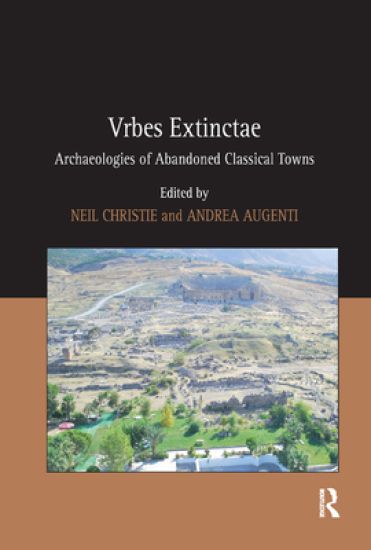
Core tourist sites for the classical world are the ruins of those many and scattered examples of 'lost' and abandoned towns - from Pompeii to Timgad to Ephesus and Petra. Usually studied for their peaks and growth, rarely are their ends explored in detail, to consider the processes of loss and also to trace their 'afterlives', when they were often robbed for materials even if still hosting remnant populations.This volume breaks new ground by examining the phenomenon of urban loss and abandonment from Roman to medieval times across the former Roman Empire. Through a series of case studies two main aspects are examined: firstly, the sequences and chronologies of loss of sites, roles, structures, people, identity; and secondly the methodologies of study of these sites - from early discoveries and exploitation of such sites to current archaeological and scientific approaches (notably excavation, urban survey, georadar and geophysics) to studying these crucial centres and their fates. How can we determine the causes of urban failure - whether economic, military, environmental, political or even religious? How drawn out was the process of urban decay and abandonment? What were the natures of the afterlives of these sites which archaeology is beginning to trace? How far does scrutiny of these 'extinct' sites help in discussion of archaeological trajectories of sites that persisted? The fourteen core chapters in this collection consider specific examples and case studies of such 'lost' classical cities from across the many Roman provinces in order to address these questions. Bringing together an array of archaeological and historical voices to share views on and findings from excavations and surveys of 'failed' towns, this volume offers much to scholars of Roman, late antique and early medieval and medieval archaeology and history.
Nach Artikel 2 der UN-Charta sind alle Mitgliedstaaten der Vereinten Nationen verpflichtet, ihre Konflikte im Wege der friedlichen Streiterledigung beizulegen. In der vorliegenden Arbeit wird anhand des Streites um den Beagle-Kanal dargestellt, wie Argentinien und Chile diesem volkerrechtlichen Anspruch in geradezu vorbildlicher Weise gerecht geworden sind. Insbesondere wird der historische Hintergrund dieser Grenzstreitigkeiten herausgearbeitet, der fur eine Reihe von zwischenstaatlichen Konflikten in Lateinamerika ursachlich war. Auch der Einfluss der katholischen Kirche in Sudamerika wird anlasslich des Beagle-Konflikts deutlich; 1493 teilte Papst Alexander VI. die Interessenspharen in der Neuen Welt, was den Beagle-Konflikt bereits im Keim anlegte. 500 Jahre spater war es wiederum ein Papst, der diesen Streit beendete."
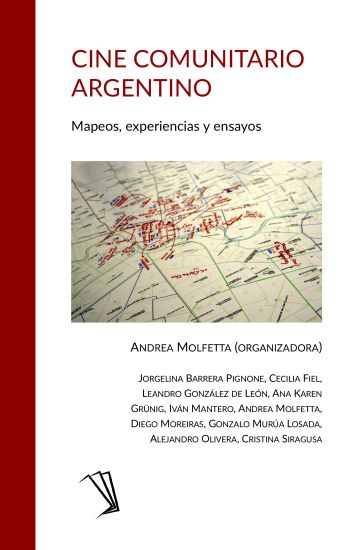
En este libro se presenta una serie de textos sobre los diversos procesos y pr cticas culturales vinculadas al cine comunitario a partir del trabajo de campo en las provincias de Buenos Aires y C rdoba. El resultado es una descripci n -sentando referencia hist rica- de los principales grupos productores y exhibidores del audiovisual comunitario en ambos territorios.
How do international negotiations affect domestic politics? Starting in the 1990s, countries throughout Latin America embarked on many and simultaneous negotiations. On the shifting ground of widening and deepening trade agendas and diverse arenas, what factors determined trade politics?This book examines the domestic political dynamics triggered by South-South, North-South and multilateral agendas in Argentina and Chile between 1990 and 2005. Using a much-needed cross-negotiation and cross-country comparative perspectives, and through detailed empirical analyses of several key negotiations, it proposes an explanation that emphasizes the interplay between international negotiations and domestic trade politics, taken as the result of the complex and dynamic interdependencies and interrelations between state and society.Informed by interviews with public officials, businesses and civil society, the analysis reveals that variation in the depth of agendas, the distributional effects and the uncertainty of political outcomes all have important consequences for domestic preference formation, collective action strategies and types of relationships. Given this, the variety of negotiations, when considered separately and comparatively, show that South-South, North-South and multilateral processes promote different patterns of trade politics. In sum, although national specificities and historical legacies are important, the book argues that trade policy comes first in creating domestic politics in Latin America.
Soils in Córdoba (Argentina) Affected by Fires
Andrea Rubenacker; Silvia Ceppi
Editorial Academica Espanola
2018
pokkari
C rdoba is a central province in Argentina, where fires in rural areas and nature reserves have increased in frequency and intensity in the last years. Among other variables, soil degradation by fire affects the dynamics of organic matter, which can substantially change its quantity and quality in short and long term. The humic substances, whose most important components are fulvic acids (FA) and humic acids (HA) are the most resistant fractions to biodegradation. These fractions play a fundamental role in the soil through their chemical reactivity. The objective of this work was to analyze the changes in the chemical and physical-chemical properties of HA extracted from fire-affected soils, with extensive crops (soybeans and corn) and native forests without intervention. The information obtained, with different methodologies, shows the influence on the soil properties, of the different surface vegetable residues present at the fire event.
Empresarios y Estado en Argentina: Política y economía 1955-2001
Andrea Lluch
Lenguaje Claro
2020
nidottu
Si bien el estancamiento de la econom a argentina reconoce un momento de inicio a mediados de la d cada de 1970, ya promediando los a os cincuenta, el desenvolvimiento de la industrializaci n se vio sometido a diferentes trabas y su comportamiento estuvo signado por recurrentes conflictos por la distribuci n del ingreso y una persistente y elevada inflaci n. Estos fen menos influyeron de manera decisiva en la formulaci n de diagn sticos muy cr ticos sobre el desempe o econ mico argentino y en la elaboraci n de estrategias de aguda confrontaci n por parte de los distintos actores.Cuando parec a que se estaban superando lentamente las rigideces que constre an el desarrollo de la econom a argentina desde los a os cincuenta, los diferentes contendientes sociales y pol ticos observaron con pesimismo esa evoluci n, proceso que se acentuar a a n m s en el marco de la crisis capitalista internacional de los a os setenta. Con el golpe de Estado de 1976, una fracci n de los sectores dominantes propuso una reformulaci n radical de las pol ticas econ micas que ten a como prop sito disciplinar a los actores econ micos y minar las bases de un orden econ mico basado en la industrializaci n orientada al mercado interno.Precisamente, el arco temporal que abarca este libro se inicia a mediados de la d cada de 1950 y culmina en la crisis del a o 2001, momento en que se produjo el colapso del orden econ mico neoliberal implantado por el menemismo. La "segunda apertura", en el marco de la convertibilidad, hab a introducido transformaciones radicales en la econom a argentina y alent as una nueva reconfiguraci n de los sectores dominantes: los grupos econ micos y el capital extranjero.Autoras y autores plantean en cada cap tulo renovadas preguntas y ofrecen nueva evidencia emp rica en torno a las relaciones entre el Estado, las corporaciones y los sectores empresariales. Se trata de aportes relevantes que contribuyen a comprender la compleja trama de actores, estrategias y pol ticas que se esconde por detr s de la crisis de la econom a argentina durante la segunda mitad del siglo veinte.ContenidoIntroducci n, Claudio Belini1 - Actores, pol ticas y procesos en la transformaci n del agro pampeano en la segunda mitad del siglo veinte, Osvaldo Barsky2 - El empresariado industrial durante el ascenso y la crisis del desarrollismo (1955-1963), Claudio Belini3 - Empresarios y pol tica econ mica en la "Revoluci n Argentina" (1966-1973), An bal J uregui4 - Las empresas extranjeras en la industria argentina (1950-1976), Andrea Lluch y Norma Lanciotti5 - Revisando la pol tica estrat gica: or genes de la producci n en serie en la industria automovil stica de Argentina, Corea del Sur y Espa a, Jordi Catal n6 - El desarrollo empresarial espa ol y el modelo neoliberal en la Argentina de los a os noventa, Eloi Serrano Robles7 - Las estrategias de los grandes grupos econ micos argentinos y su impacto en la extranjerizaci n del empresariado durante la crisis y salida del r gimen de convertibilidad, Alejandro GaggeroLos autoresSobre el compiladorClaudio Belini es doctor en Historia por la Universidad de Buenos Aires (UBA) e Investigador del Consejo Nacional de Investigaciones Cient ficas y T cnicas (Conicet) en el Instituto de Historia Argentina y Americana "Dr. Emilio Ravignani", Programa de Historia Econ mica y Social Americana (PEHESA). Integra el Centro de Estudios Econ micos de la Empresa y el Desarrollo (CEEED). Es profesor asociado de Historia Econ mica y Social Argentina en la Facultad de Ciencias Econ micas (UBA) y profesor adjunto de Historia Argentina II (1862-1916) en la Facultad de Filosof a y Letras (UBA), donde, adem s, codirige la maestr a en Historia. Dicta cursos de posgrado en el Instituto de Altos Estudios Sociales (IDAES) de la Universidad de San Mart n (UNSAM). Su rea de investigaci n es la historia industrial y de las pol ticas econ micas.
Identificación y caracterización de virus de mandioca en Argentina
Andrea Alejandra Zanini
Editorial Academica Espanola
2015
pokkari
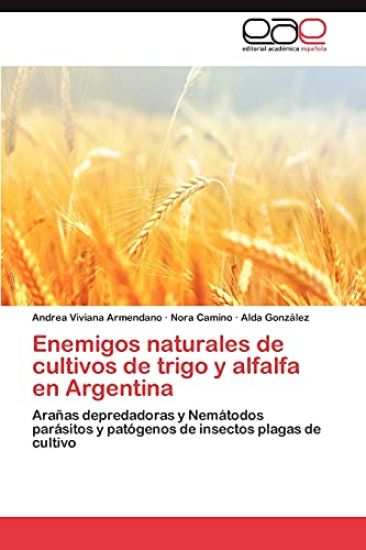
Enemigos Naturales de Cultivos de Trigo y Alfalfa En Argentina
Andrea Viviana Armendano; Nora Camino; Alda Gonz Lez
Eae Editorial Academia Espanola
2012
pokkari
Stress, coping e burnout negli agenti della polizia autostradale federale
Andrea Karla de Freitas; Luis Felipe Dias Lopes
Edizioni Sapienza
2024
pokkari
Teorías y prácticas audiovisuales: Actas del primer Congreso Internacional de la Asociación Argentina de Estudios de Cine y Audiovisual
Andrea Molfetta; Miguel a. Santagada; Marina Moguillansky
Teseo
2010
nidottu
Con una certeza similar a la que inspira lo que en la pr ctica han iniciado los m s de cien colegas que participaron en Tandil del primer Congreso Internacional, es decir, con la voluntad que tiende a la integraci n y al necesario intercambio de perspectivas heterog neas, los investigadores nucleados en AsAECA hemos conformado esta asociaci n de estudiosos del cine y del audiovisual. Nos asociamos para configurar este campo de estudios de la cultura contempor nea a partir de la diversidad epist mico-metodol gica y la heterogeneidad de miradas. Entre otros resultados, ofrecemos esta colecci n de art culos, como una muestra significativa del intercambio que proveemos y del alcance de nuestras metas. Podemos revisarlo, si queremos, como un primer mapa del estado de los estudios de cine y audiovisual en nuestro pa s. Agradecemos especialmente el subsidio de la Agencia Nacional de Promoci n Cient fica y Tecnol gica, as como el apoyo de la UNICEN y del comprometido equipo gestor de asociados que llev adelante toda esta producci n.
Ficoflora de la llanura aluvial del río Colorado, (Patagonia Argentina)
Andrea Emilia Biasotti
PUBLICIA
2016
nidottu
Bonamia sp. parásito de Ostrea puelchana en Patagonia Argentina
Marina Andrea Kroeck
Editorial Académica Española
2012
nidottu
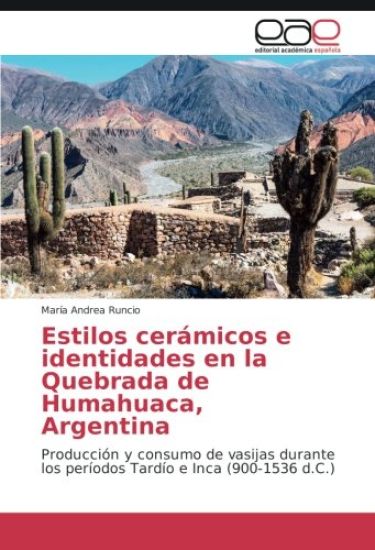
Estilos cerámicos e identidades en la Quebrada de Humahuaca, Argentina
María Andrea Runcio
EAE
2016
nidottu
Bioaktive unpolare Metaboliten aus einheimischen Pflanzen Argentiniens
Ricardo Federico Laime; Andrea Mabel Sosa; Elena Cartagena
Verlag Unser Wissen
2022
pokkari
Bioactive Nonpolar Metabolites from Native Plants of Argentina
Ricardo Federico Laime; Andrea Mabel Sosa; Elena Cartagena
Our Knowledge Publishing
2022
pokkari
Metaboliti bioattivi non polari di piante native dell'Argentina
Ricardo Federico Laime; Andrea Mabel Sosa; Elena Cartagena
Edizioni Sapienza
2022
pokkari