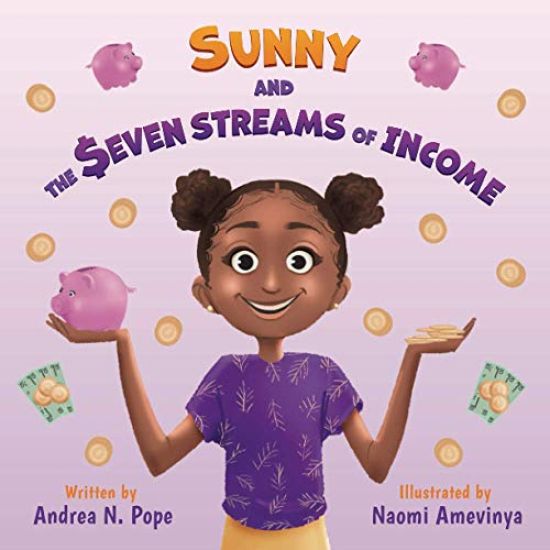
The purpose of this book is to introduce readers to the concept of social entrepreneurship, current initiatives, as well as how to create social enterprises. Once readers have completed the book they will have a better understanding of how to address issues in their community while creating positive change.
The purpose of this book is to take the reader through the process of how I created and taught an introduction to social entrepreneurship course at North Carolina A&T State University. A history of social entrepreneurship in the African American community is discussed as well as recommendations for future programs. Additional resources are also provided.
This book has been designed to assist high school students, parents, undergraduate and graduate students, as well as those thinking of returning to school with the college planning process. Topics include applying for scholarships, managing student loan debt, and barriers that prevent students from completing their degrees, or that prolong the time that they are enrolled in school.
En kvinne blir hentet opp på scenen under en teaterprøve, og uventet får hun en rolle i forestillingen, selv om ingen blir enige om hva hennes medvirkning egentlig skal bety. Når hovedpersonen begynner å interessere seg for henne utenfor teateret, oppdager han at hun spiller flere roller, og snart dras han inn i forestillingen hun har om livet og seg selv. Andrea N finnes ikke er en roman om identitet og spill, i en verden der det er fullstendig ubalanse mellom det autentiske og det iscenesatte.
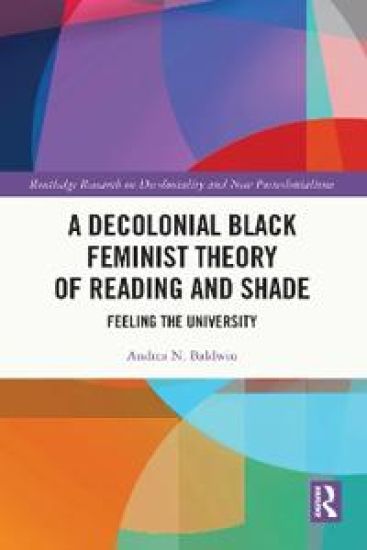
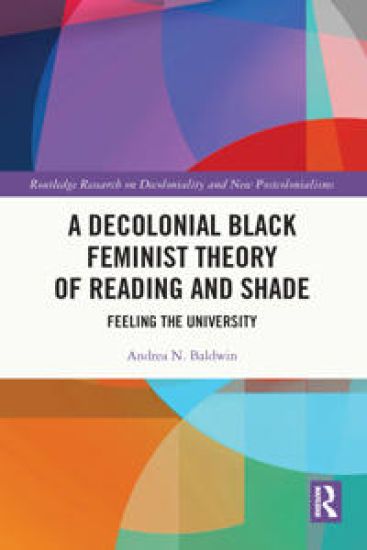
This book uses a decolonial Black feminist lens to understand the contemporary significance of the practices and politics of indifference in United States higher education. It illustrates how higher education institutions are complicit in maintaining dominant social norms that perpetuate difference. It weaves together Black feminisms, affect and queer theory to demonstrate that the ways in which human bodies are classified and normalized in societal and scientific terms contribute to how the minoritized and marginalized feel White higher education spaces. The text espouses a Black Feminist Shad(e)y Theoretics to read the university, by considering the historical positioning of the modern university as sites in which the modern body is made and remade through empirically reliable truth claims and how contemporary knowledges and academic disciplinary inheritances bear the fingerprints of racist sexist science even as the academy tries to disavow its inheritance through so-called inclusive practices and policies today. This book will appeal to students and scholars interested in Black feminism, Gender and women's studies, Black and ethnic studies, sociology, decoloniality, queer studies and affect theory.
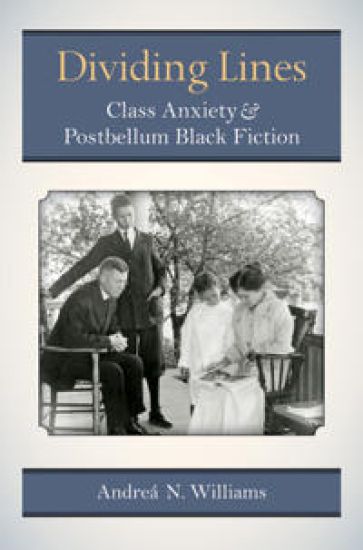
One of the most extensive studies of class in nineteenth-century African American literature to date, Dividing Lines unveils how black fiction writers represented the uneasy relationship between class differences, racial solidarity, and the quest for civil rights in black communities. By portraying complex, highly stratified communities with a growing black middle class, these authors dispelled notions that black Americans were uniformly poor or uncivilized. The book argues that the signs of class anxiety are embedded in postbellum fiction: from the verbal stammer or prim speech of class-conscious characters to fissures in the fiction's form. Andreá N. Williams delves into the familiar and lesser-known works of Frances E. W. Harper, Pauline Hopkins, Charles W. Chesnutt, Sutton Griggs, and Paul Laurence Dunbar, showing how these texts mediate class through discussions of labor, moral respectability, ancestry, spatial boundaries, and skin complexion. Dividing Lines also draws on reader responses—from book reviews, editorials, and letters—to show how the class anxiety expressed in African American fiction directly sparked reader concerns over the status of black Americans in the U.S. social order. Weaving literary history with compelling textual analyses, this study yields new insights about the intersection of race and class in black novels and short stories from the 1880s to 1900s.
One of the most extensive studies of class in nineteenth-century African American literature to date, Dividing Lines unveils how black fiction writers represented the uneasy relationship between class differences, racial solidarity, and the quest for civil rights in black communities. By portraying complex, highly stratified communities with a growing black middle class, these authors dispelled notions that black Americans were uniformly poor or uncivilized. The book argues that the signs of class anxiety are embedded in postbellum fiction: from the verbal stammer or prim speech of class-conscious characters to fissures in the fiction's form. Andreá N. Williams delves into the familiar and lesser-known works of Frances E. W. Harper, Pauline Hopkins, Charles W. Chesnutt, Sutton Griggs, and Paul Laurence Dunbar, showing how these texts mediate class through discussions of labor, moral respectability, ancestry, spatial boundaries, and skin complexion. Dividing Lines also draws on reader responses—from book reviews, editorials, and letters—to show how the class anxiety expressed in African American fiction directly sparked reader concerns over the status of black Americans in the U.S. social order. Weaving literary history with compelling textual analyses, this study yields new insights about the intersection of race and class in black novels and short stories from the 1880s to 1900s.
This book uses a decolonial Black feminist lens to understand the contemporary significance of the practices and politics of indifference in United States higher education. It illustrates how higher education institutions are complicit in maintaining dominant social norms that perpetuate difference. It weaves together Black feminisms, affect and queer theory to demonstrate that the ways in which human bodies are classified and normalized in societal and scientific terms contribute to how the minoritized and marginalized feel White higher education spaces. The text espouses a Black Feminist Shad(e)y Theoretics to read the university, by considering the historical positioning of the modern university as sites in which the modern body is made and remade through empirically reliable truth claims and how contemporary knowledges and academic disciplinary inheritances bear the fingerprints of racist sexist science even as the academy tries to disavow its inheritance through so-called inclusive practices and policies today. This book will appeal to students and scholars interested in Black feminism, Gender and women's studies, Black and ethnic studies, sociology, decoloniality, queer studies and affect theory.