Kirjojen hintavertailu. Mukana 11 244 527 kirjaa ja 12 kauppaa.

Kirjahaku

Etsi kirjoja tekijän nimen, kirjan nimen tai ISBN:n perusteella.

1000 tulosta hakusanalla Andreas Killen

Nervous Systems

Nervous Systems

Andreas Killen

HARPERCOLLINS PUBLISHERS INC
2024
nidottu
In this eye-opening chronicle of scientific research on the brain in the early Cold War era, the acclaimed historian Andreas Killen traces the complex circumstances surrounding the genesis of our present-day fascination with this organ.The 1950s were a transformative, even revolutionary decade in the history of brain science. Using new techniques for probing brain activity and function, researchers in neurosurgery, psychiatry, and psychology achieved dramatic breakthroughs in the treatment of illnesses like epilepsy and schizophrenia, as well as the understanding of such faculties as memory and perception. Memory was the site of particularly startling discoveries. As one researcher wrote to another in the middle of that decade, “Memory was the sleeping beauty of the brain—and now she is awake.” Collectively, these advances prefigured the emergence of the field of neuroscience at the end of the twentieth century.But the 1950s also marked the beginning of the Cold War and a period of transformative social change across Western society. These developments resulted in unease and paranoia. Mysterious new afflictions—none more mystifying than “brainwashing”—also appeared at this time. Faced with the discovery that, as one leading psychiatrist put it, “the human personality is not as stable as we often assume,” many researchers in the sciences of brain and behavior joined the effort to understand these conditions. They devised ingenious and sometimes transgressive experimental methods for studying and proposing countermeasures to the problem of Communist mind control. Some of these procedures took on a strange life of their own, escaping the confines of the research lab to become part of 1960s counterculture. Much later, in the early 2000s, they resurfaced in the War on Terror.These stories, often told separately, are brought together by the historian Andreas Killen in this chronicle of the brain’s mid-twentieth-century emergence as both a new research frontier and an organ whose integrity and capacities—especially that of memory—were imagined as uniquely imperiled in the 1950s. Nervous Systems explores the anxious context in which the mid-century sciences of the brain took shape and reveals the deeply ambivalent history that lies behind our contemporary understanding of this organ.
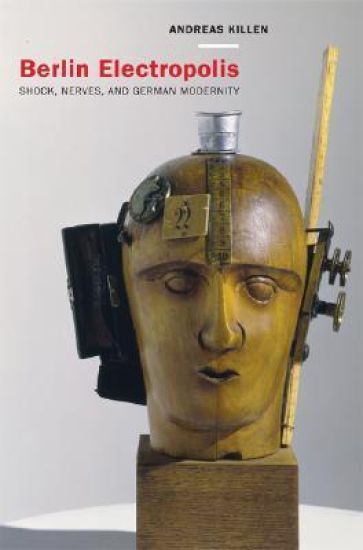
Berlin Electropolis

Berlin Electropolis

Andreas Killen

University of California Press
2006
sidottu
Berlin Electropolis ties the German discourse on nervousness in the late nineteenth and early twentieth centuries to Berlin's transformation into a capital of the second industrial revolution. Focusing on three key groups--railway personnel, soldiers, and telephone operators--Andreas Killen traces the emergence in the 1880s and then later decline of the belief that modernity caused nervous illness. During this period, Killen explains, Berlin became arguably the most advanced metropolis in Europe. A host of changes, many associated with breakthroughs in technologies of transportation, communication, and leisure, combined to radically alter the shape and tempo of everyday life in Berlin. The resulting consciousness of accelerated social change and the shocks and afflictions that accompanied it found their consummate expression in the discourse about nervousness. Wonderfully researched and clearly written, this book offers a wealth of new insights into the nature of the modern metropolis, the psychological aftermath of World War I, and the operations of the German welfare state. Killen also explores cultural attitudes toward electricity, the evolution of psychiatric thought and practice, and the status of women workers in Germany's rapidly industrializing economy. Ultimately, he argues that the backlash against the welfare state that occurred during the late Weimar Republic brought about the final decoupling of modernity and nervous illness.
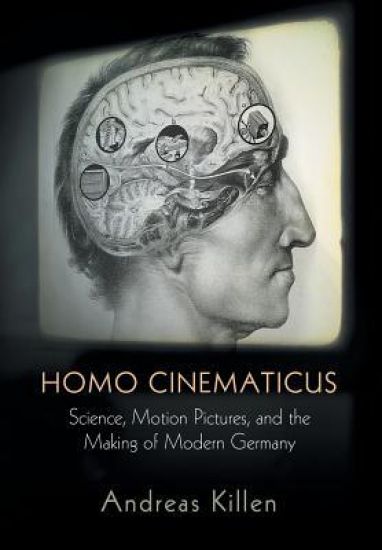
Homo Cinematicus

Homo Cinematicus

Andreas Killen

University of Pennsylvania Press
2017
sidottu
In the early decades of the twentieth century, two intertwined changes began to shape the direction of German society. The baptism of the German film industry took place amid post-World War I conditions of political and social breakdown, and the cultural vacuum left by collapsing institutions was partially filled by moving images. At the same time, the emerging human sciences-psychiatry, neurology, sexology, eugenics, industrial psychology, and psychoanalysis-began to play an increasingly significant role in setting the terms for the way Germany analyzed itself and the problems it had inherited from its authoritarian past, the modernizing process, and war. Moreover, in advancing their professional and social goals, these sciences became heavily reliant on motion pictures. Situated at the intersection of film studies, the history of science and medicine, and the history of modern Germany, Homo Cinematicus connects the rise of cinema as a social institution to an inquiry into the history of knowledge production in the human sciences. Taking its title from a term coined in 1919 by commentator Wilhelm Stapel to identify a new social type that had been created by the emergence of cinema, Killen's book explores how a new class of experts in these new disciplines converged on the figure of the "homo cinematicus" and made him central to many of that era's major narratives and social policy initiatives. Killen traces film's use by the human sciences as a tool for producing, communicating, and popularizing new kinds of knowledge, as well as the ways that this alliance was challenged by popular films that interrogated the truth claims of both modern science and scientific cinema. In doing so, Homo Cinematicus endeavors to move beyond the divide between scientific and popular film, examining their historical coexistence and coevolution.
Killer High

Killer High

Peter Andreas

Oxford University Press Inc
2020
sidottu
There is growing alarm over how drugs empower terrorists, insurgents, militias, and gangs. But by looking back not just years and decades but centuries, Peter Andreas reveals that the drugs-conflict nexus is actually an old story, and that powerful states have been its biggest beneficiaries. In his path-breaking Killer High, Andreas shows how six psychoactive drugs-ranging from old to relatively new, mild to potent, licit to illicit, natural to synthetic-have proven to be particularly important war ingredients. This sweeping history tells the story of war from antiquity to the modern age through the lens of alcohol, tobacco, caffeine, opium, amphetamines, and cocaine. Beer and wine drenched ancient and medieval battlefields, and the distilling revolution lubricated the conquest and ethnic cleansing of the New World. Tobacco became globalized through soldiering, with soldiers hooked on smoking and governments hooked on taxing it. Caffeine and opium fueled imperial expansion and warfare. The commercialization of amphetamines in the twentieth century energized soldiers to fight harder, longer, and faster, while cocaine stimulated an increasingly militarized drug war that produced casualty numbers surpassing most civil wars. As Andreas demonstrates, armed conflict has become progressively more drugged with the introduction, mass production, and global spread of mind-altering substances. As a result, we cannot understand the history of war without including drugs, and we similarly cannot understand the history of drugs without including war. From ancient brews and battles to meth and modern warfare, drugs and war have grown up together and become addicted to each other.
Killer High

Killer High

Peter Andreas

OXFORD UNIVERSITY PRESS INC
2022
nidottu
The story of war from antiquity to the modern age through the lens of six drugs: alcohol, tobacco, caffeine, opium, amphetamines, and cocaine. There is growing alarm over how drugs empower terrorists, insurgents, militias, and gangs. But by looking back not just years and decades but centuries, Peter Andreas reveals that the drugs-conflict nexus is actually an old story, and that powerful states have been its biggest beneficiaries. In his path-breaking Killer High, Andreas shows how six psychoactive drugs-ranging from old to relatively new, mild to potent, licit to illicit, natural to synthetic-have proven to be particularly important war ingredients. This sweeping history tells the story of war from antiquity to the modern age through the lens of alcohol, tobacco, caffeine, opium, amphetamines, and cocaine. Beer and wine drenched ancient and medieval battlefields, and the distilling revolution lubricated the conquest and ethnic cleansing of the New World. Tobacco became globalized through soldiering, with soldiers hooked on smoking and governments hooked on taxing it. Caffeine and opium fueled imperial expansion and warfare. The commercialization of amphetamines in the twentieth century energized soldiers to fight harder, longer, and faster, while cocaine stimulated an increasingly militarized drug war that produced casualty numbers surpassing most civil wars. As Andreas demonstrates, armed conflict has become progressively more drugged with the introduction, mass production, and global spread of mind-altering substances. As a result, we cannot understand the history of war without including drugs, and we similarly cannot understand the history of drugs without including war. From ancient brews and battles to meth and modern warfare, drugs and war have grown up together and become addicted to each other.
Hamburg - Deine Morde. Die Moral eines Killers
Ein prominenter Hamburger Sch nheitschirurg wird in seiner Praxis ermordet aufgefunden. Harald Hansen, Hauptkommissar der Mordkommission, bernimmt den Fall. Er sieht Parallelen zu fr heren Morden und glaubt an einen Auftragskiller als T ter. Hansen hat einen h chst riskanten Plan, den er im Alleingang verwirklichen will. Doch er ger t bald in Schwierigkeiten. Der neue Kollege Thomas Bernstein wird misstrauisch und die russische Mafia sch tzt seine Schn ffelarbeit berhaupt nicht. Hansen wei nicht, wem er noch vertrauen kann. In seinem verbissenen Kampf f r Gerechtigkeit ist er in der Wahl seiner Mittel nicht zimperlich und l uft Gefahr, selbst die Grenze zur Kriminalit t zu berschreiten.
Filmausweider - Das Splattermovies Magazin, Ausgabe 5, I spit on your Grave 2, Hatchet 3, Curse of Chucky, S-VHS, Auftershock, No one lives, Bounty Killer, Zombies Hunter, The walking Dead - Spin-Off Special, und noch viel mehr...
Deutschland Magazin rund um den blutigen Film mit News und Reviews zu I spit on your Grave 2, Aftershock, Hatchet 3, Curse of Chucky, S-VHS, Outpost 3, Butcher Boys, No one Lives, Zombie Hunter, Hooligans 3, Last Days on Mars, Outpost 3, Bounty Killer, Fresh Meat und noch einigen mehr... + gr erer News-Anteil und einem Spezial zum The walking Dead - Spin-Off
Die Darstellung Der Familie Im Modernen Amerikanischen Drama

Die Darstellung Der Familie Im Modernen Amerikanischen Drama

Andrea Kallenberg-Schröder

Peter Lang AG
1990
nidottu
Das moderne amerikanische Drama nach Eugene O'Neill wird in der Literatur als sogenanntes "family drama" angesehen. Die Familie als wesentliche soziale Institution steht im Mittelpunkt des dramatischen Geschehens. Sie wird aber nicht als "happy family, " als Teil des ewig positiven "American dream" dargestellt, sondern sie wird von den modernen Dramaturgen als Schlachtfeld und Quelle allen Ubels entlarvt."
Autobiographisches in Arthur Millers Familienzentrierten Dramen
Die Verwendung autobiographischer Elemente in literarischen Werken ist von grossem Interesse fur literaturwissenschaftliche und psychologische Interpretationsansatze. Die vorliegende Studie untersucht systematisch 14 familienzentrierte Werke des amerikanischen Dramatikers Arthur Miller (vom nicht publizierten "Honors at Dawn" (1937) bis zum 1980 erschienen "The American Clock") mit dem Ziel, autobiographische Elemente zu identifizieren und ihre Verwendung zu erklaren. Wiederkehrende Motive in den Dramen zeigen, dass sich Millers Protagonisten meist muhsam aus konfliktreichen Familienbeziehungen befreien mussen. Fur Miller bedeutet Schreiben Kompensation eigener familiarer Probleme; dabei gelingt es ihm stets, Personliches zu transzendieren und den gesellschaftlichen Bezug herzustellen."
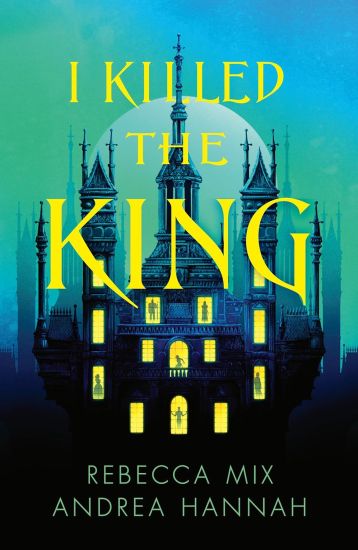
I Killed the King

I Killed the King

Andrea Hannah; Rebecca Mix

HARPERCOLLINS PUBLISHERS
2025
sidottu
One of Us Is Lying meets Knives Out – with beasts, murder, and magic – in this first book in a thrilling locked-room whodunnit YA fantasy duology by Andrea Hannah and New York Times bestseller Rebecca Mix. After a decade of war, the kingdoms of Avendell and Istellia have finally agreed to peace. As nobles and magic wielders from both countries arrive at remote Castle Avendell for a historic all-night masquerade to celebrate, King Costis summons an unlikely group to his chambers: the crown prince, his Istellian bride-to-be, his personal guard, a wild beast tamer, and the palace’s questionable new healer. But before Costis can reveal why he has gathered them, the castle goes dark. When the lights come back, the king is dead – murdered with the princess’s knife, in a weak spot only his guard knew of, and with venom from one of the beast tamer’s monsters lacing the blade. With no clear killer – and everyone a suspect – they make a risky pact: tell no one until the treaty is signed. But when a winter storm seals everyone inside and someone aware of the king's untimely death begins to pick off guests one by one, the six suspects must work together to discover who killed the king … before one of them is next.
A Killer Among Friends

A Killer Among Friends

Andrea Barton

Next Chapter
2025
sidottu
Murder. Music. Company secrets. Soon after journalist Jade returns from abroad to her hometown, Melbourne, her friend Nick is killed. She turns to their tight-knit circle for answers, only to uncover a web of lies. Mounting evidence suggests her best friend Elena's suicide three years earlier is connected to the case. Was it really murder? As Jade closes in on the killer, she realizes the suspects are all people she loves ... and her life will depend on knowing who she can trust. "A compelling whodunnit. Jade is a complex, feisty character, battling her own demons and insecurities." -Lisa Darcy, author of The Pact- "What an intricate plot and great characters. I literally couldn't put it down." -Sarah Bourne, author of Exile-
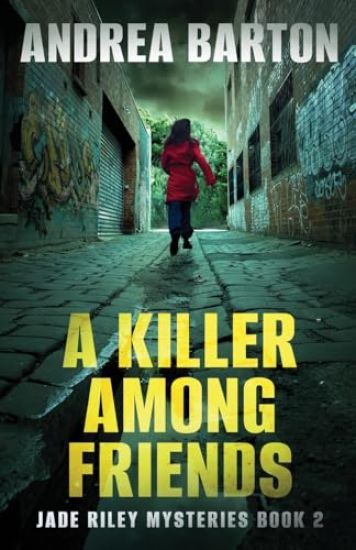
A Killer Among Friends

A Killer Among Friends

Andrea Barton

Next Chapter
2025
pokkari
Murder. Music. Company secrets. Soon after journalist Jade returns from abroad to her hometown, Melbourne, her friend Nick is killed. She turns to their tight-knit circle for answers, only to uncover a web of lies. Mounting evidence suggests her best friend Elena's suicide three years earlier is connected to the case. Was it really murder? As Jade closes in on the killer, she realizes the suspects are all people she loves ... and her life will depend on knowing who she can trust. "A compelling whodunnit. Jade is a complex, feisty character, battling her own demons and insecurities." -Lisa Darcy, author of The Pact- "What an intricate plot and great characters. I literally couldn't put it down." -Sarah Bourne, author of Exile-
The Key of Kilenya

The Key of Kilenya

Andrea Pearson

Createspace Independent Publishing Platform
2011
nidottu
When two vicious wolves chase fourteen-year-old Jacob Clark down a path from our world into another, his life is forever changed. He has no idea they have been sent by the Lorkon-evil, immortal beings who are jealous of powers he doesn't know he possesses-powers they desire to control.The inhabitants of the new world desperately need Jacob's help in recovering a magical key that was stolen by the Lorkon and is somehow linked to him. If he helps them, his life will be at risk. But if he chooses not to help them, both our world and theirs will be in danger. The Lorkon will stop at nothing to unleash the power of the key-and Jacob's special abilities.
The Ember Gods (Kilenya Series, 2)

The Ember Gods (Kilenya Series, 2)

Andrea Pearson

Createspace Independent Publishing Platform
2011
nidottu
Jacob Clark's new abilities are a blessing and a curse. He's a hero for returning the magical Key of Kilenya to its rightful owners, but at school he's starting to get noticed for something other than his basketball skills. And the attention is freaking him out.Balancing both worlds is tricky enough, but Jacob has tasked himself with saving Aloren who's trapped in Maivoryl City by the Ember Gods. He doesn't want to wait for the potion that will protect his team from the corrosive influence of the Lorkon, but the desire to prove himself to the high school basketball coach conflicts with his plans to rescue her.Feeling pulled by both sides, Jacob must walk a tightrope of warring worlds with lives on the line. Lives that will be lost if he doesn't figure out how to complete his quest and balance his abilities. Fast.