Kirjojen hintavertailu. Mukana 11 244 527 kirjaa ja 12 kauppaa.

Kirjahaku

Etsi kirjoja tekijän nimen, kirjan nimen tai ISBN:n perusteella.

1000 tulosta hakusanalla Andrei Beliakov

Istoricheskoe oruzhie. Pamjatniki, sobranija, osobennosti issledovanija. Vypusk 3
Kollektivnyj trud obedinil v sebe aktualnye issledovanija v oblasti oruzhievedenija, posvjaschennye shirokomu spektru nauchnoj problematiki. Predstavlennye raboty razrabatyvajut konkretnye voprosy po osnovnym napravlenijam izuchenija istoricheskogo oruzhija: zaschitnogo vooruzhenija, kholodnogo oruzhija, ruchnogo ognestrelnogo oruzhija i artillerii, voennogo snarjazhenija, amunitsii i uniformy. Otdelnyj razdel truda posvjaschen issledovanijam istorii oruzhejnykh kollektsij. Avtorskim kollektivom byl zatronut i rjad krupnykh problem sovremennogo oruzhievedenija. Znachitelnaja chast statej posvjaschena izucheniju konkretnykh pamjatnikov, vkhodjaschikh v sobranija tsentralnykh rossijskikh muzeev: Muzeev Moskovskogo Kremlja, Gosudarstvennogo Ermitazha, Gosudarstvennogo istoricheskogo muzeja, Voenno-istoricheskogo muzeja artillerii, inzhenernykh vojsk i vojsk svjazi, Tsentralnogo muzeja Vooruzhennykh sil RF i rjada drugikh sobranij.Izdanie prednaznacheno dlja spetsialistov-oruzhievedov, muzejnykh sotrudnikov, kollektsionerov, a takzhe shirokogo kruga chitatelej, interesujuschikhsja oruzhejnoj tematikoj.
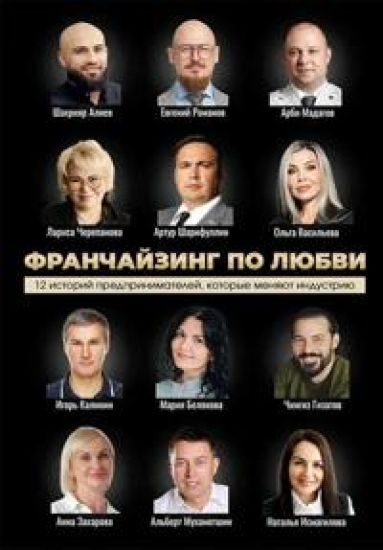
Franchajzing po ljubvi. 12 istorij predprinimatelej, kotorye menjajut industriju

Franchajzing po ljubvi. 12 istorij predprinimatelej, kotorye menjajut industriju

Andrej Sharifullin; Marija Beljakova; Marija Beljakova; Andrej Sharifullin

Eksmo
2026
sidottu
Kniga, posle kotoroj masshtabirovanie perestaet byt lotereej. V knige - dvenadtsat soderzhatelnykh intervju s predprinimateljami, kotorye proshli put ot odnoj tochki do federalnoj seti i sokhranili kachestvo, ljudej i smysl. Oni pokazyvajut, kak na samom dele vyrastit set: kogo brat v partnery i kak ikh gotovit, kakie standarty derzhat distantsiju, kak ustroit finmodel, chtoby ros ne tolko oborot, no i marzha, i kak kontrolirovat sotni tochek bez polomki servisa. Kniga nachinaetsja s otveta na vopros "zachem" - zachem strane i rynku nuzhen zrelyj franchajzing. Avtory formulirujut missiju: ne "dogonjat modnye trendy", a stroit "khram" - sistemu, gde silnye modeli vytesnjajut slabye i podnimajut planku servisa. Eto ne metafora, a printsip: delat rynok tsivilizovannee, kachestvennee, silnee. Na vykhode chitatel poluchaet rabochie algoritmy, kotorye sokraschajut tsenu oshibok zapuska i rosta: kak formirovat voronku partnerov i provodit otbor; kak organizovyvat obuchenie i sertifikatsiju; kakie standarty realno ispolnjajutsja; kak stroit monitoring i "kachestvennyj kontur" seti; kak obespechit ustojchivuju ekonomiku kazhdoj tochki i vsej sistemy.
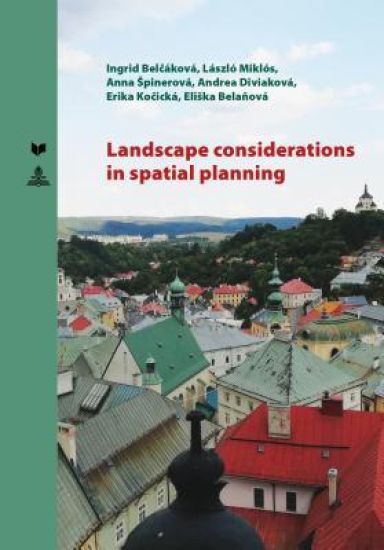
Landscape Considerations in Spatial Planning

Landscape Considerations in Spatial Planning

Ingrid Belcáková; László Miklós; Anna Špinerová; Andrea Diviaková; Erika Kocická; Eliška Belanová

Peter Lang AG
2019
sidottu
The landscape is a vital spatial and material frame for our natural and man-made environment and is considered by many stakeholders to be one of the most important aspects of a healthy, enjoyable life. This book deals with the current trends in the theory of the integration of landscape aspects in spatial planning and development processes. The authors discuss the need for integrated land use planning, landscape planning and impact assessment, and explore landscape consideration practice in European countries, with a special focus on Slovakia. Information about landscape decision-making approaches and cases illustrates current practice and lessons from experience, providing baseline material for landscape academic forum, members of the public and professionals in spatial development making: planners, designers, architects, engineers and others. This practice-oriented and up-to-date monograph is a sourcebook and reference guide to key trends, issues of and approaches to sustainable spatial development in European countries.
Andrei Tarkovsky's Sounding Cinema

Andrei Tarkovsky's Sounding Cinema

Tobias Pontara

Routledge
2019
sidottu
Andrei Tarkovsky's Sounding Cinema adds a new dimension to our understanding and appreciation of the work of Russian director Andrei Tarkovsky (1932–1986) through an exploration of the presence of music and sound in his films.The first comprehensive study in English concentrating on the soundtrack in Tarkovsky’s cinema, this book reveals how Tarkovsky’s use of electronic music, electronically manipulated sound, traditional folk songs and fragments of canonized works of Western art music plays into the philosophical, existential and ethical themes recurring throughout his work. Exploring the multilayered relationship between music, sound, film image and narrative space, Pontara provides penetrating and innovative close readings of Solaris (1972), Mirror (1975), Stalker (1979), Nostalghia (1983) and The Sacrifice (1986) and in turn deeply enriches critical understanding of Tarkovsky’s films and their relation to the broader traditions of European art cinema. An excellent resource for scholars, researchers and students interested in European art cinema and the role of music in film, as well as for film aficionados interested in Tarkovsky’s work.
Andrei Bitov

Andrei Bitov

Ellen Chances

Cambridge University Press
2006
pokkari
This is the first book on Andrei Bitov, one of contemporary Russia's most original writers. It plots his evolution from his early publications of the post-Stalin years to his mature masterpieces of the glasnost era. Ellen Chances assesses his place both in the Russian literary tradition from Pushkin onwards, and as part of a broader, international cultural heritage including Dickens, Fellini, and Proust. She explores his themes, from the psychological effects of Stalin on Soviet society to universal questions such as the human being's relationship with nature, history and culture, and discovers in his deeply philosophical and intensely psychological writings an innovative methodology, 'ecological prose', that goes beyond modernist and post-modernist fragmentation in search of the wholeness of life.
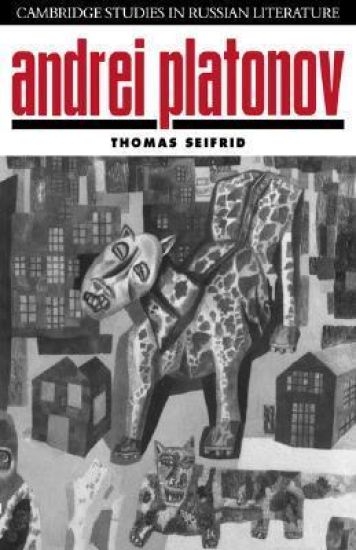
Andrei Platonov

Andrei Platonov

Thomas Seifrid

Cambridge University Press
2006
pokkari
The Soviet writer Andrei Platonov (1899–1951) belongs to a Russian philosophical tradition that includes such figures as Vladimir Solov'ev, Mikhail Bakhtin and Boris Pasternak. This 1992 study investigates the interrelation of themes, imagery and the use of language in his prose. Thomas Seifrid shows how Platonov was particularly influenced by Russian utopian thought of the late nineteenth and early twentieth centuries, and how his world view was also shaped by its implicit dialogue with the 'official' Soviet philosophy of Marxism-Leninism, and later with Stalinist utopianism. He discusses how in Platonov's masterpieces of the late 1920s and early 1930s linguistic parody comes together with existential angst and dystopian doubts about the course of Soviet history. The study concludes with consideration of the works Platonov wrote from 1934 to 1951, in the age of socialist realism. In these, he manoeuvred to preserve some of the essentials of his earlier world view and verbal manner while fusing them to the literary formulae that were expected of him.
Andrei Platonov

Andrei Platonov

Thomas Seifrid

Cambridge University Press
1992
sidottu
The Soviet writer Andrei Platonov (1899–1951) belongs to a Russian philosophical tradition that includes such figures as Vladimir Solov'ev, Mikhail Bakhtin and Boris Pasternak. This 1992 study investigates the interrelation of themes, imagery and the use of language in his prose. Thomas Seifrid shows how Platonov was particularly influenced by Russian utopian thought of the late nineteenth and early twentieth centuries, and how his world view was also shaped by its implicit dialogue with the 'official' Soviet philosophy of Marxism-Leninism, and later with Stalinist utopianism. He discusses how in Platonov's masterpieces of the late 1920s and early 1930s linguistic parody comes together with existential angst and dystopian doubts about the course of Soviet history. The study concludes with consideration of the works Platonov wrote from 1934 to 1951, in the age of socialist realism. In these, he manoeuvred to preserve some of the essentials of his earlier world view and verbal manner while fusing them to the literary formulae that were expected of him.
Andrei Codrescu and the Myth of America

Andrei Codrescu and the Myth of America

Kirby Olson

McFarland Co Inc
2005
pokkari
"This is one of those times, a time choked in the weeds of academic and civilian formalism. To put it mildly, most of what we see in print in North America is unbearably trivial and singularly devoid of courage."--Andrei Codrescu, The Disappearance of the Outside. Known to the general public as a radio commentator on National Public Radio, Romanian-born essayist and poet Andrei Codrescu has developed a variety of voices throughout his career: Transylvanian humorist on NPR, surrealist poet in his many volumes of poetry, academic essayist in his philosophical writings and historical novelist. Taking seemingly everyday events in seemingly mundane places, Codrescu is able to link the random details into a larger whole, leading his readers and listeners to conclusions very different from those they first imagined. This work explores Codrescu's writings and how they are a part of the surrealist tradition. It examines the ways in which his poetry, essays and novels are influenced by his upbringing in Communist Romania and the liberal attitudes he encountered upon moving to the United States, and draws comparisons between Codrescu and other surrealists. An interview with the author is also included.
Andrei Tarkovsky

Andrei Tarkovsky

Sean Martin

OLDCASTLE BOOKS LTD
2021
pokkari
Andrei Tarkovsky is the most celebrated Russian filmmaker since Eisenstein, and one of the most important directors to have emerged during the 1960s and 70s. Although he made only seven features, each one was a major landmark in cinema, the most well-known of them being the mediaeval epic Andrei Rublev - widely regarded as one of the greatest films of all time - and the autobiographical Mirror, set during the Russia of Stalin's purges in the 1930s and the years of stagnation under Brezhnev. Both films landed Tarkovsky in considerable trouble with the authorities, and he gained a reputation for being a tortured - and ultimately martyred - filmmaker. Despite the harshness of the conditions under which he worked, Tarkovsky built up a remarkable body of work. He burst upon the international scene in 1962 with his debut feature Ivan's Childhood, which won the Golden Lion at Venice and immediately established him as a major filmmaker. During the 1970s, he made two classic ventures into science-fiction, Solaris, regarded at the time as being the Soviet reply to Kubrick's 2001: A Space Odyssey and later remade by Steven Soderbergh, and Stalker, which was thought to have predicted the Chernobyl disaster. Harassed at home, Tarkovsky went into exile and made his last two films in the West, where he also published his classic work of film and artistic theory, Sculpting in Time. Since his death in Paris in 1986, his reputation continued - and continues - to grow. Sean Martin considers the whole of Tarkovsky's oeuvre, from the classic student film The Steamroller and the Violin, across the full-length films, to the later stage works and Tarkovsky's writings, paintings and photographs. Martin also seeks to demystify Tarkovsky as a 'difficult' director, whilst also celebrating his radical aesthetic of long takes and tracking shots, which Tarkovsky was to dub 'imprinted' or 'sculpted' time, and to make a case for Tarkovsky's position not just as an important filmmaker, but also as an artist who speaks directly about the most important spiritual issues of our time.
Andrei Tarkovsky's Sounding Cinema

Andrei Tarkovsky's Sounding Cinema

Tobias Pontara

Taylor Francis Ltd
2021
nidottu
Andrei Tarkovsky's Sounding Cinema adds a new dimension to our understanding and appreciation of the work of Russian director Andrei Tarkovsky (1932–1986) through an exploration of the presence of music and sound in his films.The first comprehensive study in English concentrating on the soundtrack in Tarkovsky’s cinema, this book reveals how Tarkovsky’s use of electronic music, electronically manipulated sound, traditional folk songs and fragments of canonized works of Western art music plays into the philosophical, existential and ethical themes recurring throughout his work. Exploring the multilayered relationship between music, sound, film image and narrative space, Pontara provides penetrating and innovative close readings of Solaris (1972), Mirror (1975), Stalker (1979), Nostalghia (1983) and The Sacrifice (1986) and in turn deeply enriches critical understanding of Tarkovsky’s films and their relation to the broader traditions of European art cinema. An excellent resource for scholars, researchers and students interested in European art cinema and the role of music in film, as well as for film aficionados interested in Tarkovsky’s work.
Andrei Tarkovsky

Andrei Tarkovsky

Peter Green

Palgrave Macmillan
1993
nidottu
A survey of the work of Andrei Tarkovsky, the Russian film-maker who lived from 1932-1986. It is a critical examination of his films in the light of his own writings and life, his aesthetics of film, his theory of time in cinematography and an attempt to comprehend his vision.
Andrei Bely

Andrei Bely

Daniel H Shubin

Lulu.com
2017
pokkari
Andrei Bely was the pseudonym of Boris Nikolaievich Bugaev, the most prominent symbolist author in Russian history, and symbolism's greatest promoter as a new genre of Russian literature. Bely had deep religious and philosophic convictions, studying the great religious texts of history and the influential philosophers. He was the greatest promoter of anthroposophy in Russia, having studied under Rudolf Steiner in Europe. Beyond this, Bely graduated from Moscow University in honors, completing physics and mathematics curriculums and later studying history and language. He was a genius beyond our comprehension. His untimely death at age 53 was due to a brain aneurysm caused from stress for his refusal to capitulate to Soviet demands and become a socialist writer. This volume is his life, as well as a history of symbolism, and it includes a selection of his symbolist writings translated from Russian into English. Daniel H Shubin has written several books on Russian history, religion and philosophy.
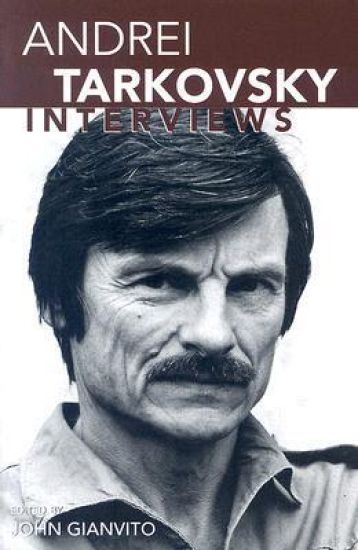
Andrei Tarkovsky

Andrei Tarkovsky

University Press of Mississippi
2006
nidottu
Andrei Tarkovsky (1932-1986) was one of Russia's most influential and renowned filmmakers, despite an output of only seven feature films in twenty years. Revered by such filmmaking giants as Ingmar Bergman and Akira Kurosawa, Tarkovsky is famous for his use of long takes, languid pacing, dreamlike metaphorical imagery, and meditations on spirituality and the human soul. His Andrei Roublev, Solaris, and The Mirror are considered landmarks of postwar Russian cinema.Andrei Tarkovsky: Interviews is the first English-language collection of interviews with and profiles of the filmmaker. It includes conversations originally published in French, Italian, Russian, and British periodicals. With pieces from 1962 through 1986, the collection spans the breadth of Tarkovsky's career. In the volume, Tarkovsky candidly and articulately discusses the difficulties of making films under the censors of the Soviet Union. He explores his aesthetic ideology, filmmakers he admires, and his eventual self-exile from Russia. He talks about recurring images in his movies--water, horses, fire, snow--but adamantly refuses to divulge what they mean, as he feels that would impose his own meaning onto the audience. At times cagey and resistant to interviewers, Tarkovsky nevertheless reveals his vision and his rigorous devotion to his art.
Andrei Siniavskii

Andrei Siniavskii

Eugenie Markesinis

Academic Studies Press
2013
sidottu
This groundbreaking critical biography of Andrei Siniavskii (1925-1997) as a writer in and of his time shows how this subtle and complex author found his way in a society polarised into heroes and villains, patriots and traitors, how he progressed from identification with the value system and ideology of his time to reaction against it, and his dissidence expressed in literary terms. Based on a close reading of his work, Andrei Siniavskii: A Hero of his Time? explores the way in which Siniavskii’s art does not simply reflect the circumstances of his life and times but is actively shaped by an intricate commerce between the two.
Andrei Siniavskii

Andrei Siniavskii

Eugenie Markesinis

Academic Studies Press
2020
sidottu
This groundbreaking critical biography of Andrei Siniavskii (1925-1997) as a writer in and of his time shows how this subtle and complex author found his way in a society polarized into heroes and villains, patriots and traitors, how he progressed from identification with the value system and ideology of his time to reaction against it, and his dissidence expressed in literary terms. Based on a close reading of his work, Andrei Siniavskii: A Hero of his Time? explores the way in which Siniavskii’s art does not simply reflect the circumstances of his life and times but is actively shaped by an intricate commerce between the two.
Andréi Chikatilo, el carnicero de Rostov

Andréi Chikatilo, el carnicero de Rostov

Mente Criminal

American Book Group
2021
pokkari
Andr i Rom novich Chikatilo, miembro del Partido Comunista y maestro de escuela, se considera el asesino en serie m s salvaje y prol fico de la historia de Rusia. Conocido como el Carnicero de Rostov, cometi asalto sexual, asesinato, mutilaci n y canibalismo con mujeres y ni os entre 1978 y 1990 en Rostov del Don, ciudad ubicada al suroeste de la Rusia europea. Confes un total de 56 asesinatos y fue juzgado por 53 en abril de 1992. Condenado a muerte y consciente de sus delitos, fue ejecutado con un disparo en la nuca en febrero de 1994 en la prisi n de Rostov del Don. Probablemente, haya deseado morir para frenar la bestia interior que lo domin durante tantos a os y lo impuls a cometer tantos cr menes aberrantes sin culpa ni arrepentimiento. Este t tulo forma parte de la colecci n Mente CriminalMente Criminal: Mente Criminal ayuda a sus lectores a ingresar al mundo de las investigaciones criminales y descubrir las historias reales detr s de los cr menes que conmocionaron al mundo. En sus libros, los lectores siguen paso a paso el trabajo de los detectives, descubren las pistas y resuelven el caso: C mo se cometieron los cr menes? Por qu los perpetraron? Cada uno de sus libros profundiza en estas preguntas analizando los motivos detr s de los cr menes que hicieron que comunidades enteras vivieran atemorizadas: la verdadera historia detr s de los cr menes que nos hacen enfrentar el lado m s oscuro de la naturaleza humana. Description in English: Andr i Rom novich Chikatilo, a member of the Communist Party and a schoolteacher, is considered the most savage and prolific serial killer in Russian history. Known as "the Butcher of Rostov", he committed sexual assaults, murders, mutilations and cannibalisms of women and children between 1978 and 1990 in Rostov-on-Don, a city located in the southwest of European Russia. He confessed to a total of 56 murders and was tried for 53 in April 1992. Condemned to death and in non-denial of his crimes, he was shot in the neck in February 1994 in the Rostov-on-Don prison. He probably wanted to die to stop the beast within that dominated him for so many years and drove him to commit so many heinous crimes without remorse.
Andrei Tarkovsky

Andrei Tarkovsky

Lyudmila Boyadzhieva

Glagoslav Publications Ltd
2014
pokkari
Andrei Tarkovsky died in a Paris hospital in 1986, aged just 54. An internationally acclaimed icon of the film industry, the legacy Tarkovsky left for his fans included Andrei Rublev, Stalker, Nostalgia and a host of other brilliant works. In the Soviet Union, however, Tarkovsky was a persona non grata. Longing to be accepted in his homeland, Tarkovsky distanced himself from all forms of political and social engagement, yet endured one fiasco after another in his relations with the Soviet regime. The Soviet authorities regarded the law-abiding, ideologically moderate Tarkovsky as an outsider and a nuisance, due to his impenetrable personal nature. The documentary novel Andrei Tarkovsy: A Life on the Cross provides a unique insight into the life of the infamous film director and a man whose life was by no means free of unedifying behaviour and errors of judgement. Lyudmila Boyadzhieva sets out to reveal his innate talent, and explain why the cost of such talent can sometimes be life itself. Featuring profound comments on history and cinema as an accompaniment to the text, Andrei Tarkovsy: A Life on the Cross enables readers to step into Tarkovsky's shoes as he put together his masterpieces, seeking ways to solve his artistic dilemmas and overcome the obstacles that the Soviet regime put in his way.
Andrei Tarkovsky

Andrei Tarkovsky

Lyudmila Boyadzhieva

Glagoslav Publications Ltd
2014
nidottu
Andrei Tarkovsky died in a Paris hospital in 1986, aged just 54. An internationally acclaimed icon of the film industry, the legacy Tarkovsky left for his fans included Andrei Rublev, Stalker, Nostalgia and a host of other brilliant works. In the Soviet Union, however, Tarkovsky was a persona non grata. Longing to be accepted in his homeland, Tarkovsky distanced himself from all forms of political and social engagement, yet endured one fiasco after another in his relations with the Soviet regime. The Soviet authorities regarded the law-abiding, ideologically moderate Tarkovsky as an outsider and a nuisance, due to his impenetrable personal nature. The documentary novel Andrei Tarkovsy: A Life on the Cross provides a unique insight into the life of the infamous film director and a man whose life was by no means free of unedifying behaviour and errors of judgement. Lyudmila Boyadzhieva sets out to reveal his innate talent, and explain why the cost of such talent can sometimes be life itself. Featuring profound comments on history and cinema as an accompaniment to the text, Andrei Tarkovsy: A Life on the Cross enables readers to step into Tarkovsky`s shoes as he put together his masterpieces, seeking ways to solve his artistic dilemmas and overcome the obstacles that the Soviet regime put in his way.