
Kirjahaku
Etsi kirjoja tekijän nimen, kirjan nimen tai ISBN:n perusteella.
1000 tulosta hakusanalla Andrei Ostalski

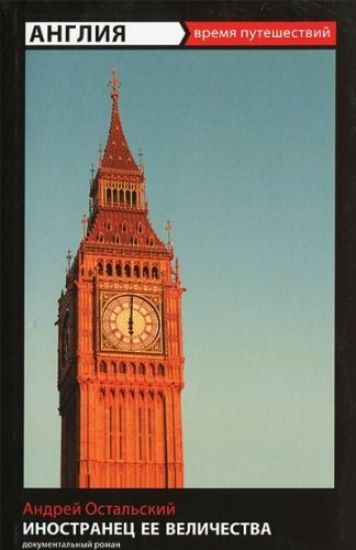
Uvlekatelnaja entsiklopedija anglijskoj zhizni, sostavlennaja russkim zhurnalistom Andreem Ostalskim, kotoryj vot uzhe pochti dvadtsat let zhivet i rabotaet v Velikobritanii.

Neft pakhnet ne tolko seroj, no i ogromnymi dengami, vlastju i tajnoj. Chto, esli neft dejstvitelno konchitsja? Novaja kniga avtora "Kratkoj istorii deneg", glavnogo redaktora Russkoj sluzhby Bi-bi-si Andreja Ostalskogo - zakhvatyvajuschee issledovanie edva li ne samogo aktualnogo voprosa tretego tysjacheletija.

Kratkaja istorija deneg. Otkuda oni vzjalis? Kak rabotajut? Kak izmenjatsja v buduschem?
Andrej Ostalskij
Amphora
2015
sidottu
V utilitarnosti est ogromnyj pljus: ona pomogaet ponjat, chto funktsii deneg vystraivajutsja v piramidu, v osnove kotoroj - funktsija obmena, i na nej, kak na moschnom fundamente, stojat vse ostalnye. V russkom jazyke slovo "dengi" proiskhodit ot tjurskogo "tenge". A koren etot imeet neskolko znachenij, v tom chisle "balans", "vyravnivanie" i - "vesy". To est instrument, ustanavlivajuschij istinnuju meru veschej i vnosjaschij spravedlivost v ikh otnoshenija drug s drugom. Dostizhenija sovremennoj nauki ogromny. Rasshifrovan genom cheloveka, najdeny sotni novykh planet v dalekikh galaktikakh, prolozheny puti k sozdaniju iskusstvennogo intellekta. No mnogie nauchnye proryvy slozhny dlja nashego ponimanija - stol truden i spetsifichen jazyk uchenykh. Vmeste s tem postizhenie aktualnykh otkrytij - ne prosto dan ljubopytstvu, eto nepremennoe uslovie vyzhivanija. Put poznanija mira navsegda svjazan s nauchnymi prozrenijami i svershenijami. Knigi novoj kollektsii "Populjarnaja nauka" povedajut o...

Uvlekatelnaja entsiklopedija anglijskoj zhizni, sostavlennaja russkim zhurnalistom Andreem Ostalskim, kotoryj vot uzhe pochti dvadtsat let zhivet i rabotaet v Velikobritanii.

Uvlekatelnaja entsiklopedija anglijskoj zhizni, sostavlennaja russkim zhurnalistom Andreem Ostalskim, kotoryj vot uzhe dvadtsat pjat let zhivet i rabotaet v Velikobritanii. V chem ee sekret? Chto pozvolilo etim ne slishkom plodorodnym ostrovam, raspolozhennym na dalnej periferii Evropy, stat odnoj iz velichajshikh derzhav v istorii chelovechestva? Sredi geroev etoj knigi - lord, podrabatyvajuschij igroj na rojale v kafe i restoranakh, direktor shkoly, kotoryj razreshaet uchenikam brosat sebe v litso mokruju gubku, i mnozhestvo drugikh porazitelnykh personazhej. Eto Velikobritanija, kotoruju vy ne znaete.

Andrei Tarkovsky's Sounding Cinema adds a new dimension to our understanding and appreciation of the work of Russian director Andrei Tarkovsky (1932–1986) through an exploration of the presence of music and sound in his films.The first comprehensive study in English concentrating on the soundtrack in Tarkovsky’s cinema, this book reveals how Tarkovsky’s use of electronic music, electronically manipulated sound, traditional folk songs and fragments of canonized works of Western art music plays into the philosophical, existential and ethical themes recurring throughout his work. Exploring the multilayered relationship between music, sound, film image and narrative space, Pontara provides penetrating and innovative close readings of Solaris (1972), Mirror (1975), Stalker (1979), Nostalghia (1983) and The Sacrifice (1986) and in turn deeply enriches critical understanding of Tarkovsky’s films and their relation to the broader traditions of European art cinema. An excellent resource for scholars, researchers and students interested in European art cinema and the role of music in film, as well as for film aficionados interested in Tarkovsky’s work.

This is the first book on Andrei Bitov, one of contemporary Russia's most original writers. It plots his evolution from his early publications of the post-Stalin years to his mature masterpieces of the glasnost era. Ellen Chances assesses his place both in the Russian literary tradition from Pushkin onwards, and as part of a broader, international cultural heritage including Dickens, Fellini, and Proust. She explores his themes, from the psychological effects of Stalin on Soviet society to universal questions such as the human being's relationship with nature, history and culture, and discovers in his deeply philosophical and intensely psychological writings an innovative methodology, 'ecological prose', that goes beyond modernist and post-modernist fragmentation in search of the wholeness of life.
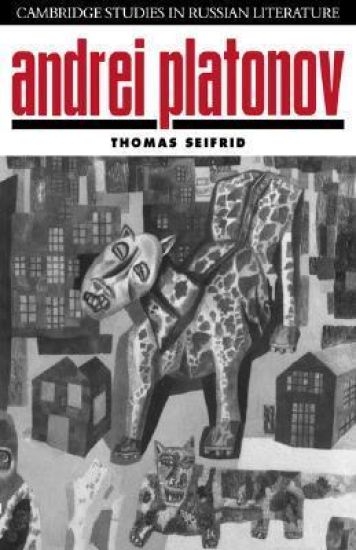
The Soviet writer Andrei Platonov (1899–1951) belongs to a Russian philosophical tradition that includes such figures as Vladimir Solov'ev, Mikhail Bakhtin and Boris Pasternak. This 1992 study investigates the interrelation of themes, imagery and the use of language in his prose. Thomas Seifrid shows how Platonov was particularly influenced by Russian utopian thought of the late nineteenth and early twentieth centuries, and how his world view was also shaped by its implicit dialogue with the 'official' Soviet philosophy of Marxism-Leninism, and later with Stalinist utopianism. He discusses how in Platonov's masterpieces of the late 1920s and early 1930s linguistic parody comes together with existential angst and dystopian doubts about the course of Soviet history. The study concludes with consideration of the works Platonov wrote from 1934 to 1951, in the age of socialist realism. In these, he manoeuvred to preserve some of the essentials of his earlier world view and verbal manner while fusing them to the literary formulae that were expected of him.

The Soviet writer Andrei Platonov (1899–1951) belongs to a Russian philosophical tradition that includes such figures as Vladimir Solov'ev, Mikhail Bakhtin and Boris Pasternak. This 1992 study investigates the interrelation of themes, imagery and the use of language in his prose. Thomas Seifrid shows how Platonov was particularly influenced by Russian utopian thought of the late nineteenth and early twentieth centuries, and how his world view was also shaped by its implicit dialogue with the 'official' Soviet philosophy of Marxism-Leninism, and later with Stalinist utopianism. He discusses how in Platonov's masterpieces of the late 1920s and early 1930s linguistic parody comes together with existential angst and dystopian doubts about the course of Soviet history. The study concludes with consideration of the works Platonov wrote from 1934 to 1951, in the age of socialist realism. In these, he manoeuvred to preserve some of the essentials of his earlier world view and verbal manner while fusing them to the literary formulae that were expected of him.

"This is one of those times, a time choked in the weeds of academic and civilian formalism. To put it mildly, most of what we see in print in North America is unbearably trivial and singularly devoid of courage."--Andrei Codrescu, The Disappearance of the Outside. Known to the general public as a radio commentator on National Public Radio, Romanian-born essayist and poet Andrei Codrescu has developed a variety of voices throughout his career: Transylvanian humorist on NPR, surrealist poet in his many volumes of poetry, academic essayist in his philosophical writings and historical novelist. Taking seemingly everyday events in seemingly mundane places, Codrescu is able to link the random details into a larger whole, leading his readers and listeners to conclusions very different from those they first imagined. This work explores Codrescu's writings and how they are a part of the surrealist tradition. It examines the ways in which his poetry, essays and novels are influenced by his upbringing in Communist Romania and the liberal attitudes he encountered upon moving to the United States, and draws comparisons between Codrescu and other surrealists. An interview with the author is also included.

Andrei Tarkovsky is the most celebrated Russian filmmaker since Eisenstein, and one of the most important directors to have emerged during the 1960s and 70s. Although he made only seven features, each one was a major landmark in cinema, the most well-known of them being the mediaeval epic Andrei Rublev - widely regarded as one of the greatest films of all time - and the autobiographical Mirror, set during the Russia of Stalin's purges in the 1930s and the years of stagnation under Brezhnev. Both films landed Tarkovsky in considerable trouble with the authorities, and he gained a reputation for being a tortured - and ultimately martyred - filmmaker. Despite the harshness of the conditions under which he worked, Tarkovsky built up a remarkable body of work. He burst upon the international scene in 1962 with his debut feature Ivan's Childhood, which won the Golden Lion at Venice and immediately established him as a major filmmaker. During the 1970s, he made two classic ventures into science-fiction, Solaris, regarded at the time as being the Soviet reply to Kubrick's 2001: A Space Odyssey and later remade by Steven Soderbergh, and Stalker, which was thought to have predicted the Chernobyl disaster. Harassed at home, Tarkovsky went into exile and made his last two films in the West, where he also published his classic work of film and artistic theory, Sculpting in Time. Since his death in Paris in 1986, his reputation continued - and continues - to grow. Sean Martin considers the whole of Tarkovsky's oeuvre, from the classic student film The Steamroller and the Violin, across the full-length films, to the later stage works and Tarkovsky's writings, paintings and photographs. Martin also seeks to demystify Tarkovsky as a 'difficult' director, whilst also celebrating his radical aesthetic of long takes and tracking shots, which Tarkovsky was to dub 'imprinted' or 'sculpted' time, and to make a case for Tarkovsky's position not just as an important filmmaker, but also as an artist who speaks directly about the most important spiritual issues of our time.

Andrei Tarkovsky's Sounding Cinema adds a new dimension to our understanding and appreciation of the work of Russian director Andrei Tarkovsky (1932–1986) through an exploration of the presence of music and sound in his films.The first comprehensive study in English concentrating on the soundtrack in Tarkovsky’s cinema, this book reveals how Tarkovsky’s use of electronic music, electronically manipulated sound, traditional folk songs and fragments of canonized works of Western art music plays into the philosophical, existential and ethical themes recurring throughout his work. Exploring the multilayered relationship between music, sound, film image and narrative space, Pontara provides penetrating and innovative close readings of Solaris (1972), Mirror (1975), Stalker (1979), Nostalghia (1983) and The Sacrifice (1986) and in turn deeply enriches critical understanding of Tarkovsky’s films and their relation to the broader traditions of European art cinema. An excellent resource for scholars, researchers and students interested in European art cinema and the role of music in film, as well as for film aficionados interested in Tarkovsky’s work.

A survey of the work of Andrei Tarkovsky, the Russian film-maker who lived from 1932-1986. It is a critical examination of his films in the light of his own writings and life, his aesthetics of film, his theory of time in cinematography and an attempt to comprehend his vision.

Andrei Bely was the pseudonym of Boris Nikolaievich Bugaev, the most prominent symbolist author in Russian history, and symbolism's greatest promoter as a new genre of Russian literature. Bely had deep religious and philosophic convictions, studying the great religious texts of history and the influential philosophers. He was the greatest promoter of anthroposophy in Russia, having studied under Rudolf Steiner in Europe. Beyond this, Bely graduated from Moscow University in honors, completing physics and mathematics curriculums and later studying history and language. He was a genius beyond our comprehension. His untimely death at age 53 was due to a brain aneurysm caused from stress for his refusal to capitulate to Soviet demands and become a socialist writer. This volume is his life, as well as a history of symbolism, and it includes a selection of his symbolist writings translated from Russian into English. Daniel H Shubin has written several books on Russian history, religion and philosophy.
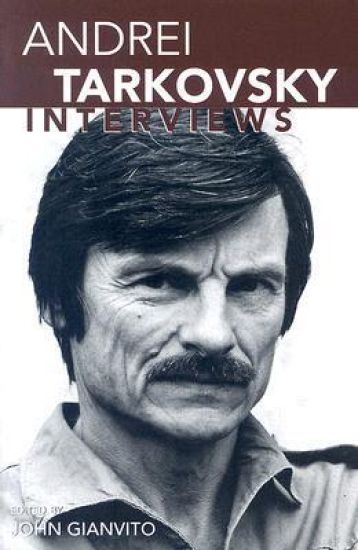
Andrei Tarkovsky
University Press of Mississippi
2006
nidottu
Andrei Tarkovsky (1932-1986) was one of Russia's most influential and renowned filmmakers, despite an output of only seven feature films in twenty years. Revered by such filmmaking giants as Ingmar Bergman and Akira Kurosawa, Tarkovsky is famous for his use of long takes, languid pacing, dreamlike metaphorical imagery, and meditations on spirituality and the human soul. His Andrei Roublev, Solaris, and The Mirror are considered landmarks of postwar Russian cinema.Andrei Tarkovsky: Interviews is the first English-language collection of interviews with and profiles of the filmmaker. It includes conversations originally published in French, Italian, Russian, and British periodicals. With pieces from 1962 through 1986, the collection spans the breadth of Tarkovsky's career. In the volume, Tarkovsky candidly and articulately discusses the difficulties of making films under the censors of the Soviet Union. He explores his aesthetic ideology, filmmakers he admires, and his eventual self-exile from Russia. He talks about recurring images in his movies--water, horses, fire, snow--but adamantly refuses to divulge what they mean, as he feels that would impose his own meaning onto the audience. At times cagey and resistant to interviewers, Tarkovsky nevertheless reveals his vision and his rigorous devotion to his art.

This groundbreaking critical biography of Andrei Siniavskii (1925-1997) as a writer in and of his time shows how this subtle and complex author found his way in a society polarised into heroes and villains, patriots and traitors, how he progressed from identification with the value system and ideology of his time to reaction against it, and his dissidence expressed in literary terms. Based on a close reading of his work, Andrei Siniavskii: A Hero of his Time? explores the way in which Siniavskii’s art does not simply reflect the circumstances of his life and times but is actively shaped by an intricate commerce between the two.

This groundbreaking critical biography of Andrei Siniavskii (1925-1997) as a writer in and of his time shows how this subtle and complex author found his way in a society polarized into heroes and villains, patriots and traitors, how he progressed from identification with the value system and ideology of his time to reaction against it, and his dissidence expressed in literary terms. Based on a close reading of his work, Andrei Siniavskii: A Hero of his Time? explores the way in which Siniavskii’s art does not simply reflect the circumstances of his life and times but is actively shaped by an intricate commerce between the two.