
Kirjahaku
Etsi kirjoja tekijän nimen, kirjan nimen tai ISBN:n perusteella.
1000 tulosta hakusanalla Andrew Cunning

Cunningham was the best-known and most celebrated British admiral of the Second World War. He held one of the two major fleet commands between 1939 and 1942, and in 1942-43, he was Allied naval commander for the great amphibious operations in the Mediterranean. From 1943 to 1946, he was the First Sea Lord and a participant in the wartime conferences with Churchill, Stalin, Roosevelt and the US Chiefs of Staff, deliberating the global strategy for Allied victory. He also led a very active public life for almost twenty years after his retirement in 1946. Cunningham's papers are abundant for the period 1939-63 and are supplemented here by Cabinet and Admiralty records, papers of his service contemporaries and of Churchill, and by memories of his family and friends, as well as extensive US archives and private papers.
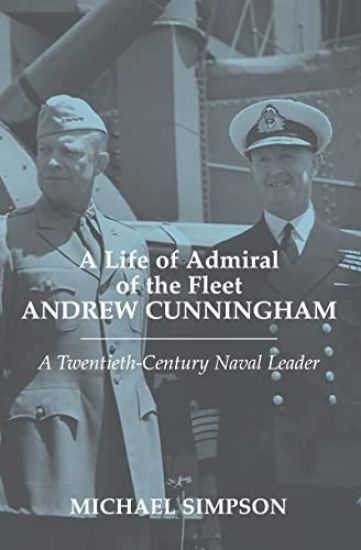
This book presents an account of the life of naval commander Andrew Cunningham, the best-known and most celebrated British admiral of the Second World War. It supplements Cunningham's papers by Cabinet and Admiralty records, papers of his service contemporaries and of Churchill.
Marilynne Robinson, Theologian of the Ordinary posits that Robinson’s widely celebrated novels and essays are best understood as emerging from a foundational theology that has 'the Ordinary' as its source. Reading Robinson’s published work, and drawing on an original interview with Robinson, Andrew Cunning constructs an authentically Robinsonian theology that is at once distinctly American and conversant with contemporary continental philosophy of religion.This book demonstrates that the Ordinary is the source of Robinson’s writing and, as a phenomenon that opens onto a surplus of meaning, is where Robinson’s notion of transcendence emerges. Robinson’s theology is one centered on the material reality of the world and on the subjective nature of one’s encounter with oneself and the physical stuff of existence. Arguing that the Ordinary demands an artistic response, this book reads Robinson’s fiction as her theological response to the surplus of meaning in ordinary experience. Under the themes of grace, language, time and self, Cunning locates the ordinary, everyday grounding of Robinson’s metaphysics.

Marilynne Robinson, Theologian of the Ordinary
Andrew Cunning
BLOOMSBURY PUBLISHING PLC
2022
nidottu
Marilynne Robinson, Theologian of the Ordinary posits that Robinson’s widely celebrated novels and essays are best understood as emerging from a foundational theology that has 'the Ordinary' as its source. Reading Robinson’s published work, and drawing on an original interview with Robinson, Andrew Cunning constructs an authentically Robinsonian theology that is at once distinctly American and conversant with contemporary continental philosophy of religion.This book demonstrates that the Ordinary is the source of Robinson’s writing and, as a phenomenon that opens onto a surplus of meaning, is where Robinson’s notion of transcendence emerges. Robinson’s theology is one centered on the material reality of the world and on the subjective nature of one’s encounter with oneself and the physical stuff of existence. Arguing that the Ordinary demands an artistic response, this book reads Robinson’s fiction as her theological response to the surplus of meaning in ordinary experience. Under the themes of grace, language, time and self, Cunning locates the ordinary, everyday grounding of Robinson’s metaphysics.
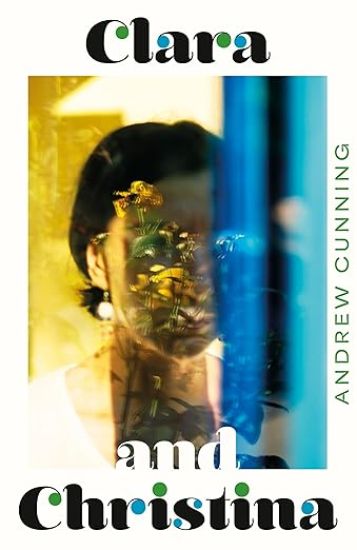
Two women meet in an unassuming coffee shop in Belfast; they seem an unlikely pair. Clara is young, inquisitive, optimistic for what the meeting holds. Christina is older, in her seventies, still glamorous, still quick. She is working on her fifth novel but no one yet knows of its existence. Clara is there to interview Christina, for her own book, anticipating some major scoop on this reclusive novelist. She wants to unearth the truth behind the fiction. But Christina has a different lesson in store for Clara. Over a few months, a relationship forms between these two women who live their lives in books. Clara, writing her first, embraces this opportunity to learn from a writer finishing her last. During this time, Clara, face to face with her hero, begins to question her own convictions ultimately asking herself: what if there is nothing but fiction?

When Satou's best friend,Hime, tells him that she's moving, he decides to follow. After crashing herwedding in another world, he ends up as the groom when she suddenly kisses him!Prophecy states that her husband is destined to be the Ring King-a hero ofimmense power who will save the world from the Abyssal King! Is Satou up for thechallenge, or is his new marriage going to end before it evenbegins?

Romanticism and the Sciences
Andrew Cunningham; Nicholas Jardine
Cambridge University Press
1990
pokkari
This book presents a series of essays, each specially written by an expert in the area, which focus on the role of Romantic philosophy and ideology in the sciences, and on the role of the sciences in Romantic literature. The contributions are designed to give a systematic coverage of the whole field. They are written at a popular level; they are well illustrated; and are accompanied by suggestions for further reading suitable for undergraduates and others. Divided into four sections under the titles 'Romanticism', 'Sciences of the Organic', 'Sciences of the Inorganic', and 'Literature and the Sciences', the book discusses various themes, movements and theories, as well as individual scientists and writers (including Schelling, von Humboldt, Goethe, Ritter, Davy, Oersted, Kleist, Coleridge, and Buchner). There is an editorial introduction prefiguring some of the concerns of the books. This original collection, designed to provide a balance of literary and scientific interests for students in both humanistic and scientific disciplines and occupies an important place in a previously under-explored field.

Laboratory Revolution Medicine
Andrew Cunningham; Cunningham
CAMBRIDGE UNIVERSITY PRESS_
1992
sidottu

The Four Horsemen of the Apocalypse
Andrew Cunningham; Ole Peter Grell
Cambridge University Press
2001
pokkari
This book offers a new and exciting interpretation of early modern European history (1490–1648). Cunningham and Grell’s point of departure, and a prism through which events of the period are interpreted, is Dürer’s famous woodcut of The Four Horsemen of the Apocalypse. This image came to characterise the outlook and expectations of most early modern Europeans, who experienced a dramatic rise in population, leading to repeated episodes of war, epidemics and famine. These were seen as indicating the imminent end of the world. The book is lavishly illustrated with fascinating contemporary images which, like many texts of the period, are preoccupied with Apocalypticism and eschatological expectations. Lucidly written and carefully organised, it brings together religious, social, military and medical history in one survey, giving a unique insight into why the early modern world linked all the crises of the age to the Day of Judgement.

Report On The Diplomatic Archives Of The Department Of State, 1789-1840
Andrew Cunningham Mclaughlin
Kessinger Pub
2008
pokkari
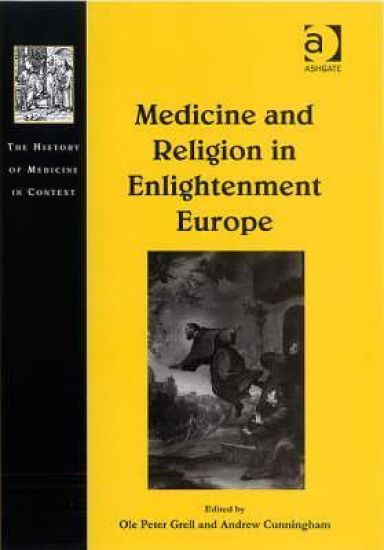
Medicine and Religion in Enlightenment Europe
Andrew Cunningham
Ashgate Publishing Limited
2007
sidottu
The Enlightenment period, here understood as covering the years 1650 to 1789, is usually considered to be a period when religion was obliged to give way to rationality. With respect to medicine this means that the religious elements in the treatment and interpretation of diseases to all intents and purposes disappeared. However, there are growing indications in recent scholarship that this may well be an overstatement. Indeed it appears that religion retained many of its customary relations with medicine. This volume explores how far, and the ways in which, this was still the case. It looks at this multi-faceted relationship with respect to among others: medical care and death in hospitals, religious vocation and nursing, chemical medicine and religion, the clergy and medicine, the continued significance of popular medicine, faith healing, dissection and religion, and religious dissent and medical innovation. Within these significant areas the volume provides a European perspective which will make it possible to draw comparisons and determine differences.

The eighteenth-century practitioners of anatomy saw their own period as 'the perfection of anatomy'. This book looks at the investigation of anatomy in the 'long' eighteenth century in disciplinary terms. This means looking in a novel way not only at the practical aspects of anatomizing but also at questions of how one became an anatomist, where and how the discipline was practised, what the point was of its practice, what counted as sub-disciplines of anatomy, and the nature of arguments over anatomical facts and priority of discovery. In particular pathology, generation and birth, and comparative anatomy are shown to have been linked together as sub-disciplines of anatomy. At first sight anatomy seems the most long-lived and stable of medical disciplines, from Galen and Vesalius to the present. But Cunningham argues that anatomy was, like so many other areas of knowledge, changed irrevocably around the end of the eighteenth century, with the creation of new disciplines, new forms of knowledge and new ways of investigation. The 'long' eighteenth century, therefore, was not only the highpoint of anatomy but also the endpoint of old anatomy.

Students notoriously vote with their feet, seeking out the best and most innovative teachers of their subject. The most ambitious students have been travelling long distances for their education since universities were first founded in the 13th century, making their own educational pilgrimage or peregrinatio. This volume deals with the peregrinatio medica from the viewpoint of the travelling students: who went where; how did they travel; what did they find when they arrived; what did they take back with them from their studies. Even a single individual could transform medical studies or practice back home on the periphery by trying to reform teaching and practice the way they had seen it at the best universities. Other contributions look at the universities themselves and how they were actively developed to attract students, and at some of the most successful teachers, such as Boerhaave at Leiden or the Monros at Edinburgh. The essays show how increasing levels of wealth allowed more and more students to make their pilgrimages, travelling for weeks at a time to sit at the feet of a particular master. In medicine this meant that, over the period c.1500 to 1789, a succession of universities became the medical school of choice for ambitious students: Padua and Bologna in the 1500s, Paris, Leiden and Montpellier in the 1600s, and Leiden, Göttingen and Edinburgh in the 1700s. The arrival of foreign students brought wealth to the university towns and this significant economic benefit meant that the governors of these universities tried to ensure the defence of freedom of religion and freedom of speech, thus providing the best conditions for the promotion of new views and innovation in medicine. The collection presents a new take on the history of medical education, as well as universities, travel and education more widely in ancien régime Europe.
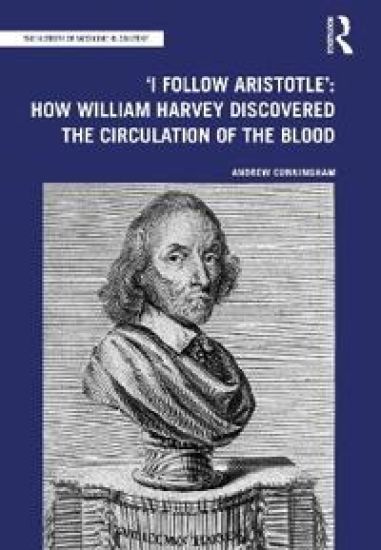
'I Follow Aristotle': How William Harvey Discovered the Circulation of the Blood
Andrew Cunningham
TAYLOR FRANCIS LTD
2022
sidottu
This book presents a new interpretation of how and why the discovery of the circulation of the blood in animals was made. It has long been known that the English physician William Harvey (1578–1657) was a follower of Aristotle, but his most strikingly ‘modern’ and original discovery – of the circulation of the blood – resulted from Harvey following Aristotle’s ancient programme of investigation into animals. This is a new reading of the most important discovery ever made in anatomy by one man and produces not only a radical re-reading of Harvey as anatomist, but also of Aristotle and his investigations of animals.
'I Follow Aristotle': How William Harvey Discovered the Circulation of the Blood
Andrew Cunningham
TAYLOR FRANCIS LTD
2024
nidottu
This book presents a new interpretation of how and why the discovery of the circulation of the blood in animals was made. It has long been known that the English physician William Harvey (1578–1657) was a follower of Aristotle, but his most strikingly ‘modern’ and original discovery – of the circulation of the blood – resulted from Harvey following Aristotle’s ancient programme of investigation into animals. This is a new reading of the most important discovery ever made in anatomy by one man and produces not only a radical re-reading of Harvey as anatomist, but also of Aristotle and his investigations of animals.
James Wilson In The Philadelphia Convention (1897)
Andrew Cunningham Mclaughlin
KESSINGER PUBLISHING, LLC
2009
pokkari
In these essays, Andrew Cunningham is concerned with issues of identity - what was the identity of topics, disciplines, arguments, diseases in the past, and whether they are identical with (more usually, how they are not identical with) topics, disciplines, arguments or diseases in the present. Historians usually tend to assume such continuous identities of present attitudes and activities with past ones, and rarely question them; the contention here is that this gives us a false image of the very things in the past that we went to look for.
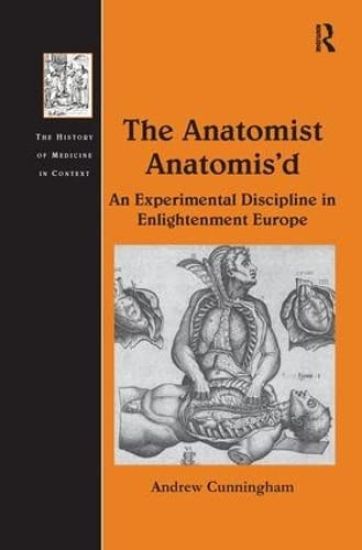
The eighteenth-century practitioners of anatomy saw their own period as 'the perfection of anatomy'. This book looks at the investigation of anatomy in the 'long' eighteenth century in disciplinary terms. This means looking in a novel way not only at the practical aspects of anatomizing but also at questions of how one became an anatomist, where and how the discipline was practised, what the point was of its practice, what counted as sub-disciplines of anatomy, and the nature of arguments over anatomical facts and priority of discovery. In particular pathology, generation and birth, and comparative anatomy are shown to have been linked together as sub-disciplines of anatomy. At first sight anatomy seems the most long-lived and stable of medical disciplines, from Galen and Vesalius to the present. But Cunningham argues that anatomy was, like so many other areas of knowledge, changed irrevocably around the end of the eighteenth century, with the creation of new disciplines, new forms of knowledge and new ways of investigation. The 'long' eighteenth century, therefore, was not only the highpoint of anatomy but also the endpoint of old anatomy.