Kirjojen hintavertailu. Mukana 11 244 527 kirjaa ja 12 kauppaa.

Kirjahaku

Etsi kirjoja tekijän nimen, kirjan nimen tai ISBN:n perusteella.

1000 tulosta hakusanalla Andrew Edward Tingler

Cameron Parish

Cameron Parish

Andrew Edward Tingler

Arcadia Publishing (SC)
2022
nidottu
In 1790, Daniel Johnson sailed into the Sabine River, beginning the Anglo settlement in what would eventually become Cameron Parish in the southwest corner of Louisiana. Lured by the abundance of natural beauty and resources, most settlers moved into the coastal cheniers and inland Cajun prairie after 1830. The population grew enough by 1870 that a new parish was officially carved from Calcasieu and Vermilion Parishes. It was named for Abraham Lincoln's first secretary of war, Simon Cameron; the community of Leesburg at the mouth of the Calcasieu River also took the parish name of Cameron. The town of Cameron was among the biggest fishing ports in the country during the mid-1900s, but one of the largest economic drivers for the parish has been oil since the late 1920s. Even through the adversity of hurricanes, investments continue, and today, Cameron Parish exports more liquid natural gas than most countries.

Cameron Parish

Cameron Parish

Andrew Edward Tingler

ARCADIA PUB (SC)
2022
sidottu
In 1790, Daniel Johnson sailed into the Sabine River, beginning the Anglo settlement in what would eventually become Cameron Parish in the southwest corner of Louisiana. Lured by the abundance of natural beauty and resources, most settlers moved into the coastal cheniers and inland Cajun prairie after 1830. The population grew enough by 1870 that a new parish was officially carved from Calcasieu and Vermilion Parishes. It was named for Abraham Lincoln's first secretary of war, Simon Cameron; the community of Leesburg at the mouth of the Calcasieu River also took the parish name of Cameron. The town of Cameron was among the biggest fishing ports in the country during the mid-1900s, but one of the largest economic drivers for the parish has been oil since the late 1920s. Even through the adversity of hurricanes, investments continue, and today, Cameron Parish exports more liquid natural gas than most countries.
Vernalization and Photoperiodism

Vernalization and Photoperiodism

Andrew Edward 1888- Murneek

Hassell Street Press
2021
sidottu
This work has been selected by scholars as being culturally important and is part of the knowledge base of civilization as we know it.This work is in the public domain in the United States of America, and possibly other nations. Within the United States, you may freely copy and distribute this work, as no entity (individual or corporate) has a copyright on the body of the work.Scholars believe, and we concur, that this work is important enough to be preserved, reproduced, and made generally available to the public. To ensure a quality reading experience, this work has been proofread and republished using a format that seamlessly blends the original graphical elements with text in an easy-to-read typeface.We appreciate your support of the preservation process, and thank you for being an important part of keeping this knowledge alive and relevant.
A General and Critical Introduction to the Study of Holy Scripture
A General and Critical Introduction to the Study of Holy Scripture is an unchanged, high-quality reprint of the original edition of 1897. Hansebooks is editor of the literature on different topic areas such as research and science, travel and expeditions, cooking and nutrition, medicine, and other genres. As a publisher we focus on the preservation of historical literature. Many works of historical writers and scientists are available today as antiques only. Hansebooks newly publishes these books and contributes to the preservation of literature which has become rare and historical knowledge for the future.
A Textbook of Plant Physiology

A Textbook of Plant Physiology

N. A. (Nikolai Aleksandrovi Maksimov; Andrew Edward 1888- Murneek; Rodney Beecher 1890- Harvey

Hassell Street Press
2021
sidottu
This work has been selected by scholars as being culturally important and is part of the knowledge base of civilization as we know it.This work is in the public domain in the United States of America, and possibly other nations. Within the United States, you may freely copy and distribute this work, as no entity (individual or corporate) has a copyright on the body of the work.Scholars believe, and we concur, that this work is important enough to be preserved, reproduced, and made generally available to the public. To ensure a quality reading experience, this work has been proofread and republished using a format that seamlessly blends the original graphical elements with text in an easy-to-read typeface.We appreciate your support of the preservation process, and thank you for being an important part of keeping this knowledge alive and relevant.
Patrons of Enlightenment

Patrons of Enlightenment

Edward Andrew

University of Toronto Press
2006
sidottu
All major writers of the Enlightenment enjoyed royal or aristocratic patronage, often denying their financial dependency and claiming to live by the labours of their pens or by the expanding readership of the eighteenth century, thereby maintaining the ideal of intellectual autonomy.In Patrons of Enlightenment, Edward G. Andrew examines the conditions in which the central idea of Enlightenment was fabricated; intellectual autonomy was constructed while patronage was being transformed by a commercial print culture. Andrew further argues that since an Enlightenment depends on a relationship of plebeian genius and patrician taste, England could not have had one - as the French and Scots did - because after the English civil war, plebeians did not contribute to the intellectual culture of England.Patrons of Enlightenment emphasizes the dependency of thinkers upon patrons and compares the patron-client relationships in the French, English, and Scottish republics of letters. Andrew challenges philosophers to rethink the Platonic distinction between philosophers and sophists and the Aristotelian view of philosophers as godlike in their self-sufficiency.
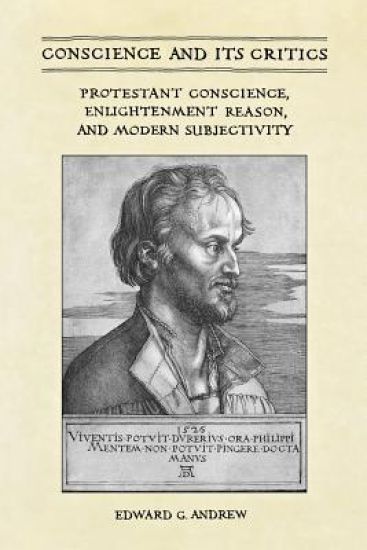
Conscience and Its Critics

Conscience and Its Critics

Edward Andrew

University of Toronto Press
2001
pokkari
Conscience and Its Critics is an eloquent and passionate examination of the opposition between Protestant conscience and Enlightenment reason in the seventeenth and eighteenth centuries. Seeking to illuminate what the United Nations Declaration of Rights means in its assertion that reason and conscience are the definitive qualities of human beings, Edward Andrew attempts to give determinate shape to the protean notion of conscience through historical analysis. The argument turns on the liberal Enlightenment's attempt to deconstruct conscience as an innate practical principle. The ontological basis for individualism in the seventeenth century, conscience was replaced in the eighteenth century by public opinion and conformity to social expectations. Focusing on the English tradition of political thought and moral psychology and drawing on a wide range of writers, Andrew reveals a strongly conservative dimension to the Enlightenment in opposing the egalitarian and antinomian strain in Protestant conscience. He then traces the unresolved relationship between reason and conscience through to the modern conception of the liberty of conscience, and shows how conscience served to contest social inequality and the natural laws of capitalist accumulation.
Imperial Republics

Imperial Republics

Edward Andrew

University of Toronto Press
2011
sidottu
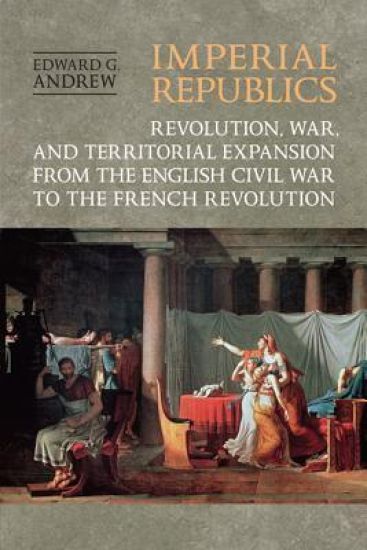
Republicanism and imperialism are typically understood to be located at opposite ends of the political spectrum. In Imperial Republics, Edward G. Andrew challenges the supposed incompatibility of these theories with regard to seventeenth- and eighteenth-century revolutions in England, the United States, and France. Many scholars have noted the influence of the Roman state on the ideology of republican revolutionaries, especially in the model it provided for transforming subordinate subjects into autonomous citizens. Andrew finds an equally important parallel between Rome's expansionary dynamic — in contrast to that of Athens, Sparta, or Carthage — and the imperial rivalries that emerged between the United States, France, and England in the age of revolutions. Imperial Republics is a sophisticated, wide-ranging examination of the intellectual origins of republican movements, and explains why revolutionaries felt the need to 'don the toga' in laying the foundation for their own uprisings.