Kirjojen hintavertailu. Mukana 11 244 527 kirjaa ja 12 kauppaa.

Kirjahaku

Etsi kirjoja tekijän nimen, kirjan nimen tai ISBN:n perusteella.

1000 tulosta hakusanalla Andrew F. Smith

The Oxford Companion to American Food and Drink

The Oxford Companion to American Food and Drink

Andrew F. Smith

Oxford University Press Inc
2009
nidottu
During the last decade, curiosity about food and drink in America has rapidly accelerated and interest in the social, historical and economic aspects of food has dramatically expanded. The Oxford Companion to American Food and Drink will satiate this hunger for knowledge with fascinating entries on everything from the origin of Bloody Marys to vegetarianism. Placing American food and drink in context, this unique resource colorfully explains how the culinary world is influenced by American food, points out disappearing traditions and includes sidebars, definitions, bibliographies, and lists of popular festivals, museums, and websites for readers anxious to learn more about this mouth-watering subject. With over 950 articles and 300 illustrations, the Oxford Companion to American Food and Drink will stand alongside Davidson's Companion as the ideal complement for any food lover wishing to explore this related topic in even greater detail.
Drinking History

Drinking History

Andrew F. Smith

Columbia University Press
2012
sidottu
A companion to Andrew F. Smith's critically acclaimed and popular Eating History: Thirty Turning Points in the Making of American Cuisine, this volume recounts the individuals, ingredients, corporations, controversies, and myriad events responsible for America's diverse and complex beverage scene. Smith revisits the country's major historical moments-colonization, the American Revolution, the Whiskey Rebellion, the temperance movement, Prohibition, and its repeal-and he tracks the growth of the American beverage industry throughout the world. The result is an intoxicating encounter with an often overlooked aspect of American culture and global influence. Americans have invented, adopted, modified, and commercialized tens of thousands of beverages-whether alcoholic or nonalcoholic, carbonated or caffeinated, warm or frozen, watery or thick, spicy or sweet. These include uncommon cocktails, varieties of coffee and milk, and such iconic creations as Welch's Grape Juice, Coca-Cola, root beer, and Kool-Aid. Involved in their creation and promotion were entrepreneurs and environmentalists, bartenders and bottlers, politicians and lobbyists, organized and unorganized criminals, teetotalers and drunks, German and Italian immigrants, savvy advertisers and gullible consumers, prohibitionists and medical professionals, and everyday Americans in love with their brew. Smith weaves a wild history full of surprising stories and explanations for such classic slogans as "taxation with and without representation;" "the lips that touch wine will never touch mine;" and "rum, Romanism, and rebellion." He reintroduces readers to Samuel Adams, Thomas Jefferson, George Washington, and the colorful John Chapman (Johnny Appleseed), and he rediscovers America's vast literary and cultural engagement with beverages and their relationship to politics, identity, and health.
Drinking History

Drinking History

Andrew F. Smith

Columbia University Press
2014
pokkari
A companion to Andrew F. Smith's critically acclaimed and popular Eating History: Thirty Turning Points in the Making of American Cuisine, this volume recounts the individuals, ingredients, corporations, controversies, and myriad events responsible for America's diverse and complex beverage scene. Smith revisits the country's major historical moments-colonization, the American Revolution, the Whiskey Rebellion, the temperance movement, Prohibition, and its repeal-and he tracks the growth of the American beverage industry throughout the world. The result is an intoxicating encounter with an often overlooked aspect of American culture and global influence. Americans have invented, adopted, modified, and commercialized tens of thousands of beverages-whether alcoholic or nonalcoholic, carbonated or caffeinated, warm or frozen, watery or thick, spicy or sweet. These include uncommon cocktails, varieties of coffee and milk, and such iconic creations as Welch's Grape Juice, Coca-Cola, root beer, and Kool-Aid. Involved in their creation and promotion were entrepreneurs and environmentalists, bartenders and bottlers, politicians and lobbyists, organized and unorganized criminals, teetotalers and drunks, German and Italian immigrants, savvy advertisers and gullible consumers, prohibitionists and medical professionals, and everyday Americans in love with their brew. Smith weaves a wild history full of surprising stories and explanations for such classic slogans as "taxation with and without representation;" "the lips that touch wine will never touch mine;" and "rum, Romanism, and rebellion." He reintroduces readers to Samuel Adams, Thomas Jefferson, George Washington, and the colorful John Chapman (Johnny Appleseed), and he rediscovers America's vast literary and cultural engagement with beverages and their relationship to politics, identity, and health.
The Tomato in America

The Tomato in America

Andrew F. Smith

University of Illinois Press
2001
nidottu
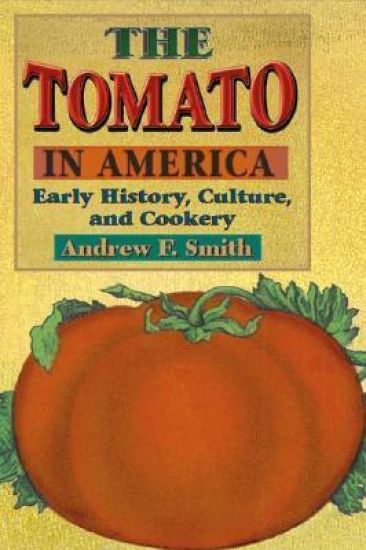
From the Americas to Australasia, from northern Europe to southern Africa, the tomato tickles the world's taste buds. Americans along devour more than twelve million tons annually of this peculiar fruit, variously considered poisonous, curative, and aphrodisiacal. In this first concerted study of the tomato in America, Andrew F. Smith separates myth from historical fact, beginning with the Salem, New Jersey, man who, in 1820, allegedly attracted spectators from hundreds of miles to watch him eat a tomato on the courthouse steps (the legend says they expected to see him die a painful death). Later, hucksters such as Dr. John Cook Bennett and the Amazing Archibald Miles peddled the tomato's purported medicinal benefits. The competition was so fierce that the Tomato Pill War broke out in 1838. The Tomato in America traces the early cultivation of the tomato, its infiltration of American cooking practices, the early manufacture of preserved tomatoes and ketchup (soon hailed as "the national condiment of the United States"), and the "great tomato mania" of the 1820s and 1830s. The book also includes tomato recipes from the pre-Civil War period, covering everything from sauces, soups, and main dishes to desserts and sweets. Now available for the first time in paperback, The Tomato in America provides a piquant and entertaining look at a versatile and storied figure in culinary history.
Peanuts

Peanuts

Andrew F. Smith

University of Illinois Press
2006
nidottu
The peanut is one of the most versatile and beloved of American food icons. In this first culinary history of the protein-laden legume, Andrew F. Smith follows the peanut 's rise from a lowly, messy snack food to its place in haute cuisine and on supermarket shelves around the world. Chronicling how peanut consumption and production has changed throughout history, Smith highlights the peanut's role in the ways economic distress, wartime conditions, industrialization, and health trends reflect and inform our culinary landscape. Chock-full of photographs, advertisements, and peanut recipes from as early as 1847, this entertaining and enlightening volume is a testament to the culinary potential and lasting popularity of the goober pea.
The Turkey

The Turkey

Andrew F. Smith

University of Illinois Press
2009
nidottu
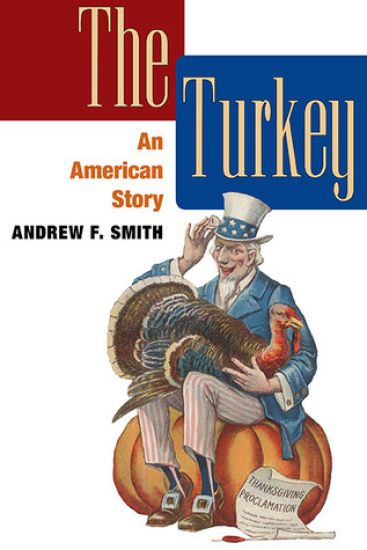
“Talking turkey” about the bird you thought you knewFondly remembered as the centerpiece of family Thanksgiving reunions, the turkey is a cultural symbol as well as a multi-billion dollar industry. As a bird, dinner, commodity, and as a national icon, the turkey has become as American as the bald eagle (with which it actually competed for supremacy on national insignias). Food historian Andrew F. Smith’s sweeping and multifaceted history of Meleagris gallopavo separates fact from fiction, serving as both a solid historical reference and a fascinating general read. With his characteristic wit and insatiable curiosity, Smith presents the turkey in ten courses, beginning with the bird itself (actually several different species of turkey) flying through the wild. The Turkey subsequently includes discussions of practically every aspect of the iconic bird, including the wild turkey in early America, how it came to be called “turkey,” domestication, turkey mating habits, expansion into Europe, stuffing, conditions in modern industrial turkey factories, its surprising commercial history of boom and bust, and its eventual ascension to holiday mainstay. As one of the easiest of foods to cook, the turkey’s culinary possibilities have been widely explored if little noted. The second half of the book collects an amazing array of over one hundred historical and modern turkey recipes from across America and Europe. From sandwiches to salmagundi, you’ll find detailed instructions on nearly every variation on the turkey. Historians will enjoy a look back at the varied appetites of their ancestors and seasoned cooks will have an opportunity to reintroduce a familiar food in forgotten ways.
Encyclopedia of Junk Food and Fast Food

Encyclopedia of Junk Food and Fast Food

Andrew F. Smith

Greenwood Press
2006
sidottu
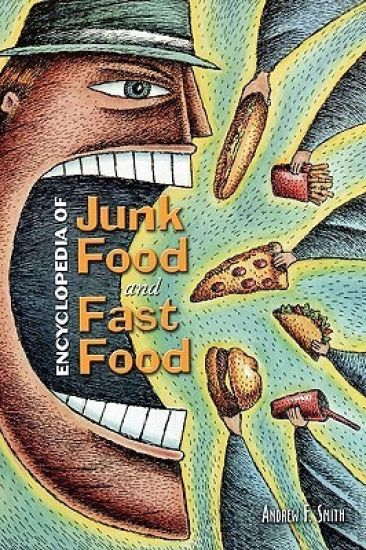
Eating junk food and fast food is a great all-American passion. American kids and grownups love their candy bars, Big Macs and supersized fries, Doritos, Twinkies, and Good Humor ice cream bars. The disastrous health effects from the enormous appetite for these processed fat- and sugar-loaded foods are well publicized now. This was particularly dramatically evidenced by Super Size Me (2004), filmmaker Morgan Spurlock's 30-day all-McDonald's diet in which his liver suffered the same poisoning as if he had been on an extended alcohol binge. Through increased globalization, American popular food culture is being increasingly emulated elsewhere in the world, such as China, with the potential for similar disastrous consequences. This A-to-Z reference is the first to focus on the junk food and fast food phenomena from a multitude of angles in addition to health and diet concerns. More than 250 essay entries objectively explore the scope of the topics to illuminate the American way through products, corporations and entrepreneurs, social history, popular culture, organizations, issues, politics, commercialism and consumerism, and much more. Interest in these topics is high. This informative and fascinating work, with entries on current controversies such as mad cow disease and factory farming, the food pyramid, movie tie-ins, and marketing to children, will be highly useful for reports, research, and browsing. It takes readers behind the scenes, examining the significance of such things as uniforms, training, packaging, and franchising. Readers of every age will also enjoy the nostalgia factor, learning about the background of iconic drive-ins, the story behind the mascots, facts about their favorite candy bar, and collectables. Each entry ends with suggested reading. Besides an introduction, a timeline, glossary, bibliography, resource guide, and photos enhance the text. Sample entries: A&W Root Beer; Advertising; Automobiles; Ben & Jerry's; Burger King; Carhops; Center for Science in the Public Interest; Christmas; Cola Wars; Employment; Fair Food; Fast Food Nation; Hershey, Milton; Hollywood; Injury; Krispy Kreme; Lobbying; Nabisco; Obesity; PepsiCo; Salt; Soda Fountain; Teen Hangouts; Vegetarianism; White Castle; Yum! Brands, Inc.
American Tuna

American Tuna

Andrew F. Smith

University of California Press
2012
sidottu
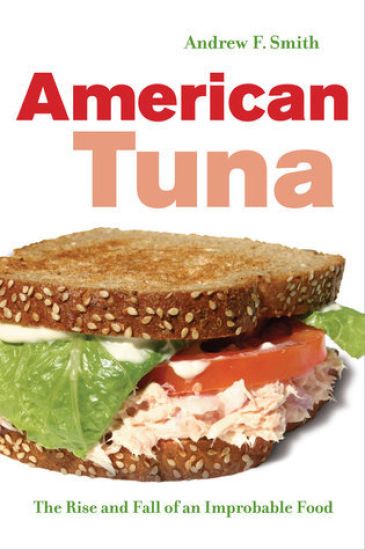
In a lively account of the American tuna industry over the past century, celebrated food writer and scholar Andrew F. Smith relates how tuna went from being sold primarily as a fertilizer to becoming the most commonly consumed fish in the country. In American Tuna, the so-called "chicken of the sea" is both the subject and the backdrop for other facets of American history: U.S. foreign policy, immigration and environmental politics, and dietary trends. Smith recounts how tuna became a popular low-cost high-protein food beginning in 1903, when the first can rolled off the assembly line. By 1918, skyrocketing sales made it one of America's most popular seafoods. In the decades that followed, the American tuna industry employed thousands, yet at at mid-century production started to fade. Concerns about toxic levels of methylmercury, by-catch issues, and over-harvesting all contributed to the demise of the industry today, when only three major canned tuna brands exist in the United States, all foreign owned. A remarkable cast of characters-- fishermen, advertisers, immigrants, epicures, and environmentalists, among many others--populate this fascinating chronicle of American tastes and the forces that influence them.
The Deliberative Impulse

The Deliberative Impulse

Andrew F. Smith

Lexington Books
2011
sidottu
What can motivate citizens in divided societies to engage in free, open, and reasoned dialogue? Attempts by philosophers to answer this question focus largely on elucidating what citizens owe to one another as free and equal citizens, as members of a shared social context, or as agents who are mutually dependent on one another for our well-being. In The Deliberative Impulse: Motivating Discourse in Divided Societies, Andrew F. Smith suggests that that a better answer can be offered in terms of what we owe to our convictions. Given the defining role they play in how we live our lives and regard ourselves, among the highest-order interests that we maintain is being in a position to do right by our convictions_to abide by conscience. By developing a clear understanding of how best to act on this interest, we see that we are well served by engaging in public deliberation. Particularly for citizens in societies that are fragmented along ethnic, cultural, ideological, and religious lines, our interest in abiding by conscience should give us clear moral, epistemic, and religious incentives to deliberatively engage with allies and adversaries alike. Scholars who focus on issues in political philosophy, ethics, and political theory will value this book for how it suggests we can overcome the motivational roadblocks to active political participation and robust deliberation.
The Deliberative Impulse

The Deliberative Impulse

Andrew F. Smith

Lexington Books
2011
nidottu
What can motivate citizens in divided societies to engage in free, open, and reasoned dialogue? Attempts by philosophers to answer this question focus largely on elucidating what citizens owe to one another as free and equal citizens, as members of a shared social context, or as agents who are mutually dependent on one another for our well-being. In The Deliberative Impulse: Motivating Discourse in Divided Societies, Andrew F. Smith suggests that that a better answer can be offered in terms of what we owe to our convictions. Given the defining role they play in how we live our lives and regard ourselves, among the highest-order interests that we maintain is being in a position to do right by our convictions—to abide by conscience. By developing a clear understanding of how best to act on this interest, we see that we are well served by engaging in public deliberation. Particularly for citizens in societies that are fragmented along ethnic, cultural, ideological, and religious lines, our interest in abiding by conscience should give us clear moral, epistemic, and religious incentives to deliberatively engage with allies and adversaries alike. Scholars who focus on issues in political philosophy, ethics, and political theory will value this book for how it suggests we can overcome the motivational roadblocks to active political participation and robust deliberation.
A Critique of the Moral Defense of Vegetarianism

A Critique of the Moral Defense of Vegetarianism

Andrew F. Smith

Palgrave Macmillan
2016
sidottu
Drawing on research in plant science, systems ecology, environmental philosophy, and cultural anthropology, Andrew F. Smith shatters the distinction between vegetarianism and omnivorism. The book outlines the implications that these manufactured distinctions have for how we view food and ourselves as eaters.
A Critique of the Moral Defense of Vegetarianism

A Critique of the Moral Defense of Vegetarianism

Andrew F. Smith

Palgrave Macmillan
2016
nidottu
Drawing on research in plant science, systems ecology, environmental philosophy, and cultural anthropology, Andrew F. Smith shatters the distinction between vegetarianism and omnivorism. The book outlines the implications that these manufactured distinctions have for how we view food and ourselves as eaters.
New York City

New York City

Andrew F. Smith

Rowman Littlefield
2013
sidottu
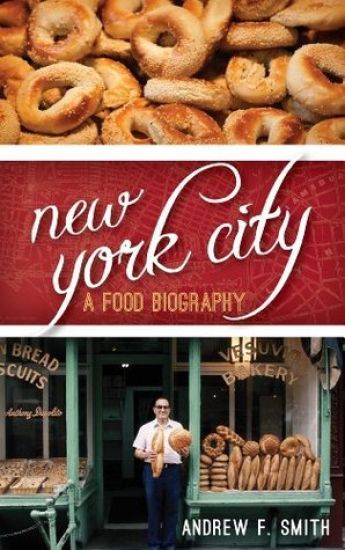
New York City’s first food biography showcases all the vibrancy, innovation, diversity, influence, and taste of this most-celebrated American metropolis. Its cuisine has developed as a lively potluck supper, where discrete culinary traditions have survived, thrived, and interacted. For almost 400 years New York’s culinary influence has been felt in other cities and communities worldwide. New York’s restaurants, such as Delmonico’s, created and sustained haute cuisine in this country. Grocery stores and supermarkets that were launched here became models for national food distribution. More cookbooks have been published in New York than in all other American cities combined. Foreign and “fancy” foods, including hamburgers, pizza, hot dogs, Waldorf salad, and baked Alaska, were introduced to Americans through New York’s colorful street vendors, cooks, and restaurateurs. As Smith shows here, the city’s ever-changing culinary life continues to fascinate and satiate both natives and visitors alike.
Popped Culture

Popped Culture

Andrew F. Smith

University of South Carolina Press
1999
sidottu
The history, legends and cookery of popcorn in America. The book tests legends against agricultural, archaeological, culinary and social findings and gauges the reasons for its unflagging popularity. The account is concluded with more than 160 historical recipes for popcorn cookery.
Pure Ketchup

Pure Ketchup

Andrew F. Smith

University of South Carolina Press
2012
nidottu
For topping French fries or cottage cheese, K rations or school lunches, ketchup has long been an American favorite. In Pure Ketchup, Andrew F. Smith chronicles American milestones in ketchup history, including colonial adaptations of popular British mushroom, anchovy, and walnut ketchups, the rise of tomato-based ketchup, the proliferation of commercial bottling after the Civil War, debates about preservatives, the resurgence of homemade and designer varieties, and a recent challenge from salsa. In addition to the history of ketchup, the book also includes historical recipes.
Sugar

Sugar

Andrew F. Smith

Reaktion Books
2015
sidottu
Sugar is one of the most beloved substances consumed by humans, and also one of the most reviled. It has come to dominate our diets – whether in candy, desserts, soft drinks or even bread and pasta sauces – for better and for worse. This fascinating history of this addictive ingredient reveals its incredible value as a global commodity and explores its darker legacies of slavery and widespread obesity.Sugar’s past is chock-full of determined adventurers: relentless sugar barons and plantation owners who worked alongside plant breeders, food processors, distributors and politicians to build a business based on our cravings. Exploring both the sugar cane and sugar beet industries, Andrew F. Smith tells story after story of those who have made fortunes and those who have met their demise because of sugar’s simple but profound hold on our palates. Delightful and surprisingly action-packed, this book offers a layered and definitive tale of sugar and the many people who have been caught in its spell, from barons to slaves, and from chefs to the countless among us born with that insatiable devil – the sweet tooth.
Fast Food

Fast Food

Andrew F. Smith

Reaktion Books
2016
nidottu
Fast food is the most pervasive culinary trend of our time. It is an industry that has changed the way the world eats, as the model works virtually everywhere. At its heart are large multinational chains, running an estimated one million outlets in virtually every corner of the world, serving hundreds of millions of people every day. It provides access to reasonably tasty food with speed, economy and convenience, and appeals to customers of practically every nationality, ethnicity, religion, age, gender, class, financial status and culinary tradition on earth.Fast Food: A Global Perspective explores why this industry has been so successful, and at the same time examines its many negative effects. Fast food has harmed the environment, undermined the health of customers, degraded the diets of children, and underpaid its workers. Indirectly, through its suppliers, it has supported factory farming and condoned dangerous working conditions from field to processing plant. The fast-food industry has undercut indigenous food purveyors, contributed to the loss of local and regional diversity and promoted culinary homogenization around the world.Critics have published scathing exposes, supported boycotts, engaged in demonstrations, and lobbied political leaders in an attempt to force the fast-food corporations to reduce the harm they cause - usually to little effect. Fast Food: A Global Perspective examines the industry's options and those of its customers, and asks what society as a whole can and should do to ameliorate the major problems generated by fast food.
Why Waste Food?

Why Waste Food?

Andrew F. Smith

Reaktion Books
2020
nidottu
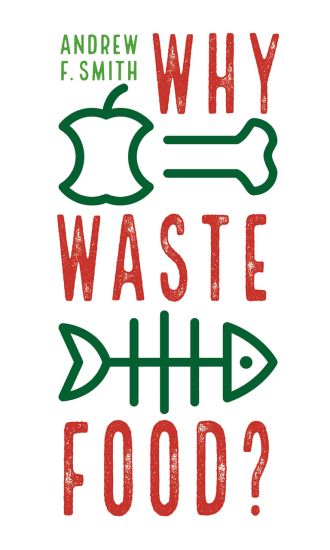
About one-third of all food grown for human consumption is lost or discarded every year, despite financial, environmental and ethical reasons to not waste food. We grow enough food to adequately feed everyone in the world, yet hundreds of millions of people suffer from hunger, malnutrition or food insecurity. Together it accounts for about 8 per cent of the world’s total greenhouse gas emissions. So, if wasting food is such a patently bad idea, why do we discard so much? In Why Waste Food?, Andrew F. Smith investigates one of today’s most pressing topics, examining the causes of avoidable food waste across the supply chain, and highlighting the ways in which we can all do something to tackle this global concern.
Hamburger

Hamburger

Andrew F. Smith

Reaktion Books
2008
sidottu
McDonald’s founder Ray Kroc once said, ‘It requires a certain kind of mind to see beauty in a hamburger bun’. The hamburger has been both a source of gluttonous joy and a recurrent obstacle to healthy eating. Now the full beauty of the burger in all its forms is explored in this book.Andrew F. Smith traces the global history of the hamburger from its humble beginnings as a nineteenth-century street food sold by American vendors. It soon spread to the menus of diners and restaurants, and it came into its own with the 1921 opening of the first US hamburger chain,White Castle. Subsequent successful food chains such as McDonald’s and Wendy’s ensured the burger’s success in the United States and around the world. The hamburger irrevocably changed Americans’ eating habits as it propelled the rise of fast food over home-cooked meals. At the same time, burgers were making inroads in culture, becoming a rich symbol in paintings, television and cinema. Smith also discusses the wider nutritional, economic and cultural conflicts raised by the hamburger, such as the ‘McDonaldization’ of international cultures.A juicy, meaty and richly illustrated read, Hamburger will stimulate the taste buds of hamburger aficionados the world over.
Potato

Potato

Andrew F. Smith

Reaktion Books
2011
sidottu
From its obscure Pre-Columbian beginnings in South America to its global popularity today, the story of the potato is one of rags to riches. In Potato, esteemed culinary historian Andrew F. Smith reveals the captivating story of a once lowly vegetable that has changed - and continues to change - the world. First domesticated by prehistoric people in the Andes, the potato has since been adopted by cultures all over the globe. After its discovery by Europeans, goverments and monarchs encouraged the people to farm it because it was so nutritious and easy to grow, but its new position as the staple of the poor meant mass starvation in nineteenth-century Ireland when potato blight wiped out the crops. The potato was also adopted by cooks in India and in China, which is now the world's largest potato producer.Despite its popularity, in this era of both fast food and health consciousness, the potato is now suffering negative publicity for the very quality for which it was lauded by our forefathers: being a good source of carbohydrate. But is it fair to blame the humble spud for our habit of covering it with butter or sour cream or deep-frying it in oil? Potato is a captivating account of the history, economy, politics and gastronomy behind this beloved tuber. Like a well-dressed baked potato, this book will both comfort and satisfy the reader.