Kirjahaku
Etsi kirjoja tekijän nimen, kirjan nimen tai ISBN:n perusteella.
1000 tulosta hakusanalla Andrew H. Price
Texas has about one hundred twenty native species and subspecies of snakes, fifteen of which are venomous. Since 1950, Texans have turned to the Poisonous Snakes of Texas pamphlet series published by the Texas Parks and Wildlife Department for help in identifying these snakes and for expert advice on preventing and treating snakebite. Venomous Snakes of Texas, a thoroughly revised and updated edition of Poisonous Snakes, carries on this tradition as a one-stop, all-you-need-to-know guide to Texas's rattlesnakes, copperheads, cottonmouths, and coral snakes.In this authoritative field guide, you'll find:Full-color photographs and a county-by-county distribution map for each species.Each species' common and scientific name, description, look-alikes, and a summary sketch of its habitat, behavior, reproduction, venom characteristics, predator-prey relationships, and fossil record.Up-to-date advice on recognizing venomous snakes and preventing and treating snakebite, both at home and in the field.A glossary of terms and an extensive bibliography.A special feature of this guide is an expanded treatment of the ecological and evolutionary context in which venomous snakes live, which supports Price's goal "to lessen the hatred and fear and to increase the understanding, the respect, and even the appreciation with which venomous snakes should be regarded."

Amphibians and Reptiles of New Mexico
W. G. Degenhardt; Charles W. Painter; Andrew H. Price
University of New Mexico Press
2005
nidottu
Amphibians and reptiles thrive in New Mexico's many landscapes and its extremes of temperatures and moisture. The state has 123 species, an assemblage of 3 salamanders, 23 frogs and toads, 10 turtles, 41 lizards, and 46 snakes. In this comprehensive guide, each species is presented in a colour photograph and its distribution shown on a map. Technical art supplements identification keys and line art complements family descriptions. For each species, the following information is provided: type, distribution, description, similar species, systematics, habitat, behaviour, reproduction, food habits, and references. The detailed descriptions add immeasurably to students' and herpetologists' knowledge about the region's herpetofauna. This book is also of great benefit to non-specialists, including casual hikers, since the authors write in accessible language that makes for easy identifications of species.
Modeling Terrorism Risk to the Air Transportation System
Andrew R. Morral; Carter C. Price; David S. Ortiz; Bradley Wilson; Tom LaTourrette; Blake W. Mobley; Shawn McKay; Henry H. Willis
RAND
2012
pokkari
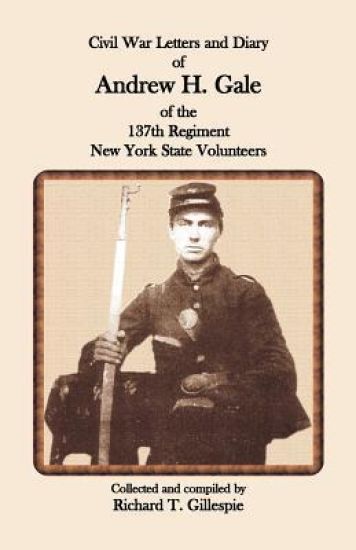
Civil War Letters and Diary of Andrew H. Gale of the 137th Regiment, New York State Volunteers
Richard T Gillespie
Heritage Books
2009
pokkari
Free Public Education in Nature and Art, Combined in Original Central Park and Museum Plans, 1857-1871, of Andrew H. Green, Frederick Law Olmsted, Cal
American Museum of Natural History; Municipal Art Society of New York
Hassell Street Press
2021
nidottu
This work has been selected by scholars as being culturally important and is part of the knowledge base of civilization as we know it.This work is in the public domain in the United States of America, and possibly other nations. Within the United States, you may freely copy and distribute this work, as no entity (individual or corporate) has a copyright on the body of the work.Scholars believe, and we concur, that this work is important enough to be preserved, reproduced, and made generally available to the public. To ensure a quality reading experience, this work has been proofread and republished using a format that seamlessly blends the original graphical elements with text in an easy-to-read typeface.We appreciate your support of the preservation process, and thank you for being an important part of keeping this knowledge alive and relevant.
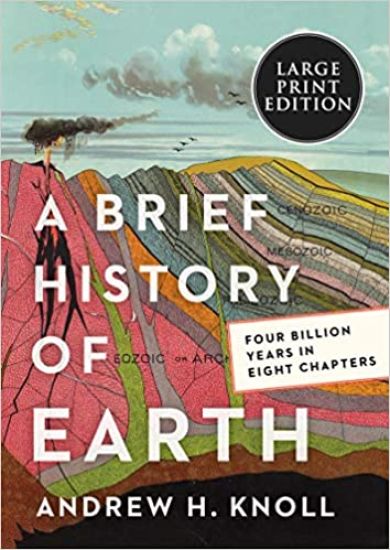
Harvard’s acclaimed geologist “charts Earth’s history in accessible style” (AP)“A sublime chronicle of our planet." –Booklist, STARRED reviewHow well do you know the ground beneath your feet? Odds are, where you’re standing was once cooking under a roiling sea of lava, crushed by a towering sheet of ice, rocked by a nearby meteor strike, or perhaps choked by poison gases, drowned beneath ocean, perched atop a mountain range, or roamed by fearsome monsters. Probably most or even all of the above. The story of our home planet and the organisms spread across its surface is far more spectacular than any Hollywood blockbuster, filled with enough plot twists to rival a bestselling thriller. But only recently have we begun to piece together the whole mystery into a coherent narrative. Drawing on his decades of field research and up-to-the-minute understanding of the latest science, renowned geologist Andrew H. Knoll delivers a rigorous yet accessible biography of Earth, charting our home planet's epic 4.6 billion-year story. Placing twenty first-century climate change in deep context, A Brief History of Earth is an indispensable look at where we’ve been and where we’re going.Features original illustrations depicting Earth history and nearly 50 figures (maps, tables, photographs, graphs).
Harvard's acclaimed geologist "charts Earth's history in accessible style" (AP)"A sublime chronicle of our planet." -Booklist, STARRED reviewHow well do you know the ground beneath your feet? Odds are, where you're standing was once cooking under a roiling sea of lava, crushed by a towering sheet of ice, rocked by a nearby meteor strike, or perhaps choked by poison gases, drowned beneath ocean, perched atop a mountain range, or roamed by fearsome monsters. Probably most or even all of the above. The story of our home planet and the organisms spread across its surface is far more spectacular than any Hollywood blockbuster, filled with enough plot twists to rival a bestselling thriller. But only recently have we begun to piece together the whole mystery into a coherent narrative. Drawing on his decades of field research and up-to-the-minute understanding of the latest science, renowned geologist Andrew H. Knoll delivers a rigorous yet accessible biography of Earth, charting our home planet's epic 4.6 billion-year story. Placing twenty first-century climate change in deep context, A Brief History of Earth is an indispensable look at where we've been and where we're going.Features original illustrations depicting Earth history and nearly 50 figures (maps, tables, photographs, graphs).
The relationship between theory and practice, research and action, is fundamental to all fields of applied social science. Should research findings and knowledge be useful for science, practice, and policy? If so, how should such research be designed, carried out and disseminated to achieve the twin goals of rigor and relevance? These challenges are particularly relevant in the applied areas of management and organization studies where there is a distinct responsibility for researchers to engage with the 'real world'. In this carefully crafted and thoughtful book, leading management researcher Andrew Van de Ven both presents the broad intellectual challenge of 'engaged scholarship', and also sets out a clear framework and guidelines for carrying out soundly based and useful research for advancing both science and practice. At a time when some may question the value and status of academic knowledge; and others, contrastingly, urge a closer relationship between researchers and research users - be they businesses, governments or other institutions - the challenge of engaged scholarship is as relevant as ever, and there is a real need for the thoughtful and considered approach offered by Van de Ven. The book both provides a manifesto for engaged scholarship in the social sciences, and clear framework for research design and methodology. It will be an invaluable reference point and guide for academics, researchers and graduate students across the social sciences concerned with rigorous and relevant research in the contemporary world.
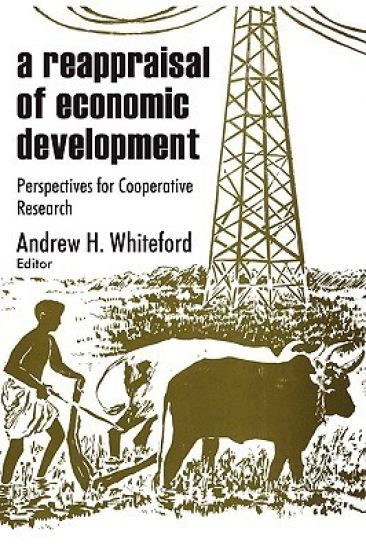
What have the social sciences to show for decades of systematic investigation of the problems of economic development? What basic problems have they solved and what remains to be done in the development of viable theoretical approaches to this area of research and policy? In an unusually open discussion, thirty-three experts from the fields of anthropology, economics, political science, geography, sociology, and agriculture here present a stimulating re-examination of their accomplishments and mutual problems, of the progress the disciplines have made, and that which remains.The increased interest of social scientists in their sister disciplines has not been stimulated solely by intellectual exploration into the problems that they share and the particular insights each provides. Much of the interest stems from the groping and searching concern of field workers who find themselves investigating problems and systems which cannot be understood adequately in terms of a single kind of analysis, be it political, social, cultural, historical, or psychological. Fieldwork thrusts upon them the realization that their professional areas of concern overlap and converge upon aspects of life which traditionally (or academically) lie in the domains of other disciplines.A Reappraisal of Economic Development is distinguished by the vitality and spark of scholars of different disciplines interacting with each other. The book's formal essays are deliberately short, leaving the bulk of the volume to intensive, cross-disciplinary investigation of the positions, accomplishments, and proposals of the speakers and their critics. The result is a fruitful re-evaluation of the political, social, and geographic forces affecting economic development in emerging nations and a useful handbook for anyone dealing with the varied problems of foreign aid, health and educational development, labor organization, and foreign business.Andrew H. Whiteford was George L. Collie Professor of Anthropology, Beloit College, and director, Logan Museum of Anthropology, Beloit. For a twenty-year period he also served as the chair of the department of anthropology at Beloit. After retiring, he became active in the Indian Arts Research Center at the School of American Research, the Wheelwright Museum of the American Indian, and the New Mexico Museum of Indian Arts and Culture.
Conventional wisdom holds that legislators who bring “pork”—federal funds for local projects—back home to their districts are better able to fend off potential challengers. For more than four decades, however, the empirical support for this belief has been mixed. Some studies have found that securing federal spending has no electoral effects at best or can even cost incumbent legislators votes.In Pork Barrel Politics, Andrew H. Sidman offers a systematic explanation for how political polarization affects the electoral influence of district-level federal spending. He argues that the average voter sees the pork barrel as an aspect of the larger issue of government spending, determined by partisanship and ideology. It is only when the political world becomes more divided over everything else that the average voter pays attention to pork, linking it to their general preferences over government spending. Using data on pork barrel spending from 1986 through 2012 and public works spending since 1876 along with analyses of district-level outcomes and incumbent success, Sidman demonstrates the rising power of polarization in United States elections. During periods of low polarization, pork barrel spending has little impact, but when polarization is high, it affects primary competition, campaign spending, and vote share in general elections. Pork Barrel Politics is an empirically rich account of the surprising repercussions of bringing pork home, with important consequences in our polarized era.
Shadow Tribe offers the first in-depth history of the Pacific Northwest's Columbia River Indians -- the defiant River People whose ancestors refused to settle on the reservations established for them in central Oregon and Washington. Largely overlooked in traditional accounts of tribal dispossession and confinement, their story illuminates the persistence of off-reservation Native communities and the fluidity of their identities over time. Cast in the imperfect light of federal policy and dimly perceived by non-Indian eyes, the flickering presence of the Columbia River Indians has followed the treaty tribes down the difficult path marked out by the forces of American colonization.Based on more than a decade of archival research and conversations with Native people, Andrew Fisher's groundbreaking book traces the waxing and waning of Columbia River Indian identity from the mid-nineteenth through the late twentieth centuries. Fisher explains how, despite policies designed to destroy them, the shared experience of being off the reservation and at odds with recognized tribes forged far-flung river communities into a loose confederation called the Columbia River Tribe. Environmental changes and political pressures eroded their autonomy during the second half of the twentieth century, yet many River People continued to honor a common heritage of ancestral connection to the Columbia, resistance to the reservation system, devotion to cultural traditions, and detachment from the institutions of federal control and tribal governance. At times, their independent and uncompromising attitude has challenged the sovereignty of the recognized tribes, earning Columbia River Indians a reputation as radicals and troublemakers even among their own people.Shadow Tribe is part of a new wave of historical scholarship that shows Native American identities to be socially constructed, layered, and contested rather than fixed, singular, and unchanging. From his vantage point on the Columbia, Fisher has written a pioneering study that uses regional history to broaden our understanding of how Indians thwarted efforts to confine and define their existence within narrow reservation boundaries.
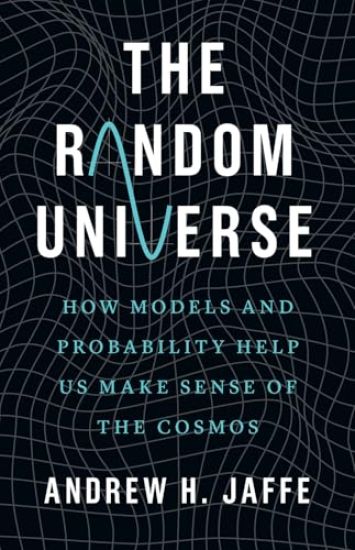
An award-winning astrophysicist looks at how the understanding of uncertainty and randomness has led to breakthroughs in our knowledge of the cosmos All of us understand the world around us by constructing models, comparing them to observations, and drawing conclusions. Scientists create, test, and replace these models by applying the twinned concepts of probability and randomness. Exploring how this process has refined our knowledge of quantum mechanics and the birth of the universe, Andrew H. Jaffe offers a unique synthesis of the philosophy of epistemology, the mathematics of probability, and the science of cosmology. As Jaffe puts Enlightenment thinkers like David Hume in conversation with contemporary philosophers such as Karl Popper and Imre Lakatos and engages with scientists ranging from Isaac Newton and Galileo to Albert Einstein and Arthur Eddington, he uses Thomas Bayes’s seminal studies of statistics and probability to make sense of conflicting currents of thought. This is a deep look into how we have learned to account for uncertainty in our search for knowledge—and a reminder that science is not about facts and data as such but about creating models that correctly account for the facts and data.
Diagnosis and Treatment of Fungal Chest Infections, An Issue of Clinics in Chest Medicine
Andrew H. Limper; Eva Carmona
Elsevier - Health Sciences Division
2017
sidottu
This issue of Clinics in Chest Medicine focuses on Current Perspectives on the Diagnosis and Treatment of Fungal Chest Infections.Editors Andrew Limper and Eva Carmona have assembled an expert team of authors on topics such as: When to consider the possibility of a fungal infection: an overview of clinical diagnosis and laboratory approaches; Overview of treatment approaches for fungal infections; Clinical perspectives in the diagnosis and management of histoplasmosis; Presentation and management of coccidiodomycosis in immune competent and immunosuppressed patients; Clinical manifestations and treatment of blastomycosis; Update on the epidemiology, diagnosis, and treatment of cryptococcal infections; Approach to fungal infections in HIV-infected individuals: Pneumocystis and beyond; Fungal infections in immunocompromised patients with malignancies: practical approaches to prevention, diagnosis, and treatment; Candidemia in the intensive care unit; Fungal infections following lung transplantation; Noninvasive aspergillus infections and syndromes; Contemporary laboratory modalities for the diagnosis of fungal infections; Emergence of the molds other than Aspergillus in immunocompromised patients.
The Land Problem in the Developed Economy
Andrew H. Dawson
Barnes Noble Books-Imports, Div of Rowman Littlefield Pubs., Inc
1991
sidottu
A survey of the major problems and debates connected with land use in the modern developed world. The opening chapters examine the major components of the problem and describe the development of the debate about land from Malthus onward. The book then analyzes land policy in a number of different countries, including the UK, the USA, Japan, and Poland.
Now in the new Second Edition, Purchasing for Chefs is a comprehensive yet concise treatment of the purchasing principles that teaches students and chefs the basic principles of how to purchase goods and services in order to run their businesses effectively. It contains sections on "Purchasing Technology" that explains purchasing lingo beyond the scope of the book as well as illustrating different tools used in purchasing. This book is written in a unique conversational style that makes purchasing an accessible subject.
Structural Design for Fire Safety
Andrew H. Buchanan; Anthony Kwabena Abu
John Wiley Sons Inc
2017
sidottu
Structural Design for Fire Safety, 2nd edition Andrew H. Buchanan, University of Canterbury, New Zealand Anthony K. Abu, University of Canterbury, New Zealand A practical and informative guide to structural fire engineering This book presents a comprehensive overview of structural fire engineering. An update on the first edition, the book describes new developments in the past ten years, including advanced calculation methods and computer programs. Further additions include: calculation methods for membrane action in floor slabs exposed to fires; a chapter on composite steel-concrete construction; and case studies of structural collapses. The book begins with an introduction to fire safety in buildings, from fire growth and development to the devastating effects of severe fires on large building structures. Methods of calculating fire severity and fire resistance are then described in detail, together with both simple and advanced methods for assessing and designing for structural fire safety in buildings constructed from structural steel, reinforced concrete, or structural timber. Structural Design for Fire Safety, 2nd edition bridges the information gap between fire safety engineers, structural engineers and building officials, and it will be useful for many others including architects, code writers, building designers, and firefighters. Key features: • Updated references to current research, as well as new end-of-chapter questions and worked examples. •Authors experienced in teaching, researching, and applying structural fire engineering in real buildings. • A focus on basic principles rather than specific building code requirements, for an international audience. An essential guide for structural engineers who wish to improve their understanding of buildings exposed to severe fires and an ideal textbook for introductory or advanced courses in structural fire engineering.