Kirjojen hintavertailu. Mukana 11 244 527 kirjaa ja 12 kauppaa.

Kirjahaku

Etsi kirjoja tekijän nimen, kirjan nimen tai ISBN:n perusteella.

1000 tulosta hakusanalla Andrew Lamb

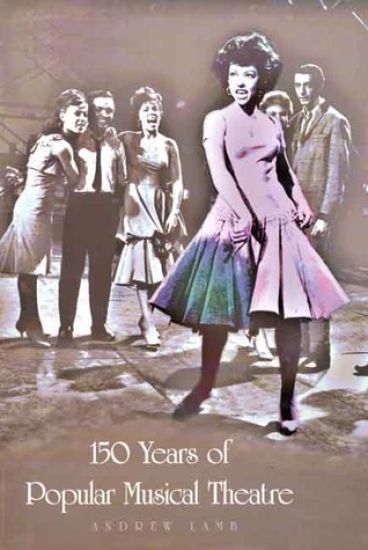
150 Years of Popular Musical Theatre

150 Years of Popular Musical Theatre

Andrew Lamb

Yale University Press
2001
sidottu
From the Parisian operettas of Jacques Offenbach in the 1850s to such current blockbuster musicals as Les Misérables and Rent, musical theatre has given joy to audiences throughout the world. This lively book—an illustrated history of popular musical theatre—provides a compendium of fascinating details about the origins and development of the genre over a century and a half. Andrew Lamb moves from country to country, showing how different cultures interpreted and were influenced by different types of musical theatre. He examines, for example, the development of the European operetta style from French and Viennese works to such less-well-known schools as the Spanish zarzuela. He also traces the evolution of English-language works from the comic operas of Gilbert and Sullivan and American vaudevilles and extravaganzas to the latest Broadway and West End musicals. For each significant work he provides a brief description of the plot and references to the principal musical numbers. While his focus is on composers, librettists, and lyricists, he also gives information about principal performers, directors, and other creative influences. In a masterful way he conveys the differences between works of the same composer and works by various composers, and shows how they reflect changing cultural tastes and musical and dramatic conventions. Displaying a deep and wide-ranging expertise, this authoritative book is an invaluable resource for all lovers of the musical theatre.
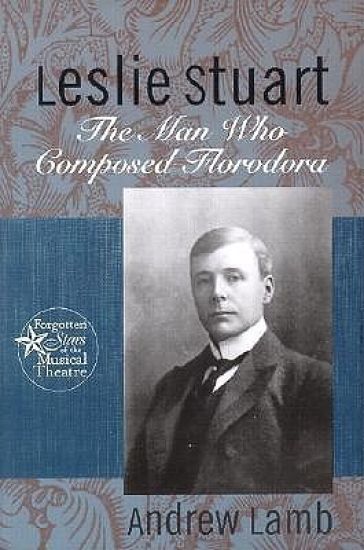
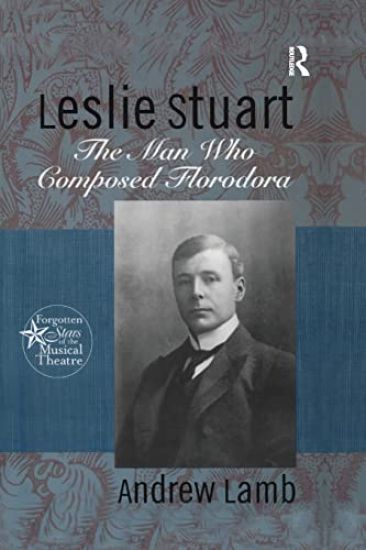
Leslie Stuart

Leslie Stuart

Andrew Lamb

Routledge
2002
sidottu
Leslie Stuart (1864-1928) was a British songwriter best remembered as the composer of the hit show, Florodora. He began writing popular songs as a teenager, first for blackface and vaudeville performers, and eventually for more "legitimate" shows and revues. Florodora (1899), written in collaboration with London's most fashionable librettist, Owen Hall, was a musical-comedy sensation. Its combination of the traditional slow love ballads and waltzes with more rhythmic and long-lined numbers made it a worldwide success. He continued to compose through the first decade of the 20th century, laying the groundwork for the coming innovations in British and American musical theater.
Leslie Stuart

Leslie Stuart

Andrew Lamb

Routledge
2016
nidottu
Leslie Stuart (1864-1928) was a British songwriter best remembered as the composer of the hit show, Florodora. He began writing popular songs as a teenager, first for blackface and vaudeville performers, and eventually for more "legitimate" shows and revues. Florodora (1899), written in collaboration with London's most fashionable librettist, Owen Hall, was a musical-comedy sensation. Its combination of the traditional slow love ballads and waltzes with more rhythmic and long-lined numbers made it a worldwide success. He continued to compose through the first decade of the 20th century, laying the groundwork for the coming innovations in British and American musical theater.
Serpent of the Tyche

Serpent of the Tyche

Andrew Lamb

Createspace Independent Publishing Platform
2014
nidottu
How far would you go to spare yourself an eternity in Damnation? Murdered for his adulterous ways, Vincentius De Cavalieri forged a twisted pact with the cursed Olympian Priestess Stheno to avoid a fate worse than Hell. In exchange for immortality, he was tasked with the retrieval of the mysterious Tyche sword, a weapon with supernatural and corrupting powers. After 500 years of searching, he tracks the Tyche to a corrupt Bio-Weapons genius who has used the sword to craft the ultimate weapon... the Serpent of the Tyche. From the creator of "Dispatchers - Vengeance of the Dark", the Serpent of the Tyche draws upon Greek Mythologies and combines them with modern Science Fiction themes to create a fast paced action packed thriller.
The Gates of Hell: Sir John Franklin's Tragic Quest for the North West Passage
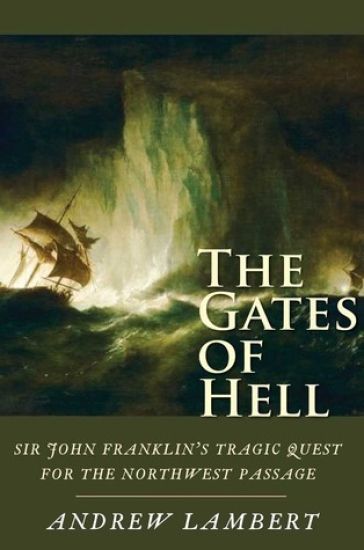
From one of our foremost naval historians, the compelling story of the doomed Arctic voyage of the HMS Erebus and the HMS Terror, commanded by Captain Sir John Franklin. Andrew Lambert, a leading authority on naval history, reexamines the life of Sir John Franklin and his final, doomed Arctic voyage. Franklin was a man of his time, fascinated, even obsessed with, the need to explore the world; he had already mapped nearly two-thirds of the northern coastline of North America when he undertook his third Arctic voyage in 1845, at the age of fifty-nine.His two ships were fitted with the latest equipment; steam engines enabled them to navigate the pack ice, and he and his crew had a three-year supply of preserved and tinned food and more than one thousand books. Despite these preparations, the voyage ended in catastrophe: the ships became imprisoned in the ice, and the men were wracked by disease and ultimately wiped out by hypothermia, scurvy, and cannibalism.Franklin's mission was ostensibly to find the elusive North West Passage, a viable sea route between Europe and Asia reputed to lie north of the American continent. Lambert shows for the first time that there were other scientific goals for the voyage and that the disaster can only be understood by reconsidering the original objectives of the mission. Franklin, commonly dismissed as a bumbling fool, emerges as a more important and impressive figure, in fact, a hero of navigational science.
The British Way of War

The British Way of War

Andrew Lambert

Yale University Press
2021
sidottu
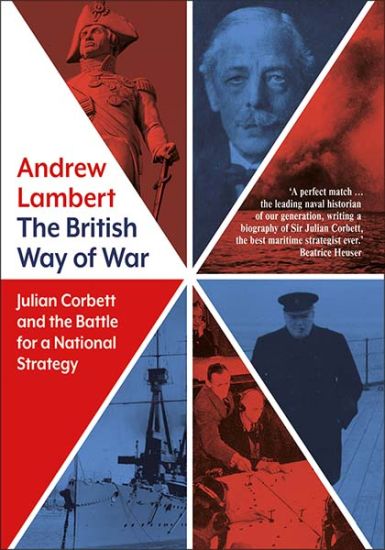
How a strategist's ideas were catastrophically ignored in 1914—but shaped Britain’s success in the Second World War and beyond Leading historian Andrew Lambert shows how, as a lawyer, civilian, and Liberal, Julian Corbett (1854–1922) brought a new level of logic, advocacy, and intellectual precision to the development of strategy. Corbett skillfully integrated classical strategic theory, British history, and emerging trends in technology, geopolitics, and conflict to prepare the British state for war. He emphasized that strategy is a unique national construct, rather than a set of universal principles, and recognized the importance of domestic social reform and the evolving British Commonwealth. Corbett's concept of a maritime strategy, dominated by the control of global communications and economic war, survived the debacle of 1914–18, when Britain used the German "way of war" at unprecedented cost in lives and resources. It proved critical in the Second World War, shaping Churchill’s conduct of the conflict from the Fall of France to D-Day. And as Lambert shows, Corbett’s ideas continue to influence British thinking.
Seapower States

Seapower States

Andrew Lambert

Yale University Press
2019
pokkari
One of the most eminent historians of our age investigates the extraordinary success of five small maritime states “A superb survey of the perennial opportunities and risks in what Herman Melville called ‘the watery part of the world.’”—William Anthony Hay, Wall Street Journal Andrew Lambert, author of The Challenge: Britain Against America in the Naval War of 1812—winner of the prestigious Anderson Medal—turns his attention to Athens, Carthage, Venice, the Dutch Republic, and Britain, examining how their identities as “seapowers” informed their actions and enabled them to achieve success disproportionate to their size. Lambert demonstrates how creating maritime identities made these states more dynamic, open, and inclusive than their lumbering continental rivals. Only when they forgot this aspect of their identity did these nations begin to decline. Recognizing that the United States and China are modern naval powers—rather than seapowers—is essential to understanding current affairs, as well as the long-term trends in world history. This volume is a highly original “big think” analysis of five states whose success—and eventual failure—is a subject of enduring interest, by a scholar at the top of his game.
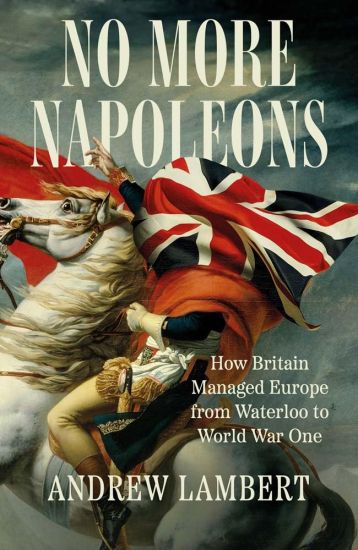
No More Napoleons

No More Napoleons

Andrew Lambert

YALE UNIVERSITY PRESS
2025
sidottu
How, for just over a century, Britain ensured it would not face another Napoleon Bonaparte—manipulating European powers while building a global maritime empire At the conclusion of the Napoleonic Wars, a fragile peace emerged in Europe. The continent’s borders were redrawn, and the French Empire, once a significant threat to British security, was for now cut down to size. But after decades of ceaseless conflict, Britain’s economy was beset by a crippling debt. How could this small, insular seapower state secure order across the Channel? Andrew Lambert argues for a dynamic new understanding of the nineteenth century, showing how British policymakers shaped a stable European system that it could balance from offshore. Through judicious deployment of naval power against continental forces, and the defence strategy of statesmen such as the Duke of Wellington, Britain ensured that no single European state could rise to pose a threat, rebuilt its economy, and established naval and trade dominance across the globe. This is the remarkable story of how Britain kept a whole continent in check—until the final collapse of this delicately balanced order at the outset of World War One.
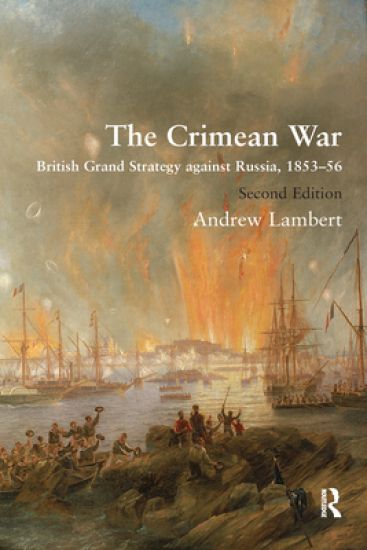
The Crimean War

The Crimean War

Andrew Lambert

Routledge
2020
nidottu
In contrast to every other book about the conflict Andrew Lambert's ground-breaking study The Crimean War: British Grand Strategy against Russia, 1853-1856 is neither an operational history of the armies in the Crimea, nor a study of the diplomacy of the conflict. The core concern is with grand strategy, the development and implementation of national policy and strategy. The key concepts are strategic, derived from the works of Carl von Clausewitz and Sir Julian Corbett, and the main focus is on naval, not military operations. This original approach rejected the 'Continentalist' orthodoxy that dominated contemporary writing about the history of war, reflecting an era when British security policy was dominated by Inner German Frontier, the British Army of the Rhine and Air Force Germany. Originally published in 1990 the book appeared just as the Cold War ended; the strategic landscape for Britain began shifting away from the continent, and new commitments were emerging that heralded a return to maritime strategy, as adumbrated in the defence policy papers of the 1990s. With a new introduction that contextualises the 1990 text and situates it in the developing historiography of the Crimean War the new edition makes this essential book available to a new generation of scholars.
Craxton's Cats

Craxton's Cats

Andrew Lambirth

THAMES HUDSON LTD
2024
sidottu
An appealing picture book of cats depicted by John Craxton, one of the major figures of modern British painting, with an introduction and commentary by Andrew Lambirth, who knew Craxton well. By concentrating on a single subject very dear to John Craxton’s heart – cats – this book offers a much more accessible introduction to this popular artist (championed by David Attenborough and Andrew Marr among many others) than the recently published biography and monograph. Craxton's significance as the early artist companion of Lucian Freud, his time in Greece and his collaborations with Patrick Leigh Fermor have generated growing interest in his art. For John Craxton, cats were an index of moods and states of mind, and a splendidly apposite vehicle for his visual and verbal wit. Craxton loved cats and lived with them, on and off, for most of his life. The cat image came readily to mind and hand, whether he was planning a taverna scene in Crete, or doodling during a telephone conversation. Cats permeate his art, weaving their way through his paintings, drawings and prints, bringing humour and mischief to his images as they did to his daily existence. Affectionate and faithless, they were like so many casual lovers, no better than they should be, and gloriously on the make. In many ways, they are a fitting symbol or leitmotif for Craxton's own happy-go-lucky life. Containing new and original material, this widely accessible introduction to Craxton’s work will appeal to the devotee and the uninitiated alike.
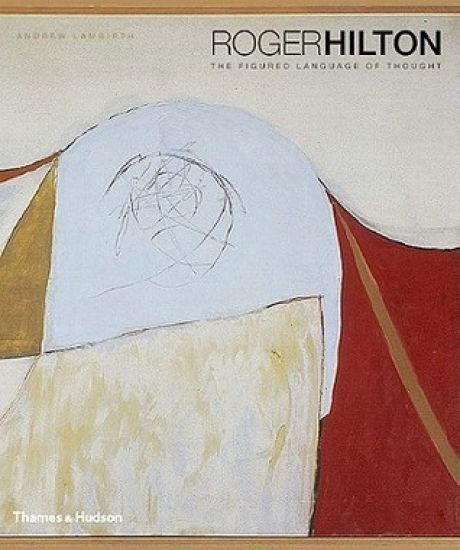
Roger Hilton

Roger Hilton

Andrew Lambirth

Thames Hudson Ltd
2007
sidottu
Roger Hilton (1911–75) was one of the pioneers of British abstract art. This account of his life is lavishly illustrated with works from all stages of his career, in a visually stunning record of his oeuvre. It is further enlivened by numerous anecdotes and reminiscences recalling his sometimes outspoken relations with other artists such as Peter Lanyon, Terry Frost and Patrick Heron, and includes personal memories of his widow, Rose.
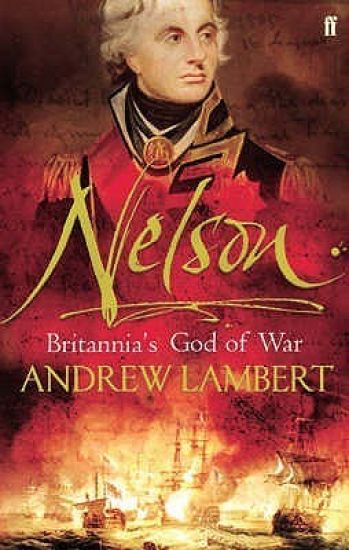
Nelson

Nelson

Andrew Lambert

Faber Faber
2005
pokkari
'Fascinating . . . Shot through with fresh insights . . . No previous biography has attempted anything so comprehensive.' ObserverNelson is a thrilling new appraisal of Horatio Nelson, the greatest practitioner of naval command the world has ever seen. It explores the professional, personal, intellectual and practical origins of one man's genius, to understand how the greatest warrior that Britain has ever produced transformed the art of conflict, and enabled his country to survive the challenge of total war and international isolation. In Nelson, Andrew Lambert - described by David Cannadine as 'the outstanding British naval historian of his generation' - is able to offer new insights into the individual quality which led Byron rightly to celebrate Nelson's genius as 'Britannia's God of War'. He demonstrates how Admiral Nelson elevated the business of naval warfare to the level of the sublime. Nelson's unique gift was to take that which other commanders found complex, and reduce it to simplicity. Where his predecessors and opponents saw a particular battle as an end in itself, Nelson was always a step ahead - even in the midst of terrifying, close-quarters action, with officers and men struck down all around him. 'Excellent . . . Worthy of the stirring events [it celebrates].' Independent
Admirals

Admirals

Andrew Lambert

Faber Faber
2009
pokkari
The true story of how Britain's maritime power helped gain this country unparalleled dominance of the world's economy, Admirals celebrates the rare talents of the men who shaped the most successful fighting force in world history. Told through the lives and battles of eleven of our most remarkable admirals - men such as James II and Robert Blake - Andrew Lambert's book stretches from the Spanish Armada to the Second World War, culminating with the spirit which led Andrew Browne Cunningham famously to declare, when the army feared he would lose too many ships, 'it takes three years to build a ship; it takes three centuries to build a tradition.'
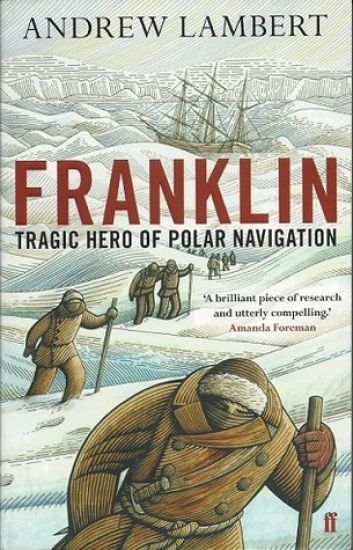
Franklin

Franklin

Andrew Lambert

Faber Faber
2010
pokkari
In 1845 Captain Sir John Franklin led a large, well equipped expedition to complete the conquest of the Canadian Arctic, to find the fabled North West Passage connecting the North Atlantic to the North Pacific. Yet Franklin, his ships and his men were fated never to return. The cause of their loss remains a mystery. In Franklin, Andrew Lambert presents a gripping account of the worst catastrophe in the history of British exploration, and the dark tales of cannibalism that surround the fate of those involved.Shocked by the disappearance of all 129 officers and men, and sickened by reports of cannibalism, the Victorians re-created Franklin as the brave Christian hero who laid down his life, and those of his men. Later generations have been more sceptical about Franklin and his supposed selfless devotion to duty. But does either view really explain why this outstanding scientific navigator found his ships trapped in pack ice seventy miles from magnetic north?In 2014 Canadian explorers discovered the remains of Franklin's ship. His story is now being brought to a whole new generation, and Andrew Lambert's book gives the best analysis of what really happened to the crew. In its incredible detail and its arresting narrative, Franklin re-examines the life and the evidence with Lambert's customary brilliance and authority. In this riveting story of the Arctic, he discovers a new Franklin: a character far more complex, and more truly heroic, than previous histories have allowed. '[A]nother brilliant piece of research combined with old-fashioned detective work . . . utterly compelling.' Dr Amanda Foreman
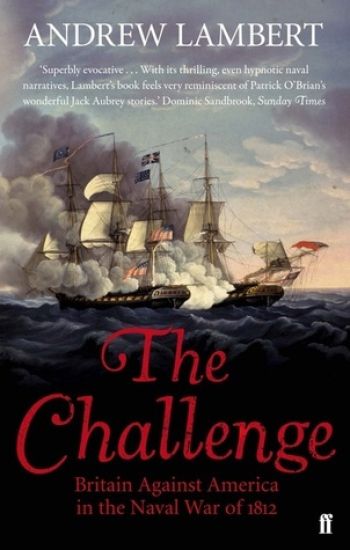
The Challenge

The Challenge

Andrew Lambert

Faber Faber
2013
pokkari
In the summer of 1812 Britain stood alone, fighting for her very survival against a vast European Empire. Only the Royal Navy stood between Napoleon's legions and ultimate victory. In that dark hour America saw its chance to challenge British dominance: her troops invaded Canada and American frigates attacked British merchant shipping, the lifeblood of British defence. War polarised America. The south and west wanted land, the north wanted peace and trade. But America had to choose between the oceans and the continent. Within weeks the land invasion had stalled, but American warships and privateers did rather better, and astonished the world by besting the Royal Navy in a series of battles. Then in three titanic single ship actions the challenge was decisively met. British frigates closed with the Chesapeake, the Essex and the President, flagship of American naval ambition. Both sides found new heroes but none could equal Captain Philip Broke, champion of history's greatest frigate battle, when HMS Shannon captured the USS Chesapeake in thirteen blood-soaked minutes. Broke's victory secured British control of the Atlantic, and within a year Washington, D.C. had been taken and burnt by British troops.
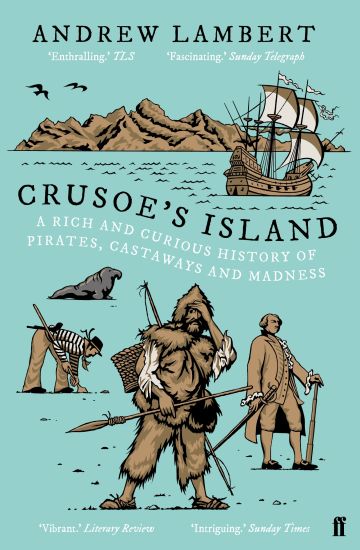
Crusoe's Island

Crusoe's Island

Andrew Lambert

Faber Faber
2017
nidottu
Originally named Juan Fernández, the island of Robinson Crusoe in the South Pacific was the inspiration for Defoe's classic novel about the adventures of a shipwrecked sailor. Yet the complex story of Britain's relationship with this distant, tiny island is more surprising, more colourful and considerably darker. Drawing on voyage accounts, journal entries, maps and illustrations, acclaimed historian Andrew Lambert brings to life the voices of the visiting sailors, scientists, writers and artists, from the early encounters of the 1500s and the perilous journeys of the eighteenth-century explorers, to the naval conflicts of the First World War and the environmental concerns of more recent years. Crusoe's Island explores why we are still not willing to give up on the specks of land at the far ends of the earth.
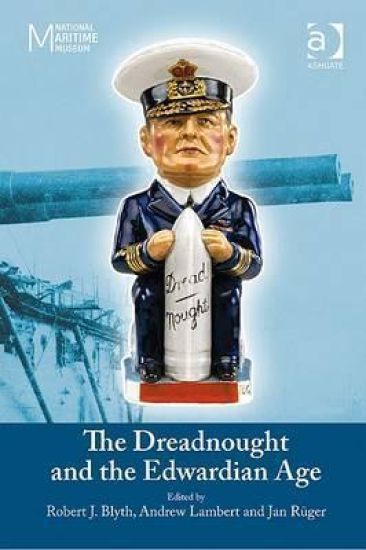
The Dreadnought and the Edwardian Age

The Dreadnought and the Edwardian Age

Andrew Lambert

Ashgate Publishing Limited
2011
sidottu
HMS Dreadnought (1906) is closely associated with the age of empire, the Anglo-German antagonism and the naval arms race before the First World War. Yet it was also linked with a range of other contexts - political and cultural, national and international - that were central to the Edwardian period. The chapters in this volume investigate these contexts and their intersection in this symbolically charged icon of the Edwardian age. In reassessing the most famous warship of the period, this collection not only considers the strategic and operational impact of this 'all big gun' battleship, but also explores the many meanings Dreadnought had in politics and culture, including national and imperial sentiment, gender relations and concepts of masculinity, public spectacle and images of technology, and ideas about modernity and decline. The volume brings together historians from different backgrounds, working on naval and technological history, politics and international relations, as well as culture and gender. This diverse approach to the subject ensures that the book offers a timely revision of the Dreadnought and the Edwardian Age.'