Kirjojen hintavertailu. Mukana 11 342 296 kirjaa ja 12 kauppaa.

Kirjahaku

Etsi kirjoja tekijän nimen, kirjan nimen tai ISBN:n perusteella.

1000 tulosta hakusanalla Andrew Louth

Meditations of the Heart: The Psalms in Early Christian Thought and Practice: Essays in Honour of Andrew Louth
The Psalms are one of the most important biblical texts in Patristic exegesis, commentary, preaching, liturgical practice and theological reflection. Their language and imageryis all-pervasive; they were not only interpreted by the fathers but a good deal of Patristic exegetical practice actually evolved from engagement with them; they directly informed Christological and Ecclesiological reflection; were central to early monasticism; inspired early Christian poetry and provided material for liturgical chant, prayers, hymns and penitential or doxological expression. This volume of essays on the Psalms in Early Christian Thought and Practice is offered with profound gratitude, admiration and respect by colleagues and friends of Professor Andrew Louth FBA, to honour his long and immensely distinguished career as priest, teacher and prolific author in almost every aspect of Greek and Latin Patristics.
Selected Essays, Volume I

Selected Essays, Volume I

Andrew Louth

Oxford University Press
2023
sidottu
Taken together, these two volumes collect seventy-five essays written by Professor Andrew Louth over a forty-year period. Louth's contribution to scholarship and theology has always been significant, and these essays have been collected from journals and edited collections, many of which are difficult to access, and are here made available over two thought-provoking and wide-ranging volumes. Volume I focuses on a variety of topics in Patristics, or early Christian studies. In these essays, Louth discusses early Christian thinkers from the early second century through to Photios of Constantinople in the east (in the tenth century) and Thomas Aquinas in the west (in the thirteenth century). Constant figures who appear at the heart of these volumes are Maximos the Confessor (c.580 - 662) and John of Damascus (676-749).
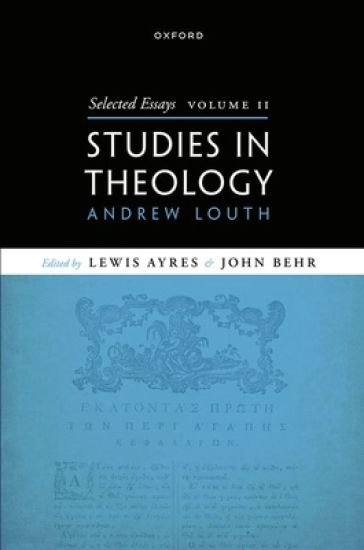
Selected Essays, Volume II

Selected Essays, Volume II

Andrew Louth

Oxford University Press
2023
sidottu
Taken together, these two volumes collect seventy-five essays written by Professor Andrew Louth over a forty-year period. Louth's contribution to scholarship and theology has always been significant, and these essays have been collected from journals and edited collections, many of which are difficult to access, and are here made available over two thought-provoking and wide-ranging volumes. Volume II collects essays on a variety of theological topics, arranged chronologically, showing the development of Louth's thought since 1978. Throughout this collection the nature of 'theology', as it is understood within Orthodox tradition, is a constant concern. These essays offer distinctive reflections on categories -- such as 'development of doctrine' -- that have become foundational in modern western thought but which must be viewed rather differently from an Orthodox perspective. The legacy of modern Russian Orthodox thought -- especially the key figures of the twentieth century Russian diaspora -- is under constant consideration, and forms a constant dialogue partner.
Discerning the Mystery

Discerning the Mystery

Andrew Louth

Clarendon Press
1989
nidottu
This book seeks to exorcize the spectre of the Enlightenment by drawing on H. G. Gadamer's demonstration of `how little the traditions in which we stand are weakened' by the legacy of the Enlightenment. It then applies these insights to theology where the importance of tradition and the unity between theology and spirituality are rediscovered.
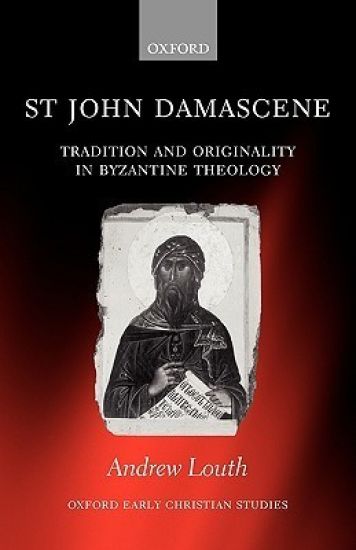
St John Damascene

St John Damascene

Andrew Louth

Oxford University Press
2004
nidottu
John Damascene, one-time senior civil servant in the Umayyad Arab Empire, became a monk near Jerusalem in the early years of the eighth century. He never set foot in the Byzantine Empire, yet his influence on Byzantine theology was ultimately determinative, and beyond that his theological work became a key resource for Western theology from Scholasticism to Romanticism. His searching criticism of Imperial Byzantine iconoclasm earned him harsh condemnation from the Byzantine iconoclasts. This is the first book to present an overall account of John's life and work; it makes use of recent scholarship about the transformation of the former Byzantine territories of the Middle East after the seventh-century Arab Conquest, and the new critical edition of the Damascene's prose works. It sets John's theological work in the context of the process of preserving, defining, defending, and also celebrating the Christian faith of the early synods of the Church that took place in the Palestinian monasteries during the first century of Arab rule. John's own contribution is explored in detail: his amazing three-part Fountain Head of Knowledge, which provided the logical tools for arguing theologically, outlined the multifarious forms of heresy, and set out with clarity and learning the fundamental doctrines of Orthodox Christianity; as well as his treatises against iconoclasm, his preaching, for which he was famous in his lifetime, and, the work for which he is most renowned in the Orthodox world, his sacred poetry that still graces the liturgy of the Orthodox Church. The life and thought of this subject of the Arab Caliphs, a Christian monk who thought of himself as a Byzantine, poses intriguing questions about identity in a rapidly changing world, and the deeply traditional nature of his presentation of Christian theology calls for reflection about the relationship between tradition and originality in theology.
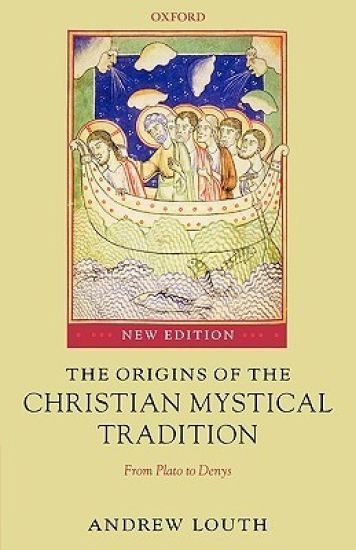
The Origins of the Christian Mystical Tradition

The Origins of the Christian Mystical Tradition

Andrew Louth

Oxford University Press
2007
nidottu
Scholars of the patristic era have paid more attention to the dogmatic tradition in their period than to the development of Christian mystical theology. Andrew Louth aims to redress the balance. Recognizing that the intellectual form of this tradition was decisively influenced by Platonic ideas of the soul's relationship to God, Louth begins with an examination of Plato and Platonism. The discussion of the Fathers which follows shows how the mystical tradition is at the heart of their thought and how the dogmatic tradition both moulds and is the reflection of mystical insights and concerns. This new edition of a classic study of the diverse influences upon Christian spirituality includes a new Epilogue which brings the text completely up to date.
Introducing Eastern Orthodox Theology

Introducing Eastern Orthodox Theology

Andrew Louth

SPCK Publishing
2013
pokkari
The author is a world authority on Orthodox thought. With an estimated 250 million adherents, the Orthodox Church is the second largest Christian body in the world. This absorbing account of the essential elements of Eastern Orthodox thought deals with the Trinity, Christ, sin, humanity and creation as well as praying, icons, the sacraments and liturgy. This book explores and explains the enduring influence of some of the world's greatest mystical theologians. 1. Introduction: Who are the Orthodox 2. Thinking and doing, being and praying: Where do we start? 3. Who is God? The doctrine of the Holy Trinity; apophatic theology 4. Creation; Wisdom of God (Sophia); Angels and humankind 5. What went wrong? Sin and death 6. Who is Christ? The life of Christ; the Paschal mystery; Christology 7. What is it to be human? Being in the image of God; becoming God; deification. 8. Icons and Sacraments: the place of matter in the divine economy 9. Time and the Liturgy 10. Where are we going? The last things and eternal life
Modern Orthodox Thinkers

Modern Orthodox Thinkers

Andrew Louth

SPCK Publishing
2015
nidottu
Starting with the influence of the Philokalia in nineteenth-century Russia, the book moves through the Slavophiles, Solov´ev, Florensky in Russia and then traces the story through the Christian intellectuals exiled from Stalin’s Russia—Bulgakov, Berdyaev, Florovsky, Lossky, Lot-Borodine, Skobtsova—and a couple of theologians outside the Russian world: the Romanian Staniloae and the Serbian Popovich, both of whom studied in Paris. Andrew Louth then considers the contributions of the second generation Russians – Evdokimov, Meyendorff, Schmemann – and the theologians of Greece from the sixties onwards—Zizioulas, Yannaras, and others, as well as influential monks and spiritual elders, especially Fr Sophrony of the monastery in Essex and his mentor, St Silouan. The book concludes with an illuminating chapter on Metropolitan Kallistos and the theological vision of the Philokalia.
Maximus the Confessor

Maximus the Confessor

Andrew Louth

Routledge
1996
sidottu
St Maximus the Confessor, the greatest of Byzantine theologians, lived through the most catastrophic period the Byzantine Empire was to experience before the Crusades. This book introduces the reader to the times and upheavals during which Maximus lived. It discusses his cosmic vision of humanity and the role of the church. The study makes available a selection of Maximus' theological treaties many of them translated for the first time. The translations are accompanied by a lucid and informed introduction.
Maximus the Confessor

Maximus the Confessor

Andrew Louth

Routledge
1996
nidottu
St Maximus the Confessor, the greatest of Byzantine theologians, lived through the most catastrophic period the Byzantine Empire was to experience before the Crusades. This book introduces the reader to the times and upheavals during which Maximus lived. It discusses his cosmic vision of humanity and the role of the church. The study makes available a selection of Maximus' theological treaties many of them translated for the first time. The translations are accompanied by a lucid and informed introduction.
Denys the Areopagite

Denys the Areopagite

Andrew Louth

Continuum International Publishing Group Ltd.
2002
nidottu
Andrew Louth examines all the traditions on which Denys' work draws: the Fourth Century Greek theologians, pagan philosophy and Syrian Christian thought. The corpus of Denys the Areopagite appeared in the sixth century and have since been deeply influential on Christian thinking both in East and West. Who their author was remains a mystery but in this book Professor Louth documents and comments on his compelling vision of the beauty of God's world and his revelation, together with his profound awareness of the ultimate mystery of the unknowable God who utterly transcends all being.
Introducing Eastern Orthodox Theology

Introducing Eastern Orthodox Theology

Andrew Louth

INTERVARSITY PRESS
2013
nidottu
With an estimated 250 million adherents, the Orthodox Church is the second largest Christian body in the world. This absorbing account of the essential elements of Eastern Orthodox thought deals with the Trinity, Christ, sin, humanity and creation as well as praying, icons, the sacraments and liturgy.
Modern Orthodox Thinkers

Modern Orthodox Thinkers

Andrew Louth

IVP Academic
2015
nidottu
Andrew Louth, one of the most respected authorities on Orthodoxy, introduces us to twenty key thinkers from the last two centuries. He begins with the Philokalia, the influential Orthodox collection published in 1782 which marked so many subsequent writers. The colorful characters, poets and thinkers who populate this book range from Romania, Serbia, Greece, England, France and also include exiles from Communist Russia. Louth offers historical and biographical sketches that help us understand the thought and impact of these men and women. Only some of them belong to the ranks of professional theologians. Many were neither priests nor bishops, but influential laymen. The book concludes with an illuminating chapter on Metropolitan Kallistos and the theological vision of the Philokalia.
Moderna ortodoxa tänkare : från Filokalia till idag
Moderna ortodoxa tänkare ger en insiktsfull och skarpsinnig redogörelse av de senaste 250 årens stora ortodoxa tänkares liv, texter och intellektuella arv. Andrew Louth beskriver och förklarar det varaktiga inflytande dessa teologer fått för vår samtid. Med början i hur Filokalia kom att påverka 1800-talets Ryssland rör sig berättelsen vidare till slavofiler som Vladimir Solovjov och Pavel Florenskij och landar bland de intellektuella i exil: Sergej Bulgakov, Nikolaj Berdjajev, Vladimir Lossky, Myrra Lot-Borodine, Maria Skobtsova, med flera. Boken behandlar vidare ett par teologer utanför Ryssland som den rumänske Dimitru St niloae och den serbiske Justin Popov . Andrew Louth går sedan vidare till mer samtida teologer som Paul Evdokimov, John Meyendorff och Alexander Schmemann samt teologerna i Grekland från 1960-talet och framåt John Zizioulas och Christos Yannaras. Viktiga nunnor och munkar och andliga ledare ges plats, som moder Thekla och speciellt fader Sofrony och dennes mentor Starets Siluan. Boken avslutas med ett fint kapitel om metropolit Kallistos och den teologiska visionen av Filokalia. Andrew Louth är präst i den Ryska ortodoxa kyrkan och professor emeritus i patristik och bysantinska studier vid Universitetet i Durham, England. Han anses som en av samtidens viktigaste ortodoxa teologer och tilldelades Sankt Ignatius orden för 2019 i Sigtuna.
Hyvyyttä ja kauneutta etsimässä

Hyvyyttä ja kauneutta etsimässä

Andrew Louth

Valamon luostari
2020
sidottu
Teos sisältää 21 alun perin luentoihin perustuvaa lukua, joissa professori Andrew Louth esittelee lähes kolmekymmentä kahden viimeisen vuosisadan merkittävää ortodoksista ajattelijaa. Teoksen läpi kulkeva teema on Filokalia-teos, joka kirjoittajan mukaan merkitsi eräänlaista käännekohtaa ortodoksisen teologian historiassa.Kirjoittaja tarkastelee Filokalian syntyhistoriaa ja sen vaikutuksia Athosvuorelta Venäjälle ja edelleen Eurooppaan ja sieltä Yhdysvaltoihin, Kreikkaan ja Englantiin. Kirjoittaja ei pyri niinkään pohtimaan ortodoksisen ajattelun tai teologian historiaa tai dogmeja, vaan peilaamaan näitä eri ajattelijoiden elämän ja kokemusten kautta.Kirjan kirjoittaja Andrew Louth on Durhamin yliopiston patristiikan ja bysanttilaisen tutkimuksen emeritusprofessori, eräs nykypäivän tunnetuimmista ortodoksisuuden asiantuntijoita. Vuodesta 2003 hän on toiminut myös pappina Englannissa Moskovan patriarkaatin alaisessa Surozhin hiippakunnassa.
Genesis 1–11

Genesis 1–11

Andrew Louth; Thomas C. Oden

Inter-Varsity Press
2001
sidottu
The Ancient Christian Commentary on Scripture is a unique twenty-seven-volume series encompassing all of Scripture and offering contemporary readers the opportunity to study for themselves the key writings of the early church fathers. Arranged by the books of the Bible, each portion of commentary allows the living voices of the church in its formative centuries to speak as they engage the sacred pages of Scripture. This Ancient Christian Commentary on Genesis 1-11 opens a whole new way of reading these Old Testament texts. The pastoral and theological interpretation of the church fathers offers spiritual and intellectual sustenance to those who would read these texts again with open minds and hearts.
Genesis 1–11

Genesis 1–11

Andrew Louth; Thomas C. Oden

IVP Academic
2019
nidottu
The rich tapestry of the creation narrative in the early chapters of Genesis proved irresistible to the thoughtful, reflective minds of the church fathers. Within them they found the beginning threads from which to weave a theology of creation, Fall, and redemption. Following their mentor the apostle Paul, they explored the profound significance of Adam as a type of Christ, the second Adam. The six days of creation proved especially attractive among the fathers as a subject for commentary, with Basil the Great and Ambrose producing well-known Hexaemerons. Similarly, Augustine devoted portions of five works to the first chapter of Genesis. As in previous volumes within the Ancient Christian Commentary on Scripture, the range of comment contained in this volume spans from the first century to the eighth and from East to West, from Greek and Latin speakers to Syriac. This ACCS volume on Genesis 1-11 opens up a treasure house of ancient wisdom that allows these faithful witnesses, some appearing here in English translation for the first time, to speak with eloquence and intellectual acumen to the church today. Especially helpful is the volume editor's provision of Septuagintal alternative readings to the Masoretic text, which are often necessary to understanding the fathers' flow of thought.
Seeing God

Seeing God

Hans Boersma; Andrew Louth

WILLIAM B EERDMANS PUBLISHING CO
2022
pokkari
Winner of the Christianity Today Book Award in Theology/EthicsTo see God is our heart's desire, our final purpose in life. But what does it mean to see God? And exactly how do we see God--with our physical eyes or with the mind's eye? In this informed study of the beatific vision, Hans Boersma focuses on "vision" as a living metaphor and shows how the vision of God is not just a future but a present reality. Seeing God is both a historical theology and a dogmatic articulation of the beatific vision--of how the invisible God becomes visible to us. In examining what Christian thinkers throughout history have written about the beatific vision, Boersma explores how God trains us to see his character by transforming our eyes and minds, highlighting continuity from this world to the next. Christ-centered, sacramental, and ecumenical, Boersma's work presents life as a never-ending journey toward seeing the face of God in Christ both here and in the world to come.
Why Read Pavel Florensky

Why Read Pavel Florensky

John Burgess; Andrew Louth

THE CATHOLIC UNIVERSITY OF AMERICA PRESS
2024
nidottu
This book offers an excellent, accessible introduction to the life and thought of Father Pavel Florensky, one of the most prominent religious philosophers of Russia's highly creative Silver Age at the beginning of the twentieth century. Florensky, an Orthodox priest, died in Stalin's gulag in 1937. His writings were long suppressed in the Soviet Union, and Western Protestant and Catholic theologians have known little about him.John Burgess argues that it is time to give Florensky his due. His worldview is as important today as it was during his lifetime: a deep sensitivity to the beauty of the natural world; a conviction that the religious cult—acts of worship and ritual—make human culture possible; and an understanding of the Christian faith as, above all, a way of seeing God's glorious presence in all of creation.The book takes a unique approach by examining Florensky not primarily as an academic philosopher but rather as an Orthodox priest and theologian, who speaks out of his personal religious experience to communicate the Christian faith to people who are seeking truth but do not yet know church life. The book makes an original contribution to Florensky scholarship and literature, especially in the United States, where his colleagues Sergei Bulgakov and Nicholas Berdiaev have been better known.John Burgess is a Protestant theologian who has lived and travelled in Russia, and has visited key places associated with Florensky. The author's experience, even as an outsider, of Orthodox worship and practice—its liturgical cycles, iconography, seasons of fasting and feasting, and monasteries and holy sites—has enabled him to understand Florensky's admonition that one must enter into Orthodoxy in order to understand it (and Florensky's) thinking.
Abba: the Tradition of Orthodoxy in the West

Abba: the Tradition of Orthodoxy in the West

John Behr; Andrew Louth; Dimitri Conomos

St Vladimir's Seminary Press,U.S.
2003
nidottu
This Festschrift celebrates the joyful heart and retirement from thirty-five years of university teaching of Bishop Kallistos Ware, a person who has found his monastic "desert" among the "dreaming spires" of academia, and his "cell" in the lecture room. The Festschrift contains articles by renowned academics, which are based on historical, theological, and spiritual themes.