
Kirjahaku
Etsi kirjoja tekijän nimen, kirjan nimen tai ISBN:n perusteella.
1000 tulosta hakusanalla Andrew R Hay

This is a guide to the archaeology of the British Isles, from the Ice Age to the medieval period. Beginning with an introduction to the methods and techniques of modern archaeology, the author moves on to cover the archaeology of the British Isles, dealing with such questions as: when the British Isles were first inhabited; how the great Neolithic monuments were planned and built; and the impact of the Roman Conquest. The guide is completed by a detailed gazetteer of 468 sites that can be visited.

This is a guide to the archaeology of the British Isles, from the Ice Age to the medieval period. Beginning with an introduction to the methods and techniques of modern archaeology, the author moves on to cover the archaeology of the British Isles, dealing with such questions as: when the British Isles were first inhabited; how the great Neolithic monuments were planned and built; and the impact of the Roman Conquest. The guide is completed by a detailed gazetteer of 468 sites that can be visited.
This two volume set presents the reader with new strategies for the contributions of psychology and Human Factors to the safe and effective functioning of aviation organizations and systems. The volumes comprise the edited contributions to the Fourth Australian Aviation Psychology Symposium. The chapters within are orientated towards presenting and developing practical solutions for the current and future challenges facing the aviation industry. Each volume covers areas of vital and enduring importance within today’s complex aviation system. Volume 2 covers Selection, Training, Human-Machine Interface, Air Traffic Control, Maintenance and Situational Awareness. Invited chapters include contributions from Capt. Dañiel Maurino (ICAO), Professor Bob Helmreich (University of Texas), Jean Pariés and Dr. Ashleigh Merritt (Dédale), Professor Ron Westrum (Eastern Michigan University), Capt. Azmi Radzi (Malaysian Airlines), Nicole Svátek (Virgin Atlantic), Professor Patrick Hudson (Leiden University), Dr. Sherry Chappell (Delta Technology), Dr. Nick McDonald (Trinity College, Dublin), Professor Jan Davies (University of Calgary), Capt. John Bent (Cathay Pacific Airways), Dr. Carol Manning (FAA), Dr. Manfred Barberino and Dr. Anne Isaac (EUROCONTROL), Dr. Drew Dawson (University of South Australia), Rebecca Chute and Professor Earl Wiener (NASA Ames), Dr. Gavan Lintern (AMRL), Bert Ruitenberg (IFATCA) and Dr. Mica Endsley (SA Technologies)
Aviation Resource Management
Andrew R. Lowe; Brent J. Hayward
Ashgate Publishing Limited
2000
sidottu
This two volume set presents the reader with new strategies for the contributions of psychology and Human Factors to the safe and effective functioning of aviation organizations and systems. The volumes comprise the edited contributions to the Fourth Australian Aviation Psychology Symposium. The chapters within are orientated towards presenting and developing practical solutions for the current and future challenges facing the aviation industry. Each volume covers areas of vital and enduring importance within today’s complex aviation system. Volume 2 covers Selection, Training, Human-Machine Interface, Air Traffic Control, Maintenance and Situational Awareness. Invited chapters include contributions from Capt. Dañiel Maurino (ICAO), Professor Bob Helmreich (University of Texas), Jean Pariés and Dr. Ashleigh Merritt (Dédale), Professor Ron Westrum (Eastern Michigan University), Capt. Azmi Radzi (Malaysian Airlines), Nicole Svátek (Virgin Atlantic), Professor Patrick Hudson (Leiden University), Dr. Sherry Chappell (Delta Technology), Dr. Nick McDonald (Trinity College, Dublin), Professor Jan Davies (University of Calgary), Capt. John Bent (Cathay Pacific Airways), Dr. Carol Manning (FAA), Dr. Manfred Barberino and Dr. Anne Isaac (EUROCONTROL), Dr. Drew Dawson (University of South Australia), Rebecca Chute and Professor Earl Wiener (NASA Ames), Dr. Gavan Lintern (AMRL), Bert Ruitenberg (IFATCA) and Dr. Mica Endsley (SA Technologies)
Writings on Travel, Discovery and History by Daniel Defoe, Part I Vol 1
W R Owens; P N Furbank; D W Hayton; N H Keeble; John McVeagh; Andrew Wear
Routledge
2001
sidottu
This collection of Daniel Defoe's travel and historical writings reveal the range of his intellectual interests. His "Tour thro' the Whole Island of Great Britain", which came out between 1724 and 1726, drew on Defoe's travels throughout England and Scotland - often as a political agent and spy.

Writings on Travel, Discovery and History by Daniel Defoe, Part I Vol 2
W R Owens; P N Furbank; D W Hayton; N H Keeble; John McVeagh; Andrew Wear
Routledge
2001
sidottu
This collection of Daniel Defoe's travel and historical writings reveal the range of his intellectual interests. His "Tour thro' the Whole Island of Great Britain", which came out between 1724 and 1726, drew on Defoe's travels throughout England and Scotland - often as a political agent and spy.
Writings on Travel, Discovery and History by Daniel Defoe, Part I Vol 3
W R Owens; P N Furbank; D W Hayton; N H Keeble; John McVeagh; Andrew Wear
Routledge
2001
sidottu
This collection of Daniel Defoe's travel and historical writings reveal the range of his intellectual interests. His "Tour thro' the Whole Island of Great Britain", which came out between 1724 and 1726, drew on Defoe's travels throughout England and Scotland - often as a political agent and spy.

Writings on Travel, Discovery and History by Daniel Defoe, Part I Vol 4
W R Owens; P N Furbank; D W Hayton; N H Keeble; John McVeagh; Andrew Wear
Routledge
2001
sidottu
This collection of Daniel Defoe's travel and historical writings reveal the range of his intellectual interests. His "Tour thro' the Whole Island of Great Britain", which came out between 1724 and 1726, drew on Defoe's travels throughout England and Scotland - often as a political agent and spy.
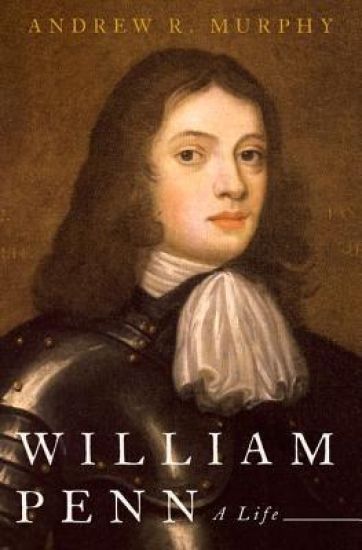
On March 4, 1681, King Charles II granted William Penn a charter for a new American colony. Pennsylvania was to be, in its founder's words, a bold "Holy Experiment" in religious freedom and toleration, a haven for those fleeing persecution in an increasingly intolerant England and across Europe. An activist, political theorist, and the proprietor of his own colony, Penn would become a household name in the New World, despite spending just four years on American soil. Though Penn is an iconic figure in both American and British history, controversy swirled around him during his lifetime. In his early twenties, Penn became a Quaker-an act of religious as well as political rebellion that put an end to his father's dream that young William would one day join the English elite. Yet Penn went on to a prominent public career as a Quaker spokesman, political agitator, and royal courtier. At the height of his influence, Penn was one of the best-known Dissenters in England and walked the halls of power as a close ally of King James II. At his lowest point, he found himself jailed on suspicion of treason, and later served time in debtor's prison. Despite his importance, William Penn has remained an elusive character-many people know his name, but few know much more than that. Andrew R. Murphy offers the first major biography of Penn in more than forty years, and the first to make full use of Penn's private papers. The result is a complex portrait of a man whose legacy we are still grappling with today. At a time when religious freedom is hotly debated in the United States and around the world, William Penn's Holy Experiment serves as both a beacon and a challenge.
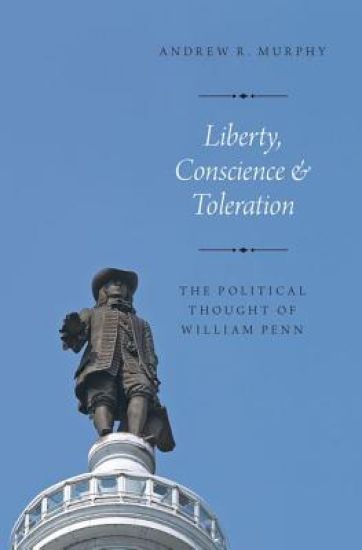
In a seventeenth-century English landscape populated with towering political and philosophical figures like Hobbes, Harrington, Cromwell, Milton, and Locke, William Penn remains in many ways a man apart. Yet despite being widely neglected by scholars, he was a sophisticated political thinker who contributed mightily to the theory and practice of religious liberty in the early modern Atlantic world. In this long-awaited intellectual biography of William Penn, Andrew R. Murphy presents a nuanced portrait of this remarkable entrepreneur, philosopher, Quaker, and politician. Liberty, Conscience, and Toleration focuses on the major political episodes that attracted William Penn's sustained attention as a political thinker and actor: the controversy over the Second Conventicle Act, the Popish Plot and Exclusion Crisis, the founding and settlement of Pennsylvania, and the contentious reign of James II. Through a careful examination of writings published in the midst of the religious and political conflicts of Restoration and Revolutionary England, Murphy contextualizes the development of Penn's thought in England and America, illuminating the mutual interconnections between Penn's political thought and his colonizing venture in America. An early advocate of representative institutions and religious freedom, William Penn remains a singular figure in the history of liberty of conscience. His political theorizing provides a window into the increasingly vocal, organized, and philosophically sophisticated tolerationist movement that gained strength over the second half of the seventeenth century. Not only did Penn attempt to articulate principles of religious liberty as a Quaker in England, but he actually governed an American polity and experienced firsthand the complex relationship between political theory and political practice. Murphy's insightful analysis shows Penn's ongoing significance to the broader study of Anglo-American political theory and practice, ultimately pointing scholars toward a new way of understanding the enterprise of political theory itself.
This book examines temple renovation as a rhetorical topic within royal literature of the ancient Near East. Unlike newly founded temples, which were celebrated for their novelty, temple renovations were oriented toward the past. Kings took the opportunity to rehearse a selective history of the temple, evoking certain past traditions and omitting others. In this way, temple renovations were a kind of historiography. Andrew R. Davis demonstrates a pattern in the rhetoric of temple renovation texts: that kings in ancient Mesopotamia, Israel, Syria and Persia used temple renovation to correct, or at least distance themselves from, some turmoil of recent history and to associate their reigns with an earlier and more illustrious past. Davis draws on the royal literature of the seventh and sixth centuries BCE for main evidence of this rhetoric. Furthermore, he argues for reading the story of Jeroboam I's placement of calves at Dan and Bethel (1 Kgs 12:25-33) as an eighth-century BCE account of temple renovation with a similar rhetoric. Concluding with further examples in the Hellenistic and Roman periods, Reconstructing the Temple demonstrates that the rhetoric of temple renovation was a distinct and longstanding topic in the ancient Near East.
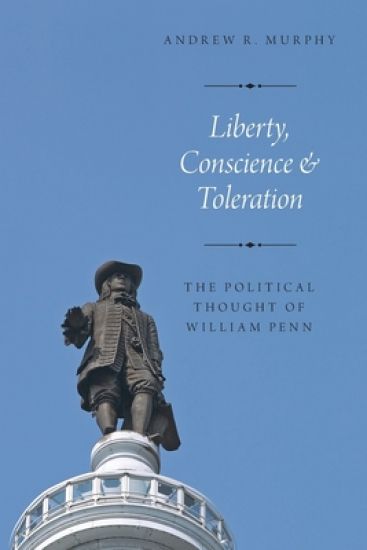
In a seventeenth-century English landscape populated with towering political and philosophical figures like Hobbes, Harrington, Cromwell, Milton, and Locke, William Penn remains in many ways a man apart. Yet despite being widely neglected by scholars, he was a sophisticated political thinker who contributed mightily to the theory and practice of religious liberty in the early modern Atlantic world. In this long-awaited intellectual biography of William Penn, Andrew R. Murphy presents a nuanced portrait of this remarkable entrepreneur, philosopher, Quaker, and politician. Liberty, Conscience, and Toleration focuses on the major political episodes that attracted William Penn's sustained attention as a political thinker and actor: the controversy over the Second Conventicle Act, the Popish Plot and Exclusion Crisis, the founding and settlement of Pennsylvania, and the contentious reign of James II. Through a careful examination of writings published in the midst of the religious and political conflicts of Restoration and Revolutionary England, Murphy contextualizes the development of Penn's thought in England and America, illuminating the mutual interconnections between Penn's political thought and his colonizing venture in America. An early advocate of representative institutions and religious freedom, William Penn remains a singular figure in the history of liberty of conscience. His political theorizing provides a window into the increasingly vocal, organized, and philosophically sophisticated tolerationist movement that gained strength over the second half of the seventeenth century. Not only did Penn attempt to articulate principles of religious liberty as a Quaker in England, but he actually governed an American polity and experienced firsthand the complex relationship between political theory and political practice. Murphy's insightful analysis shows Penn's ongoing significance to the broader study of Anglo-American political and practice, ultimately pointing scholars toward a new way of understanding the enterprise of political theory itself.
Occasionalism is the thesis that God alone is the true cause of everything that happens in the world, and created substances are merely "occasional causes." This doctrine was originally developed in medieval Islamic theology, and was widely rejected in the works of Christian authors in medieval Europe. Yet despite its heterodoxy, occasionalism was revived in the 1660s by followers of the philosophy of René Descartes, perhaps the most famous among them the French philosopher Nicolas Malebranche, who popularized this doctrine. What led Cartesian thinkers to adopt occasionalism? Since the 1970s has there been a growing body of literature on Malebranche and the movement he engendered. There is also a new and growing body of work on the Cartesian occasionalists before Malebranche--including Arnold Geulincx, Geraud de Cordemoy, and Louis de la Forge. But to date there has not been a systematic, book-length study of the reasoning that led Cartesian thinkers to adopt occasionalism, and the relationship of their arguments to Descartes' own views. This book expands on recent scholarship to provide the first comprehensive account of seventeenth century occasionalism. Part I contrasts occasionalism with a theory of divine providence developed by Thomas Aquinas, in response to medieval occasionalists; it shows that Descartes' philosophy is compatible with Aquinas' theory, on which God "concurs" in all the actions of created beings. Part II reconstructs the arguments of Cartesians--such as Cordemoy and La Forge--who used Cartesian physics to argue for occasionalism. Finally, the book shows how Malebranche's case for occasionalism combines philosophical theology with Cartesian metaphysics and mechanistic science.

America's supposed moral decline from an imagined golden age, and the threat of divine punishment for the sin of straying from the path of righteousness, have been consistent themes in its political and religious rhetoric. But why is this myth so compelling to Americans? In Prodigal Nation, Andrew Murphy investigates the jeremiad's historical roots and probes the ways in which it continues to illuminate larger themes and tensions in American social and political life. He examines its role in colonial New England, shows how it was employed during the Civil War, and demonstrates its continued power in today's political climate. Far from being simply a force for conservatism-the yearning for a return to "a simpler time"-the jeremiad has often been employed in favor of progressive causes. Americans of all political stripes-not just Jerry Falwell and Pat Robertson, but Abraham Lincoln and Robert Kennedy-have used the language of moral decline for political purposes. Murphy shows how Americans' powerful attachment to an idealized past, and the hope of a return to John Winthrop's imagined "City on a Hill," continue to shape public life.
Navigating Life with Restless Legs Syndrome
Andrew R. Spector
OXFORD UNIVERSITY PRESS INC
2024
nidottu
Navigating Life with Restless Legs Syndrome provides an overview and evidence-based guidance on a condition that afflicts millions of people around the world and their loved ones. You will learn the most up-to-date treatment approaches to the disorder, the benefits of common medications used to treat RLS, as well as non-pharmacological options such as iron supplements and infusions, along with their potential side effects and long-term risks. RLS during pregnancy and breastfeeding, patients from rural or low-income communities with limited access to health care, and those with dementia, sleep apnea, and insomnia are among the special populations that are also addressed. Periodic limb movements of sleep are discussed to help distinguish between these and RLS. Real patient scenarios and tips for caregivers and loved ones of people battling restless legs syndrome are interspersed throughout. This book serves as a comprehensive yet approachable reference on a complex condition that disrupts life, interrupts sleep, and increases the risk of multiple health problems for so many people.
Toleration is one of the most foundational and contentious concepts in contemporary political discourse. Although its modern origins lie in the realm of religious dissent, toleration remains one of our most contentious and broad-ranging concepts, invoked in today's debates about race, gender, religion, sexuality, cultural identity, free speech, and civil liberties. Questions of toleration arise wherever unpopular groups face hostile environments and stand in need of protection from state interference or the actions of their neighbors. Toleration can seem counterintuitive at first glance, since it involves a complex mixture of rejection and acceptance, combining disapproval - of particular individuals, groups, beliefs, and practices - on the one hand with legal and political guarantees for such groups on the other. Toleration has long been considered a cardinal virtue of liberalism, endorsed by central figures such as Locke, Mill, and Rawls. Although toleration has been criticized as unduly minimal, compared with more expansive terms such as recognition or acceptance, it has routinely played a key role in the protracted struggles of marginalized groups of various sorts (a necessary, if not always sufficient, condition for liberty). Toleration: A Very Short Introduction will concisely canvass the history, development, and contemporary global status of toleration as both a concept and a contested political and legal practice.
The Irish Presbyterian Mind considers how one protestant community responded to the challenges posed to traditional understandings of Christian faith between 1830 and 1930. Andrew R. Holmes examines the attitudes of the leaders of the Presbyterian Church in Ireland to biblical criticism, modern historical method, evolutionary science, and liberal forms of protestant theology. He explores how they reacted to developments in other Christian traditions, including the so-called 'Romeward' trend in the established Churches of England and Ireland and the 'Romanisation' of Catholicism. Was their response distinctively Presbyterian and Irish? How was it shaped by Presbyterian values, intellectual first principles, international denominational networks, identity politics, the expansion of higher education, and relations with other Christian denominations? The story begins in the 1830s when evangelicalism came to dominate mainstream Presbyterianism, the largest protestant denomination in present-day Northern Ireland. It ends in the 1920s with the exoneration of J. E. Davey, a professor in the Presbyterian College, Belfast, who was tried for heresy on accusations of being a 'modernist'. Within this timeframe, Holmes describes the formation and maintenance of a religiously-conservative intellectual community. At the heart of the interpretation is the interplay between the Reformed theology of the Westminster Confession of Faith and a commitment to common evangelical principles and religious experience that drew protestants together from various denominations. The definition of conservative within the Presbyterian Church in Ireland moved between these two poles and could take on different forms depending on time, geography, social class, and whether the individual was a minister or a member of the laity.
What is time and how does it influence our knowledge of international politics? For decades International Relations (IR) paid little explicit attention to time. Recently this began to change as a range of scholars took an interest in the temporal dimensions of politics. Yet IR still has not fully addressed the issue of why time matters in international politics, nor has it reflected on its own use of time -- how temporal ideas affect the way we work to understand political phenomena. Moreover, IR remains beholden to two seemingly contradictory visions of time: the time of the clock and a longstanding tradition treating time as a problem to be solved. International Relations and the Problem of Time develops a unique response to these interconnected puzzles. It reconstructs IR's temporal imagination by developing an argument that all times - from natural rhythms to individual temporal experience - spring from social and practical timing activities, or efforts to establish meaningful and useful relationships in complex and dynamic settings. In IR's case, across a surprisingly wide range of approaches scholars employ narrative timing techniques to make sense of confounding processes and events. This innovative account of time provides a more systematic and rigorous explanation for time in international politics. It also develops provocative insights about IR's own history, its key methodological commitments, supposedly 'timeless' statistical methods, historical institutions, and the critical vanguard of time studies. This book invites us to reimagine time, and in so doing to significantly rethink the way we approach the analysis of international politics.