Kirjojen hintavertailu. Mukana 11 627 220 kirjaa ja 12 kauppaa.

Kirjahaku

Etsi kirjoja tekijän nimen, kirjan nimen tai ISBN:n perusteella.

1000 tulosta hakusanalla Andrew Y. Glikson

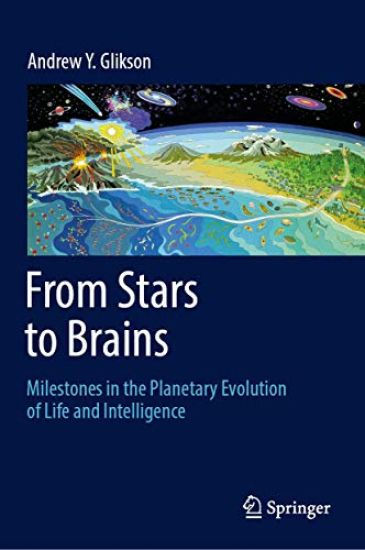
From Stars to Brains: Milestones in the Planetary Evolution of Life and Intelligence
The permutation of basic atoms—nitrogen, hydrogen, oxygen, carbon and phosphorus-into the biomolecules DNA and RNA, subsequently evolved in cells and brains, defining the origin of life and intelligence, remains unexplained. Equally the origin of the genetic information and the intertwined nature of ‘hardware’ and ‘software’ involved in the evolution of bio-molecules and the cells are shrouded in mystery. This treatise aims at exploring individual and swarm behaviour patterns which potentially hint at as yet unknown biological principles. It reviews theories of evolution with perspectives from the earth sciences, commencing with the earliest observed records of life. This is followed by reviews and discussion of the building blocks of life, marine and terrestrial communities, the arthropods, birds and finally humans. It is suggested that, further to the mutation/natural selection processes established by Darwin and Wallace, an understanding of the evolution of intelligence remains little understood. A directionality of evolutionary trajectories is evident, not least the purposeful thinking process of humans as well as animals. It is not clear how directional intelligence, manifested for example by the collective intelligence of arthropod colonies, has evolved from mutation/natural selection processes. Potential clues for the understanding of life and evolution are provided by Aristotle’s dictum of “the whole being greater than the sum of the parts”, Niels Bohr’s principle of quantum complementarity and George Ellis’ theory of top-down causality. Inherent in the question of the origin of life is an anthropocentric bias, related to the self-referential Anthropic Principle and theological paradigms of man’s supposed dominion over all other species. The Anthropic Principle, however, should be capable of being circumvented using the scientific falsification method, assuming universal verified constants of physics. The phenomenonof the human mastery of fire and the splitting of the atom, leading to the seventh major mass extinction of species, remains incomprehensible.
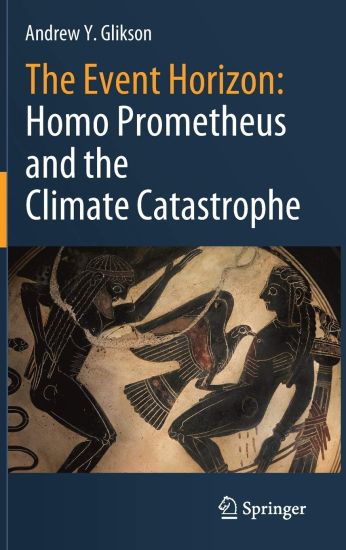
The Event Horizon: Homo Prometheus and the Climate Catastrophe

The Event Horizon: Homo Prometheus and the Climate Catastrophe

Andrew Y. Glikson

Springer Nature Switzerland AG
2020
sidottu
With the advent of global warming and the nuclear arms race, humans are rapidly approaching a moment of truth. Technologically supreme, they manifest their dreams and nightmares in the real world through science, art, adventures and brutal wars, a paradox symbolized by a candle lighting the dark yet burning away to extinction, as discussed in this book. As these lines are being written, fires are burning on several continents, the Earth’s ice sheets are melting and the oceans are rising, threatening to flood the planet’s coastal zones and river valleys, where civilization arose and humans live and grow food. With the exception of birds like hawks, black kites and fire raptors, humans are the only life form utilizing fire, creating developments they can hardly control. For more than a million years, gathered around campfires during the long nights, mesmerized by the flickering life-like dance of the flames, prehistoric humans acquired imagination, a yearningfor omnipotence, premonitions of death, cravings for immortality and conceiving the supernatural. Humans live in realms of perceptions, dreams, myths and legends, in denial of critical facts, waking up for a brief moment to witness a world that is as beautiful as it is cruel. Existentialist philosophy offers a way of coping with the unthinkable. Looking into the future produces fear, an instinctive response that can obsess the human mind and create a conflict between the intuitive reptilian brain and the growing neocortex, with dire consequences. As contrasted with Stapledon’s Last and first Man, where an advanced human species mourns the fate of the Earth, Homo sapiens continues to transfer every extractable molecule of carbon from the Earth to the atmosphere, the lungs of the biosphere, ensuring the demise of the planetary life support system.”
The Event Horizon: Homo Prometheus and the Climate Catastrophe

The Event Horizon: Homo Prometheus and the Climate Catastrophe

Andrew Y. Glikson

Springer Nature Switzerland AG
2021
nidottu
With the advent of global warming and the nuclear arms race, humans are rapidly approaching a moment of truth. Technologically supreme, they manifest their dreams and nightmares in the real world through science, art, adventures and brutal wars, a paradox symbolized by a candle lighting the dark yet burning away to extinction, as discussed in this book. As these lines are being written, fires are burning on several continents, the Earth’s ice sheets are melting and the oceans are rising, threatening to flood the planet’s coastal zones and river valleys, where civilization arose and humans live and grow food. With the exception of birds like hawks, black kites and fire raptors, humans are the only life form utilizing fire, creating developments they can hardly control. For more than a million years, gathered around campfires during the long nights, mesmerized by the flickering life-like dance of the flames, prehistoric humans acquired imagination, a yearningfor omnipotence, premonitions of death, cravings for immortality and conceiving the supernatural. Humans live in realms of perceptions, dreams, myths and legends, in denial of critical facts, waking up for a brief moment to witness a world that is as beautiful as it is cruel. Existentialist philosophy offers a way of coping with the unthinkable. Looking into the future produces fear, an instinctive response that can obsess the human mind and create a conflict between the intuitive reptilian brain and the growing neocortex, with dire consequences. As contrasted with Stapledon’s Last and first Man, where an advanced human species mourns the fate of the Earth, Homo sapiens continues to transfer every extractable molecule of carbon from the Earth to the atmosphere, the lungs of the biosphere, ensuring the demise of the planetary life support system.”
The Fatal Species

The Fatal Species

Andrew Y. Glikson

Springer Nature Switzerland AG
2021
sidottu
This book presents a history which is nearing its nadir, where a species of warlike primates is destroying the delicate web of life perceived by Charles Darwin in The Origin of Species, committing a war against nature and the fastest mass extinction in the history of nature, with global temperatures incinerating the biosphere by several degrees Celsius, within a lifetime. Despite of this knowledge, Homo “sapiens” is proceeding to transfer every accessible molecule of carbon from the Earth crust to the atmosphere and hydrosphere, an auto-da-fe ensues of the terrestrial biosphere. As amplifying feedbacks to global warming—including fires, methane release, ice melt, and warming oceans—are intensifying, at a pace exceeding any recorded in the geological past, societies are pouring their remaining resources into wars. These include likely nuclear wars triggered by arsenals many thousands of missiles strong, posing an equal threat to human existence and that of many other species. Humans, having mastered fire, which allowed them to survive the extreme ice ages, have emerged in the current interglacial as major civilizations coupled with major bloodsheds, called “war”, engulfing multitudes of innocent yet betrayed humans. Long suffering from illusions of omnipotence and omniscience, paranoid fears, a warlike mindset, aggression toward the animals and disrespect of females, coupled with artistic excellence and technical brilliance, humans have become victims to a tragic conflict between the mind and the heart, with fatal consequences.
The Fatal Species

The Fatal Species

Andrew Y. Glikson

Springer Nature Switzerland AG
2022
nidottu
This book presents a history which is nearing its nadir, where a species of warlike primates is destroying the delicate web of life perceived by Charles Darwin in The Origin of Species, committing a war against nature and the fastest mass extinction in the history of nature, with global temperatures incinerating the biosphere by several degrees Celsius, within a lifetime. Despite of this knowledge, Homo “sapiens” is proceeding to transfer every accessible molecule of carbon from the Earth crust to the atmosphere and hydrosphere, an auto-da-fe ensues of the terrestrial biosphere. As amplifying feedbacks to global warming—including fires, methane release, ice melt, and warming oceans—are intensifying, at a pace exceeding any recorded in the geological past, societies are pouring their remaining resources into wars. These include likely nuclear wars triggered by arsenals many thousands of missiles strong, posing an equal threat to human existence and that of many other species. Humans, having mastered fire, which allowed them to survive the extreme ice ages, have emerged in the current interglacial as major civilizations coupled with major bloodsheds, called “war”, engulfing multitudes of innocent yet betrayed humans. Long suffering from illusions of omnipotence and omniscience, paranoid fears, a warlike mindset, aggression toward the animals and disrespect of females, coupled with artistic excellence and technical brilliance, humans have become victims to a tragic conflict between the mind and the heart, with fatal consequences.
The Archaean: Geological and Geochemical Windows into the Early Earth

The Archaean: Geological and Geochemical Windows into the Early Earth

Andrew Y. Glikson

Springer International Publishing AG
2014
sidottu
Archaean terrains contain a wealth of structural, stratigraphic, textural, mineralogical, geochemical and isotopic features allowing insights into the nature of the early Earth. This book is based on studies during 1964-2007 of Archaean terrains in Australia and to a lesser extent in South Africa and India, as well as on visits to Archaean terrains in Canada, the US and China, as well as petrological and geochemical studies of igneous and sedimentary rock suites from a range of terrains. The book will include a range of photographic and microscopic images, geological sketch maps and diagrams illustrating the lessons derived from field and the laboratory. Also other Archaean terrains are being reviewed.The book is intended for Earth scientists as well as broader intelligent readership.
The Archaean: Geological and Geochemical Windows into the Early Earth

The Archaean: Geological and Geochemical Windows into the Early Earth

Andrew Y. Glikson

Springer International Publishing AG
2017
nidottu
Archaean terrains contain a wealth of structural, stratigraphic, textural, mineralogical, geochemical and isotopic features allowing insights into the nature of the early Earth. This book is based on studies during 1964-2007 of Archaean terrains in Australia and to a lesser extent in South Africa and India, as well as on visits to Archaean terrains in Canada, the US and China, as well as petrological and geochemical studies of igneous and sedimentary rock suites from a range of terrains. The book will include a range of photographic and microscopic images, geological sketch maps and diagrams illustrating the lessons derived from field and the laboratory. Also other Archaean terrains are being reviewed.The book is intended for Earth scientists as well as broader intelligent readership.
The Asteroid Impact Connection of Planetary Evolution
When in 1981 Louis and Walter Alvarez, the father and son team, unearthed a tell-tale Iridium-rich sedimentary horizon at the 65 million years-old Cretaceous-Tertiary boundary at Gubbio, Italy, their find heralded a paradigm shift in the study of terrestrial evolution. Since the 1980s the discovery and study of asteroid impact ejecta in the oldest well-preserved terrains of Western Australia and South Africa, by Don Lowe, Gary Byerly, Bruce Simonson, Scott Hassler, the author and others, and the documentation of new exposed and buried impact structures in several continents, have led to a resurgence of the idea of the catastrophism theory of Cuvier, previously largely supplanted by the uniformitarian theory of Hutton and Lyell. Several mass extinction of species events are known to have occurred in temporal proximity to large asteroid impacts, global volcanic eruptions and continental splitting. Likely links are observed between asteroid clusters and the 580 Ma acritarch radiation, end-Devonian extinction, end-Triassic extinction and end-Jurassic extinction. New discoveries of ~3.5 – 3.2 Ga-old impact fallout units in South Africa have led Don Lowe and Gary Byerly to propose a protracted prolongation of the Late Heavy Bombardment (~3.95-3.85 Ga) in the Earth-Moon system. Given the difficulty in identifying asteroid impact ejecta units and buried impact structures, it is likely new discoveries of impact signatures are in store, which would further profoundly alter models of terrestrial evolution..
Evolution of the Atmosphere, Fire and the Anthropocene Climate Event Horizon
Unique among all creatures, further to the increase in its cranial volume from Australopithecus to Homo sapiens, the use of tools and cultural and scientific creativity, the genus Homo is distinguished by the mastery of fire, which since about two million years ago has become its blueprint. Through the Holocene and culminating in the Anthropocene, the burning of much of the terrestrial vegetation, excavation and combustion of fossil carbon from up to 420 million years-old biospheres, are leading to a global oxidation event on a geological scale, a rise in entropy in nature and the sixth mass extinction of species.
Asteroids Impacts, Crustal Evolution and Related Mineral Systems with Special Reference to Australia
This book presents a comprehensive overview of Australian impact structures and related mineralization, including a discussion of the significance of many of these structures for crustal evolution. The book focuses in particular on Archaean impact ejecta/fallout units in the Pilbara Craton of Western Australia, large exposed and buried impact structures, and on the geophysical evidence for possible to probable impact structures. Thanks to their long-term geological stability, Precambrian and younger terrains in the Australian continent contain 38 confirmed impact structures and 43 ring and dome structures, many of which constitute possible to probable asteroid impact structures. The impact structures have been the subject of more than half a century of studies and range from several tens of meter-large craters to buried structures larger than 100 km in diameter. Discoveries of impact fallout units in the Pilbara Craton have defined the Pilbara as one of the two best documented terrains where Archaean impact ejecta/fallout deposits are identified, the other terrain being the Kaapvaal Craton in southern Africa. A synthesis of evidence from both cratons indicates periods of large asteroid bombardments during ~3.47 – 2.48 billion years-ago, including peak bombardment about 3.25—3.22 billion years-ago. The latter period coincides with an abrupt transformation of an early Archaean granite-greenstone crust to mid to late Archaean semi-continental crustal regimes, underpinning the significance of heavy asteroid impact events for crustal evolution. Apart from proven impact structures, Australian terrains display a range of circular features, including morphological and drainage rings, circular lakes, volcanic craters, tectonic domes, oval granite bodies, mafic igneous plugs, salt diapirs, and magnetic, gravity and seismic anomalies, many of which are of a likely impact origin. Thermal and hydrothermal processes associated with impact cratering bearimportant consequences for the formation of mineral deposits, such as Ni at Sudbury, Pb-Zn at Siljan and Kentland. Impact structures may also provide sites for the accumulation of hydrocarbons, whereas in some instances fracturing associated with impact structures allows outward migration of oil and gas.
Climate, Fire and Human Evolution

Climate, Fire and Human Evolution

Andrew Y. Glikson; Colin Groves

Springer International Publishing AG
2015
sidottu
The book outlines principal milestones in the evolution of the atmosphere, oceans and biosphere during the last 4 million years in relation with the evolution from primates to the genus Homo – which uniquely mastered the ignition and transfer of fire. The advent of land plants since about 420 million years ago ensued in flammable carbon-rich biosphere interfaced with an oxygen-rich atmosphere. Born on a flammable Earth surface, under increasingly unstable climates descending from the warmer Pliocene into the deepest ice ages of the Pleistocene, human survival depended on both—biological adaptations and cultural evolution, mastering fire as a necessity. This allowed the genus to increase entropy in nature by orders of magnitude. Gathered around camp fires during long nights for hundreds of thousandth of years, captivated by the flickering life-like dance of the flames, humans developed imagination, insights, cravings, fears, premonitions of death and thereby aspiration for immortality, omniscience, omnipotence and the concept of god. Inherent in pantheism was the reverence of the Earth, its rocks and its living creatures, contrasted by the subsequent rise of monotheistic sky-god creeds which regard Earth as but a corridor to heaven. Once the climate stabilized in the early Holocene, since about ~7000 years-ago production of excess food by Neolithic civilization along the Great River Valleys has allowed human imagination and dreams to express themselves through the construction of monuments to immortality. Further to burning large part of the forests, the discovery of combustion and exhumation of carbon from the Earth’s hundreds of millions of years-old fossil biospheres set the stage for an anthropogenic oxidation event, affecting an abrupt shift in state of the atmosphere-ocean-cryosphere system. The consequent ongoing extinction equals the past five great mass extinctions of species—constituting a geological event horizon in the history of planetEarth.
Climate, Fire and Human Evolution

Climate, Fire and Human Evolution

Andrew Y. Glikson; Colin Groves

Springer International Publishing AG
2016
nidottu
The book outlines principal milestones in the evolution of the atmosphere, oceans and biosphere during the last 4 million years in relation with the evolution from primates to the genus Homo – which uniquely mastered the ignition and transfer of fire. The advent of land plants since about 420 million years ago ensued in flammable carbon-rich biosphere interfaced with an oxygen-rich atmosphere. Born on a flammable Earth surface, under increasingly unstable climates descending from the warmer Pliocene into the deepest ice ages of the Pleistocene, human survival depended on both—biological adaptations and cultural evolution, mastering fire as a necessity. This allowed the genus to increase entropy in nature by orders of magnitude. Gathered around camp fires during long nights for hundreds of thousandth of years, captivated by the flickering life-like dance of the flames, humans developed imagination, insights, cravings, fears, premonitions of death and thereby aspiration for immortality, omniscience, omnipotence and the concept of god. Inherent in pantheism was the reverence of the Earth, its rocks and its living creatures, contrasted by the subsequent rise of monotheistic sky-god creeds which regard Earth as but a corridor to heaven. Once the climate stabilized in the early Holocene, since about ~7000 years-ago production of excess food by Neolithic civilization along the Great River Valleys has allowed human imagination and dreams to express themselves through the construction of monuments to immortality. Further to burning large part of the forests, the discovery of combustion and exhumation of carbon from the Earth’s hundreds of millions of years-old fossil biospheres set the stage for an anthropogenic oxidation event, affecting an abrupt shift in state of the atmosphere-ocean-cryosphere system. The consequent ongoing extinction equals the past five great mass extinctions of species—constituting a geological event horizon in the history of planetEarth.
Asteroids Impacts, Crustal Evolution and Related Mineral Systems with Special Reference to Australia

Asteroids Impacts, Crustal Evolution and Related Mineral Systems with Special Reference to Australia

Andrew Y. Glikson; Franco Pirajno

Springer International Publishing AG
2018
sidottu
This book presents a comprehensive overview of Australian impact structures and related mineralization, including a discussion of the significance of many of these structures for crustal evolution. The book focuses in particular on Archaean impact ejecta/fallout units in the Pilbara Craton of Western Australia, large exposed and buried impact structures, and on the geophysical evidence for possible to probable impact structures. Thanks to their long-term geological stability, Precambrian and younger terrains in the Australian continent contain 38 confirmed impact structures and 43 ring and dome structures, many of which constitute possible to probable asteroid impact structures. The impact structures have been the subject of more than half a century of studies and range from several tens of meter-large craters to buried structures larger than 100 km in diameter. Discoveries of impact fallout units in the Pilbara Craton have defined the Pilbara as one of the two best documented terrains where Archaean impact ejecta/fallout deposits are identified, the other terrain being the Kaapvaal Craton in southern Africa. A synthesis of evidence from both cratons indicates periods of large asteroid bombardments during ~3.47 – 2.48 billion years-ago, including peak bombardment about 3.25—3.22 billion years-ago. The latter period coincides with an abrupt transformation of an early Archaean granite-greenstone crust to mid to late Archaean semi-continental crustal regimes, underpinning the significance of heavy asteroid impact events for crustal evolution. Apart from proven impact structures, Australian terrains display a range of circular features, including morphological and drainage rings, circular lakes, volcanic craters, tectonic domes, oval granite bodies, mafic igneous plugs, salt diapirs, and magnetic, gravity and seismic anomalies, many of which are of a likely impact origin. Thermal and hydrothermal processes associated with impact cratering bearimportant consequences for the formation of mineral deposits, such as Ni at Sudbury, Pb-Zn at Siljan and Kentland. Impact structures may also provide sites for the accumulation of hydrocarbons, whereas in some instances fracturing associated with impact structures allows outward migration of oil and gas.
Dynamic Stiffness and Substructures

Dynamic Stiffness and Substructures

Andrew Y.T. Leung

Springer London Ltd
2011
nidottu
Dynamic Stiffness and Substructures models a complex dynamic system and offers a solution to the advanced dynamical problem associated with the effects of wind and earthquakes on structures. Since the system matrices are inevitably frequency dependant, those are exclusively considered in this publication. The relation between the frequency matrices by the Leung's theorem is most important in the development of efficient algorithms for the natural modes. This new approach was developed by the author over the past 15 years. It offers practising engineers and researchers a wide choice for structural modelling and analysis. Abundant numerical examples enable the reader to understand the theorem and to apply the methods.
Fascinating San Francisco

Fascinating San Francisco

Fred Brandt; Andrew Y Wood

Anson Street Press
2025
pokkari
Discover the captivating story of "Fascinating San Francisco," a meticulously researched and faithfully reproduced travel guide perfect for urban exploration and delving into the city's rich history. Authored by Fred Brandt and Andrew Y. Wood, this book explores San Francisco's unique character, offering insights into its past and present. Journey through the iconic landscapes of California's beloved city, experiencing its charm through detailed descriptions and historical context. Whether you are planning a trip or simply fascinated by urban geography, this book provides a compelling glimpse into what makes San Francisco so special. Ideal for history buffs and travel enthusiasts alike, "Fascinating San Francisco" is a timeless exploration of one of America's most vibrant cities. Rediscover the allure of San Francisco through the eyes of those who knew it best.This work has been selected by scholars as being culturally important, and is part of the knowledge base of civilization as we know it.This work is in the public domain in the United States of America, and possibly other nations. Within the United States, you may freely copy and distribute this work, as no entity (individual or corporate) has a copyright on the body of the work.Scholars believe, and we concur, that this work is important enough to be preserved, reproduced, and made generally available to the public. We appreciate your support of the preservation process, and thank you for being an important part of keeping this knowledge alive and relevant.
Bifurcation and Chaos in Engineering

Bifurcation and Chaos in Engineering

Yushu Chen; Andrew Y.T. Leung

Springer London Ltd
2011
nidottu
For the many different deterministic non-linear dynamic systems (physical, mechanical, technical, chemical, ecological, economic, and civil and structural engineering), the discovery of irregular vibrations in addition to periodic and almost periodic vibrations is one of the most significant achievements of modern science. An in-depth study of the theory and application of non-linear science will certainly change one's perception of numerous non-linear phenomena and laws considerably, together with its great effects on many areas of application. As the important subject matter of non-linear science, bifurcation theory, singularity theory and chaos theory have developed rapidly in the past two or three decades. They are now advancing vigorously in their applications to mathematics, physics, mechanics and many technical areas worldwide, and they will be the main subjects of our concern. This book is concerned with applications of the methods of dynamic systems and subharmonic bifurcation theory in the study of non-linear dynamics in engineering. It has grown out of the class notes for graduate courses on bifurcation theory, chaos and application theory of non-linear dynamic systems, supplemented with our latest results of scientific research and materials from literature in this field. The bifurcation and chaotic vibration of deterministic non-linear dynamic systems are studied from the viewpoint of non-linear vibration.