
Kirjahaku
Etsi kirjoja tekijän nimen, kirjan nimen tai ISBN:n perusteella.
1000 tulosta hakusanalla Angus J Kennedy

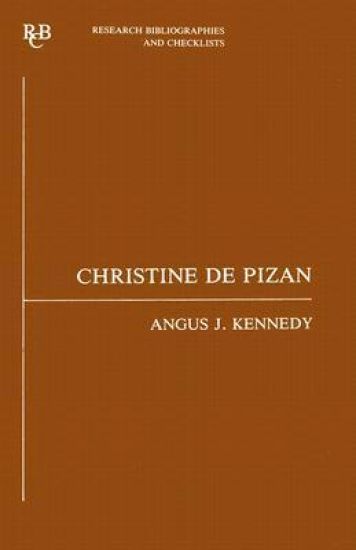
The first political treatise written by a woman. Christine de Pizan’s The Book of the Body Politic is the first political treatise written by a woman. It not only advises the prince, but nobles, knights, and common people as well. It promotes the ideals of interdependence and social responsibility. Rooted in the mindset of medieval Christendom, The Book of the Body Politic heralds the humanism of the Renaissance, highlighting classical culture and Roman civic virtues. This new edition and translation offers a faithful rendering of Christine de Pizan’s writing, as well as a thorough contextualization of her career as a political writer at the end of the Middle Ages in France. The Book of the Body Politic resounds to this day, urging for the need for probity in public life and the importance of responsibilities and rights.

In the first study of its kind, Agents Under Fire defends a robust notion of agency and intentionality against eliminative and naturalistic alternatives, showing the interconnections between the philosophy of mind, theology, and Intelligent Design. Menuge argues that Behe's irreducible complexity is a challenge to reductionism not only in biology, but also in psychology, and shows the inability of the Darwinian psychology proposed by Dawkins, Dennett, and Steven Pinker to explain the integration, unity, direction, and reliability of rational thought. This fascinating defense against scientific materialism is the only book-length study relating Intelligent Design to contemporary issues in the philosophy of mind. Drawing on his experience as both a philosopher and a computer scientist, Menuge deftly shows the reader that the materialist's attempts to rid science of all commitment to teleology can only result in incoherence, and presents instead his own unique argument for the legitimacy of Intelligent Design.
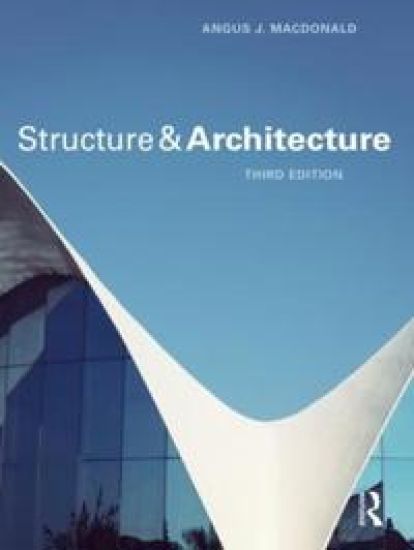
This thoroughly updated edition of Angus J. Macdonald’s insightful book Structure and Architecture offers an in depth analysis of structural design and its relationship with architecture. It draws on clear explanations of the connections between structural form, structural performance and architectural design to explore the interface between the technical and the visual in architecture. Additional chapters in this new edition cover the fields of structural theory, structural philosophy, the contributions of prominent engineers to the evolution of Modern architecture, and the concept and practice of sustainable design. Fully illustrated, this critical appraisal of structures is a core-curriculum text for students of architecture, structural engineering and architectural history, and is also a valuable resource for practitioners of these disciplines.
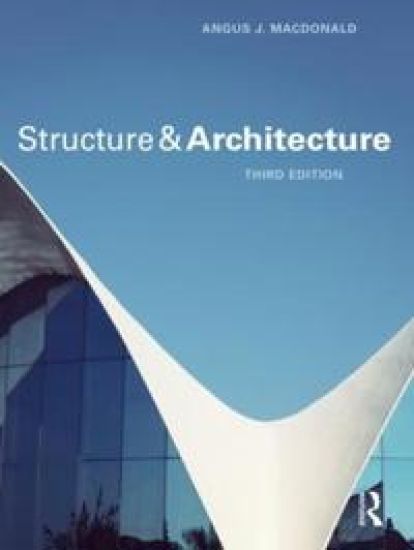
This thoroughly updated edition of Angus J. Macdonald’s insightful book Structure and Architecture offers an in depth analysis of structural design and its relationship with architecture. It draws on clear explanations of the connections between structural form, structural performance and architectural design to explore the interface between the technical and the visual in architecture. Additional chapters in this new edition cover the fields of structural theory, structural philosophy, the contributions of prominent engineers to the evolution of Modern architecture, and the concept and practice of sustainable design. Fully illustrated, this critical appraisal of structures is a core-curriculum text for students of architecture, structural engineering and architectural history, and is also a valuable resource for practitioners of these disciplines.
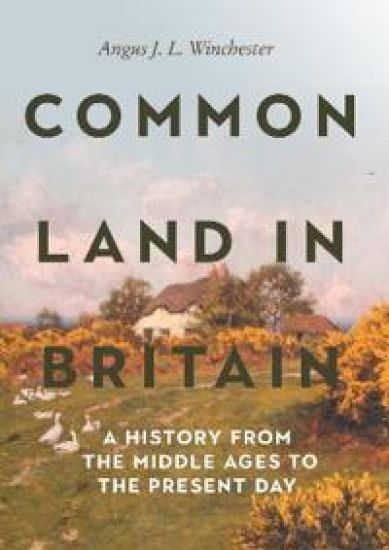
The first authoritative survey of the history of common land in Great Britain from the medieval period to present day. More than a million hectares of Britain has the status of common land, most of it consisting of semi-natural environments of mountain, moorland, wetland or heath. Formerly much more extensive, common land was, and in many places remains, an integral part of the pastoral economy. Even where it is no longer used by farmers, it plays an increasingly important role in modern life, as recreational space and for its value for nature conservation. This book provides for the first time an authoritative survey of the history of common land across all three nations of Great Britain from medieval times to the present day. It charts how commons have been viewed and valued across the centuries, how they have been used, and how their vegetation has changed, highlighting parallels and differences between the histories of common land in England, Scotland and Wales. It traces the distinctive legal status of common land and the management regimes which regulated the exercise of common rights; considers the role of commons as spaces for communal gatherings and as a resource for the poor; charts the loss of common land (but also its persistence) during the era of enclosure in the century 1760-1860; and explores the changing conceptions of the value and right use of commons since the nineteenth century, and the impact this has had on their ecological character. Eight case studies of individual commons illustrate the richness of common landscapes and their history at local level. They include crofters' common grazings in Sutherland, mountain commons in the Lake District and Snowdonia, lowland commons in Co. Durham, Herefordshire and the New Forest, turbary allotments in Lincolnshire, and the urban commons of Wimbledon and Putney Heath.
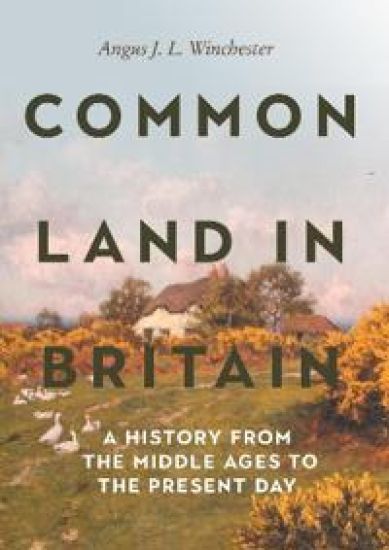
An authoritative survey of the history of common land in Great Britain from the medieval period to present day. More than a million hectares of Britain has the status of common land, most of it consisting of semi-natural environments of mountain, moorland, wetland or heath. Formerly much more extensive, common land was, and in many places remains, an integral part of the pastoral economy. Even where it is no longer used by farmers, it plays an increasingly important role in modern life, as recreational space and for its value for nature conservation. This book provides for the first time an authoritative survey of the history of common land across all three nations of Great Britain from medieval times to the present day. It charts how commons have been viewed and valued across the centuries, how they have been used, and how their vegetation has changed, highlighting parallels and differences between the histories of common land in England, Scotland and Wales. It traces the distinctive legal status of common land and the management regimes which regulated the exercise of common rights; considers the role of commons as spaces for communal gatherings and as a resource for the poor; charts the loss of common land (but also its persistence) during the era of enclosure in the century 1760-1860; and explores the changing conceptions of the value and right use of commons since the nineteenth century, and the impact this has had on their ecological character. Eight case studies of individual commons illustrate the richness of common landscapes and their history at local level. They include crofters' common grazings in Sutherland, mountain commons in the Lake District and Snowdonia, lowland commons in Co. Durham, Herefordshire and the New Forest, turbary allotments in Lincolnshire, and the urban commons of Wimbledon and Putney Heath.

This illustrated history of rural life in Northern England and the Scottish Borders in the late medieval and early modern periods explores the relationship between society and the environment: the ways in which humans responded to and used the environment in which they lived.

Prof. Angus Winchester provides an illustrated history of the history and heritage of dry stone walling in Britain.

Today, it’s not uncommon to get the impression that our claims to know are either doomed before they begin or that they have a status that approaches certainty. The pendulum seems to swing from one end to the other, with our educational institutions too often perpetuating both depending on the person being asked. Yet the question of how and if our claims to know are really justified remains central. Is knowledge a purely social construct without any objective basis, as many claim? Or, if we do have some basis to believe some of our claims, are we justified in holding those claims with an attitude of certainty, as others in today’s environment seem to imply? And what role do our quick judgments play in those claims? From the tenor of our public debates, one could easily be left with the suspicion that either we can’t know anything or that whatever the present state of knowledge is shouldn’t be questioned. What Can We Really Know? The Strengths and Limits of Human Understanding aims to bring some balance to the topic, and argues that while we do have reason to believe that a great many of our claims are justified, it’s also true that much of what passes for knowledge is a social product and therefore vulnerable to future revision. Exploring how knowledge can be understood, how far science can take us and what its limitations might be, and the status of some of the most recent arguments for God’s existence, it will be suggested that a healthy dose of humility should be reincorporated in our public and private debates.

![Memorials of Angus and the Mearns. (Second Edition.) Re-Written ... by ... J. Gammack. [Illustrated with Etchings.] L.P. Vol. II](/covers/9781241122409.jpg)
Memorials of Angus and the Mearns. (Second Edition.) Re-Written ... by ... J. Gammack. [Illustrated with Etchings.] L.P. Vol. II
Andrew Jervise; James Gammack
British Library, Historical Print Editions
2011
pokkari
![Memorials of Angus and the Mearns. (Second Edition.) Re-Written ... by ... J. Gammack. [Illustrated with Etchings.] L.P.](/covers/9781241125646.jpg)
Memorials of Angus and the Mearns. (Second Edition.) Re-Written ... by ... J. Gammack. [Illustrated with Etchings.] L.P.
Andrew Jervise; James Gammack
British Library, Historical Print Editions
2011
pokkari
![The County of Angus, 1678. (Translated from the Original Latin.) [By the REV. James Trail.] ... with Map and Preface. [The Preface by J. M., i.e. John Macnair.] L.P.](/covers/9781241607449.jpg)
The County of Angus, 1678. (Translated from the Original Latin.) [By the REV. James Trail.] ... with Map and Preface. [The Preface by J. M., i.e. John Macnair.] L.P.
Robert Edward; John Macnair
British Library, Historical Print Editions
2011
pokkari
Title: The County of Angus, 1678. (Translated from the original Latin.) by the Rev. James Trail.] ... With map and preface. The preface by J. M., i.e. John Macnair.] L.P.Publisher: British Library, Historical Print EditionsThe British Library is the national library of the United Kingdom. It is one of the world's largest research libraries holding over 150 million items in all known languages and formats: books, journals, newspapers, sound recordings, patents, maps, stamps, prints and much more. Its collections include around 14 million books, along with substantial additional collections of manuscripts and historical items dating back as far as 300 BC.The GENERAL HISTORICAL collection includes books from the British Library digitised by Microsoft. This varied collection includes material that gives readers a 19th century view of the world. Topics include health, education, economics, agriculture, environment, technology, culture, politics, labour and industry, mining, penal policy, and social order. ++++The below data was compiled from various identification fields in the bibliographic record of this title. This data is provided as an additional tool in helping to insure edition identification: ++++ British Library Edward, Robert; Macnair, John; 1883. 56 p.; 8 . 10370.d.21.

Sir Angus Wilson shot to fame in the late 1940’s – his first stories were greeted by Sean O’Faolain and Evelyn Waugh alike with delight. He was championed at once as an odd realist providing new social maps of post-war England – V S Pritchett was to see him as revising the conventional picture of English Character, and recovering “broadness” without losing humanity. He has many faces as a writer. If he inherits the comic Dickensian novel of social depth and density, he also marries this to a recognisably modern anxiety and insecurity about the ‘self’. Wilson’s major books often concern ‘creative breakdown’: they depict people who undergo a crisis and/or collapse of self-belief, and then have to find the courage to invent themselves anew.
Angus or Forfarshire, the Land and People, Descriptive and Historical
Alex J Warden
Hutson Street Press
2025
sidottu

Angus or Forfarshire, the Land and People, Descriptive and Historical
Alex J Warden
Hutson Street Press
2025
sidottu

Angus or Forfarshire, the Land and People, Descriptive and Historical
Alex J Warden
Hutson Street Press
2025
pokkari