
Kirjahaku
Etsi kirjoja tekijän nimen, kirjan nimen tai ISBN:n perusteella.
1000 tulosta hakusanalla Ann K Rothman
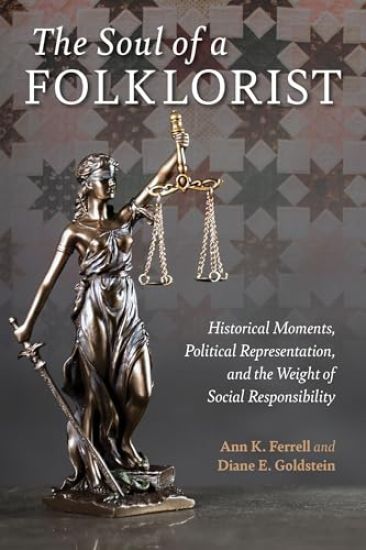
In the 1960s, '70s, and '80s, the US saw a growing awareness of representational politics following the civil rights, women's, gay and lesbian, anti-war, and environmental justice movements, and, like most fields, folklore became increasingly cognizant of these cultural and political shifts. The Soul of a Folklorist chronicles the growing pains folklorists felt as the field engaged in these new and different ways of thinking about expressive culture, inequality, and political representation. Grounded in primary sources including archival documents and interviews with members of the field, authors Ann K. Ferrell and Diane E. Goldstein examine the discussions that arose during this period among folklore scholars. Some folklorists explored progressive social change initiatives as part of their professional work, while others questioned the scholarly appropriateness of applied or political engagement, at times challenging this professional engagement in contemporary political issues. In a series of case studies from the 1970s and '80s, Ferrell and Goldstein explore how folklorists navigated questions about inequities that existed within the field and the potential adverse effects of those inequities on what and whom they studied, the push and pull of scholarly and public folklore work, the location of the line between research and advocacy as well as the wisdom of crossing that line, and the nature of our responsibility, as individual folklorists and as a field, to those we study and the communities in which we live and work. The Soul of a Folklorist examines how, as folklorists moved toward a perspective that increasingly explored the responsibility of presentation and representation of gender, race, class, and other areas of inequities, the discipline gradually came to understand both the power of its own subject and structures of subordination within the field.
In the 1960s, '70s, and '80s, the US saw a growing awareness of representational politics following the civil rights, women's, gay and lesbian, anti-war, and environmental justice movements, and, like most fields, folklore became increasingly cognizant of these cultural and political shifts. The Soul of a Folklorist chronicles the growing pains folklorists felt as the field engaged in these new and different ways of thinking about expressive culture, inequality, and political representation. Grounded in primary sources including archival documents and interviews with members of the field, authors Ann K. Ferrell and Diane E. Goldstein examine the discussions that arose during this period among folklore scholars. Some folklorists explored progressive social change initiatives as part of their professional work, while others questioned the scholarly appropriateness of applied or political engagement, at times challenging this professional engagement in contemporary political issues. In a series of case studies from the 1970s and '80s, Ferrell and Goldstein explore how folklorists navigated questions about inequities that existed within the field and the potential adverse effects of those inequities on what and whom they studied, the push and pull of scholarly and public folklore work, the location of the line between research and advocacy as well as the wisdom of crossing that line, and the nature of our responsibility, as individual folklorists and as a field, to those we study and the communities in which we live and work. The Soul of a Folklorist examines how, as folklorists moved toward a perspective that increasingly explored the responsibility of presentation and representation of gender, race, class, and other areas of inequities, the discipline gradually came to understand both the power of its own subject and structures of subordination within the field.
This book clarifies some of the central issues in Japanese syntax, pointing the way to solving several long-standing problems. It presents an alternative to the Standard Theory, a model which has dominated Japanese linguistics for a number of years.Following the study of the syntactic and lexical levels of representation in Japanese, the book brings the same theoretical perspective to bear on English. Although Japanese, a so-called nonconfigurational language, is typologically far removed from Indo-European languages, Farmer shows that Modular Grammar, which was primarily developed to account for an "exotic" language, yields insights into English as well, In particular, she examines the status of pronouns and anaphors. Aspects of Government Binding theory are adapted for both Japanese and English, providing significant evidence that still-evolving theories have wide and possibly universal validity. Modularity in Syntax concludes by comparing Japanese and English, speculating on the extent to which the typological differences between them are a function of the nature of the rules and principles that mediate between the syntax and the lexical structure of the two languages.This book is the ninth in the series, Current Studies in Linguistics, edited by Samuel Jay Keyser.

First published in 2004. For the Muslim the foundation from which all discussion of government starts is the law of God, the shari‘a. Theoretically pre-existing and eternal, it represents absolute good. It is prior to the community and the state.‘ Part of London Oriental Series, this volume’s concern wis with the political ideas of the period extending from the 2nd/8th century to the 11th/17th century and to the central lands of the caliphate, including Persia, and North Africa.

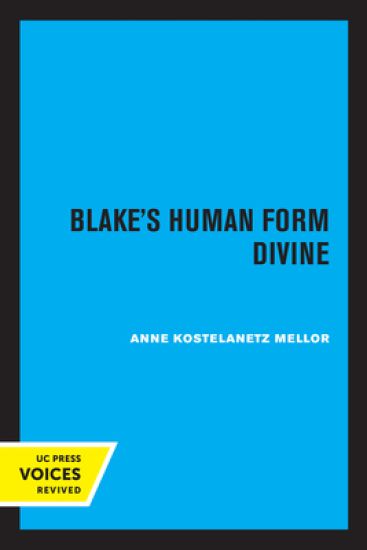
In Blake’s Human Form Divine, the profound interplay between philosophy and stylistic principles in William Blake’s work comes to life. This study delves into Blake’s evolving perception of "form," focusing on its dual role as a philosophical concept and a defining feature of his visual-verbal art. Through detailed analysis, the book explores a central paradox in Blake’s creative journey: his simultaneous rejection of form as a constraining "Urizenic tyranny" and his reliance on bounded, outlined forms in his artwork. By 1795, Blake grappled with the dilemma of expressing divinity and imaginative freedom within the constraints of mortal, finite forms, a conflict central to both his artistic and philosophical pursuits. The study illuminates Blake’s struggle to reconcile these opposing forces, charting his journey through the interplay of visual style and poetic vision. Blake’s stylistic roots in the late eighteenth-century neoclassical idiom of romantic classicism provide the backdrop for this exploration. Characterized by clear outlines, linear rhythms, and idealized human forms, this style shaped Blake’s early illuminated works, such as Songs of Innocence, which reflect a harmonious, self-contained vision of human divinity. However, as his philosophical outlook shifted toward a critique of reason’s dominance in society, Blake began to question the aesthetic and philosophical implications of bounded form. This internal conflict between his artistic reliance on romantic classicism and his philosophical denunciation of reason’s constraints culminated in iconic works like The Ancient of Days. Through a nuanced analysis of Blake’s poetry and visual art, this book examines how he sought to transcend these tensions, offering fresh insights into the evolution of his radical imagination. This title is part of UC Press's Voices Revived program, which commemorates University of California Press’s mission to seek out and cultivate the brightest minds and give them voice, reach, and impact. Drawing on a backlist dating to 1893, Voices Revived makes high-quality, peer-reviewed scholarship accessible once again using print-on-demand technology. This title was originally published in 1974.

In Blake’s Human Form Divine, the profound interplay between philosophy and stylistic principles in William Blake’s work comes to life. This study delves into Blake’s evolving perception of "form," focusing on its dual role as a philosophical concept and a defining feature of his visual-verbal art. Through detailed analysis, the book explores a central paradox in Blake’s creative journey: his simultaneous rejection of form as a constraining "Urizenic tyranny" and his reliance on bounded, outlined forms in his artwork. By 1795, Blake grappled with the dilemma of expressing divinity and imaginative freedom within the constraints of mortal, finite forms, a conflict central to both his artistic and philosophical pursuits. The study illuminates Blake’s struggle to reconcile these opposing forces, charting his journey through the interplay of visual style and poetic vision. Blake’s stylistic roots in the late eighteenth-century neoclassical idiom of romantic classicism provide the backdrop for this exploration. Characterized by clear outlines, linear rhythms, and idealized human forms, this style shaped Blake’s early illuminated works, such as Songs of Innocence, which reflect a harmonious, self-contained vision of human divinity. However, as his philosophical outlook shifted toward a critique of reason’s dominance in society, Blake began to question the aesthetic and philosophical implications of bounded form. This internal conflict between his artistic reliance on romantic classicism and his philosophical denunciation of reason’s constraints culminated in iconic works like The Ancient of Days. Through a nuanced analysis of Blake’s poetry and visual art, this book examines how he sought to transcend these tensions, offering fresh insights into the evolution of his radical imagination. This title is part of UC Press's Voices Revived program, which commemorates University of California Press’s mission to seek out and cultivate the brightest minds and give them voice, reach, and impact. Drawing on a backlist dating to 1893, Voices Revived makes high-quality, peer-reviewed scholarship accessible once again using print-on-demand technology. This title was originally published in 1974.

Wedding Cake: A Woman's Recipe For Fulfillment
Ann K. Ross
Heiress Ross Multimedia Group, LLC
2015
nidottu
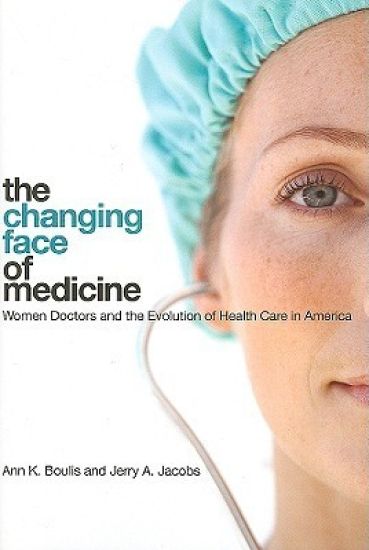
The number of women practicing medicine in the United States has grown steadily since the late 1960s, with women now roughly at parity with men among entering medical students. Why did so many women enter American medicine? How are women faring, professionally and personally, once they become physicians? Are women transforming the way medicine is practiced? To answer these questions, The Changing Face of Medicine draws on a wide array of sources, including interviews with women physicians and surveys of medical students and practitioners. The analysis is set in the twin contexts of a rapidly evolving medical system and profound shifts in gender roles in American society. Throughout the book, Ann K. Boulis and Jerry A. Jacobs critically examine common assumptions about women in medicine. For example, they find that women's entry into medicine has less to do with the decline in status of the profession and more to do with changes in women's roles in contemporary society. Women physicians' families are becoming more and more like those of other working women. Still, disparities in terms of specialty, practice ownership, academic rank, and leadership roles endure, and barriers to opportunity persist. Along the way, Boulis and Jacobs address a host of issues, among them dual-physician marriages, specialty choice, time spent with patients, altruism versus materialism, and how physicians combine work and family. Women's presence in American medicine will continue to grow beyond the 50 percent mark, but the authors question whether this change by itself will make American medicine more caring and more patient centered. The future direction of the profession will depend on whether women doctors will lead the effort to chart a new course for health care delivery in the United States.
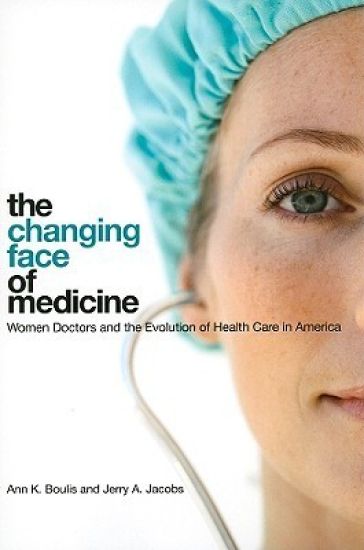
The number of women practicing medicine in the United States has grown steadily since the late 1960s, with women now roughly at parity with men among entering medical students. Why did so many women enter American medicine? How are women faring, professionally and personally, once they become physicians? Are women transforming the way medicine is practiced? To answer these questions, The Changing Face of Medicine draws on a wide array of sources, including interviews with women physicians and surveys of medical students and practitioners. The analysis is set in the twin contexts of a rapidly evolving medical system and profound shifts in gender roles in American society. Throughout the book, Ann K. Boulis and Jerry A. Jacobs critically examine common assumptions about women in medicine. For example, they find that women's entry into medicine has less to do with the decline in status of the profession and more to do with changes in women's roles in contemporary society. Women physicians' families are becoming more and more like those of other working women. Still, disparities in terms of specialty, practice ownership, academic rank, and leadership roles endure, and barriers to opportunity persist. Along the way, Boulis and Jacobs address a host of issues, among them dual-physician marriages, specialty choice, time spent with patients, altruism versus materialism, and how physicians combine work and family. Women's presence in American medicine will continue to grow beyond the 50 percent mark, but the authors question whether this change by itself will make American medicine more caring and more patient centered. The future direction of the profession will depend on whether women doctors will lead the effort to chart a new course for health care delivery in the United States.



The Law School Decision Game: A Playbook for Prospective Lawyers
Ann K. Levine Esq
Abraham Publishing
2011
nidottu
Whether you're considering law school or are already committed, "The Law School Decision Game: A Playbook for Prospective Lawyers" explains your choice to enter the legal profession with the candor readers have come to expect from Ann Levine's Law School Expert blog including: -What lawyers do, how much money they make, and how hard they work.-What's important in choosing a law school. -What BigLaw is really like.-What to consider before taking on student loan debt in today's job market. -What you can do now to increase your likelihood of getting hired later.-What is important in choosing an area of specialization.-What you need to know and do in law school and in the first few years of your career to set yourself up for success."Law school admissions directors are going to hate this book, but it's critical for potential lawyers who wish to make an informed decision about their careers before they spend three long years in law school and potentially a lifetime paying off their debt. I know many miserable law students and even more unhappy lawyers who I am sure wish they had read this book before ever taking the LSAT." Spencer Aronfeld, Esq., author of "Make It Your Own Law Firm."

The Law School Admission Game: Play Like an Expert, Second Edition
Ann K. Levine Esq
Abraham Publishing
2013
nidottu

The Law School Admission Game: Play Like an Expert, Third Edition
Ann K. Levine
Abraham Publishing
2017
nidottu
Learn everything you need to know to get into law school. This third edition (and completely re-written and updated) version of the bestselling law school admission guide provides detailed information on how to present yourself in the law school application process. Ann Levine brings 15+ years of experience in law school admissions (as director of admissions for law schools and as a law school admission consultant) to provide advice about writing the best law school personal statement and optional essays, how to choose people to write letters of recommendation, what to include in your resume, how to explain weaknesses in your application such as a low GPA or LSAT score, the best way to prepare for the LSAT, and how to choose a law school. Once you've submitted your law school applications, this book will continue to guide you on getting accepted from a waiting list, negotiating law school scholarships, and transferring to a new law school after your 1L year. The book includes an analysis of personal statement introductions as well as complete essays successfully used by applicants, tips on writing optional essays for law schools, and sample resumes and addenda. Topics include: - How will law schools view my credentials, activities, and work experience? - What is the rolling admission process and how can it impact whether I am accepted? - Will the fact that I am a non-traditional applicant help me or hurt me? - Why is the personal statement important and how do I select a topic? - How do I explain a low LSAT score, inconsistent GPA, academic probation, or arrest record? - Should I write an optional essay? - Should I share information about my learning disability? - Why was I placed on a waiting list and what can I do to increase my chances of acceptance? - How can I use scholarship offers to negotiate between law schools? - How do I decide where to attend? The tips and insights provided within The Law School Admission Game: How to Play Like an Expert is the second best thing to having your own law school admission consultant. Ms. Levine offers candid and tangible advice in a conversational tone with an open and encouraging (but brutally honest) approach. This book will change how you look at the law school admission process and help you create your strongest possible application package. This book offers strategies for all law school applicants, including specific advice for people: -Determined to attend a Top Law School -Hoping for the chance to attend any law school -Seeking an affordable legal education -Returning to school after being in the work force -Still in college with limited work and life experience -Considering how to build their experiences and resumes to strengthen their applications -Concerned about writing a compelling personal statement because they haven't overcome significant obstacles - Know the story they want to tell about overcoming obstacles in life but are not sure what to emphasize. No matter your life story or potential weaknesses in your law school application, The Law School Admission Game: How to Play Like an Expert will guide you through every piece of the application process. Both previous editions of this book have been Amazon.com bestsellers, and this one is the first to feature full-length essays used by successful applicants in the past, as well as a self-study LSAT schedule. If you're even thinking about applying to law school, this book is about to become your go-to resource.


Health Informatics Sixth Edition Supplement: Practical Guide for Healthcare and Information Technology Professionals
Ann K. Yoshihashi; Robert E. Hoyt
Lulu.com
2016
nidottu
Health Informatics: Practical Guide for Health and Information Technology Professionals Sixth Edition Supplement adds 3 new chapters. The supplement has learning objectives, case studies, recommended reading, future trends, key points, and references. Introduction to Data Science, provides a comprehensive overview with topics including databases, machine learning, big data and predictive analytics. Clinical Decision Support (CDS), covers current and salient aspects of CDS functionality, implementation, benefits, challenges and lessons learned. International Health Informatics, highlights the informatics initiatives of developed and developing countries on each continent. Available as a paperback and eBook. For more information about the textbook, visit www.informaticseducation.org. For instructors, an Instructor Manual, PDF version and PowerPoint slides are available under the Instructor's tab.